
In the world of global finance, few symbols carry as much weight as AAPL. As the cornerstone of the Nasdaq-100 and the S&P 500, Apple Inc.’s stock price is more than just a number on a ticker; it is a barometer for the health of the consumer electronics sector, the robustness of global supply chains, and the general sentiment of institutional investors toward high-growth tech stocks. While the literal price of a share fluctuates by the second during market hours, understanding what drives that value requires a deep dive into the company’s fundamental valuation, its capital allocation strategy, and the macroeconomic environment that dictates its daily movements.
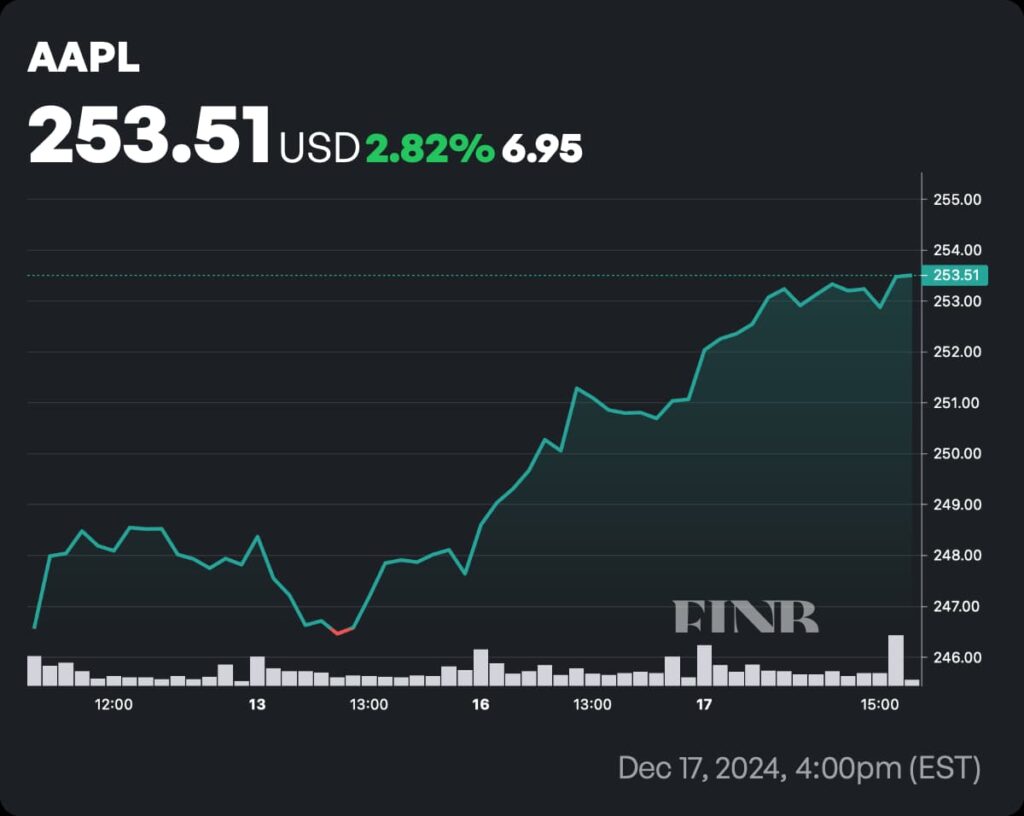
To evaluate Apple’s current standing in the market, an investor must look past the nominal dollar amount and analyze the underlying financial machinery. Whether the stock is trading at $170 or $220, the real question remains: what is the market pricing in, and how does that valuation align with the company’s ability to generate free cash flow?
The Core Metrics: Decoding Apple’s Valuation
When discussing Apple’s stock price, the conversation inevitably turns to valuation multiples. For years, Apple was valued as a hardware company, trading at a price-to-earnings (P/E) ratio often in the mid-teens. However, as the company pivoted toward a service-oriented business model, the market began to award it a “software multiple,” often seeing the P/E ratio climb into the 25x to 32x range.
Market Capitalization and Benchmarking
Apple was the first publicly traded U.S. company to hit a $1 trillion market cap, and subsequently $2 trillion and $3 trillion. The current stock price is a direct reflection of this massive scale. When the stock moves by even 1%, it can add or subtract tens of billions of dollars in market value. For the personal investor, this means that AAPL often moves with the broader market indexes. If you own an S&P 500 index fund, you are inherently exposed to Apple’s price movements, as it typically maintains one of the largest weightings in the index.
Price-to-Earnings (P/E) and Earnings Per Share (EPS)
The P/E ratio remains the primary lens through which the current stock price is judged. A high P/E suggests that investors expect significant future growth, whereas a lower P/E might suggest the stock is undervalued or that growth is stalling. Apple’s ability to consistently beat Earnings Per Share (EPS) estimates is a primary driver of price appreciation. By reducing the total number of shares outstanding through aggressive buybacks, Apple increases its EPS even during quarters where net income growth is modest, providing a fundamental floor for the stock price.
Gross Margins and Profitability
Profitability is the bedrock of Apple’s valuation. While many tech firms prioritize growth at the expense of profit, Apple maintains industry-leading gross margins, often hovering between 43% and 46%. The current stock price reflects the market’s confidence in Apple’s pricing power. Even in inflationary environments, Apple has demonstrated an uncanny ability to pass costs on to consumers without sacrificing volume, a trait that makes its stock a “safe haven” during periods of economic uncertainty.
Revenue Streams and Their Impact on Stock Volatility
To understand why Apple’s stock price fluctuates, one must look at where the money comes from. Apple’s revenue mix has shifted significantly over the last decade, transitioning from a heavy reliance on the iPhone to a more balanced ecosystem.
The iPhone Cycle and Seasonal Volatility
Despite diversification, the iPhone still accounts for roughly half of Apple’s total revenue. Consequently, the stock price often experiences seasonality. Typically, there is a build-up in price leading into the September hardware launch, followed by a period of volatility as the market digests initial sales data and “lead times” from shipping providers. If the new model features significant technological leaps—such as the transition to 5G or the integration of advanced AI processing—the stock price often reacts to the “super-cycle” expectations.
The Services Pivot: High-Margin Growth
The most significant driver of Apple’s stock price appreciation in recent years has been its Services segment. This includes the App Store, iCloud, Apple Pay, Apple Music, and advertising. Services carry gross margins in the range of 70%, nearly double that of hardware products. As the market sees a higher percentage of Apple’s revenue coming from recurring, high-margin services, the stock price receives a premium valuation. Investors love predictability, and the subscription-based nature of Services provides a steady cash flow that hardware sales cannot match.
Wearables and Emerging Categories
Products like the Apple Watch, AirPods, and the Vision Pro represent the “Wearables, Home, and Accessories” segment. While smaller than the iPhone, this category is crucial for the “ecosystem lock-in.” The stock price often reflects the success of these ancillary products because they increase the cost of switching to a competitor. A consumer with an iPhone, an Apple Watch, and a subscription to iCloud is far less likely to leave the ecosystem, ensuring long-term revenue stability that the market values highly.
Capital Allocation: Dividends, Buybacks, and Cash Reserves

Apple is unique in the corporate world for its massive “cash pile.” How the company manages this capital is a central component of its stock price performance. Under the leadership of Tim Cook and CFO Luca Maestri, Apple has pursued a “cash neutral” goal, intending to eventually return the majority of its net cash to shareholders.
The Power of Share Repurchases
Apple’s share buyback program is arguably the most aggressive in corporate history. By spending billions of dollars each quarter to buy back its own shares, Apple reduces the supply of stock available in the market. According to the basic laws of supply and demand, reducing the supply while demand remains constant (or increases) puts upward pressure on the stock price. Furthermore, by retiring these shares, the company increases the ownership stake of every remaining shareholder without them having to spend a dime.
Dividend Growth and Yield
While Apple is not typically viewed as a “dividend stock” in the same vein as a utility or a consumer staples company, it has become one of the largest dividend payers in the world by total dollar volume. For the long-term investor, the dividend yield—while often below 1%—represents a commitment to returning value. The consistent annual increases in the dividend serve as a signal to the market that the board of directors is confident in future cash flow generation.
Research and Development (R&D) vs. Acquisitions
The market also monitors how much Apple spends on R&D. Unlike other tech giants that grow through massive, multi-billion dollar acquisitions (which the market often views as risky), Apple prefers “bolt-on” acquisitions and heavy internal R&D. This disciplined approach to spending ensures that the stock price isn’t hit by the volatility associated with integration risks or overpaying for competitors.
Macroeconomic Factors and Sector Headwinds
No stock exists in a vacuum, and Apple’s price is frequently dictated by factors beyond its control. As a global entity with a massive supply chain, Apple is particularly sensitive to geopolitical and macroeconomic shifts.
Interest Rates and the “Discount Rate”
The current stock price of Apple is highly sensitive to the Federal Reserve’s interest rate policy. When interest rates rise, the “discount rate” applied to future cash flows also rises, which typically lowers the present value of growth stocks. Conversely, in a falling-rate environment, Apple’s stable and growing cash flows become more attractive compared to fixed-income assets, often driving the stock price higher.
Currency Fluctuations and the Strength of the Dollar
Because Apple generates more than half of its revenue outside the United States, the strength of the U.S. Dollar (USD) is a major factor in its quarterly earnings reports. A strong dollar makes Apple’s products more expensive in international markets and reduces the value of foreign sales when converted back into USD. Investors often look at “constant currency” growth to determine the true health of the business, but the “reported” numbers are what usually drive the immediate price reaction following an earnings call.
Supply Chain Resilience and Geopolitics
Apple’s reliance on manufacturing in Asia, particularly China, introduces a layer of geopolitical risk that is priced into the stock. Any disruption in the supply chain—be it from trade tensions, labor issues, or health crises—can lead to a sharp decline in the stock price. The market is currently watching Apple’s efforts to diversify its manufacturing base into countries like India and Vietnam, viewing this as a necessary move to protect the long-term stability of the stock.
Strategic Outlook: Is AAPL a Buy, Hold, or Sell?
Evaluating Apple’s current stock price requires a look toward the future. The market is a forward-looking mechanism, and today’s price is an estimate of all future cash flows discounted back to the present.
The AI Revolution and “Apple Intelligence”
The next major catalyst for Apple’s stock price is its integration of Artificial Intelligence. While competitors moved quickly to release LLMs (Large Language Models), Apple’s strategy has been more methodical, focusing on “on-device” AI that prioritizes user privacy. The market’s reaction to “Apple Intelligence” will likely dictate the stock’s performance over the next 24 months. If AI features trigger a massive upgrade cycle for the iPhone and Mac, the stock could see a significant re-rating.
Regulatory and Antitrust Risks
Perhaps the greatest threat to Apple’s stock price is the increasing scrutiny from regulators in the U.S. and the European Union. Challenges to the App Store’s commission structure or the “walled garden” ecosystem could potentially impact the high-margin Services revenue. Investors must weigh the current stock price against the possibility of legal mandates that could force Apple to open its platform to third-party stores or payment systems.

Long-Term Portfolio Positioning
For the individual investor, the current price of Apple should be viewed through the lens of portfolio construction. AAPL is often characterized as a “core” holding—a stock that provides both the growth of a tech company and the stability of a blue-chip consumer brand. Its high liquidity makes it easy to trade, but its historical performance suggests that the greatest rewards have gone to those who ignore the daily price fluctuations and hold the stock through various market cycles.
In conclusion, “what is Apple’s current stock price” is a question with a shifting answer, but the factors that determine it are constant. It is a product of disciplined capital allocation, an unparalleled ecosystem of hardware and services, and a complex web of global economic forces. For those focused on personal finance and investing, the nominal price is less important than the valuation—the relationship between what you pay and what you get in terms of earnings, dividends, and future growth potential. As Apple continues to innovate and return capital to shareholders, it remains a definitive benchmark for the modern investment landscape.
aViewFromTheCave is a participant in the Amazon Services LLC Associates Program, an affiliate advertising program designed to provide a means for sites to earn advertising fees by advertising and linking to Amazon.com. Amazon, the Amazon logo, AmazonSupply, and the AmazonSupply logo are trademarks of Amazon.com, Inc. or its affiliates. As an Amazon Associate we earn affiliate commissions from qualifying purchases.