
In the realm of audio, the pursuit of pristine sound reproduction is an ongoing quest. While many factors contribute to an amplifier’s performance, the “class” of amplification is a fundamental determinant of its operational characteristics, efficiency, and ultimately, its sonic signature. Among the various amplifier classes, Class A holds a special place, often revered by audiophiles for its unparalleled fidelity. But what exactly is a Class A amplifier, and why does it command such respect, especially in a world increasingly dominated by rapid technological advancements? This article will demystify the concept of Class A amplification, exploring its core principles, its place within the broader spectrum of amplifier technologies, and its surprising relevance even in today’s tech-driven landscape.
Understanding Amplifier Classes: A Foundation for Class A
Before diving into the specifics of Class A, it’s crucial to understand the concept of amplifier classes. Amplifiers, at their core, take a weak input signal and increase its power to drive a load, such as loudspeakers. The “class” of an amplifier refers to how its active amplifying devices (typically transistors or vacuum tubes) are biased and operated with respect to the input signal waveform. This biasing directly impacts the device’s conduction angle – the portion of the input signal cycle over which the device is actively amplifying.
There are several common amplifier classes, each with its own trade-offs:
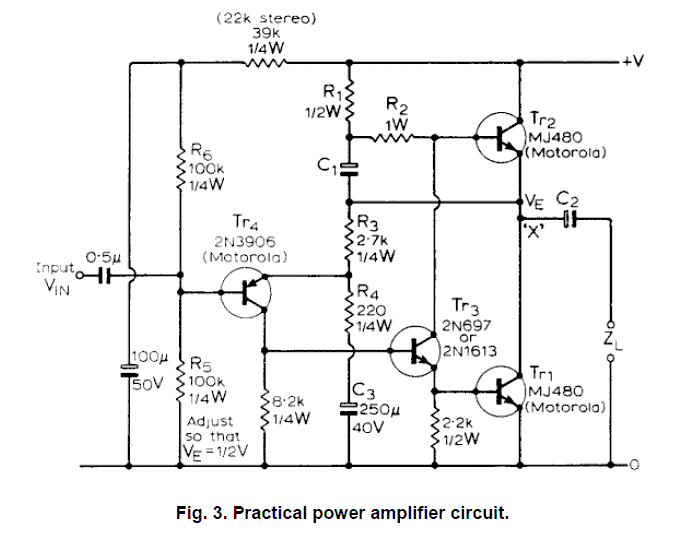
- Class A: Characterized by a 360-degree conduction angle. The active device is always “on” and conducting, even when there’s no input signal.
- Class B: Features a 180-degree conduction angle. Each active device amplifies only half of the input waveform. Typically used in push-pull configurations.
- Class AB: A hybrid of Class A and Class B, with a conduction angle slightly greater than 180 degrees but less than 360 degrees. Aims to combine the linearity of Class A with the efficiency of Class B.
- Class C: Operates with a conduction angle of less than 180 degrees, often very narrow. Highly efficient but introduces significant distortion, making it unsuitable for audio amplification without extensive filtering.
- Class D: Unlike the previous classes, Class D amplifiers don’t amplify the analog signal directly. Instead, they use pulse-width modulation (PWM) to encode the audio signal into a series of digital pulses. These pulses are then switched on and off at high frequencies, effectively representing the audio waveform. They are highly efficient but can introduce switching artifacts if not designed carefully.
The distinction between these classes is fundamental to understanding the unique attributes of Class A.
The Core Principle of Class A Amplification: Constant Conduction
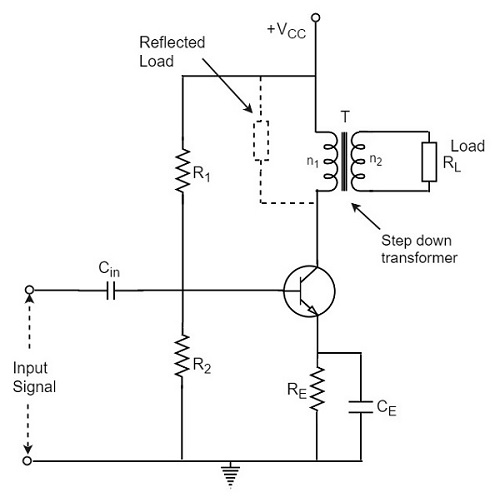
At the heart of a Class A amplifier lies its constant state of operation. The active amplifying device – be it a bipolar junction transistor (BJT) or a field-effect transistor (FET) in solid-state designs, or a vacuum tube – is biased to operate at or near its maximum linearity point. This means the device is always turned “on” and is actively conducting current, regardless of whether an audio signal is present.
Imagine the input audio signal as a wave. In a Class A amplifier, the amplifying device is always conducting throughout the entire 360-degree cycle of this waveform. This continuous conduction is the key to its exceptional linearity.
What is Bias?
To achieve this constant conduction, a specific DC voltage and current are applied to the amplifying device, known as the bias point. This bias point ensures that the device remains in its active region, ready to amplify any incoming signal with minimal distortion.
The Role of the Load Line
In circuit analysis, the load line is a graphical representation that shows the relationship between the voltage across and current through the active device. For a Class A amplifier, the bias point is chosen to be at the center of the load line. This allows the input signal to swing both positively and negatively without pushing the active device into saturation (fully “on”) or cutoff (fully “off”). When the input signal drives the device’s output voltage up or down, the current also varies proportionally, mirroring the input signal with high fidelity.
Advantages of Class A: The Pursuit of Sonic Purity
The defining characteristic of Class A amplification – constant conduction – directly translates into its most significant advantage: exceptionally low distortion.
Unmatched Linearity and Low Distortion
Because the amplifying device is always active and operating in its linear region, it reproduces the input waveform with remarkable accuracy. Any deviation from the input signal is minimized, resulting in a clean, precise audio output. This is particularly crucial for capturing the subtle nuances, dynamics, and textures of musical performances. For audiophiles, this translates to a more lifelike, detailed, and immersive listening experience, often described as “smooth,” “natural,” or “transparent.”
Superior Transient Response
The ability of a Class A amplifier to instantly respond to rapid changes in the input signal is known as transient response. Since the active devices are always on and ready, they can react instantaneously to sudden peaks and dips in the audio signal. This means that fast-paced musical passages, such as drum fills or the attack of a piano note, are reproduced with greater clarity and impact, without the smearing or softening that can occur in less linear amplifier designs.
Absence of Crossover Distortion
Classes B and AB amplifiers, which utilize multiple active devices (often in a push-pull configuration), can suffer from crossover distortion. This occurs when the signal transitions from one active device to another. At the point where one device stops conducting and the other begins, there’s a brief period of non-conduction or non-linearity, introducing audible artifacts. Class A, with its single-device or continuous push-pull operation within a single device’s linear region, completely avoids this type of distortion.
The Trade-offs of Class A: Efficiency and Heat
While Class A amplifiers offer superior sound quality, this comes at a significant cost, primarily in terms of efficiency and heat dissipation.
The Inherent Inefficiency of Constant Conduction
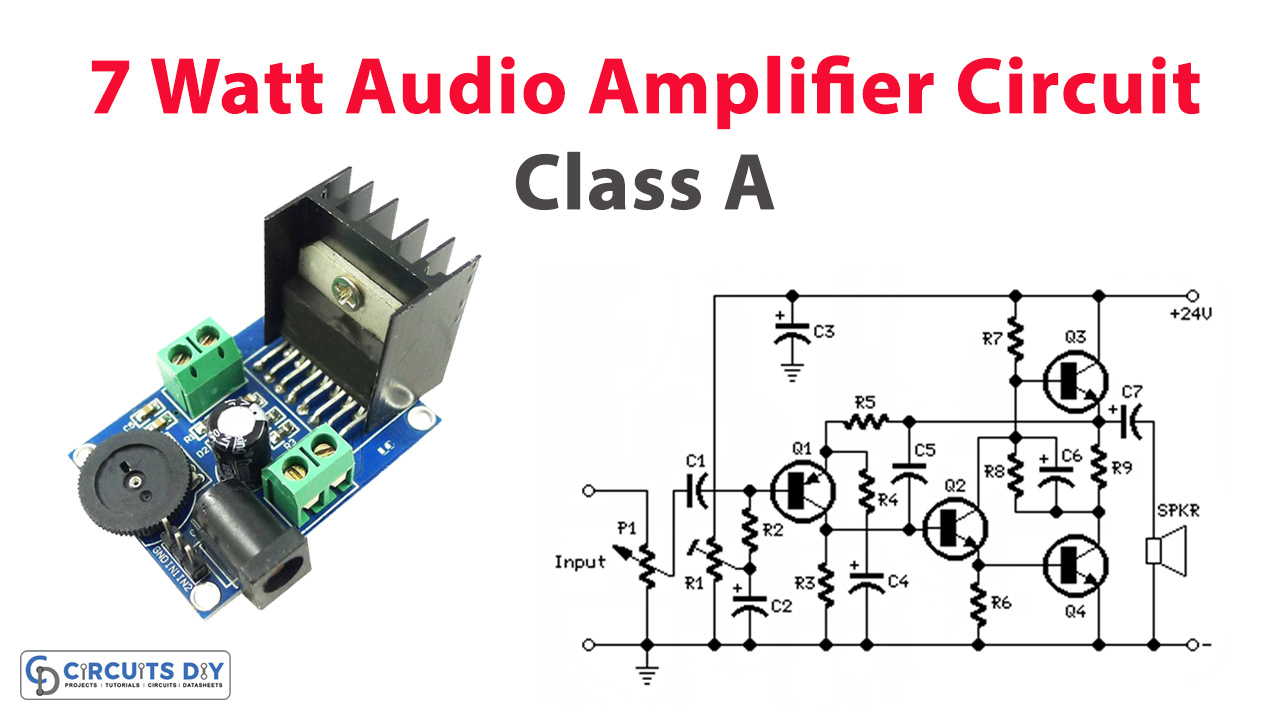
The fundamental principle of Class A operation – the active device always conducting – means that even when there is no audio signal, the amplifier is still drawing power. This “idle” current is necessary to maintain the bias point, but it contributes to significant wasted energy. In an ideal Class A amplifier, the theoretical maximum efficiency is only 25%. In practice, it’s often much lower, typically around 10-20%.
Why is this a problem?
- Power Consumption: Class A amplifiers consume considerably more electricity than other amplifier classes, even when not playing music at high volumes. This can lead to higher electricity bills and a larger carbon footprint.
- Heat Generation: The wasted energy in a Class A amplifier is primarily dissipated as heat. This means Class A amplifiers often run quite hot, requiring robust heatsinks and good ventilation to prevent overheating and potential damage. This heat can also contribute to the room temperature.
Heat Management: A Critical Design Consideration
Due to their high operating temperatures, Class A amplifiers demand careful thermal management. Designers must ensure that the active devices are adequately cooled to maintain their performance and longevity. This often involves:
- Large Heatsinks: These are metal components with a large surface area designed to draw heat away from the active devices and dissipate it into the surrounding air.
- Ventilation: Ample airflow around the amplifier chassis is crucial to prevent heat buildup.
- Careful Component Selection: Choosing components that can withstand higher temperatures is also important.
Size and Cost Implications
The need for larger heatsinks, more robust power supplies to handle the constant current draw, and often higher-quality components to achieve the desired linearity, all contribute to Class A amplifiers typically being larger, heavier, and more expensive than amplifiers of comparable power output in other classes.
Class A in the Modern Tech Landscape: Niche Applications and Enduring Appeal
In an era where energy efficiency and miniaturization are paramount, Class A amplification might seem anachronistic. After all, highly efficient Class D amplifiers are prevalent in everything from smartphones to home theater systems, offering substantial power in compact, cool-running packages. However, Class A continues to hold its ground in specific niches and maintains an enduring appeal for a dedicated segment of the audio community.
Audiophile Hi-Fi Systems: The Quest for Ultimate Sound
The primary domain where Class A amplifiers continue to thrive is in high-end, dedicated hi-fi audio systems. For enthusiasts who prioritize absolute sonic fidelity above all else, the inherent advantages of Class A – its transparency, detail, and natural sound – are paramount. These users are willing to accept the higher power consumption, heat, and cost in exchange for what they perceive as the ultimate listening experience.
Dedicated Listening Rooms
Typically, Class A amplifiers are found in specialized listening rooms where their heat output can be managed, and their sonic benefits can be fully appreciated without the compromises demanded by portable devices or multi-purpose home entertainment systems.
Pairing with High-Quality Components
To truly leverage the capabilities of a Class A amplifier, it must be paired with other high-quality components, including source players, preamplifiers, and, crucially, high-fidelity loudspeakers. The entire signal chain needs to be optimized to reveal the subtle improvements that a Class A amplifier brings.
Other Niche Applications
Beyond consumer hi-fi, Class A topology finds use in other areas where linearity is critical:
- Studio Monitoring Equipment: In professional audio studios, where accurate sound reproduction is essential for mixing and mastering, Class A designs can be found in certain high-end monitor amplifiers or signal processing units.
- Test and Measurement Equipment: For precision electronic testing, amplifiers that introduce minimal distortion are vital. Class A amplifiers can be employed in such applications for their predictable and clean performance.
The Future of Class A: Evolution, Not Extinction
While Class D continues to dominate the mass market due to its efficiency, the principles of Class A amplification are not static. Engineers are constantly exploring ways to mitigate its drawbacks:
- Hybrid Designs: Combinations of Class A and other classes (like Class AB or Class G) are sometimes employed to offer a balance between sonic performance and efficiency. For instance, an amplifier might operate in Class A at lower listening levels and switch to a more efficient class at higher power demands.
- Improved Component Technology: Advances in semiconductor technology, such as new transistor designs or more efficient biasing techniques, can contribute to incremental improvements in Class A amplifier efficiency.
- Focus on Purity: For those who seek the absolute best in audio, the appeal of Class A remains strong. The pursuit of sonic perfection is a driving force, and for many, Class A represents the pinnacle of amplifier design in this regard.
In conclusion, a Class A amplifier is defined by its constant conduction of its active amplifying devices, operating with a 360-degree signal waveform. This fundamental design principle grants it unparalleled linearity and exceptionally low distortion, leading to a superior audio experience highly prized by audiophiles. However, this sonic purity comes with the inherent trade-off of low efficiency and significant heat generation. While less practical for everyday consumer electronics due to these limitations, Class A amplifiers continue to occupy a vital and respected niche in high-end audio, representing a commitment to uncompromising sound quality. As technology evolves, so too do the approaches to amplifier design, but the legacy and appeal of the Class A amplifier, as a beacon of audio fidelity, remain as strong as ever.
aViewFromTheCave is a participant in the Amazon Services LLC Associates Program, an affiliate advertising program designed to provide a means for sites to earn advertising fees by advertising and linking to Amazon.com. Amazon, the Amazon logo, AmazonSupply, and the AmazonSupply logo are trademarks of Amazon.com, Inc. or its affiliates. As an Amazon Associate we earn affiliate commissions from qualifying purchases.