
The landscape of personal finance has undergone a seismic shift over the last decade. The days of standing in line at a local branch, filling out stacks of paper forms, and waiting weeks for a representative to review a file are largely behind us. Today, the ability to secure a bank card online represents the pinnacle of financial convenience, allowing consumers to manage their liquidity, build credit, and access global markets from the palm of their hand. Whether you are looking for a high-yield checking account debit card or a premium rewards credit card, the digital application process is streamlined, secure, and increasingly instantaneous.

Understanding the Landscape of Online Banking
Before initiating an application, it is essential to understand the different types of institutions that offer online bank cards. The financial sector is currently divided between traditional legacy banks that have digitized their services and “neobanks”—fintech companies that operate exclusively online without physical branches.
Traditional Banks vs. Neobanks
Traditional banks, such as JPMorgan Chase, Bank of America, or HSBC, offer the security of a long-standing reputation and a full suite of financial products, including mortgages and wealth management. Their online card application processes are now highly refined, often providing existing customers with “one-click” approvals. On the other hand, neobanks like Chime, Revolut, or Monzo often provide a more agile user experience. These platforms frequently offer cards with lower fees, better international exchange rates, and innovative budgeting tools built directly into their mobile apps. Choosing between them depends on whether you prioritize a physical banking footprint or a mobile-first financial ecosystem.
The Role of Digital Wallets
When you apply for a bank card online today, you are often not just applying for a piece of plastic. Most modern issuers provide a “virtual card” immediately upon approval. This digital version of your card can be added to Apple Pay, Google Pay, or Samsung Pay, allowing you to begin transacting before the physical card even arrives in the mail. This integration into the digital wallet ecosystem is a critical component of modern money management, offering both convenience and an extra layer of security through tokenization.
Steps to Applying for a Bank Card Online
The process of getting a bank card online is designed to be frictionless, but it requires specific preparation to ensure a high probability of approval and to satisfy regulatory requirements.
Selecting the Right Financial Product
The first step is determining which card suits your financial goals. A debit card is linked directly to a checking account and allows you to spend only what you have deposited, making it an excellent tool for daily budgeting. A credit card, conversely, allows you to borrow funds up to a certain limit, which is essential for building a credit history and earning rewards, provided the balance is managed responsibly. For those with limited credit history, a “secured” card—where a deposit acts as your credit limit—is often the best entry point into the banking system.
Gathering Necessary Documentation
To comply with “Know Your Customer” (KYC) and Anti-Money Laundering (AML) regulations, financial institutions must verify your identity. Before starting an online application, ensure you have the following documents ready:
-
Government-Issued ID: A digital scan or clear photograph of your driver’s license, passport, or national ID card.
-
Social Security Number (SSN) or Taxpayer ID: Necessary for credit checks and tax reporting in many jurisdictions.
-
Proof of Address: A recent utility bill, lease agreement, or bank statement that confirms your residency.
-
Income Verification: While not always required for debit cards, credit card applications will ask for your annual income to determine your debt-to-income ratio and set your credit limit.
Navigating the Online Application
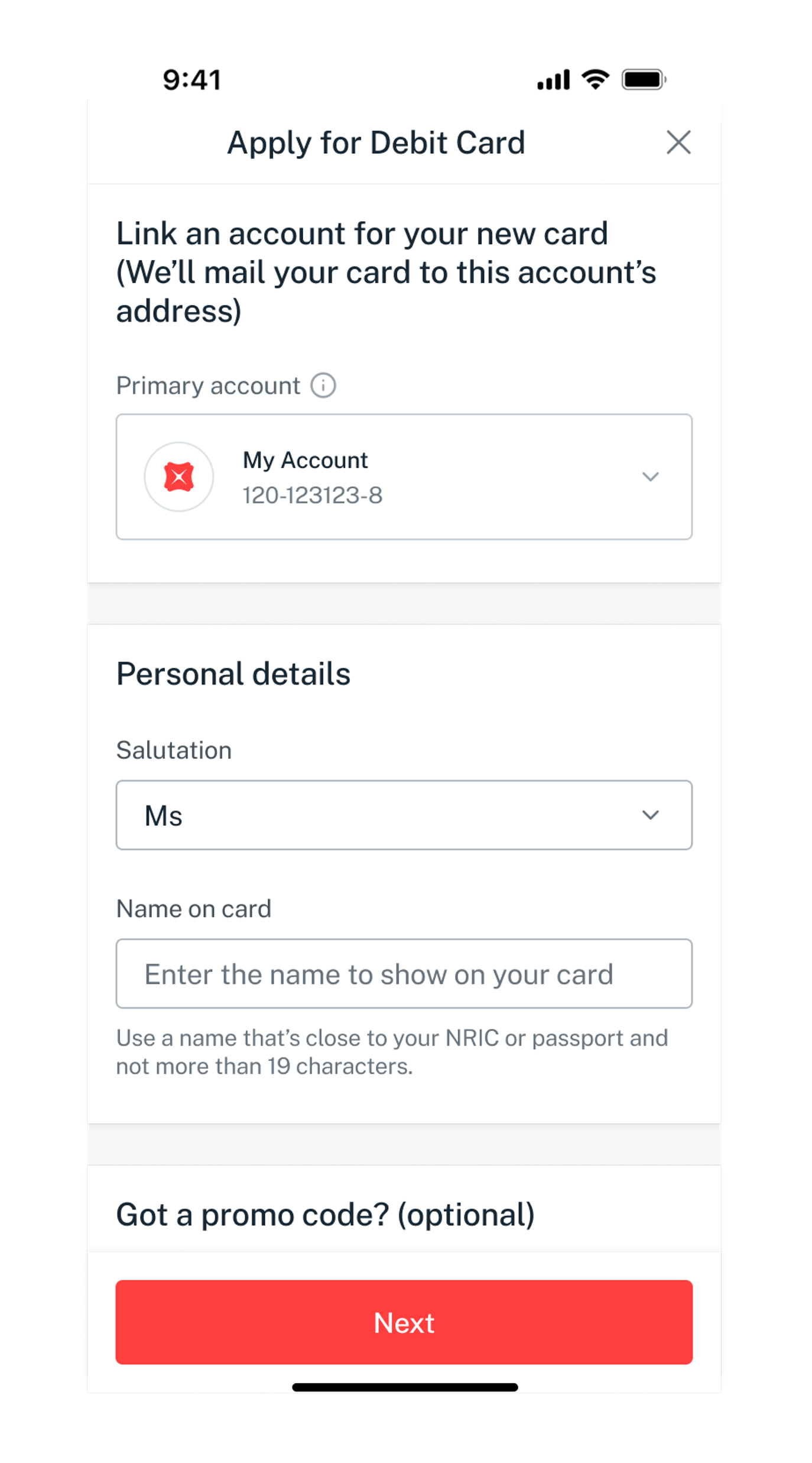
Once you have selected an issuer, visit their official website or download their encrypted mobile application. The application will typically take 5 to 10 minutes. You will be asked to enter your personal details, financial information, and employment status. Most modern platforms use automated underwriting systems that can provide a decision in seconds. If your application requires manual review, the bank may ask for additional documentation via a secure upload portal.
Evaluating Financial Features and Fee Structures
Getting a card is simple, but choosing the wrong card can be a costly financial mistake. It is imperative to look beyond the marketing and analyze the underlying fee structure and terms of service.

Interest Rates and APR
For credit cards, the Annual Percentage Rate (APR) is the most significant factor. This represents the cost of borrowing if you do not pay your balance in full every month. While many cards offer 0% introductory periods, the “go-to” rate can exceed 20% or 25% depending on your creditworthiness. Understanding how interest is calculated is vital for maintaining long-term financial health.
Maintenance and Transaction Fees
Many online-only banks pride themselves on having “no fees,” but it is important to verify this. Common fees to look out for include:
-
Monthly Maintenance Fees: Often waived if a minimum balance is maintained or a direct deposit is set up.
-
ATM Fees: Some banks reimburse out-of-network ATM fees, while others charge a premium.
-
Foreign Transaction Fees: If you travel or shop on international websites, a card that charges 3% on every transaction can quickly erode your savings.
-
Overdraft Fees: For debit cards, ensure you understand the bank’s policy on declined transactions versus paid overdrafts.
Rewards and Cashback Programs
A primary advantage of high-tier bank cards is the ability to earn value back on every dollar spent. Rewards typically fall into three categories: flat-rate cashback (e.g., 1.5% on all purchases), tiered categories (e.g., 3% on groceries and gas), or travel points. For a card to be a truly effective financial tool, the rewards earned should outweigh any annual fees associated with the account.
Security Protocols in Digital Banking
Security is the cornerstone of online finance. When applying for and using a bank card online, you are participating in a highly regulated and technologically advanced ecosystem designed to protect your capital.
Encryption and Data Privacy
Reputable financial institutions use 256-bit AES encryption to protect the data transmitted during your application. When you access your account online, look for the padlock icon in the browser address bar and ensure the URL begins with “https://”. Furthermore, most banks now employ multi-factor authentication (MFA), requiring a code from a mobile app or SMS before allowing access to sensitive financial data.
Virtual Cards and Fraud Prevention
One of the greatest security features of modern online banking is the “Virtual Card” or “Disposable Card.” Some issuers allow you to generate a temporary card number for a single online transaction. If the merchant’s database is ever breached, that card number is useless to hackers because it has already expired or is locked to that specific merchant. Additionally, real-time transaction alerts via push notifications allow you to monitor your spending and immediately “freeze” your card through the app if you notice unauthorized activity.
Maximizing the Value of Your Online Bank Card
Once your card arrives and your account is active, the focus shifts from acquisition to strategic management. A bank card is a tool that, when used correctly, can significantly improve your financial standing.
Building and Monitoring Credit
If you have opted for a credit card, the way you use it will impact your FICO score. To optimize this, keep your credit utilization—the ratio of your balance to your limit—below 30%. Paying your balance in full and on time every month is the single most effective way to build a robust credit profile, which will eventually lead to lower interest rates on major loans like mortgages and auto financing.
Leveraging Integrated Financial Tools
Most online banking platforms now include sophisticated data analytics. These tools categorize your spending, helping you identify “leaks” in your budget, such as forgotten subscriptions or excessive dining out. By reviewing these insights weekly, you can make informed adjustments to your savings goals and investment contributions.
Automating Your Finances
The ultimate goal of getting a bank card online is to simplify your life. Use your new account to set up “Auto-Pay” for recurring bills. This ensures you never miss a payment, avoiding late fees and protecting your credit score. Many online banks also offer “round-up” features, where every purchase is rounded to the nearest dollar, and the change is automatically moved into a high-yield savings account or an investment portfolio.
In conclusion, obtaining a bank card online is a straightforward process that grants you entry into a world of sophisticated financial management. By choosing the right institution, understanding the fee structures, and utilizing the security features available, you can turn a simple piece of plastic—or a digital token in your phone—into a powerful instrument for building wealth and achieving financial independence.
aViewFromTheCave is a participant in the Amazon Services LLC Associates Program, an affiliate advertising program designed to provide a means for sites to earn advertising fees by advertising and linking to Amazon.com. Amazon, the Amazon logo, AmazonSupply, and the AmazonSupply logo are trademarks of Amazon.com, Inc. or its affiliates. As an Amazon Associate we earn affiliate commissions from qualifying purchases.