
The meteoric rise of Bitcoin from a niche experiment among cryptographers to a premier global financial asset is one of the most significant economic stories of the 21st century. To the uninitiated, the price tag of a single Bitcoin—often fluctuating between the tens of thousands and nearing the high five figures—seems irrational. However, the valuation of Bitcoin is not a product of mere speculation or a “digital bubble.” Instead, it is the result of a complex interplay between hardcoded scarcity, institutional adoption, and a shifting global macroeconomic landscape.
Understanding why Bitcoin is so expensive requires moving beyond the surface-level price and looking at the underlying economic principles that govern its existence. From its role as “digital gold” to its function as a decentralized settlement layer, Bitcoin offers a unique value proposition that traditional fiat currencies and even physical commodities struggle to match.

The Economics of Absolute Scarcity
The most fundamental reason for Bitcoin’s high price is its scarcity. In the world of traditional finance, central banks have the authority to print money at will. This expansion of the money supply, known as quantitative easing or monetary debasement, inherently reduces the purchasing power of each individual unit of currency. Bitcoin operates on a diametrically opposed philosophy: absolute mathematical scarcity.
The 21 Million Cap
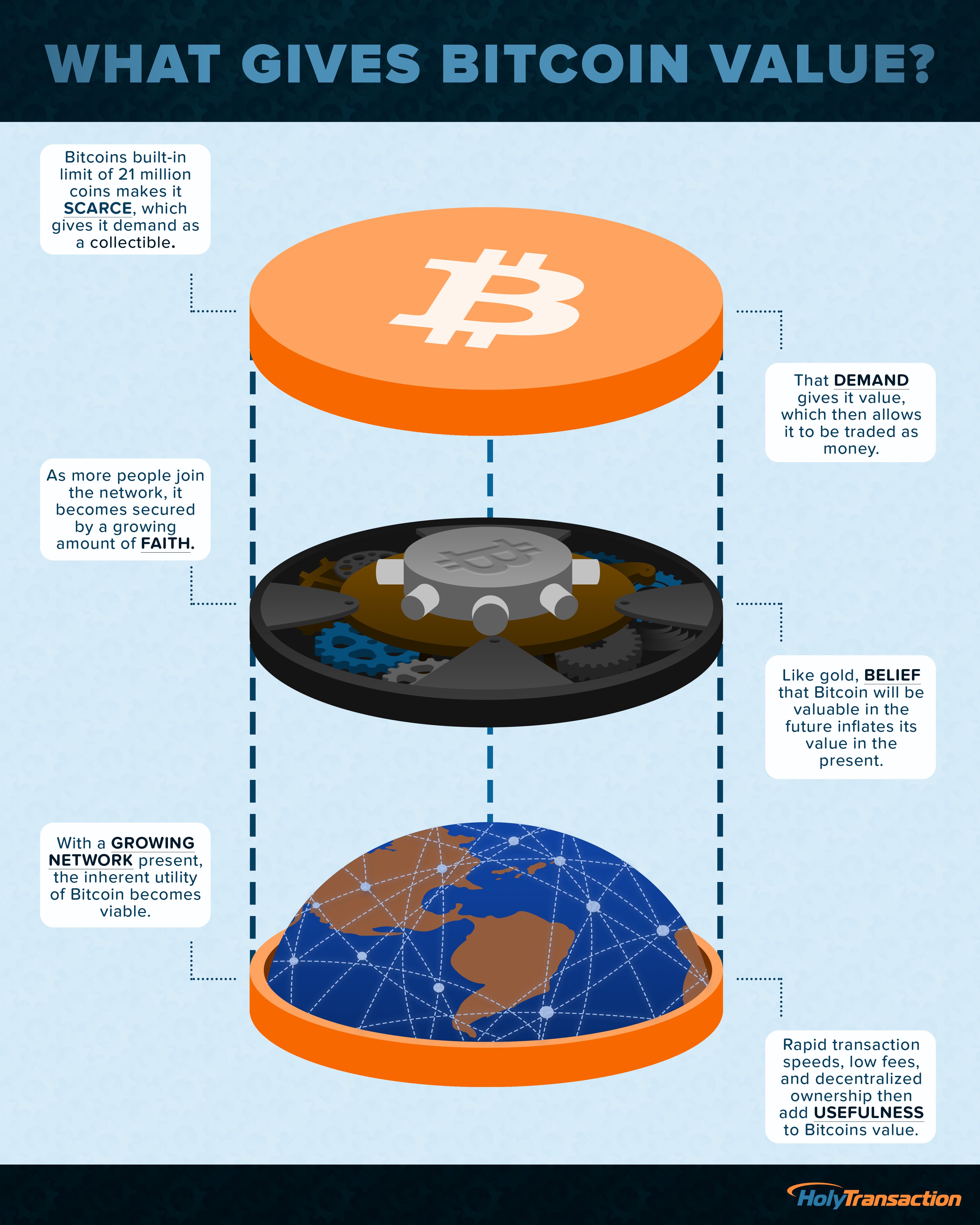
Unlike the US Dollar, the Euro, or even gold—the total supply of which increases by about 1-2% every year through mining—Bitcoin has a hard supply cap. Only 21 million Bitcoins will ever exist. This limit is hardcoded into the protocol and is enforced by a global network of thousands of independent nodes. Because there is no central authority that can “issue” more Bitcoin, the asset is immune to the type of inflationary pressure that plagues sovereign currencies. As the demand for a fixed-supply asset grows, the price must increase to accommodate that demand.
The Halving and Supply Shocks
Bitcoin’s issuance schedule is dictated by a mechanism known as “the halving.” Roughly every four years, the reward given to Bitcoin miners for securing the network is cut in half. This reduces the rate at which new Bitcoins enter the market. Historically, these halving events have served as catalysts for massive price appreciation. When the daily production of an asset is slashed by 50% while demand remains steady or increases, a supply shock occurs. Investors recognize this predictable scarcity, leading them to value Bitcoin more highly as a long-term store of value.
Institutional Legitimacy and the Wall Street Influx
For the first decade of its existence, Bitcoin was largely driven by retail investors and “early adopters.” However, the narrative shifted dramatically in the early 2020s as institutional capital began to flood the market. This transition from a “speculative retail asset” to an “institutional-grade financial instrument” has provided the liquidity and demand necessary to sustain high price levels.
The Role of Spot ETFs
The approval of Spot Bitcoin Exchange-Traded Funds (ETFs) in the United States marked a watershed moment for the asset’s price discovery. For years, massive pools of capital—such as pension funds, 401(k) providers, and traditional wealth managers—were sidelined because they could not hold Bitcoin directly due to regulatory or custody hurdles. The introduction of ETFs from giants like BlackRock and Fidelity provided a regulated, “one-click” way for trillions of dollars to enter the Bitcoin market. This surge in institutional demand, meeting a limited supply, has placed a permanent upward pressure on the price.
Corporate Treasury Adoption
Beyond investment funds, corporations have begun to view Bitcoin as a strategic reserve asset. Led by firms like MicroStrategy and Tesla, some companies have moved a portion of their cash reserves out of depreciating fiat currency and into Bitcoin. These entities are not “trading” Bitcoin for short-term gains; they are treating it as a high-velocity savings account. When corporations lock up thousands of Bitcoins on their balance sheets for the long term, they effectively remove that supply from the liquid market, making the remaining coins more expensive for everyone else.
A Hedge Against Macroeconomic Instability
The current global economic environment is characterized by record-high sovereign debt, persistent inflation, and geopolitical uncertainty. In this climate, investors look for “safe haven” assets. Historically, this role was played exclusively by gold. However, Bitcoin has emerged as a digital-native alternative that offers several advantages over precious metals, driving its valuation higher.
Debasement of Fiat Currencies
As global debt levels soar, central banks are often forced to keep interest rates low or print more money to service that debt. This makes holding cash a losing strategy for wealth preservation. Bitcoin is often described as “the exit ramp” from this system. Because it is decentralized and has no “issuer,” it cannot be seized or devalued by any single government. In countries experiencing hyperinflation, such as Argentina or Turkey, Bitcoin is not seen as “expensive”—it is seen as a necessary insurance policy against the collapse of the local currency.
The “Digital Gold” Thesis
While gold is durable and scarce, it is difficult to transport, expensive to store, and nearly impossible to verify instantly. Bitcoin improves upon gold’s properties in every digital dimension. It is perfectly divisible, can be sent anywhere in the world in minutes, and its authenticity is verified by the blockchain without the need for an expensive third-party assay. As the “digital gold” narrative gains wider acceptance among the younger, tech-savvy demographic that is currently inheriting trillions in generational wealth, the capital flows from gold into Bitcoin are expected to continue, further elevating its price.
The Cost of Production and Network Security
In traditional economics, the price of a commodity is often linked to its cost of production. Bitcoin is no different. The network is secured by a process called Proof of Work, where “miners” use specialized hardware and vast amounts of electricity to solve complex mathematical puzzles.
The Energy Floor
The price of Bitcoin is intrinsically linked to the “hash rate,” which is the total computational power securing the network. As the price of Bitcoin rises, more miners enter the market, increasing the difficulty of mining. This creates a “difficulty adjustment” that ensures new blocks are found every ten minutes regardless of how much power is used. The massive capital expenditure required to mine Bitcoin—including hardware costs and industrial-scale electricity bills—acts as a psychological and economic floor for the price. Miners are generally unwilling to sell their coins below the cost of production, which limits sell-side pressure during market downturns.
Decentralization as a Premium
One reason Bitcoins are “expensive” is that you are not just buying a digital token; you are buying access to the most secure, censorship-resistant financial network in history. The sheer scale of the Bitcoin network makes it practically impossible to attack or shut down. This level of security has a premium. Investors are willing to pay a high price for an asset that guarantees they can move their wealth across borders without permission and without the risk of their accounts being frozen. In a world where financial censorship is becoming more common, the “sovereignty” provided by Bitcoin is an incredibly valuable commodity.
The Network Effect and Future Expectations
Finally, the price of Bitcoin is driven by Metcalfe’s Law, which states that the value of a network is proportional to the square of the number of its users. Bitcoin was the first cryptocurrency, and it remains the most recognized and widely used.
The Lindy Effect
The “Lindy Effect” suggests that the longer a non-perishable thing (like a technology or an idea) has survived, the longer it is likely to survive into the future. Bitcoin has survived countless “bans,” market crashes, and technical challenges over the last 15 years. Every day that Bitcoin continues to function as designed, it gains more trust. This growing trust translates into higher valuation, as the perceived risk of the asset “going to zero” diminishes.

Pricing in the Future
Markets are forward-looking. Many investors buy Bitcoin today not because of what it is now, but because of what they believe it will become: a global reserve asset or a primary layer of the internet’s financial architecture. If Bitcoin is eventually adopted as a standard for international trade or as a core component of every diversified investment portfolio, its current price may actually appear “cheap” in retrospect. This speculative anticipation of future utility is a major driver of current market prices.
In conclusion, the high price of Bitcoin is a reflection of its unique status as the world’s first scarce, decentralized, and digital global currency. It is a financial tool designed for an era of digital globalization and monetary uncertainty. By combining the scarcity of gold with the speed of the internet, Bitcoin has created a new category of value that resonates with both individual savers and the largest financial institutions on Earth. As long as the demand for a secure, non-sovereign store of value continues to grow, the economic fundamentals suggest that Bitcoin will remain an expensive and highly sought-after asset.
aViewFromTheCave is a participant in the Amazon Services LLC Associates Program, an affiliate advertising program designed to provide a means for sites to earn advertising fees by advertising and linking to Amazon.com. Amazon, the Amazon logo, AmazonSupply, and the AmazonSupply logo are trademarks of Amazon.com, Inc. or its affiliates. As an Amazon Associate we earn affiliate commissions from qualifying purchases.