
Navigating the world of automotive finance can feel like aiming at a moving target. In recent years, the economic landscape has shifted dramatically, moving from record-low borrowing costs to a more challenging environment characterized by inflation and central bank adjustments. For many prospective buyers, the question “What is the current car loan interest rate?” is the first step in a complex journey toward vehicle ownership. Understanding these rates is not just about knowing a single number; it is about understanding how global economics, your personal financial history, and the specific vehicle you choose intersect to determine your monthly payment and the total cost of your loan.

Understanding the Landscape of Current Auto Loan Rates
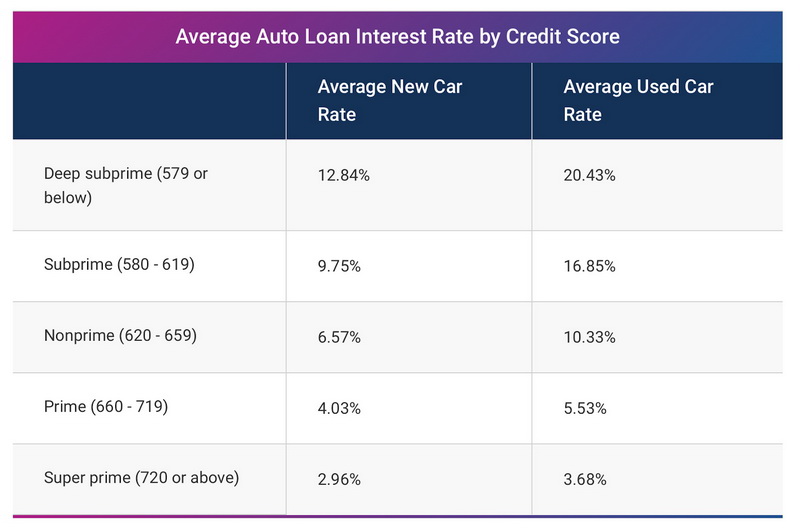
As of late 2024 and heading into 2025, interest rates for auto loans have stabilized at levels significantly higher than those seen during the previous decade. While the exact “current” rate changes daily based on market conditions, the market generally sees a wide spectrum. For borrowers with excellent credit, new car loan rates often hover between 5.5% and 8.5%. For used cars, those rates typically climb higher, often ranging from 7% to 12% or more, depending on the age of the vehicle and the borrower’s history.
New vs. Used Car Rates
One of the most consistent trends in auto finance is the disparity between new and used car rates. Lenders generally view new cars as lower-risk collateral. They are easier to value, come with manufacturer warranties, and have a higher resale value should the lender need to repossess the asset. Consequently, new car loans typically carry interest rates that are 2% to 4% lower than used car loans.
Used car loans are considered riskier because the vehicle’s condition is less certain and its value depreciates more unpredictably. Furthermore, lenders often place limits on the age of a used vehicle they are willing to finance; an older car might attract a “subprime” rate regardless of the borrower’s credit score simply because the asset itself is seen as a liability.
The Role of the Federal Reserve
To understand why your local dealership is quoting a specific rate, you must look toward the Federal Reserve. When the Fed raises the federal funds rate to combat inflation, the cost for banks to borrow money increases. To maintain their profit margins, banks pass these costs on to consumers in the form of higher Annual Percentage Rates (APRs) on products like mortgages, credit cards, and car loans. While the Fed does not set car loan rates directly, their actions create the “floor” upon which all consumer lending is built. When the Fed signals a “hawkish” or “dovish” stance, the automotive market reacts almost immediately, causing rates to fluctuate.
Key Factors That Determine Your Personal Interest Rate
While market averages provide a baseline, your personal interest rate is highly individualized. Lenders use a variety of metrics to determine how much of a risk you represent, and each factor can swing your APR by several percentage points.
The Weight of Your Credit Score
Your credit score is arguably the most influential factor in determining your car loan interest rate. Lenders typically categorize borrowers into “tiers.”
-
Superprime (781–850): These borrowers receive the lowest possible rates, often very close to the prime rate.
-
Prime (661–780): These borrowers still qualify for competitive rates and have access to most promotional offers.
-
Near-prime (601–660): Rates begin to climb significantly here, as lenders perceive a moderate risk of default.
-
Subprime and Deep Subprime (300–600): Borrowers in this category may face interest rates in the double digits, sometimes exceeding 15% or 20%.
The difference between a Superprime and a Subprime rate on a $35,000 car can amount to tens of thousands of dollars in interest over the life of the loan. This is why financial experts often recommend checking and improving your credit score months before applying for a car loan.
Loan Term Length and Its Impact
The duration of your loan—the “term”—also dictates the interest rate. Historically, 60 months (five years) was the standard. Today, 72-month and even 84-month loans have become common as buyers attempt to lower their monthly payments in the face of rising vehicle prices.
However, there is a trade-off. Longer loan terms almost always come with higher interest rates. Lenders charge more for longer terms because the risk of default increases over time, and the vehicle’s value may drop below the loan balance (being “underwater”) much sooner. Opting for a 48-month or 60-month loan instead of an 84-month loan can save a borrower thousands in interest, even if the monthly payment is higher.
The Importance of a Down Payment
In the current high-interest environment, the “Loan-to-Value” (LTV) ratio is a critical metric for lenders. This is the ratio of the loan amount compared to the value of the car. A substantial down payment—ideally 20% for new cars and 10% for used—reduces the LTV. When you have “skin in the game,” lenders view you as a lower-risk borrower and are more likely to offer a lower interest rate. A large down payment also protects the borrower from negative equity, which occurs when you owe more on the car than it is worth on the open market.
Where to Find the Best Car Loan Rates Today
Where you choose to borrow money is just as important as when you borrow it. Different financial institutions have different business models, which results in varying interest rate offerings.
Credit Unions: The Local Advantage
Credit unions are member-owned, not-for-profit organizations. Because they do not have to answer to shareholders, they frequently offer interest rates that are 1% to 2% lower than traditional banks. For many car buyers, credit unions provide the best balance of competitive rates and personalized service. Many credit unions also offer “first-time buyer” programs or special rates for fuel-efficient vehicles, which can further drive down the cost of borrowing.
Traditional Banks vs. Online Lenders
National banks offer the convenience of established infrastructure and online tools, but their rates may not always be the most competitive for auto loans unless you have an existing “premier” relationship with them.
Online-only lenders have become a powerhouse in the car loan space. Without the overhead of physical branches, they can often undercut traditional banks. Online lenders also tend to have faster approval processes, allowing you to walk into a dealership with a “pre-approval” in hand. This changes the dynamic of the sale, turning you into a “cash buyer” in the eyes of the dealer and preventing them from inflating the interest rate through their own financing department.
Dealership Financing: Convenience vs. Cost
Financing through a dealership is known as “indirect lending.” The dealer acts as an intermediary between you and a panel of lenders. While convenient, this is often where buyers pay the most. Dealers are legally allowed to add a “markup” to the interest rate offered by the lender as a commission for facilitating the deal. If a bank offers you 6%, the dealer might quote you 8% and pocket the difference.
The exception to this is manufacturer-backed financing (captive lenders like Ford Credit or Toyota Financial Services). During holiday sales events or model year-end clearances, these lenders may offer promotional rates like 0.9%, 1.9%, or even 0% APR. These “subvented” rates are the only time dealership financing is unequivocally the best option, though they are usually reserved for those with top-tier credit.
Strategic Ways to Lower Your Interest Rate Before You Apply
If you find that current market rates are higher than you expected, there are several steps you can take to position yourself for a better deal.
Improving Your Debt-to-Income Ratio
Lenders don’t just look at your credit score; they look at your Debt-to-Income (DTI) ratio. If too much of your monthly income is already committed to rent, student loans, or credit card debt, lenders will see you as a higher risk. By paying down high-interest credit card debt before applying for a car loan, you can lower your DTI and potentially qualify for a better tier of interest rates.
Finding a Co-signer
For younger buyers or those rebuilding their credit, a co-signer with a strong credit history can be a game-changer. A co-signer legally agrees to take responsibility for the loan if you default. This allows the lender to base the interest rate on the co-signer’s superior credit profile rather than your own. While this is a significant responsibility for the co-signer, it can save the primary borrower thousands of dollars over the life of the loan.
The Long-Term Financial Impact of Your Interest Rate
It is easy to focus on the monthly payment, but the interest rate is what determines the “true” price of the car. Financing is essentially “renting” money, and the interest is the rent you pay.

Calculating the Total Cost of the Loan
Consider a $40,000 car loan over 60 months.
-
At a 4% interest rate, you would pay approximately $4,160 in total interest.
-
At an 8% interest rate, you would pay approximately $8,660 in total interest.
-
At a 15% interest rate (common for subprime borrowers), you would pay over $17,000 in interest.
In the 15% scenario, you are essentially paying for a car and a half. This illustrates why shopping for the lowest interest rate is often more important than haggling over a few hundred dollars on the vehicle’s sticker price. A 1% difference in your interest rate can have a larger impact on your financial health than a $1,000 discount on the car itself.
Ultimately, the current car loan interest rate is a reflection of the broader economy, but your specific rate is a reflection of your financial habits. By understanding the factors that influence these numbers—from the Federal Reserve’s policies to your own credit utilization—you can take control of the car-buying process. Pre-approvals, substantial down payments, and shorter loan terms remain the most effective tools for minimizing the cost of debt and ensuring that your vehicle remains an asset rather than a financial burden. In an era of fluctuating rates, being an informed consumer is the most valuable asset you can bring to the showroom floor.
aViewFromTheCave is a participant in the Amazon Services LLC Associates Program, an affiliate advertising program designed to provide a means for sites to earn advertising fees by advertising and linking to Amazon.com. Amazon, the Amazon logo, AmazonSupply, and the AmazonSupply logo are trademarks of Amazon.com, Inc. or its affiliates. As an Amazon Associate we earn affiliate commissions from qualifying purchases.