
Securing a car loan is one of the most significant financial commitments most consumers will make, second only to a mortgage. While the make, model, and color of the vehicle often take center stage during the shopping process, the interest rate on the loan is the silent engine that determines the actual cost of ownership. Understanding what interest rate you should expect and how it is calculated is essential for maintaining long-term financial health.
Interest rates are not arbitrary numbers; they are a reflection of risk, market conditions, and your personal financial profile. By mastering the mechanics of auto financing, you can save thousands of dollars over the life of your loan and ensure that your vehicle remains an asset rather than a financial burden.

Understanding the Mechanics of Car Loan Interest Rates
To navigate the world of auto financing, one must first distinguish between the interest rate and the Annual Percentage Rate (APR). While the interest rate is the cost you pay each year to borrow the money, expressed as a percentage, the APR is a more comprehensive figure. The APR includes the interest rate plus any additional fees or costs associated with the loan, such as origination fees or documentation charges. When comparing offers, the APR is the most accurate metric for determining the total cost of borrowing.
Fixed vs. Variable Interest Rates
In the realm of car loans, fixed interest rates are the industry standard. A fixed rate remains constant throughout the duration of the loan, providing the borrower with predictable monthly payments and protection against market fluctuations. This stability is highly valued in personal budgeting.
Variable rates, while less common in auto financing, fluctuate based on a benchmark index, such as the prime rate. While a variable rate might start lower than a fixed rate, it carries the risk of increasing over time. For most consumers, the security of a fixed rate outweighs the potential (and often marginal) initial savings of a variable rate.
Simple Interest vs. Precomputed Interest
The mathematical structure of your loan also matters. Most modern car loans utilize “simple interest.” In this model, interest is calculated daily based on the remaining principal balance. This benefits the borrower because paying extra toward the principal or paying early reduces the total interest paid over time.
In contrast, “precomputed interest” calculates the total interest for the entire loan term at the beginning. Even if you pay the loan off early, you may still be responsible for the full amount of interest originally calculated. It is crucial to confirm that your loan uses simple interest to maintain flexibility in your repayment strategy.
Factors That Determine Your Interest Rate
Lenders use a sophisticated risk-based pricing model to determine the interest rate offered to a specific borrower. Because a car is a depreciating asset, lenders must balance the potential for profit against the risk that the borrower might default or that the collateral (the car) will lose value faster than the loan is repaid.
Credit Score and Financial History
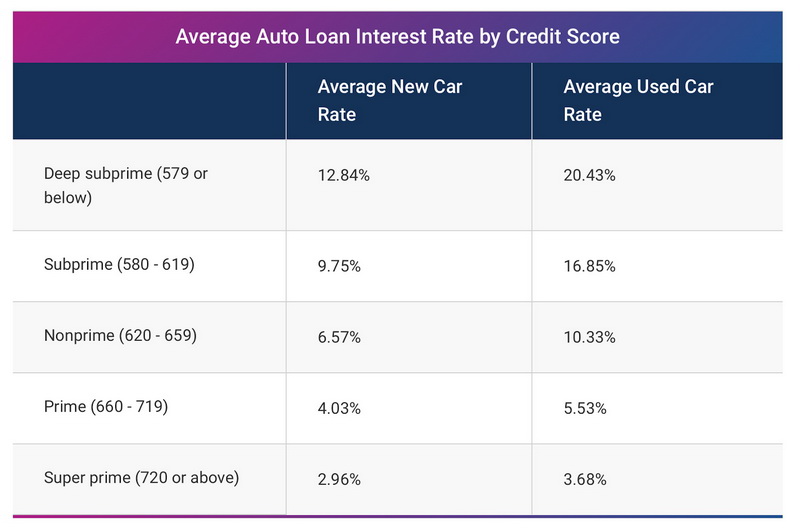
Your credit score is the single most influential factor in determining your interest rate. Lenders generally categorize borrowers into tiers:
-
Super Prime (781–850): These borrowers receive the lowest possible rates, often very close to the federal benchmark.
-
Prime (661–780): These borrowers still receive competitive rates and have a wide choice of lenders.
-
Nonprime (601–660): Rates begin to climb as lenders perceive a moderate level of risk.
-
Subprime (501–600) and Deep Subprime (300–500): Borrowers in these tiers face significantly higher interest rates, sometimes reaching into the double digits, reflecting the high risk of default.
Beyond the score, lenders examine your debt-to-income (DTI) ratio. Even with a high credit score, a borrower with excessive existing debt may be viewed as a higher risk, leading to a higher interest rate or a loan denial.
Loan Term Length
The duration of the loan significantly impacts the interest rate. Generally, shorter loan terms (e.g., 36 or 48 months) carry lower interest rates than longer terms (e.g., 72 or 84 months). Lenders charge more for longer terms because they are exposed to risk for a greater period, and the vehicle’s value is more likely to drop below the loan balance (becoming “upside down”).
While a longer term results in a lower monthly payment, the combination of a higher interest rate and a longer repayment period means you will pay substantially more in total interest.
New vs. Used Vehicles
Statistically, new cars qualify for lower interest rates than used cars. This is because new vehicles have a more predictable resale value and act as better collateral for the lender. Additionally, manufacturers often provide incentives—such as 0% APR financing—to move new inventory. Used cars are viewed as higher risk due to potential mechanical issues and more rapid depreciation, leading lenders to charge a premium on the interest rate.
Navigating the Lending Landscape
Where you get your loan can be just as important as the rate itself. There are three primary avenues for securing an auto loan, each with its own set of advantages and drawbacks.
Traditional Banks and Credit Unions
Traditional financial institutions are often the best starting point. Credit unions, in particular, are member-owned and non-profit, which frequently allows them to offer lower interest rates and lower fees than commercial banks. Establishing a relationship with a credit union before you start car shopping can provide you with a powerful benchmark for what a “good” rate looks like for your specific credit profile.
Online Lenders and Fintech
The rise of financial technology has introduced a wave of online lenders that specialize in auto financing. These platforms often have lower overhead than brick-and-mortar banks, allowing them to offer competitive rates. Online lenders are also known for their speed and ease of use, often providing pre-approval within minutes. This can be a valuable tool for comparing rates without the pressure of a dealership environment.
Dealership Financing and Captive Lenders
Dealerships provide “one-stop shopping” by offering financing through captive lenders (the financial arms of manufacturers, like Ford Credit or Toyota Financial Services) or by acting as intermediaries for other banks.
Captive lenders are where you will find promotional rates like 0.9% or 0% APR, which are typically reserved for those with excellent credit. However, dealerships may also “markup” the interest rates from third-party lenders to earn a commission. It is vital to have an outside offer in hand to ensure the dealership’s rate is truly competitive.
Strategies to Secure a Lower Interest Rate
Lowering your interest rate by even one or two percentage points can save you hundreds, if not thousands, of dollars. Implementing a strategic approach to financing can yield significant rewards.
Improving Your Credit Profile
If you are not in a rush to purchase, spending six months to a year improving your credit score is the most effective way to lower your rate. This includes paying down existing revolving debt, ensuring all payments are made on time, and disputing any inaccuracies on your credit report. Moving from the “Nonprime” to “Prime” category can slash your interest rate by half in some market conditions.
The Power of Rate Shopping and Pre-approval
Lenders are competing for your business. To get the best deal, you should “rate shop” within a short window—usually 14 to 45 days. Credit bureaus treat multiple inquiries for an auto loan during this period as a single inquiry, minimizing the impact on your credit score.
Securing a pre-approval from an outside lender before visiting the dealership is the ultimate negotiation tool. It sets a ceiling on the interest rate you are willing to accept and shifts the focus of the negotiation from the monthly payment to the total cost of the loan and the interest rate.
Down Payments and Loan-to-Value (LTV) Ratio
The more money you put down upfront, the less risk the lender assumes. A substantial down payment reduces the Loan-to-Value (LTV) ratio. If you are borrowing only 70% or 80% of the car’s value, the lender is much more likely to offer a favorable interest rate than if you are financing 100% or more of the value (including taxes and fees).
The Long-Term Impact of Interest on Financial Health
The interest rate is not just a fee; it is an opportunity cost. Every dollar spent on interest is a dollar that is not being invested, saved for retirement, or used to build an emergency fund.
The Total Cost of Ownership
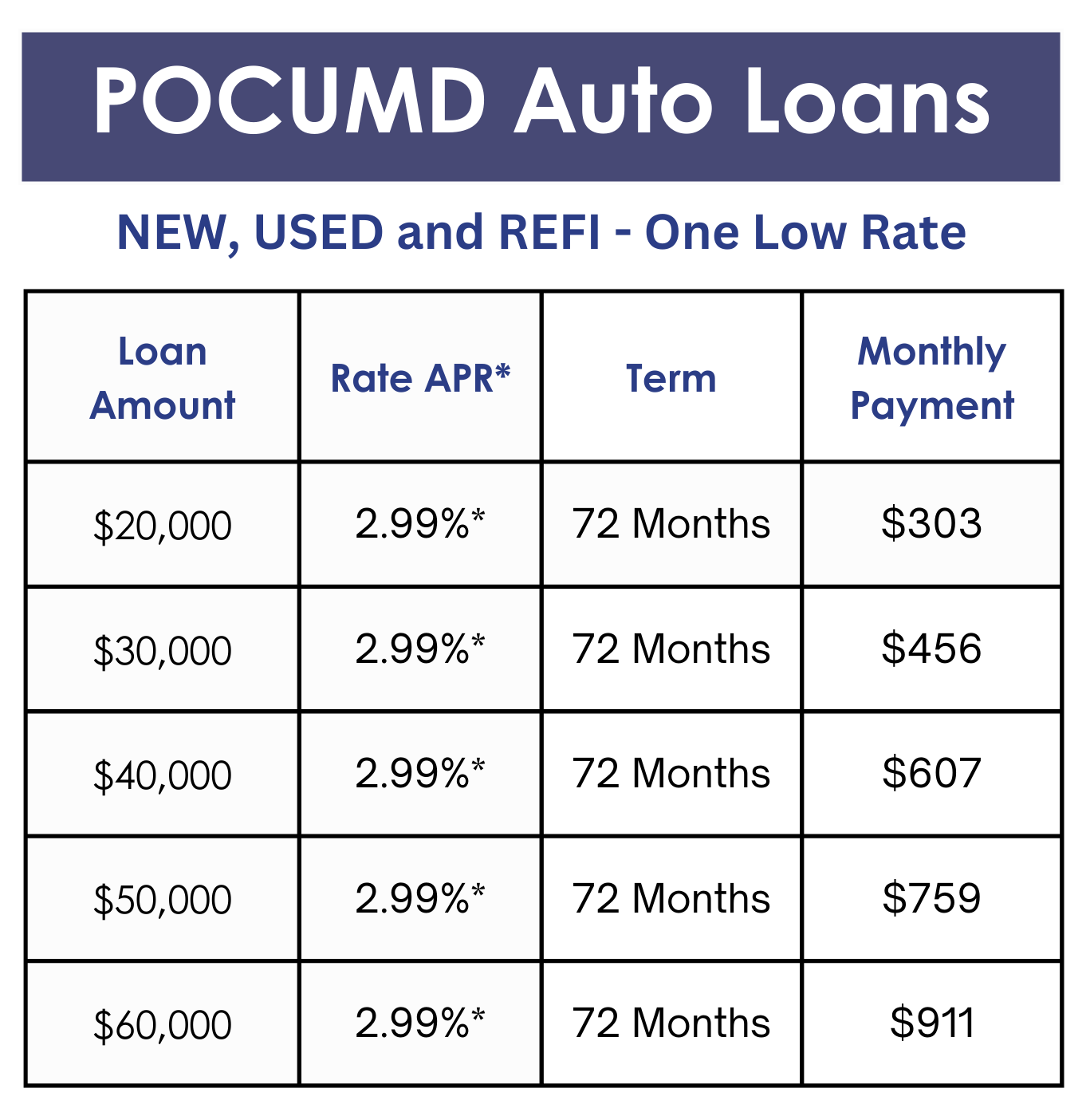
When calculating the affordability of a vehicle, many consumers focus exclusively on the monthly payment. This is a common financial trap. A $500 monthly payment at 3% interest is fundamentally different from a $500 monthly payment at 12% interest. Over a 72-month term, the higher interest rate could result in paying nearly $10,000 more for the exact same vehicle. True financial literacy involves looking at the “out-the-door” price plus the total interest paid over the life of the loan.
Avoiding “Upside Down” Loans
An “upside down” or “underwater” loan occurs when you owe more on the car than it is worth. High interest rates, combined with long loan terms and minimal down payments, are the primary drivers of this situation. If you need to sell the car or if it is totaled in an accident, you will be responsible for paying the difference to the lender out of pocket.
By securing a lower interest rate and opting for a shorter term, you build equity in the vehicle much faster. This provides financial flexibility and protects you against the rapid depreciation that characterizes the automotive market.
Ultimately, the interest rate you receive for a car loan is a reflection of your financial preparation. By understanding how rates are determined, shopping aggressively, and focusing on the total cost of borrowing, you can transform the car-buying experience from a stressful transaction into a savvy financial move. Managing your auto financing with the same rigor as an investment portfolio ensures that your capital is working for you, rather than just paying for the privilege of driving.
aViewFromTheCave is a participant in the Amazon Services LLC Associates Program, an affiliate advertising program designed to provide a means for sites to earn advertising fees by advertising and linking to Amazon.com. Amazon, the Amazon logo, AmazonSupply, and the AmazonSupply logo are trademarks of Amazon.com, Inc. or its affiliates. As an Amazon Associate we earn affiliate commissions from qualifying purchases.