
To understand the modern landscape of digital assets and personal finance, one must look back at the watershed year of 2017. For many seasoned investors and casual observers alike, 2017 remains the most significant period in the history of cryptocurrency. It was the year Bitcoin transitioned from an obscure digital experiment discussed in cryptography forums to a household name and a legitimate, albeit volatile, asset class. When asking “how much was Bitcoin in 2017,” the answer is not a single number, but a staggering trajectory of growth that redefined the concept of return on investment (ROI) for a new generation of market participants.

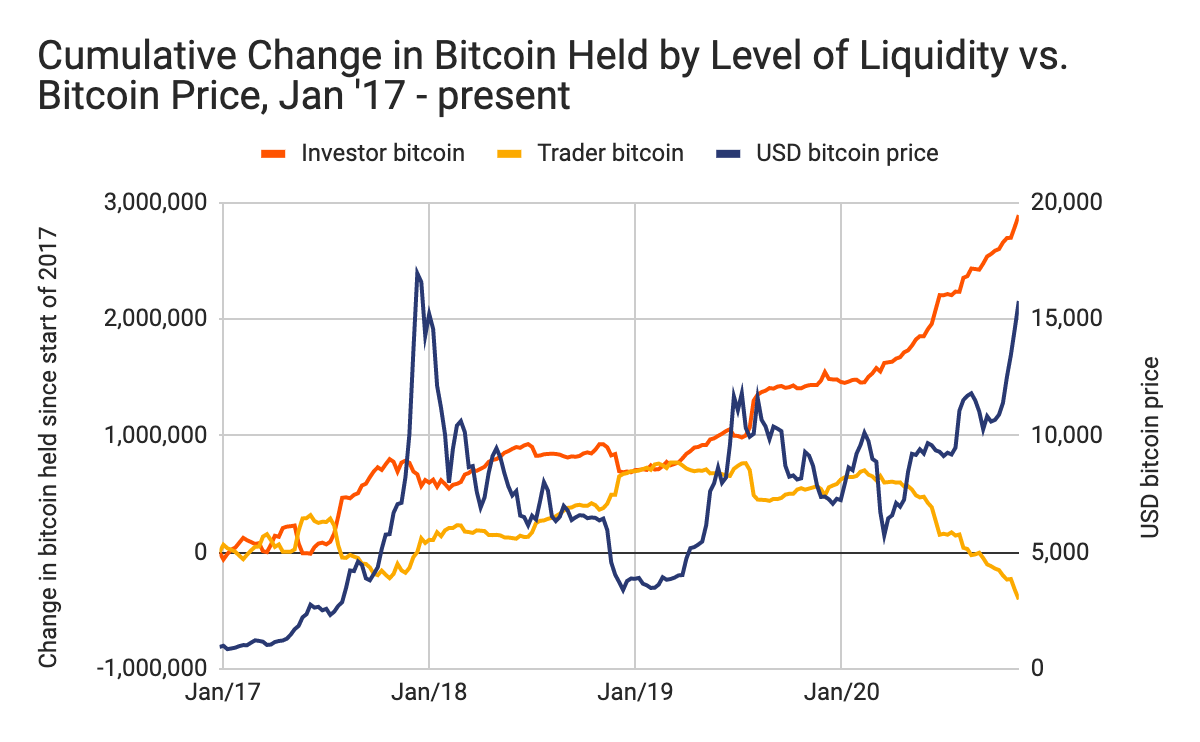
At the dawn of January 1, 2017, Bitcoin was trading at approximately $960. By the time the year drew to a close in December, it had touched nearly $20,000 on several major exchanges. This unprecedented 2,000% increase in value created a financial phenomenon that challenged traditional economic theories and fundamentally altered how individuals approach wealth building and portfolio diversification.
The 2017 Price Trajectory: From Triple Digits to the Threshold of $20,000
The price action of Bitcoin in 2017 was characterized by escalating momentum, sharp corrections, and a final parabolic surge that captured the world’s attention. To analyze the year’s performance, it is helpful to break down the timeline into distinct phases of market activity.
The Quiet Ascent: Q1 and Q2
In the first quarter of 2017, Bitcoin was still finding its footing. After breaking the $1,000 psychological barrier in early January, the market experienced a brief correction, falling back into the $800 range. However, the sentiment was shifting. By late February, Bitcoin had surpassed the price of an ounce of gold for the first time, a symbolic milestone that signaled its growing role as “digital gold.”
By May 2017, the price had reached $2,000. This period was marked by an increase in global awareness, particularly in Asian markets. Japan’s recognition of Bitcoin as a legal method of payment in April 2017 provided a massive boost to institutional and retail confidence. As the second quarter closed, Bitcoin was flirting with the $3,000 mark, already providing a 200% return for those who had entered at the start of the year.
The Summer of Forks and Resilience: Q3
The third quarter of 2017 was perhaps the most technically and politically volatile for the Bitcoin network. Debates over the protocol’s scalability led to the “Hard Fork” on August 1, which resulted in the creation of Bitcoin Cash (BCH). Many traditional financial analysts predicted that this split would dilute Bitcoin’s value or cause the network to collapse.
Instead, the opposite occurred. The market viewed the successful navigation of the fork as a sign of Bitcoin’s resilience. Within weeks of the split, Bitcoin’s price surged past $4,000. Even the news of China’s ban on Initial Coin Offerings (ICOs) and the closure of domestic cryptocurrency exchanges in September—which caused a sharp 30% “flash crash”—could not dampen the momentum for long. By the end of September, the price had recovered to nearly $4,300, setting the stage for an historic finale.
The Parabolic Explosion: Q4
The final three months of 2017 are etched into financial history as one of the greatest bull runs of all time. In October, Bitcoin breached $6,000. By November, it had crossed $10,000, a milestone many thought was years away. The velocity of the price increase became exponential; it took years to go from $0 to $1,000, but in December 2017, the price moved from $10,000 to nearly $20,000 in less than three weeks.
On December 17, 2017, Bitcoin reached an all-time high of approximately $19,783 (varying by exchange). The year concluded with the price hovering around $13,000 to $15,000, representing a complete transformation of the asset’s valuation and the net worth of those who held through the volatility.
Economic Drivers: Why the Market Value Skyrocketed
The 2017 bull run was not an accident of fate; it was driven by a perfect storm of technological maturity, macroeconomic shifts, and a massive influx of retail capital. Understanding these drivers is essential for any investor looking to identify similar patterns in modern financial markets.

The ICO Boom and the Altcoin Halo Effect
While Bitcoin was the leader, the broader “Initial Coin Offering” (ICO) craze played a significant role in driving its price. Startups were raising billions of dollars by issuing their own tokens, often requiring investors to purchase Bitcoin or Ethereum first. This created a massive secondary demand for Bitcoin as the primary “on-ramp” for the entire crypto ecosystem. The success of the broader market acted as a feedback loop, pushing Bitcoin’s valuation higher as investors rotated profits back into the “reserve currency” of the digital age.
Mainstream Media and the “Retail Mania”
2017 was the year Bitcoin entered the cultural zeitgeist. Major news outlets like CNBC, Bloomberg, and The Wall Street Journal began providing daily price updates. This media saturation triggered a powerful psychological response: FOMO, or the “Fear Of Missing Out.”
Unlike previous financial bubbles, which were often driven by institutional “smart money,” the 2017 run was uniquely fueled by retail investors. People from all walks of life—from college students to retirees—opened accounts on burgeoning exchanges like Coinbase. This democratized access to a high-growth asset class was unprecedented in the history of personal finance.
Institutional Validation through Futures Markets
One of the most significant catalysts for the late-year surge was the announcement and eventual launch of Bitcoin futures contracts by the CBOE (Chicago Board Options Exchange) and the CME (Chicago Mercantile Exchange). For the first time, Bitcoin was being recognized by the pillars of traditional American finance. This was viewed as the “ultimate validation” of Bitcoin’s longevity, leading to a speculative frenzy in the weeks leading up to the futures launch in mid-December.
Portfolio Management Lessons from the 2017 Volatility
For the modern investor, the 2017 price action serves as a masterclass in risk management and the psychology of investing. The extreme gains were accompanied by extreme risks, and the lessons learned during this period continue to shape financial strategies today.
The Importance of Profit-Taking
The 2017 run taught a painful lesson to many “HODLers” (a term for long-term holders). Those who watched their portfolios grow by 2,000% but failed to sell a portion of their holdings saw a significant amount of that wealth evaporate in the 2018 crash. In personal finance, 2017 highlighted the necessity of having a clear exit strategy and the wisdom of “taking chips off the table” during periods of parabolic growth.
Diversification vs. Concentration
Many investors who entered the market in 2017 put their entire life savings into Bitcoin at the $15,000 or $19,000 level. This lack of diversification led to significant financial distress during the subsequent multi-year bear market. The year served as a reminder that while high-risk, high-reward assets have a place in a modern portfolio, they should be balanced against more stable investments to protect one’s overall financial health.
Managing Emotional Bias in Investing
The “euphoria” of December 2017 is often cited by behavioral economists as a textbook example of market irrationality. When your neighbor, your barber, and your Uber driver are all giving you crypto investment tips, the market is likely overheated. 2017 taught investors to look for signs of “extreme greed” as a signal to exercise caution, rather than as a signal to buy more.
The Aftermath: What the 2017 Price Peak Taught Modern Investors
The legacy of 2017 extends far beyond the price charts. It established a blueprint for how digital assets interact with the global financial system and how they can be used for long-term wealth creation.
The Maturation of the Asset Class
Following the peak in 2017, the “Wild West” era of crypto began to fade, replaced by a more regulated and structured environment. The lessons of 2017 led to better security practices, more robust exchange platforms, and a more critical eye from regulators. This maturation has eventually paved the way for the institutional adoption we see today, including Bitcoin ETFs and corporate balance sheet allocations.
Bitcoin as a Hedge and Side Hustle
The 2017 price action proved that Bitcoin could serve as a powerful tool for building “online income” and “side wealth.” It showed that an individual with a small amount of capital could, through patience and timing, achieve life-changing financial results. This sparked a global interest in alternative finance and decentralization that continues to grow.
Final Thoughts on the Value of 2017
When we look back and ask “how much was Bitcoin in 2017,” we aren’t just looking at a price tag of $900 or $19,000. We are looking at the birth of a new financial era. 2017 demonstrated the power of decentralized networks and the shifting appetite of the global public for assets that exist outside the traditional banking system. For the personal finance enthusiast, the history of 2017 is a reminder that the greatest opportunities often come with the greatest volatility, and that understanding the past is the best way to navigate the future of money.
aViewFromTheCave is a participant in the Amazon Services LLC Associates Program, an affiliate advertising program designed to provide a means for sites to earn advertising fees by advertising and linking to Amazon.com. Amazon, the Amazon logo, AmazonSupply, and the AmazonSupply logo are trademarks of Amazon.com, Inc. or its affiliates. As an Amazon Associate we earn affiliate commissions from qualifying purchases.