
The global financial landscape underwent a seismic shift in 2008, a year primarily remembered for the collapse of major banking institutions and the onset of the Great Recession. However, beneath the surface of this economic turmoil, the seeds of a new monetary system were being sown. If you are asking what year Bitcoin started, the answer is dual-layered: the conceptual blueprint emerged in 2008, while the functional network launched in early 2009. Understanding this timeline is essential for any modern investor, as it reveals Bitcoin not just as a piece of software, but as a direct response to the systemic failures of traditional finance.

The Genesis: 2008-2009 and the Birth of a New Asset Class
To understand Bitcoin’s inception, one must look at the specific economic climate of the late 2000s. The traditional financial system was reeling from the subprime mortgage crisis, leading to massive government bailouts and a significant loss of public trust in centralized banking. It was against this backdrop that an anonymous entity known as Satoshi Nakamoto introduced a solution that would redefine personal finance forever.
The Whitepaper and the 2008 Financial Crisis
On October 31, 2008, Satoshi Nakamoto published a document titled Bitcoin: A Peer-to-Peer Electronic Cash System. This whitepaper did not just propose a new technology; it proposed a new economic philosophy. It detailed a system where transactions could occur directly between parties without the need for a financial intermediary like a bank. By using a decentralized ledger now known as the blockchain, Bitcoin solved the “double-spending problem” that had plagued previous attempts at digital currency. For investors, this marked the beginning of “programmable money”—an asset whose supply is governed by mathematics rather than the whims of central banks.
The Genesis Block and the First Transaction
While the idea was born in 2008, the Bitcoin network officially went live on January 3, 2009. This is when Nakamoto mined the “Genesis Block” (Block 0), the first-ever block on the Bitcoin blockchain. Embedded in the code of this block was a message: “The Times 03/Jan/2009 Chancellor on brink of second bailout for banks.” This was a clear signal that Bitcoin was intended to be a hedge against the inflationary practices and systemic risks of the fiat monetary system. On January 12, 2009, the first transaction took place between Nakamoto and developer Hal Finney, proving that a trustless, decentralized transfer of value was not only possible but functional.
Understanding Bitcoin as a Portfolio Diversifier
Since its start in 2009, Bitcoin has evolved from a cypherpunk experiment into a trillion-dollar asset class. For the modern investor, understanding the “why” behind its creation helps in categorizing its role within a diversified portfolio. Bitcoin is frequently referred to as “Digital Gold,” and for good reason.
Digital Gold vs. Traditional Fiat
Traditional fiat currencies, such as the US Dollar or the Euro, have an infinite supply. Central banks can print more money to stimulate the economy, which often leads to the erosion of purchasing power over time. Bitcoin, conversely, has a hard cap of 21 million coins. This absolute scarcity is programmed into the protocol, making it a deflationary asset by nature. In the world of personal finance, this makes Bitcoin a potential hedge against inflation. When the value of fiat currency drops, assets with fixed supplies typically see a rise in nominal value.
Risk Management in the Crypto Era
Despite its potential for high returns, Bitcoin remains a volatile asset. When integrating Bitcoin into a financial plan, it is crucial to view it through the lens of risk-adjusted returns. Because it operates on a four-year “halving” cycle—where the reward for mining new blocks is cut in half—its price action tends to follow predictable, albeit dramatic, patterns. Professional financial advisors often suggest a small percentage allocation (1% to 5%) to Bitcoin to capture its “asymmetric upside” without over-leveraging the portfolio to its inherent volatility.
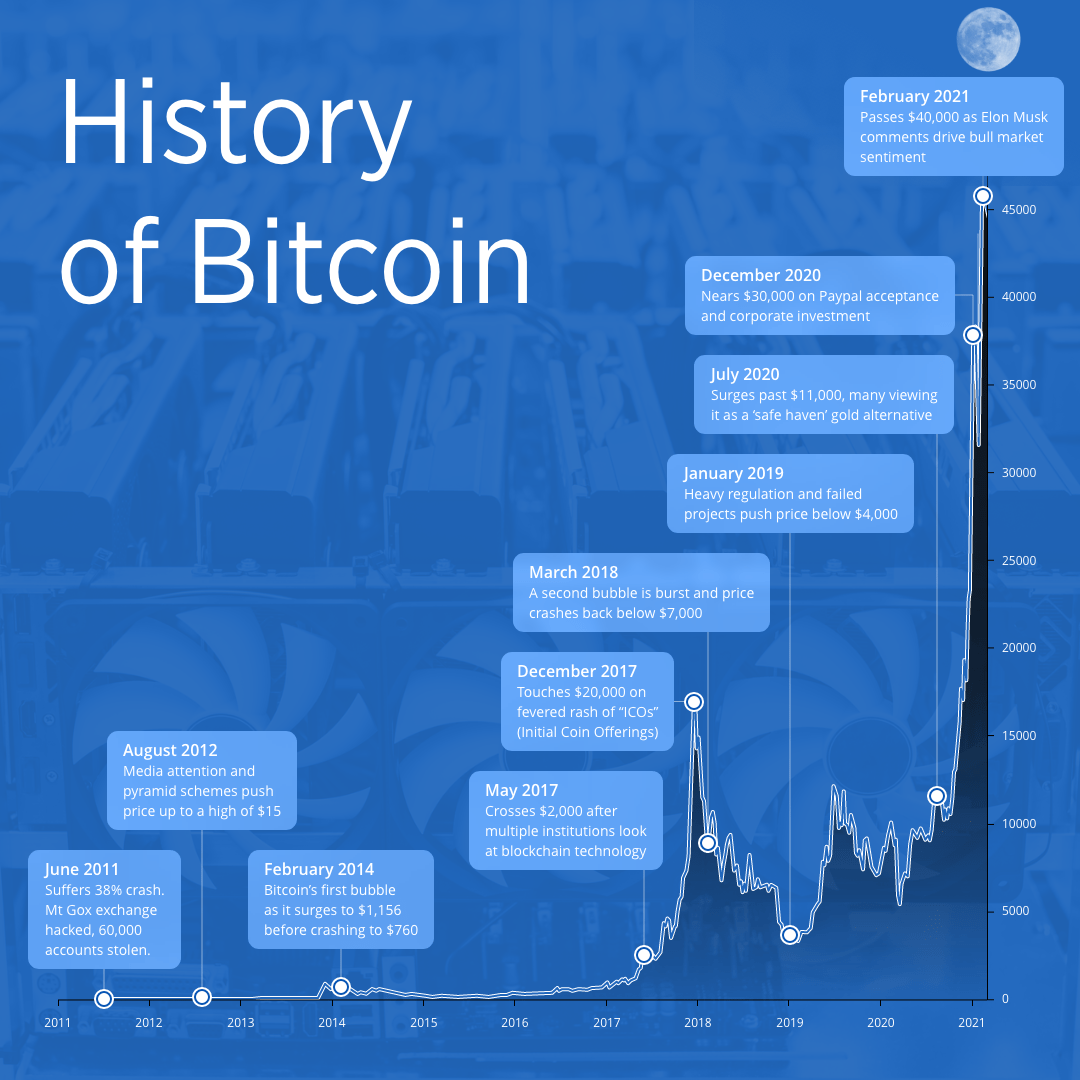
The Evolution of Bitcoin’s Market Value
When Bitcoin started in 2009, it had no market price. There were no exchanges, and the idea of “buying” Bitcoin was non-existent; you either mined it yourself or received it as a gift. The journey from $0 to its current valuation is a case study in market psychology and the adoption of new financial tools.
From Pizza Payments to Institutional Adoption
The first real-world price discovery occurred in May 2010, when a programmer famously paid 10,000 BTC for two pizzas. At the time, those Bitcoins were worth about $41. Today, those same coins represent hundreds of millions of dollars. This event highlighted Bitcoin’s transition from a medium of exchange to a store of value.
As the years progressed, the demographic of Bitcoin holders shifted. What began with retail enthusiasts and tech-savvy individuals moved into the realm of institutional finance. By 2020, major corporations like MicroStrategy and Square (now Block) began adding Bitcoin to their balance sheets. This marked a turning point in business finance: Bitcoin was no longer just a “side hustle” for hobbyists; it was becoming a legitimate treasury reserve asset.
Regulatory Milestones and Market Maturity
The maturity of Bitcoin as a financial tool was further solidified by the introduction of regulated financial products. The launch of Bitcoin futures on the CME in 2017 and the landmark approval of Spot Bitcoin ETFs (Exchange-Traded Funds) in early 2024 have bridged the gap between the crypto world and Wall Street. For the average investor, these tools mean that one can now gain exposure to Bitcoin’s price movements within traditional brokerage accounts or IRAs, removing the technical barriers of managing private keys and digital wallets.
Future Outlook: Investing in the Next Decade of Decentralization
As we look past the initial decade of Bitcoin’s existence, the focus has shifted from “if” Bitcoin will survive to “how” it will integrate into the global financial infrastructure. For those looking to build long-term wealth, Bitcoin represents the vanguard of a broader movement toward decentralized finance (DeFi).
The Halving Cycles and Scarcity
The Bitcoin protocol is designed to undergo a “halving” approximately every four years. This event reduces the rate at which new Bitcoins enter circulation. Historically, these halving events have served as catalysts for significant bull markets, as the decrease in new supply meets a steady or increasing demand. Understanding this cycle is paramount for any investor timing their entry into the market. It reinforces the idea that Bitcoin is a long-term play, rewarding those with the patience to hold through high-volatility periods.
Long-term Wealth Preservation Strategies
For individuals utilizing Bitcoin as a tool for online income or long-term savings, several strategies have emerged:
-
Dollar-Cost Averaging (DCA): This involves investing a fixed amount of money at regular intervals, regardless of the price. This mitigates the impact of volatility and removes the emotional stress of trying to “time the market.”
-
Self-Custody: In the spirit of the 2008 whitepaper, “being your own bank” is a core tenet of Bitcoin. Using hardware wallets to secure one’s assets ensures that they are not subject to the counterparty risks associated with centralized exchanges.
-
Tax-Advantaged Growth: By holding Bitcoin through specific crypto-compatible IRAs, investors can benefit from the asset’s appreciation without the immediate burden of capital gains taxes, a strategy that is becoming increasingly popular in retirement planning.

Conclusion: The Legacy of 2009
Bitcoin started in a year defined by financial collapse, and it has spent the subsequent decade proving its resilience. It has transitioned from a niche digital experiment to a cornerstone of modern financial discourse. Whether viewed as a speculative investment, a hedge against inflation, or the future of money, Bitcoin’s origin story serves as a reminder of the power of decentralized innovation. As the world moves further into the digital age, the financial lessons learned from Bitcoin’s inception continue to shape how we earn, save, and invest in an increasingly complex global economy.
aViewFromTheCave is a participant in the Amazon Services LLC Associates Program, an affiliate advertising program designed to provide a means for sites to earn advertising fees by advertising and linking to Amazon.com. Amazon, the Amazon logo, AmazonSupply, and the AmazonSupply logo are trademarks of Amazon.com, Inc. or its affiliates. As an Amazon Associate we earn affiliate commissions from qualifying purchases.