
The story of Bitcoin’s original price is not a simple ledger entry; it’s a fascinating journey from a theoretical concept to an investable asset, marking one of the most remarkable financial phenomena of the 21st century. For investors, financial historians, and enthusiasts alike, understanding Bitcoin’s initial valuation isn’t just a matter of curiosity; it offers profound insights into market dynamics, the birth of a new asset class, and the psychology of early adoption. Unlike traditional stocks or commodities with clear IPOs or established market prices from day one, Bitcoin emerged from a purely digital, decentralized environment, its price initially dictated not by institutional valuations, but by the nascent efforts of developers and crypto-anarchists willing to assign it value.
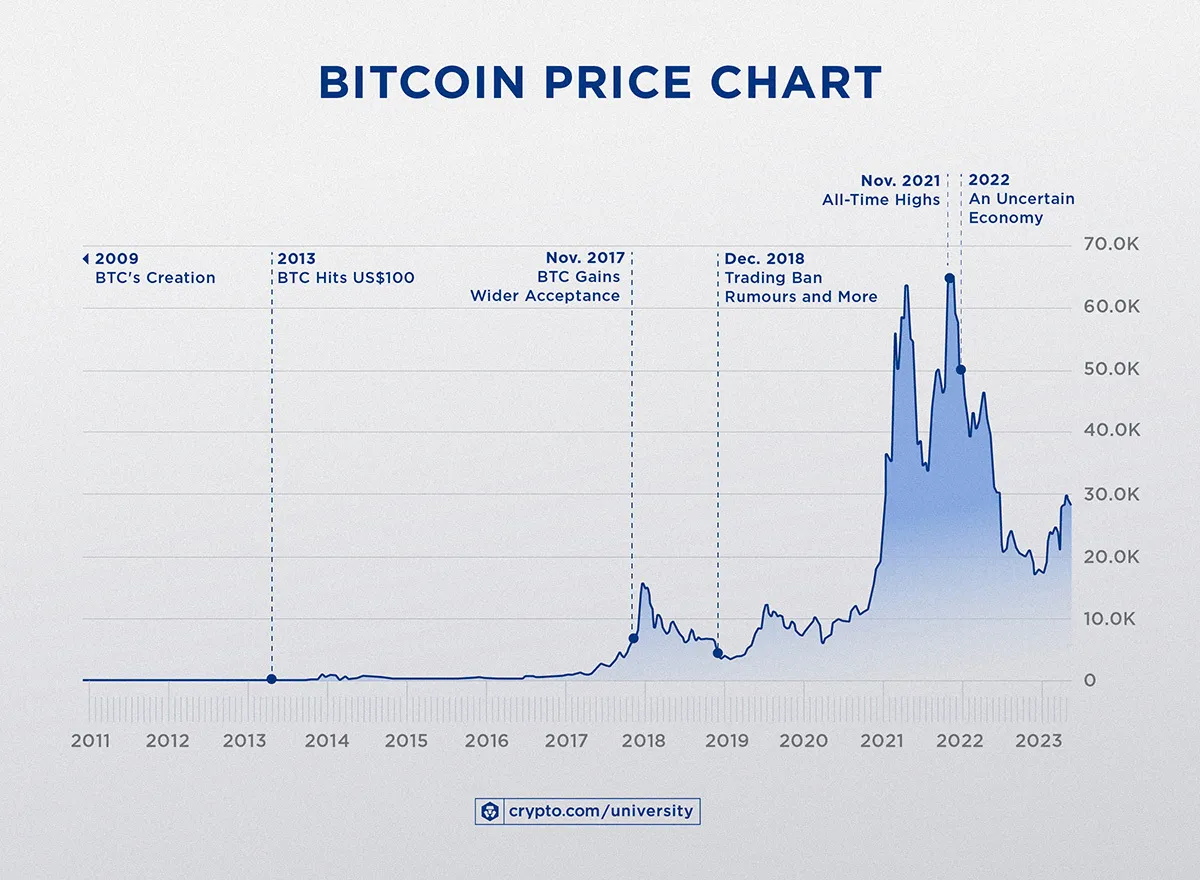
This exploration will delve into the various stages of Bitcoin’s price discovery, from its theoretical inception to its first quantifiable market transactions, shedding light on the economic principles that underpinned its initial valuation and set the stage for its meteoric rise. Understanding this genesis is crucial for grasping Bitcoin’s long-term investment narrative and its disruptive potential within the broader financial landscape.
The Genesis of Value: From Zero to First Transactions
Bitcoin didn’t begin with a price; it began with a whitepaper and code. When Satoshi Nakamoto published “Bitcoin: A Peer-to-Peer Electronic Cash System” in October 2008 and mined the genesis block in January 2009, Bitcoin had no monetary value in the traditional sense. It was merely data—a cryptographic proof-of-work, a revolutionary concept, but without a market to assign it a price.
Theoretical Value vs. Market Price
Initially, the “price” of Bitcoin could only be measured in the computational resources required to mine it. Early miners, often tech enthusiasts and cypherpunks, expended electricity and computing power to secure the network and receive block rewards (50 BTC per block initially). Their motivation was less about immediate financial gain and more about contributing to a groundbreaking decentralized experiment. In this phase, the “cost of production” was effectively the only metric, and even that wasn’t uniform, varying based on individual hardware and electricity rates. There was no exchange, no buyer, no seller, thus no market price. The true financial innovation here wasn’t the price itself, but the creation of a scarce digital asset that could eventually accrue value based on its utility and adoption.
The First Real-World Price Discovery: The Pizza Incident
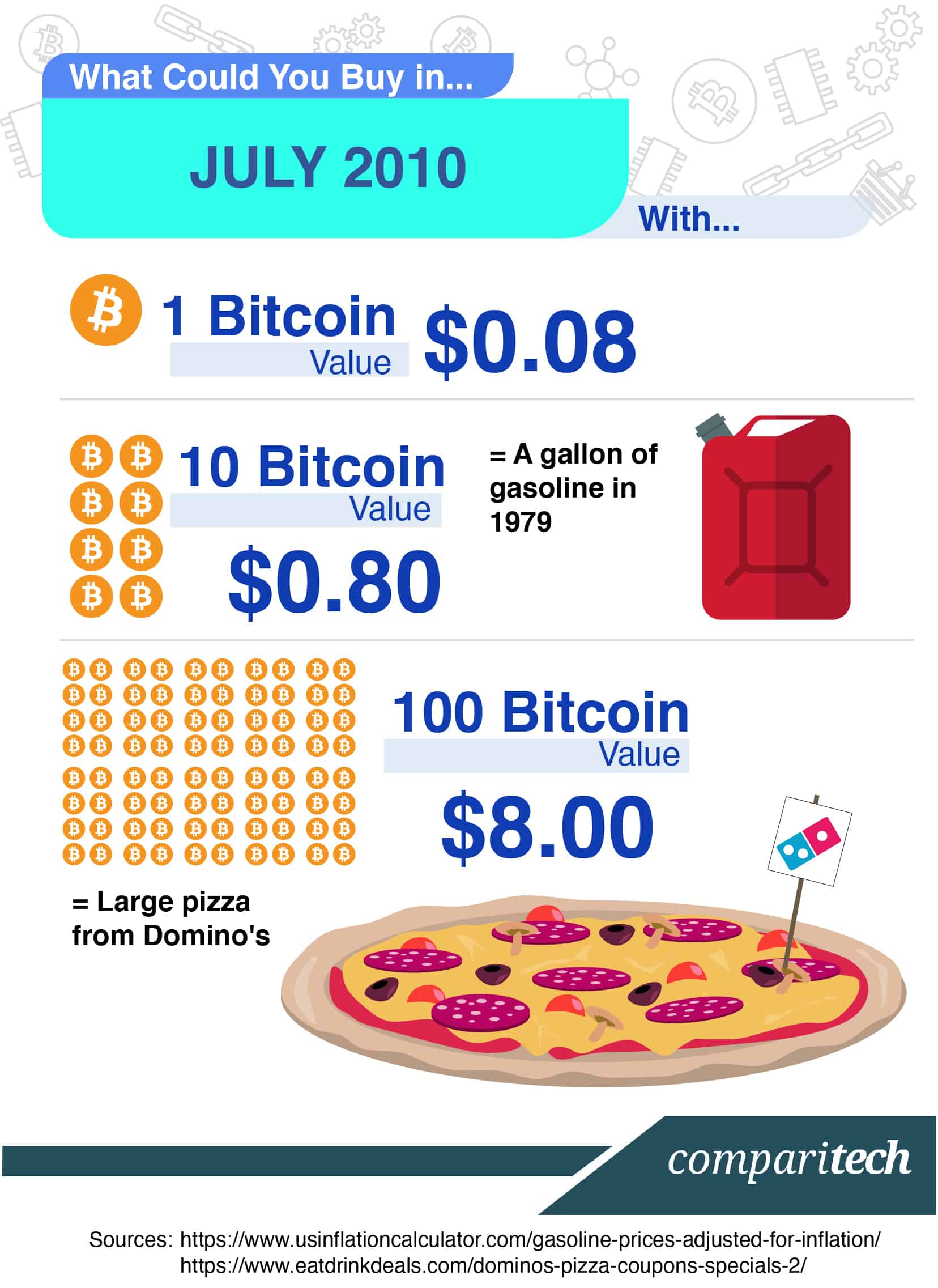
The commonly cited first real-world transaction occurred on May 22, 2010, when Laszlo Hanyecz, a programmer, paid 10,000 Bitcoins for two Papa John’s pizzas. At the time, another user agreed to buy the pizzas for $25 and have them delivered to Hanyecz. This transaction effectively set Bitcoin’s first tangible, if informal, market price: 0.0025 cents per Bitcoin (or $0.0025 for 1 BTC, based on $25/10,000 BTC). This seemingly trivial exchange was monumental. It demonstrated Bitcoin’s potential as a medium of exchange and proved that a digital currency, born from lines of code, could acquire real-world purchasing power. This event, now celebrated as “Bitcoin Pizza Day,” marked the transition of Bitcoin from a purely theoretical concept to a nascent financial asset with a measurable, albeit minuscule, value. It was a crucial step in Bitcoin’s journey towards becoming a recognized part of the global financial system.
The Dawn of Exchanges: From Pennies to Parity
Following the pizza transaction, the need for a more structured market became apparent. The informal peer-to-peer exchanges paved the way for dedicated online platforms where users could trade Bitcoin for fiat currencies. These early exchanges were primitive by today’s standards, but they were instrumental in establishing Bitcoin’s early price trajectory and introducing it to a broader, albeit still niche, audience of speculators and early investors.
BitcoinMarket.com and Mt. Gox
The first true Bitcoin exchange, BitcoinMarket.com, launched in March 2010. It allowed users to buy and sell Bitcoin using PayPal. The first recorded trade on this platform was on March 17, 2010, where 5,000 BTC were traded for $0.003 per coin. This marked the very first recorded exchange rate for Bitcoin against the US dollar on a public platform. Soon after, in July 2010, Mt. Gox, initially a trading card exchange, pivoted to become a Bitcoin exchange, quickly dominating the nascent market. Mt. Gox, despite its eventual infamous collapse, was pivotal in giving Bitcoin its first sustained market price discovery mechanisms. On July 17, 2010, Bitcoin’s price on Mt. Gox was $0.05 per BTC.
These early exchanges were crucial. They provided liquidity, facilitated price discovery, and slowly built confidence among a growing pool of users. The prices were volatile, often fluctuating wildly based on small trading volumes and limited market depth, but they consistently moved upward as awareness and adoption grew.
Bitcoin’s Journey to Dollar Parity
The period between 2010 and 2011 saw Bitcoin’s price climb from fractions of a cent to significant milestones.
-
February 2011: Bitcoin reached $1.00, achieving parity with the US dollar. This was a monumental psychological barrier broken, demonstrating Bitcoin’s potential to be a viable alternative currency. This milestone attracted a new wave of interest, pushing the price further.
-
June 2011: Bitcoin surged to an astonishing peak of $31.91 on Mt. Gox, representing an increase of over 10,000,000% from its pizza price just over a year earlier. This rapid appreciation created the first wave of “Bitcoin millionaires” and brought the cryptocurrency to the attention of mainstream media, albeit often framed with skepticism.
This early surge, however, was followed by significant corrections, underscoring the extreme volatility inherent in a new, speculative asset class with low liquidity. These booms and busts were educational for early investors, highlighting both the immense potential for gains and the inherent risks.
The Financial Implications of Early Bitcoin Pricing
The journey from a valueless concept to a multi-dollar asset laid the groundwork for many financial lessons that continue to resonate in the cryptocurrency space today. The initial pricing phases offer invaluable insights into investment psychology, opportunity cost, and the birth of a fundamentally new financial asset.
The Psychology of Early Investment: Risk vs. Reward
Investing in Bitcoin during its infancy required an extraordinary tolerance for risk and an almost prescient belief in a decentralized digital future. Most people viewed it as a niche tech experiment or even a scam. Early adopters weren’t just investing money; they were investing in an idea, an unproven technology with no regulatory framework, no institutional backing, and highly uncertain prospects. The decision to buy Bitcoin at $0.01, $0.10, or even $1.00 involved a profound leap of faith. The potential reward, as history has shown, was astronomical, but the perceived risk at the time was equally immense. This dynamic highlights a core tenet of investing: higher risk often correlates with higher potential returns, especially in frontier markets.
The “What If” Scenario and Opportunity Cost
The story of Bitcoin’s early price is often accompanied by the “what if” game: “What if I had bought 1,000 Bitcoins for $10 back then?” This thought experiment, while often tinged with regret, serves a crucial financial purpose: it illustrates the concept of opportunity cost on an unprecedented scale. Opportunity cost is the value of the next best alternative that was not taken. For those who dismissed Bitcoin or chose to invest their funds elsewhere, the opportunity cost was immense. It underscores the difficulty of identifying truly disruptive assets in their nascent stages and the challenge of overcoming conventional wisdom or skepticism. It’s a powerful reminder that truly transformative investments often look unconventional or even foolish at their beginning.
Bitcoin as a New Asset Class: Decentralized Finance Roots
Bitcoin’s original pricing stages were foundational in establishing it as a new and distinct asset class. It wasn’t a stock, a bond, or a traditional commodity. It was a digital, decentralized, peer-to-peer currency and store of value, operating outside traditional financial systems. This novel characteristic implied a different set of valuation metrics and risk profiles. Its finite supply, deflationary nature (due to halving events), and resistance to censorship offered a compelling alternative to fiat currencies susceptible to inflation and governmental control. The early price discovery mechanisms, though chaotic, were the first steps in demonstrating that a truly decentralized financial instrument could gain market acceptance and accrue significant value, laying the groundwork for the entire decentralized finance (DeFi) ecosystem that exists today.
Beyond the Price Tag: Bitcoin’s Enduring Financial Lessons
While the question of Bitcoin’s original price is rooted in its past, the financial lessons derived from that period are enduring and continue to shape investment strategies in the digital asset space.
Volatility as a Feature, Not a Flaw (in early stages)
The extreme volatility of Bitcoin in its early days, with rapid pumps and dumps, was often cited by critics as a reason for its inevitable failure. However, from a financial innovation perspective, this volatility was, in part, a feature of its growth. As a new asset with limited liquidity and a small market cap, even minor buying or selling pressure could cause dramatic price swings. This volatility was a necessary part of its price discovery mechanism, allowing the market to experiment and find a true equilibrium. For early investors, understanding and managing this volatility was paramount. It highlighted the importance of a long-term perspective and the dangers of panic selling during corrections.
The Power of Scarcity and Monetary Policy
Satoshi Nakamoto’s genius lay not just in the technology, but in the embedded monetary policy: a fixed supply of 21 million Bitcoins, with issuance decreasing over time through halving events. Even in Bitcoin’s earliest days, this programmed scarcity was a defining characteristic. Unlike fiat currencies, which can be printed ad infinitum, Bitcoin’s supply schedule makes it a fundamentally deflationary asset. This unique economic model contributed significantly to its long-term value proposition and attracted investors seeking a hedge against inflation and a store of value independent of governmental monetary policy. The original price, therefore, was not just a snapshot of supply and demand, but also a reflection of this revolutionary monetary design.
Investing Principles: Long-Term Vision vs. Short-Term Gains
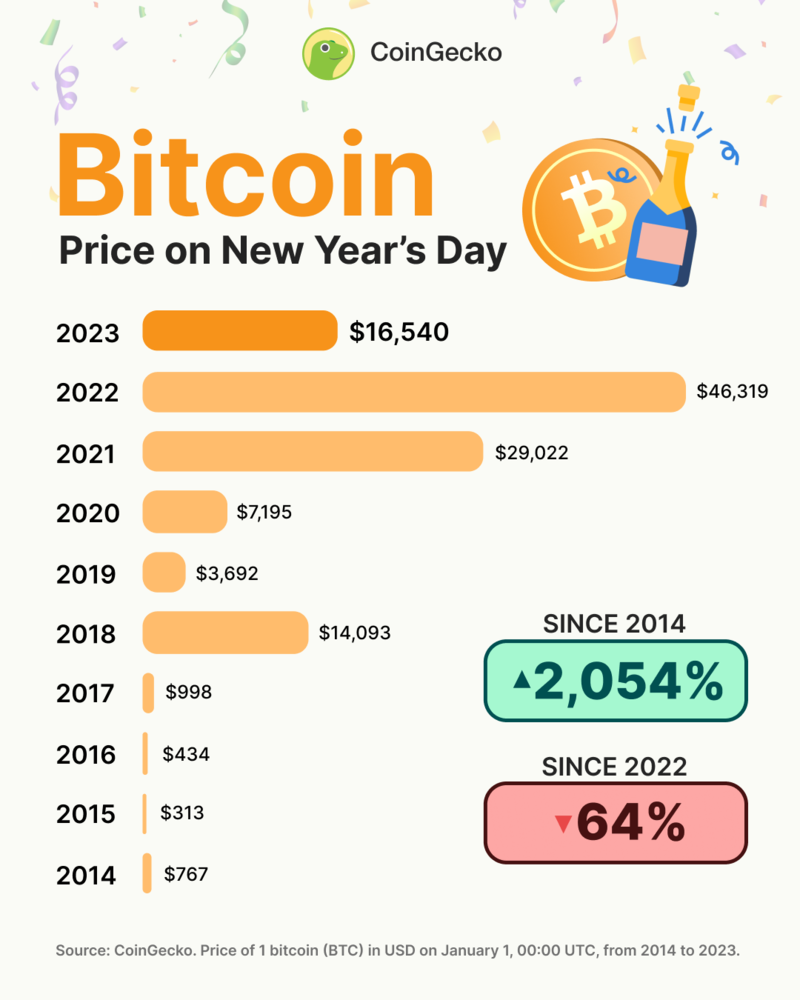
The story of Bitcoin’s original price is a powerful testament to the value of long-term vision in investing. Those who held onto their Bitcoins from pennies to dollars, and beyond, reaped extraordinary rewards. Conversely, many early participants traded their Bitcoins away for small profits or lost them in early exchange hacks. This narrative underscores the age-old investment dilemma: whether to chase short-term gains or hold for potentially massive long-term appreciation. Bitcoin’s journey from virtually zero to its current valuation serves as a compelling case study for patience, conviction, and understanding the fundamental value proposition of a disruptive asset, even when the market is immature and volatile.
In conclusion, “what was the original price of Bitcoin?” is a question that leads to a complex and richly textured financial history. It wasn’t a single definitive number but a gradual, organic process of price discovery. From its non-existent market value at conception to the fractional cents of its first transactions, and then its momentous climb to dollar parity and beyond, Bitcoin’s early pricing tells a story of innovation, risk, reward, and the birth of a financial revolution that continues to reshape the global economy. For anyone interested in investing, finance, or market dynamics, understanding this origin is not merely historical trivia; it’s a foundational lesson in the power of disruptive technology and the transformative potential of a truly decentralized asset.
aViewFromTheCave is a participant in the Amazon Services LLC Associates Program, an affiliate advertising program designed to provide a means for sites to earn advertising fees by advertising and linking to Amazon.com. Amazon, the Amazon logo, AmazonSupply, and the AmazonSupply logo are trademarks of Amazon.com, Inc. or its affiliates. As an Amazon Associate we earn affiliate commissions from qualifying purchases.