
The digital landscape has undergone a seismic shift since the first video was uploaded to YouTube in 2005. What began as a simple repository for home videos has evolved into one of the most sophisticated technological ecosystems on the planet. Today, when we ask “what is on YouTube,” we aren’t just talking about content; we are talking about a massive convergence of artificial intelligence, high-performance computing, and global networking infrastructure. To understand YouTube today is to understand the cutting edge of consumer technology.
The Algorithmic Engine: Decoding the Neural Networks of Discovery
At the heart of the YouTube experience lies its recommendation engine, a complex architecture that represents one of the most successful applications of deep learning in history. This isn’t a simple “if-this-then-that” script; it is a multi-layered neural network designed to predict human preference with startling accuracy.
The Shift from Clicks to Satisfaction Metrics
In the early days of the platform, the algorithm prioritized view counts. This led to the era of “clickbait,” where titles and thumbnails were designed to trick users into clicking. However, as the technology matured, Google’s engineers pivoted toward “watch time” and, eventually, “satisfied watch time.”
The current technological framework utilizes deep neural networks to process hundreds of millions of parameters in real-time. It doesn’t just look at what you clicked; it analyzes how long you stayed, whether you liked the video, and even your post-watch behavior. By utilizing Reinforcement Learning (RL), the system constantly experiments with different content mixes to maximize long-term user satisfaction rather than short-term clicks.
Deep Learning and Personalization at Scale
The scale at which YouTube operates requires a two-stage recommendation process: candidate generation and ranking. During the candidate generation phase, the system narrows down the billions of videos in its library to a few hundred based on the user’s history and context. This is achieved using high-dimensional vector embeddings, where videos and users are mapped into a shared mathematical space.
In the second phase, the ranking network assigns a score to each of these candidates. This model uses a variety of features, including video age, channel frequency, and historical “co-watch” patterns. This process happens in milliseconds every time a user refreshes their homepage, representing a feat of engineering that requires massive amounts of processing power provided by Google’s proprietary Tensor Processing Units (TPUs).
Generative AI and the New Creator Toolkit
The most significant technological trend currently sweeping the platform is the integration of Generative Artificial Intelligence. YouTube is no longer just a hosting provider; it is becoming an AI-augmented production house.
AI-Enhanced Video Production and Editing
YouTube’s “Dream Screen” and other AI-native features allow creators to generate high-quality backgrounds and B-roll using simple text-to-video prompts. Beyond visual generation, the platform is integrating AI into the metadata process. AI tools now suggest optimized titles, descriptions, and even video concepts based on trending topics and historical performance data.
For editors, the technology has moved into the realm of “smart” editing. AI-driven tools can now automatically identify key moments in a long-form video to generate “Shorts,” YouTube’s vertical video format. This involves computer vision algorithms that can track human faces, identify high-action sequences, and reframe horizontal footage into a vertical aspect ratio without losing the core focus of the shot.
Automatic Translation and Global Accessibility
One of the most impressive technical feats on the platform is “Aloud,” an AI-powered dubbing tool. Language has historically been a barrier to global reach, but YouTube is deploying large language models (LLMs) and synthetic voice technology to bridge this gap. This technology transcribes a video, translates it, and then generates a dubbed audio track that mimics the original speaker’s tone and rhythm. This multi-modal approach to content ensures that “what on YouTube” is accessible to anyone, regardless of their native tongue, effectively turning the platform into a global, borderless library of knowledge.
Infrastructure and the Future of Video Delivery
The sheer volume of data processed by YouTube is staggering. With over 500 hours of content uploaded every minute, the backend infrastructure must be incredibly efficient to maintain high-speed delivery and 4K—or even 8K—playback.
AV1 Codec and High-Efficiency Streaming
To handle this data deluge, YouTube has been a primary driver of the AV1 (AOMedia Video 1) codec. Video codecs are the software tools used to compress and decompress video files. Traditional codecs like H.264 are no longer sufficient for the high-bitrate demands of modern displays.
The AV1 codec provides significantly better compression—roughly 30% more efficient than its predecessor, VP9—without sacrificing visual quality. This means users with slower internet connections can stream higher-definition content with less buffering. On the server side, this efficiency reduces the massive energy footprint required to store and transmit petabytes of data daily.
The Push Toward Immersive and High-Resolution Content
YouTube remains at the forefront of display technology, supporting HDR (High Dynamic Range), 360-degree video, and 8K resolution. While 8K displays are not yet mainstream, the platform’s infrastructure is already built to support them.
The technology behind 360-degree and VR (Virtual Reality) content is particularly complex. It requires “equirectangular projection” and spatial audio mapping to create a sense of presence. When a user moves their head while wearing a VR headset, the platform must deliver the corresponding audio and video slices with near-zero latency. To achieve this, YouTube uses “viewport-adaptive streaming,” which only streams the high-resolution portion of the video that the user is actually looking at, saving immense amounts of bandwidth.
Digital Security and Content Authenticity in the Age of Synthesis
As video generation technology becomes more accessible, the challenges of digital security and content integrity have moved to the forefront of YouTube’s technological roadmap.
Combatting Deepfakes with Metadata Standards
The rise of “deepfakes” and AI-generated misinformation has necessitated new forms of digital watermarking and metadata tracking. YouTube has integrated systems that require creators to disclose when content has been meaningfully altered or synthetically generated.
Technically, this involves the adoption of C2PA (Coalition for Content Provenance and Authenticity) standards. These standards attach a digital “nutrition label” to files, documenting their origin and any AI-based modifications. YouTube’s backend systems scan for these signals to ensure transparency for the viewer, using automated classifiers to flag undisclosed AI content.
Enhanced Rights Management and Content ID
The Content ID system remains one of the most sophisticated pieces of digital rights management (DRM) software ever created. It works by creating a “fingerprint” for every piece of copyrighted material—audio and video—submitted by rightsholders.
When a new video is uploaded, it is compared against a database of millions of these fingerprints. This is a massive “needle in a haystack” problem solved through high-speed hashing algorithms. Recent updates to Content ID have focused on “granular matching,” which can identify even highly distorted or shortened clips of copyrighted material, ensuring that the intellectual property ecosystem remains secure in an era where remixing and sampling are the norms.
The Evolution of Engagement: WebRTC and Interactive Tech
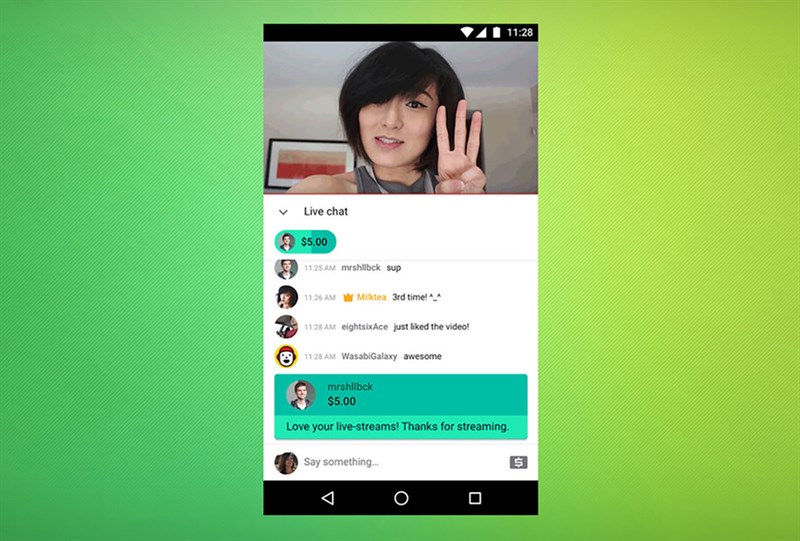
Finally, the technology of engagement has evolved from static comments to real-time interaction. YouTube’s live-streaming infrastructure utilizes WebRTC (Web Real-Time Communication) and low-latency protocols to allow for sub-second delays between a creator’s action and the audience’s reaction.

Low-Latency Streaming and Edge Computing
To achieve “Ultra-Low Latency,” YouTube leverages a global network of “Edge” servers. Instead of data traveling from a central data center in California to a user in London, the content is cached and delivered from a local server near the user. This distributed computing model is essential for features like “Live Polls,” “Super Chat,” and “Channel Memberships,” where timing is critical to the user experience.
The integration of these technologies—AI, advanced codecs, global edge networks, and neural discovery engines—is what makes YouTube more than just a video site. It is a living laboratory for the future of the internet. As we look forward, the convergence of these tools will continue to redefine how we consume information, interact with creators, and perceive the boundary between the physical and digital worlds. What is on YouTube today is a preview of the technological standard for the entire digital world of tomorrow.
aViewFromTheCave is a participant in the Amazon Services LLC Associates Program, an affiliate advertising program designed to provide a means for sites to earn advertising fees by advertising and linking to Amazon.com. Amazon, the Amazon logo, AmazonSupply, and the AmazonSupply logo are trademarks of Amazon.com, Inc. or its affiliates. As an Amazon Associate we earn affiliate commissions from qualifying purchases.