
In the rapidly evolving landscape of digital assets, few cryptocurrencies have sparked as much debate, legal scrutiny, and institutional interest as XRP. Unlike Bitcoin, which was conceived as a decentralized alternative to traditional currencies, or Ethereum, which serves as a global computer for decentralized applications, XRP was designed with a specific, pragmatic purpose: to revolutionize the way value moves across borders. For investors and financial strategists, the question of “Why XRP” is not merely about speculative price action; it is about the fundamental restructuring of the global financial system.
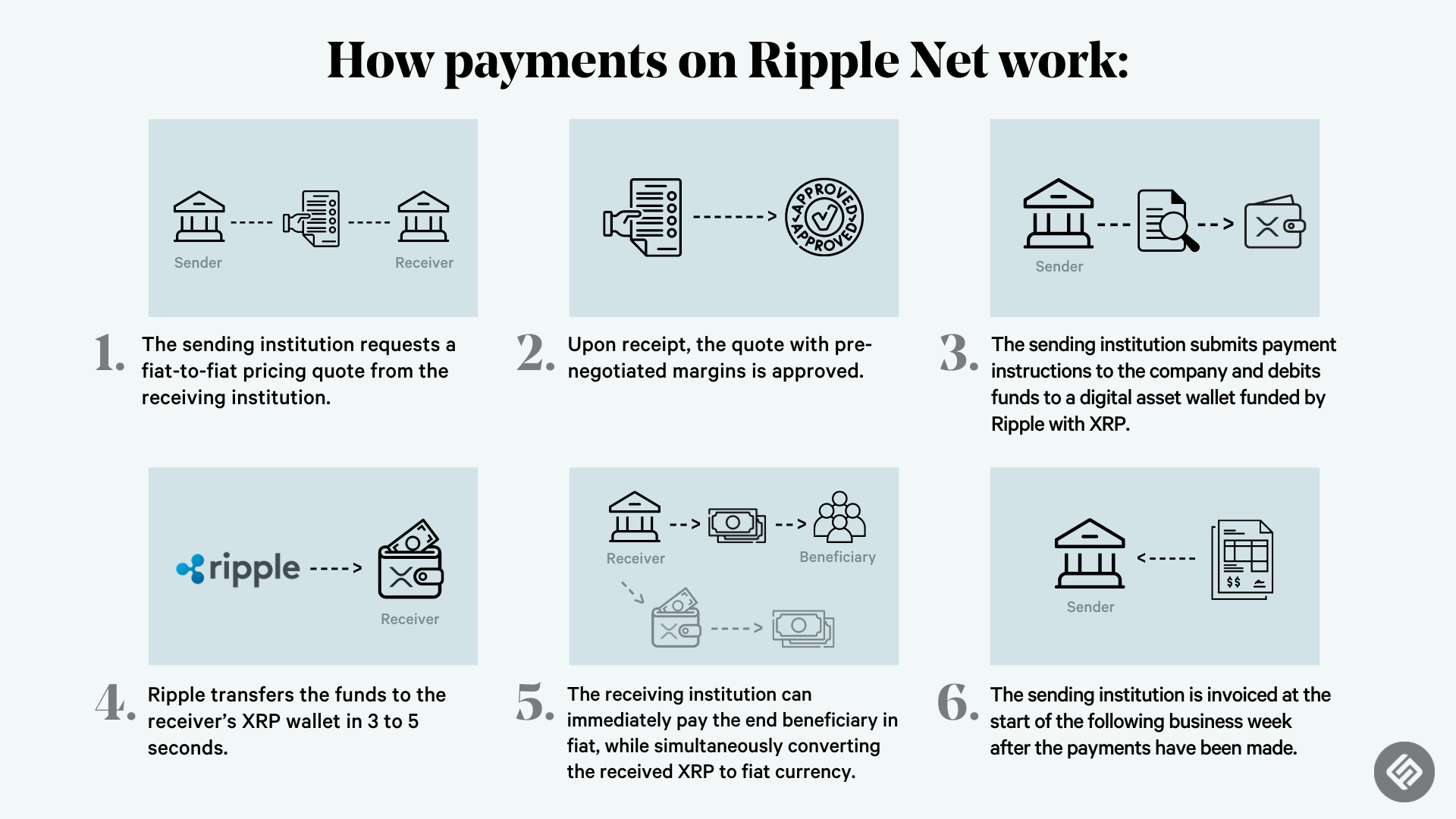
To understand the value proposition of XRP, one must look past the volatility of the crypto market and examine the inefficiencies of the current banking infrastructure. For decades, the movement of money internationally has relied on the SWIFT network—a system built on technology from the 1970s. This legacy framework is slow, expensive, and fraught with errors. XRP, and the ledger it resides on, offers a modern solution to these systemic bottlenecks.
Understanding the Utility-First Investment Thesis
The primary investment thesis for XRP is rooted in its utility as a bridge asset. In the world of traditional finance, if a bank in Mexico wants to send payments to a bank in Japan, it must maintain pre-funded accounts in both Mexican Pesos and Japanese Yen. These are known as Nostro and Vostro accounts. Globally, trillions of dollars are trapped in these accounts, sitting idle just to facilitate cross-border liquidity. This is an incredible waste of capital that could otherwise be used for lending, investment, or growth.
The Bridge Asset Model
XRP functions as a neutral intermediary. Through a process known as On-Demand Liquidity (ODL), financial institutions can convert their local currency into XRP, send it across the XRP Ledger (XRPL) in seconds, and have it converted into the destination currency on the other side. This eliminates the need for pre-funded accounts. By using XRP as a bridge, institutions can free up vast amounts of capital, significantly reducing the cost of doing business. For the investor, the logic is simple: as the volume of global payments moving through XRP increases, the demand for the asset as a liquidity tool should theoretically rise.
Solving the Pre-Funding Dilemma
The “Pre-funding Dilemma” is a major pain point for small to medium-sized banks and payment providers. Large “money center” banks dominate the current landscape because they have the capital to maintain global liquidity. XRP democratizes this process. By utilizing the XRPL, a smaller bank in an emerging market can compete on a level playing field, offering near-instant international settlements without needing a massive balance sheet. This utility-driven demand is what separates XRP from assets that rely solely on “store of value” narratives.
Regulatory Clarity and the Institutional Landscape
For any financial asset to achieve mass adoption within the regulated banking sector, legal certainty is non-negotiable. For years, the cloud of the U.S. Securities and Exchange Commission (SEC) lawsuit hung over Ripple, the company most closely associated with XRP’s development. However, the legal resolutions surrounding this case have provided XRP with a level of regulatory clarity that is virtually unique in the United States.
The Significance of Legal Precedents
The landmark ruling that XRP itself is not a security provides a foundation for institutional confidence. Financial institutions are risk-averse by nature; they cannot build products on top of an asset that might be deemed illegal or unregistered. With the legal status of XRP clarified, the path is cleared for major corporations and banks to integrate the XRP Ledger into their back-end systems. This “regulatory moat” makes XRP a more attractive option for institutional portfolios compared to other altcoins that still face potential classification as securities.
Strategic Partnerships and Institutional Integration
Beyond the courtroom, the strength of XRP lies in the ecosystem built by Ripple. By partnering with hundreds of financial institutions worldwide—including Standard Chartered, Santander, and various national banks—Ripple has created a network effect. While XRP the asset is decentralized, the corporate strategy behind its adoption is highly organized. These partnerships serve as a “proof of concept” for the asset’s utility in the real world. Investors often look to these enterprise-level integrations as a signal of long-term viability, moving XRP from the realm of “experimental tech” to “financial infrastructure.”
Technical Efficiency and Scalability
The financial markets of the future require speed, low costs, and environmental sustainability. The XRP Ledger was designed from the ground up to meet these requirements, diverging significantly from the Proof-of-Work (PoW) consensus mechanism used by Bitcoin.
Speed, Cost, and Sustainability
A transaction on the XRP Ledger settles in approximately 3 to 5 seconds. In contrast, Bitcoin transactions can take anywhere from ten minutes to an hour, and traditional wire transfers can take days. Furthermore, the cost of an XRP transaction is a fraction of a cent, making it viable for micro-payments—a sector of the economy that is currently hindered by high transaction fees.
From an ESG (Environmental, Social, and Governance) perspective, XRP is significantly more efficient than its predecessors. Because it does not require energy-intensive mining, its carbon footprint is negligible. As global finance moves toward “green” mandates, the low energy consumption of the XRPL becomes a competitive advantage for institutions looking to meet sustainability goals.
The XRP Ledger (XRPL) Ecosystem
While cross-border payments are the “killer app” for XRP, the ledger itself is a versatile platform. It supports issued currencies, decentralized exchanges (DEX), and is currently expanding to support smart contracts and Sidechains. This evolution means that XRP is not just a payment token; it is the native asset of a burgeoning financial ecosystem. The ability to tokenize real-world assets (RWA)—such as real estate, stocks, or commodities—on the XRPL opens up new frontiers for wealth management and personal finance. By bringing these assets onto a fast, low-cost ledger, XRP facilitates a more liquid and accessible global market.
Market Positioning and the Future of Money
The ultimate vision for XRP is the “Internet of Value.” Just as the internet allowed for the instantaneous exchange of information, the goal is to allow for the instantaneous exchange of value. In this future, moving $10,000 across the globe should be as easy and cheap as sending an email.
Integration into CBDCs
One of the most significant growth levers for XRP is the rise of Central Bank Digital Currencies (CBDCs). Many nations are currently exploring or piloting digital versions of their national currencies. However, these CBDCs risk becoming “walled gardens”—isolated systems that cannot easily talk to one another. Ripple has positioned XRP as the potential “interoperability layer” for these national tokens. By acting as a neutral bridge between different CBDCs, XRP could become the backbone of a new, unified global monetary system. For an investor, the potential for XRP to serve as the reserve asset for digital currency exchange represents an unprecedented opportunity.
Risks and Competitive Challenges
No investment analysis is complete without a consideration of the risks. XRP faces stiff competition from other blockchain projects like Stellar (XLM) and even from modernized versions of traditional systems, such as the Federal Reserve’s FedNow or updated SWIFT protocols. Furthermore, while regulatory clarity has improved in the US, the global regulatory landscape remains a patchwork of differing rules.
The success of XRP is also closely tied to the continued adoption of the XRP Ledger. While the technology is sound, the financial world is notoriously slow to change. The “Why XRP” argument depends on a shift in how banks perceive risk and liquidity. However, the momentum is currently in favor of modernization.
Conclusion: The Strategic Role of XRP in a Modern Portfolio
In the context of money and investing, XRP represents a shift from speculative assets to utility-based assets. Its value is not derived from a meme or a fleeting social media trend, but from its ability to solve a multi-trillion dollar problem in the global economy.
By addressing the inefficiencies of cross-border settlements, providing a sustainable alternative to mining-heavy protocols, and securing a unique regulatory position, XRP has carved out a niche that few other digital assets can claim. For those looking at the future of finance, XRP is more than just a digital coin; it is a fundamental building block of a more efficient, inclusive, and transparent global financial architecture. As the world moves toward the digitization of all assets, the infrastructure that facilitates the movement of those assets will become the most valuable real estate in the financial world. XRP is positioned at the very center of that transition.
aViewFromTheCave is a participant in the Amazon Services LLC Associates Program, an affiliate advertising program designed to provide a means for sites to earn advertising fees by advertising and linking to Amazon.com. Amazon, the Amazon logo, AmazonSupply, and the AmazonSupply logo are trademarks of Amazon.com, Inc. or its affiliates. As an Amazon Associate we earn affiliate commissions from qualifying purchases.