
In the rapidly evolving landscape of enterprise technology, the transition from fragmented legacy systems to unified cloud environments has become a strategic imperative for global organizations. At the forefront of this shift is Workday, a platform often referred to by users and IT professionals alike as a “program,” though it is more accurately described as a comprehensive, cloud-native suite of enterprise applications. Since its inception, Workday has redefined how businesses manage their most critical assets: their people and their money. By moving away from traditional on-premise software and embracing a pure Software-as-a-Service (SaaS) model, Workday provides a level of agility and data integrity that was previously unattainable in the corporate world.
To understand what Workday is, one must look beyond the user interface. It is a sophisticated ecosystem built on a single codeline with a unified data model. This architecture ensures that every module—from human resources to financial accounting—communicates in real-time, providing a “single source of truth” for decision-makers. In an era where data silos are the enemy of efficiency, Workday’s integrated approach offers a technical solution to complex organizational challenges.
The Architecture of a Cloud-First Ecosystem
The primary differentiator between Workday and traditional Enterprise Resource Planning (ERP) systems is its underlying architecture. Most legacy systems were built decades ago for on-premise servers, often resulting in a “Frankenstein” of various software acquisitions patched together. Workday, conversely, was built in the cloud for the cloud.
Multi-Tenant SaaS Explained
Workday operates on a multi-tenant model. In technical terms, this means that all customers—from medium-sized businesses to Fortune 500 giants—run on the same version of the software. When Workday releases an update or a new feature, it is deployed to the entire customer base simultaneously. This eliminates the “version lock” that plagued older tech environments, where companies would stay on outdated software for years to avoid the astronomical costs and technical risks of a manual upgrade. In the Workday ecosystem, innovation is continuous, and maintenance is handled by the provider, allowing internal IT teams to focus on strategy rather than server patches.
The Power of the Unified Data Core
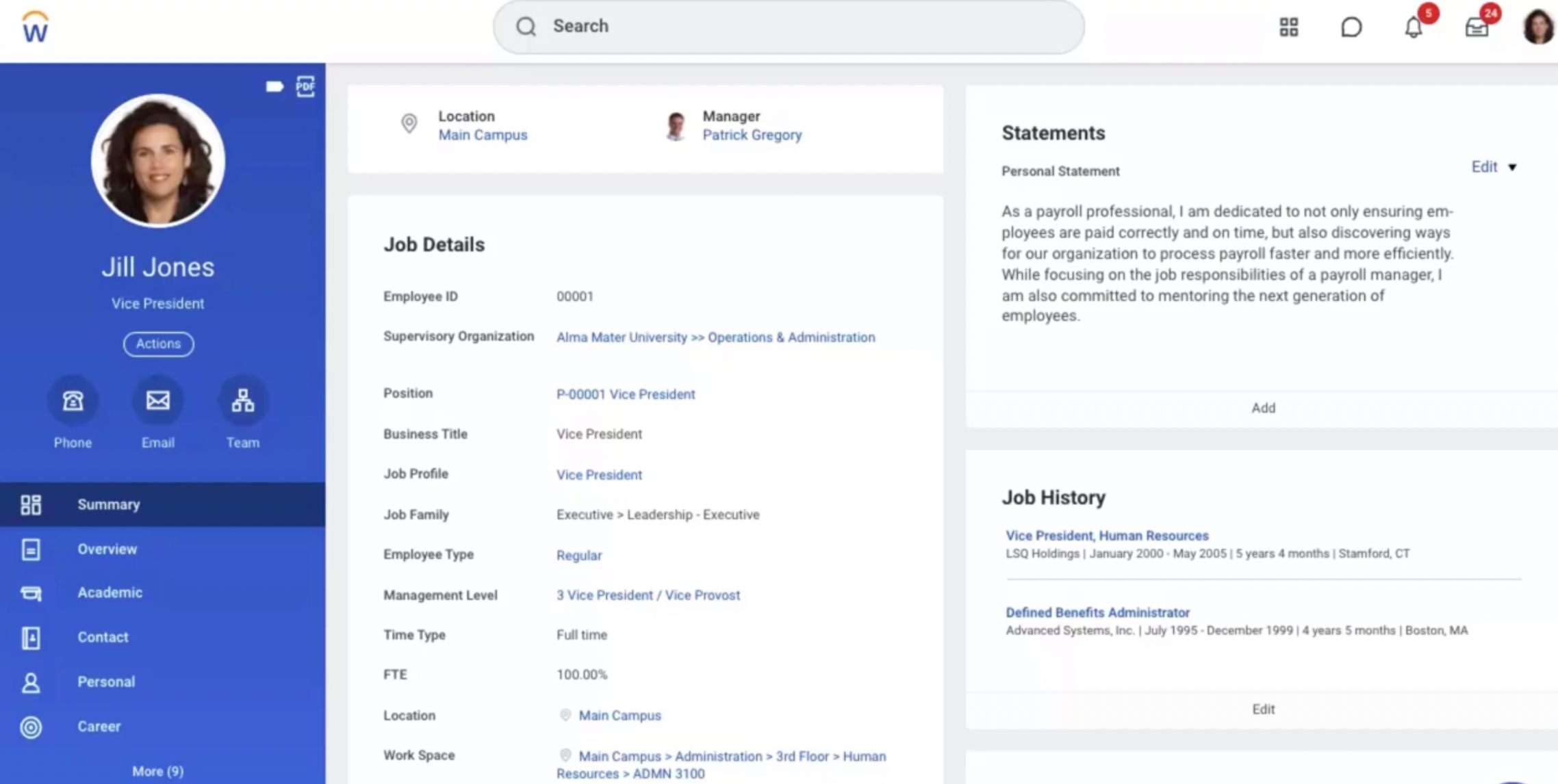
Unlike relational databases that rely on complex tables and joins, Workday utilizes an object-oriented data model. This allows the system to store data and its relationships more naturally. For example, an “Employee” is not just a row in a table; it is an object with attributes like position, salary, skills, and reporting lines. Because this data is unified, a change in a worker’s status (such as a promotion) automatically reflects across the entire platform—updating payroll, organizational charts, and financial budget forecasts instantly. This real-time processing capability is a cornerstone of Workday’s technical value proposition.
Key Modules and Functionalities
Workday is not a singular tool but a suite of applications designed to handle different facets of business operations. While it began with a focus on Human Capital Management (HCM), it has expanded into a full-scale platform for finance and planning.
Human Capital Management (HCM)
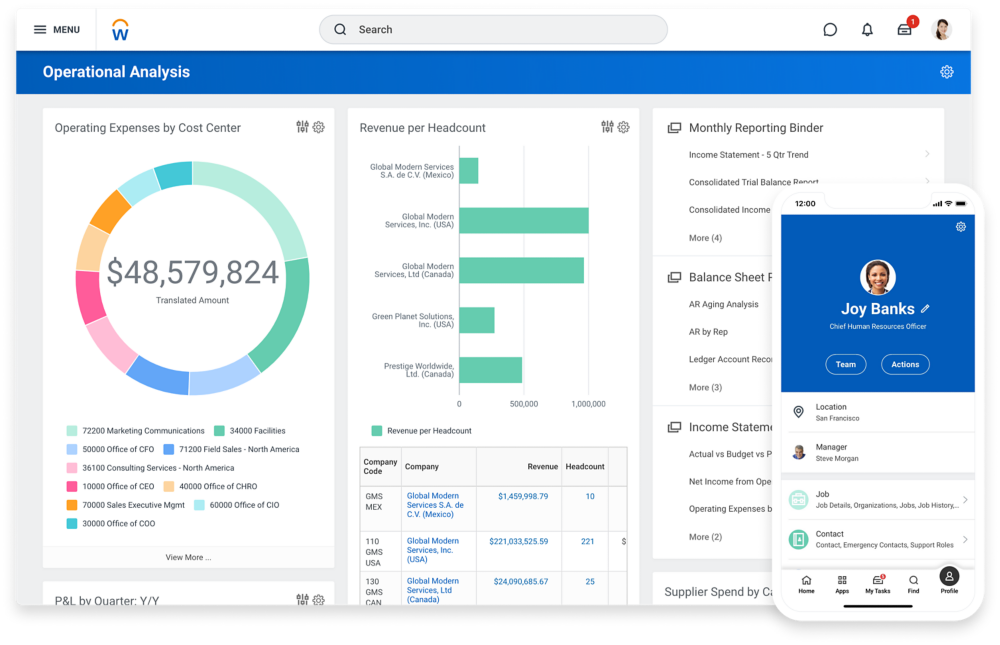
The HCM module is the heart of the Workday program for many users. It encompasses the entire lifecycle of an employee, from recruitment and onboarding to performance management and retirement. The technology allows for sophisticated talent acquisition workflows, automated benefits administration, and global payroll processing. By leveraging mobile-first design, Workday ensures that employees can request time off or view paystubs from their smartphones, reflecting the modern expectation for “anywhere, anytime” access to work tools.
Financial Management
In the realm of finance, Workday replaces antiquated accounting software with a modern, analytical engine. It handles general ledger, accounts payable/receivable, and asset management. The technical advantage here is the ability to capture “dimensions” of data. Instead of a rigid chart of accounts, users can tag financial transactions with various attributes (such as department, project, or region), enabling deep-dive reporting without the need for external business intelligence tools. This granularity allows CFOs to gain immediate insights into spend patterns and operational costs.
Adaptive Planning and Analytics
A more recent evolution of the Workday suite is the integration of “Adaptive Planning.” This tool allows organizations to perform complex financial modeling and workforce planning. It uses high-performance memory-resident data processing to run “what-if” scenarios. For instance, if a tech company plans to expand into a new territory, they can model the hiring needs, office costs, and tax implications directly within the system, drawing on live data from their HCM and Finance modules.
Integrating AI and Machine Learning in Business Processes
As artificial intelligence moves from a buzzword to a functional necessity, Workday has integrated AI and Machine Learning (ML) directly into its core platform. Rather than treating AI as an add-on, Workday uses these technologies to automate repetitive tasks and provide predictive insights.
Generative AI and Task Automation
Workday has aggressively integrated generative AI to streamline administrative burdens. For HR managers, this might mean using AI to draft job descriptions based on the specific skills required for a role. For finance teams, AI can be used to automatically scan and categorize receipts or flag anomalous transactions that might indicate fraud or error. By automating these low-value tasks, the “program” transforms from a data entry tool into a productivity booster.
Predictive Analytics for Workforce Planning
One of the most powerful applications of ML within Workday is its ability to predict future trends. The system can analyze historical turnover data to identify “flight risks”—employees who are likely to leave the company based on factors like time in role, compensation changes, and engagement levels. Similarly, it can suggest internal candidates for new roles by matching their documented skills with job requirements, facilitating internal mobility and better utilization of human capital. These insights are generated through sophisticated algorithms that process millions of data points across the unified platform.
Implementation and the Technical Ecosystem
Deploying a system as robust as Workday is a significant technical undertaking. It requires a shift in mindset from “customizing” software to “configuring” a platform. Because Workday is multi-tenant, users cannot change the core code; instead, they use powerful configuration tools to tailor the system to their specific business processes.
The Workday Integration Cloud
A common question regarding Workday is how it talks to other pieces of a company’s “tech stack.” The Workday Integration Cloud is a complete Integration-as-a-Service (IaaS) solution that allows Workday to connect with third-party vendors, such as health insurance providers, background check services, or specialized manufacturing software.
It utilizes several layers of technology:
-
Enterprise Interface Builder (EIB): A low-code tool for simple data imports and exports via Excel.
-
Workday Studio: A sophisticated integrated development environment (IDE) used for building complex, multi-endpoint integrations.
-
APIs: Workday provides robust REST and SOAP APIs, allowing external developers to programmatically interact with Workday data, ensuring that the platform remains an open node in the corporate ecosystem.
Security and Data Privacy Protocols
Given that Workday stores sensitive personal and financial information, its security architecture is paramount. The platform employs a multi-layered security model. Data is encrypted at rest and in transit using industry-standard protocols. Furthermore, Workday utilizes a “Software Defined Network” to isolate customer data and prevent cross-tenant access. From a compliance perspective, the platform is designed to meet rigorous global standards, including GDPR for European data privacy and SOC 1/SOC 2 reporting. For IT departments, this shifts the burden of hardware security and physical data center maintenance to Workday, which operates highly secure, redundant facilities.
The Future of Enterprise Software: Why Workday Stands Out
The “Workday program” represents more than just a transition to the cloud; it represents a new philosophy in enterprise software. In the past, business software was often clunky, difficult to update, and isolated from the user experience. Workday has pioneered a path where enterprise tools are as intuitive as consumer apps but as powerful as traditional mainframes.
The future of the platform lies in its “Skills Cloud”—a universal language for skills that uses AI to help companies understand the capabilities of their workforce. As the global economy moves toward a skills-based hiring model, having a technical system that can identify, track, and develop those skills becomes a competitive advantage.
For organizations, adopting Workday is not merely about replacing a payroll system or an accounting ledger. It is about building a resilient, data-driven foundation that can scale. As AI continues to evolve and the demand for real-time data increases, Workday’s commitment to a unified, cloud-native architecture ensures that its users are not just keeping up with technology but stay ahead of it. Whether it is through the seamless deployment of updates, the integration of advanced ML, or the provide-anywhere access of its mobile applications, Workday continues to set the standard for what modern enterprise technology should be.
aViewFromTheCave is a participant in the Amazon Services LLC Associates Program, an affiliate advertising program designed to provide a means for sites to earn advertising fees by advertising and linking to Amazon.com. Amazon, the Amazon logo, AmazonSupply, and the AmazonSupply logo are trademarks of Amazon.com, Inc. or its affiliates. As an Amazon Associate we earn affiliate commissions from qualifying purchases.