
In the modern digital economy, the speed of capital movement has become as critical as the capital itself. Venmo, a subsidiary of PayPal, has fundamentally reshaped how individuals and small businesses handle peer-to-peer (P2P) transactions. While the platform offers a seamless way to split dinner bills or pay for freelance services, the movement of those funds from the Venmo ecosystem into a traditional bank account introduces a choice between cost and convenience. Understanding the Venmo instant transfer fee is not merely about knowing a percentage; it is about mastering personal liquidity management in an era where “real-time” is the expected standard.
Decoding the Cost of Convenience
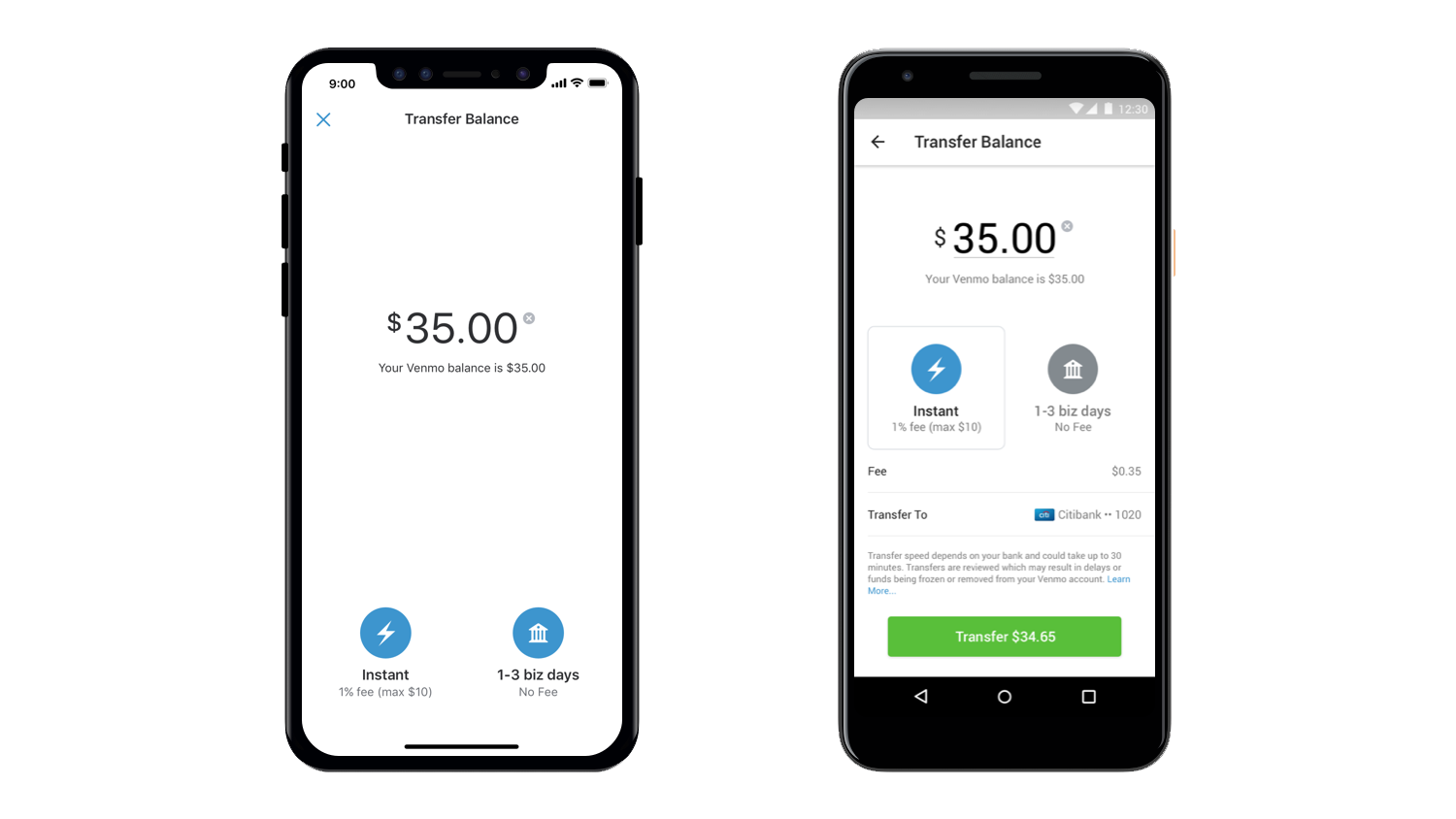
For many users, the Venmo balance acts as a digital wallet, holding funds until they are needed for external expenses. However, when you need that cash to cover a mortgage payment, a credit card bill, or an urgent repair, the standard waiting period of one to three business days can feel like an eternity. To bridge this gap, Venmo offers the “Instant Transfer” feature.
The Current Fee Structure
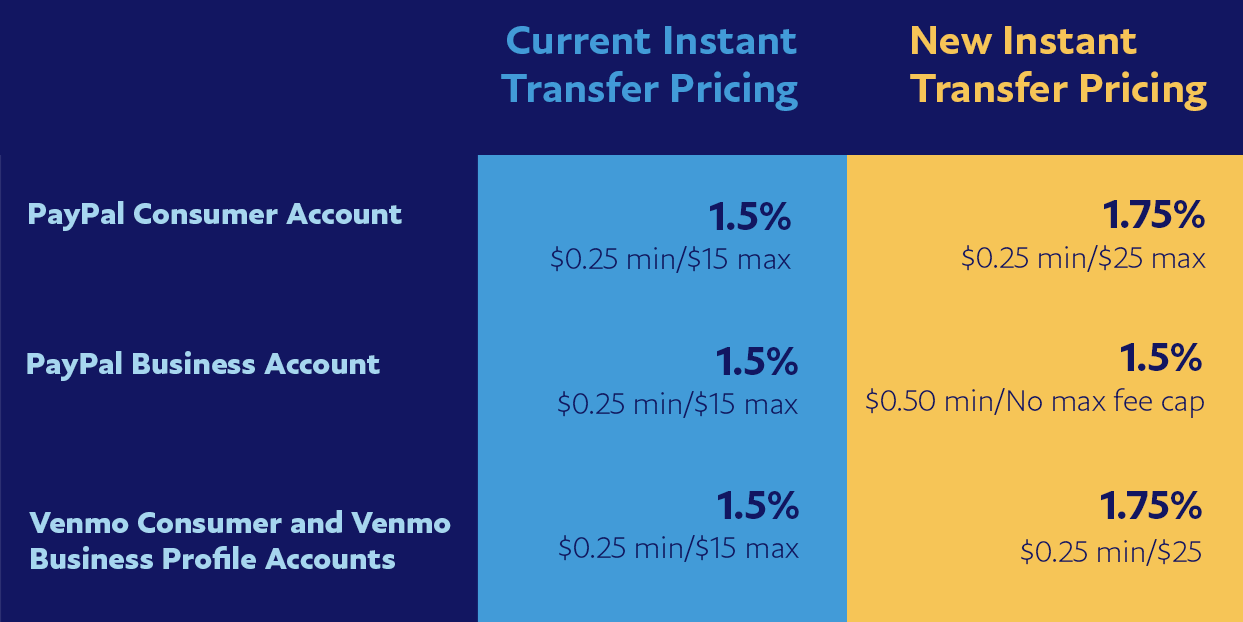
As of the current financial landscape, Venmo charges a fee of 1.75% for every instant transfer. This fee is deducted directly from the amount being transferred. For example, if you are moving $100 from your Venmo balance to your linked debit card or bank account, you will receive $98.25, while Venmo retains $1.75 as a convenience fee.
This percentage-based model ensures that the fee scales with the size of the transaction, but Venmo has also implemented “floor” and “ceiling” limits to provide predictability for both very small and very large transfers.
Minimums and Maximums
To ensure the service remains viable for the provider while remaining accessible for the user, Venmo has established specific boundaries for the 1.75% fee:
-
The Minimum Fee: The minimum charge for an instant transfer is $0.25. If you are transferring a small amount, such as $10, 1.75% would technically be $0.175. However, Venmo will round this up to the $0.25 minimum. Users should be aware that on very small transfers, the effective percentage rate can be significantly higher than 1.75%.
-
The Maximum Fee: For high-value users and business profiles, Venmo caps the instant transfer fee at $25.00. This cap is reached when a user transfers approximately $1,428.57. For any amount above this threshold, the fee remains flat at $25.00, making it more cost-effective for larger liquidity moves.
Instant Transfer vs. Standard Transfer: A Deep Dive
When managing personal or business finances, the decision to pay a fee for speed is a strategic one. To make an informed choice, one must understand what happens behind the scenes of both transfer methods.
The Standard ACH Process
The standard transfer is the “free” option provided by Venmo. It utilizes the Automated Clearing House (ACH) network, which is the backbone of the American banking system. While reliable and cost-effective, ACH transfers are processed in batches and are subject to bank holidays and weekends.
When you initiate a standard transfer, Venmo sends the instruction to the clearinghouse, which then communicates with your bank. This process typically takes one to three business days. For the disciplined budgeter who anticipates their cash flow needs, the standard transfer is the optimal choice for preserving capital and avoiding unnecessary fees.
The Instant Transfer Technical Layer
The instant transfer does not use the traditional ACH system. Instead, it utilizes the “push to card” functionality provided by major card networks like Visa and Mastercard (often through services like Visa Direct or Mastercard Send). This allows funds to be cleared and available in the recipient’s bank account within minutes—often in less than 30 seconds.
The 1.75% fee covers the interchange costs charged by the card networks and the increased risk and infrastructure requirements of real-time processing. For a user facing an immediate overdraft risk or a time-sensitive investment opportunity, the 1.75% cost is often viewed as a “liquidity premium” that is worth the expense.
Navigating Fees for Business Profiles
With the rise of the creator economy and micro-entrepreneurship, many individuals now use Venmo Business Profiles to accept payments for goods and services. For these users, the instant transfer fee is an additional layer on top of the standard transaction fees.
Seller Protection and Transaction Fees
When a payment is sent to a business profile or identified as a payment for “Goods and Services,” Venmo charges a standard seller fee (typically 1.9% plus $0.10). This fee covers seller protection and the cost of processing the incoming payment.
If a business owner then chooses to move those funds to their bank account via an instant transfer, they will incur the additional 1.75% fee. In this scenario, the total cost of accepting and accessing that money instantly can approach 3.65% plus the flat cent fee. For businesses operating on thin margins, these micro-costs must be factored into their pricing strategies to ensure long-term profitability.
Calculating the True Cost of Speed
For a business owner transferring $5,000 in monthly revenue, the $25 fee cap for instant transfers becomes a significant advantage. Rather than paying 1.75% on every small transaction, many savvy users choose to let their balance accumulate and perform a single large instant transfer at the end of the week, ensuring they only hit the $25 ceiling once rather than paying multiple smaller fees that do not reach the cap.
Strategies to Optimize Your Venmo Cash Outs
In the realm of personal finance, the goal is always to minimize leakage—those small, recurring fees that quietly erode your net worth. There are several strategies to navigate the Venmo fee structure without sacrificing too much convenience.
Bundling Transfers
As mentioned previously, the fee cap is a powerful tool. If you find yourself frequently using instant transfers for $100 or $200 at a time, you are paying the full 1.75% every time. By waiting until your balance is higher—specifically above the $1,428.57 mark—you effectively lower your percentage rate. A $3,000 transfer still only costs $25, bringing your effective fee down to approximately 0.83%.
Utilizing the Venmo Debit Card
For those who need immediate access to their funds but want to avoid the transfer fee entirely, the Venmo Debit Card offers a strategic workaround. The card allows you to spend your Venmo balance directly at point-of-sale terminals or online retailers without moving the money to a traditional bank account. Since there is no “transfer” taking place, there is no 1.75% fee. Additionally, Venmo offers cash-back rewards at certain retailers, which can actually turn a potential expense into a small gain.
Leveraging Zelle for Immediate No-Fee Moves
While Venmo is a dominant player, it is not the only tool in the shed. Many banks have integrated Zelle directly into their mobile apps. Zelle offers near-instant transfers between supported bank accounts with zero fees. If a client or friend is willing to send money via Zelle instead of Venmo, you can bypass the need for an instant transfer fee altogether, as the money lands directly in your checking account in real-time.
The Comparative Landscape: Venmo vs. Competitors
To understand the value proposition of Venmo’s 1.75% fee, it is helpful to look at how its primary competitors price similar services.
Cash App and the Fast-Action Premium
Cash App, operated by Block, Inc., offers a similar “Instant” feature. Their fee generally mirrors Venmo’s, typically hovering around 1.5% to 1.75%, with a minimum fee of $0.25. The parity between these two giants suggests that the 1.75% rate is currently the market equilibrium for peer-to-peer real-time liquidity.
PayPal’s Unified Pricing
Since PayPal owns Venmo, their fee structures have become increasingly aligned. PayPal also charges 1.75% for instant transfers to linked debit cards or bank accounts, with a maximum fee cap that mirrors Venmo’s. This alignment suggests a corporate strategy focused on maximizing the value of the “push to card” infrastructure across their entire ecosystem.
The Long-Term Impact on Personal Wealth Management
While $0.25 or 1.75% may seem like negligible amounts in isolation, they represent a broader trend in financial services: the monetization of time. In the world of investing, a 1.75% management fee is considered high. When applied to your liquid cash, it functions as a tax on urgency.
For the modern consumer, the “What is the Venmo instant transfer fee?” question should be followed by “Is the speed of this transaction worth the cost?” If the transfer is being made to avoid a $35 overdraft fee, paying $1.75 is a brilliant financial move. If the transfer is being made simply to see a higher balance in a checking account a few days sooner, it is an unnecessary drain on resources.
As the Federal Reserve continues to roll out FedNow—a service designed to allow all banks in the United States to offer instant payments—the landscape of transfer fees may change. Until real-time gross settlement becomes the default and free standard for all banking, the Venmo instant transfer fee remains a prime example of the price we pay for the acceleration of the digital economy. By understanding these fees, users can move from reactive spending to proactive wealth management, ensuring that every dollar moved is a dollar moved with purpose.
aViewFromTheCave is a participant in the Amazon Services LLC Associates Program, an affiliate advertising program designed to provide a means for sites to earn advertising fees by advertising and linking to Amazon.com. Amazon, the Amazon logo, AmazonSupply, and the AmazonSupply logo are trademarks of Amazon.com, Inc. or its affiliates. As an Amazon Associate we earn affiliate commissions from qualifying purchases.