
Embarking on the journey toward a financially secure retirement can seem daunting, yet it’s one of the most crucial steps you’ll take in your financial life. The question “How do I open a retirement account?” is not just about a transactional process; it’s about laying the foundation for future peace of mind, financial independence, and the ability to live comfortably in your golden years. Retirement accounts are specially designed investment vehicles that offer significant tax advantages, encouraging individuals to save consistently over decades. Understanding these accounts, choosing the right ones, and implementing an effective savings strategy are paramount. This comprehensive guide will demystify the process, empowering you to take control of your financial future.
Understanding Retirement Accounts: Why and What?
The concept of a retirement account extends beyond a simple savings pot; it’s a strategically designed financial tool that leverages time, tax benefits, and compound interest to build substantial wealth. The “why” behind opening one is as important as the “how.”
The Imperative of Early Retirement Planning
Starting early is perhaps the most powerful advantage anyone can have in retirement planning. The magic of compound interest – earning returns not only on your initial investment but also on the accumulated interest from previous periods – is profoundly amplified over longer durations. A dollar invested today could be worth many more by the time you retire compared to a dollar invested ten or twenty years from now. This exponential growth makes time your most valuable asset. Delaying even a few years can significantly impact your potential nest egg, often requiring substantially larger contributions later on to catch up. Moreover, early planning instills financial discipline, creating habits of regular saving and investing that serve you well throughout your life.
Distinguishing Between Employer-Sponsored and Individual Accounts
At a high level, retirement accounts generally fall into two main categories: employer-sponsored plans and individual retirement accounts (IRAs). Employer-sponsored plans, like 401(k)s or 403(b)s, are offered through your workplace and often come with the significant perk of employer matching contributions – essentially free money. Individual Retirement Accounts (IRAs), on the other hand, are opened directly by you through a financial institution and are not tied to your employment. Both types offer unique benefits and cater to different financial situations, making it crucial to understand their distinctions to make informed choices. Many individuals benefit from contributing to both types of accounts simultaneously.
Key Benefits of Retirement Accounts
Retirement accounts are specifically structured to incentivize long-term savings through various benefits:
-
Tax Advantages: This is often the primary draw. Many retirement accounts offer tax-deferred growth (you don’t pay taxes on investment gains until withdrawal in retirement) or tax-free withdrawals in retirement (after-tax contributions grow tax-free). This allows your money to grow faster without annual erosion from taxes.
-
Forced Savings: Setting up automatic contributions to a retirement account creates a disciplined savings habit, ensuring you consistently put money aside before you have a chance to spend it.
-
Investment Growth: Unlike a regular savings account, retirement accounts allow your money to be invested in a wide array of assets – stocks, bonds, mutual funds, and ETFs – offering the potential for significant long-term growth that far outpaces inflation.
-
Employer Contributions: As mentioned, many employer-sponsored plans offer matching contributions, which can significantly boost your savings with minimal effort on your part.
Navigating Your Options: Types of Retirement Accounts
The landscape of retirement accounts can appear complex, but understanding the core types will help you select the best fit for your circumstances. Each account has specific rules, contribution limits, and tax implications.
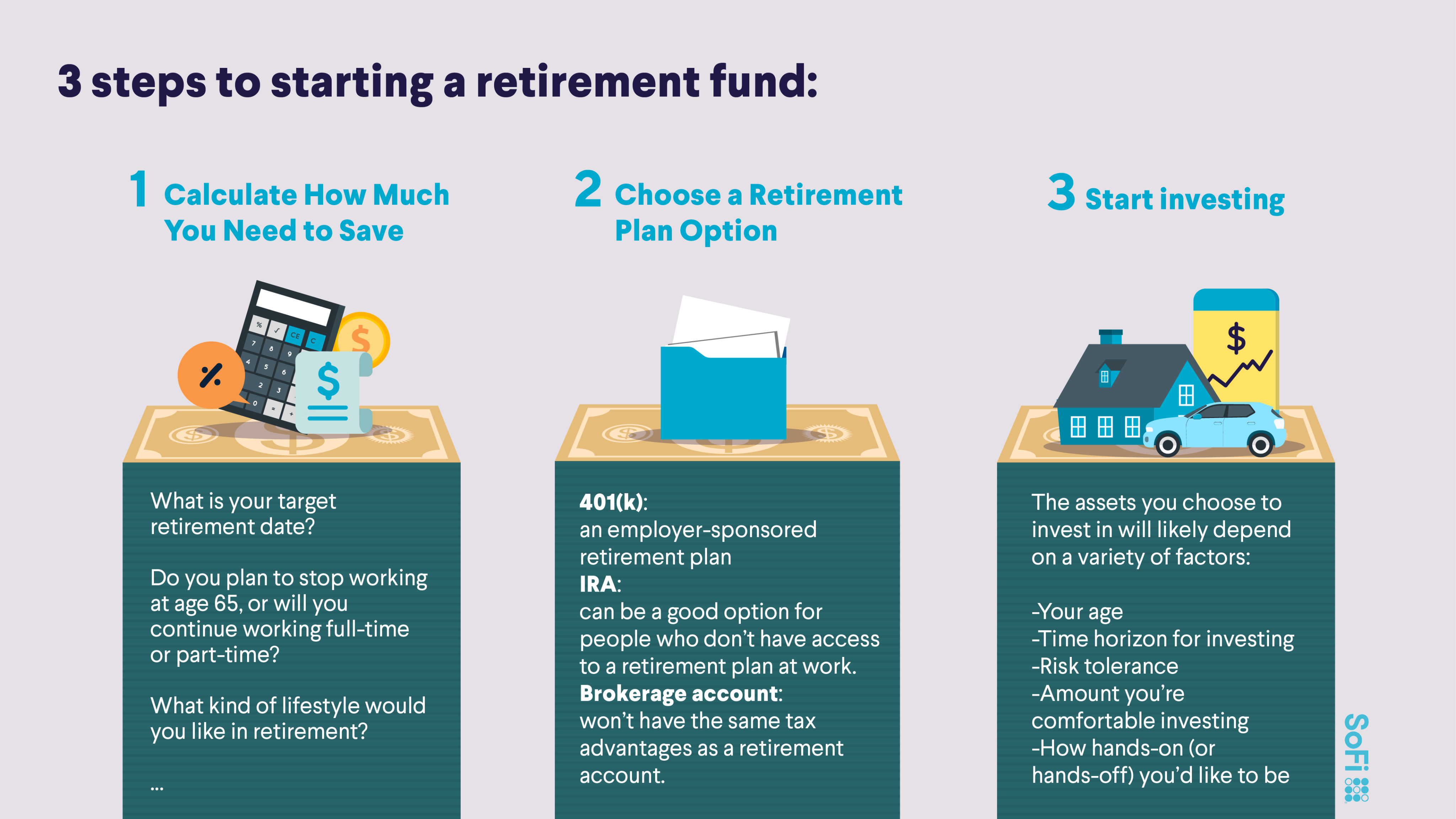
Employer-Sponsored Plans (401(k), 403(b), TSP)
These are the backbone of retirement savings for many employees.
-
401(k) Plans: Most commonly offered by for-profit companies. You contribute pre-tax dollars (reducing your current taxable income) or after-tax Roth contributions (tax-free withdrawals in retirement). Many employers offer a matching contribution, which is essentially “free money” for your retirement. Contributions grow tax-deferred until retirement.
-
403(b) Plans: Similar to 401(k)s but offered to employees of public schools and certain tax-exempt organizations (non-profits). They share similar contribution limits and pre-tax/Roth options.
-
Thrift Savings Plan (TSP): A retirement savings and investment plan for U.S. federal government employees and members of the uniformed services. It offers similar benefits to a 401(k) with very low administrative fees.
All these plans typically have vesting schedules, meaning you must work for a certain period to fully own the employer’s matching contributions.
Individual Retirement Accounts (IRAs)
IRAs are personal accounts you open yourself, regardless of your employment status, provided you meet certain income requirements.
-
Traditional IRA: Contributions may be tax-deductible in the year they are made, reducing your taxable income now. Earnings grow tax-deferred, and both contributions and earnings are taxed upon withdrawal in retirement. There are income limits for deducting contributions if you also participate in an employer-sponsored plan.
-
Roth IRA: Contributions are made with after-tax dollars, meaning they are not tax-deductible. However, qualified withdrawals in retirement are completely tax-free. This is particularly appealing if you expect to be in a higher tax bracket in retirement than you are now. There are income limits for direct contributions to a Roth IRA.
-
Backdoor Roth IRA: For individuals whose income exceeds the Roth IRA contribution limits, a “backdoor Roth” strategy allows them to contribute to a non-deductible Traditional IRA and then convert it to a Roth IRA, circumventing the income limitations.
Self-Employed and Small Business Retirement Plans
Entrepreneurs and small business owners have dedicated options:
-
SEP IRA (Simplified Employee Pension IRA): Allows employers (including self-employed individuals) to contribute a significant portion of an employee’s salary (or their own self-employment income) to a Traditional IRA. It has high contribution limits and relatively simple administration.
-
SIMPLE IRA (Savings Incentive Match Plan for Employees IRA): Designed for small businesses (100 or fewer employees) as an easy-to-administer retirement plan. It involves both employee contributions and mandatory employer contributions (either a matching contribution or a non-elective contribution).
-
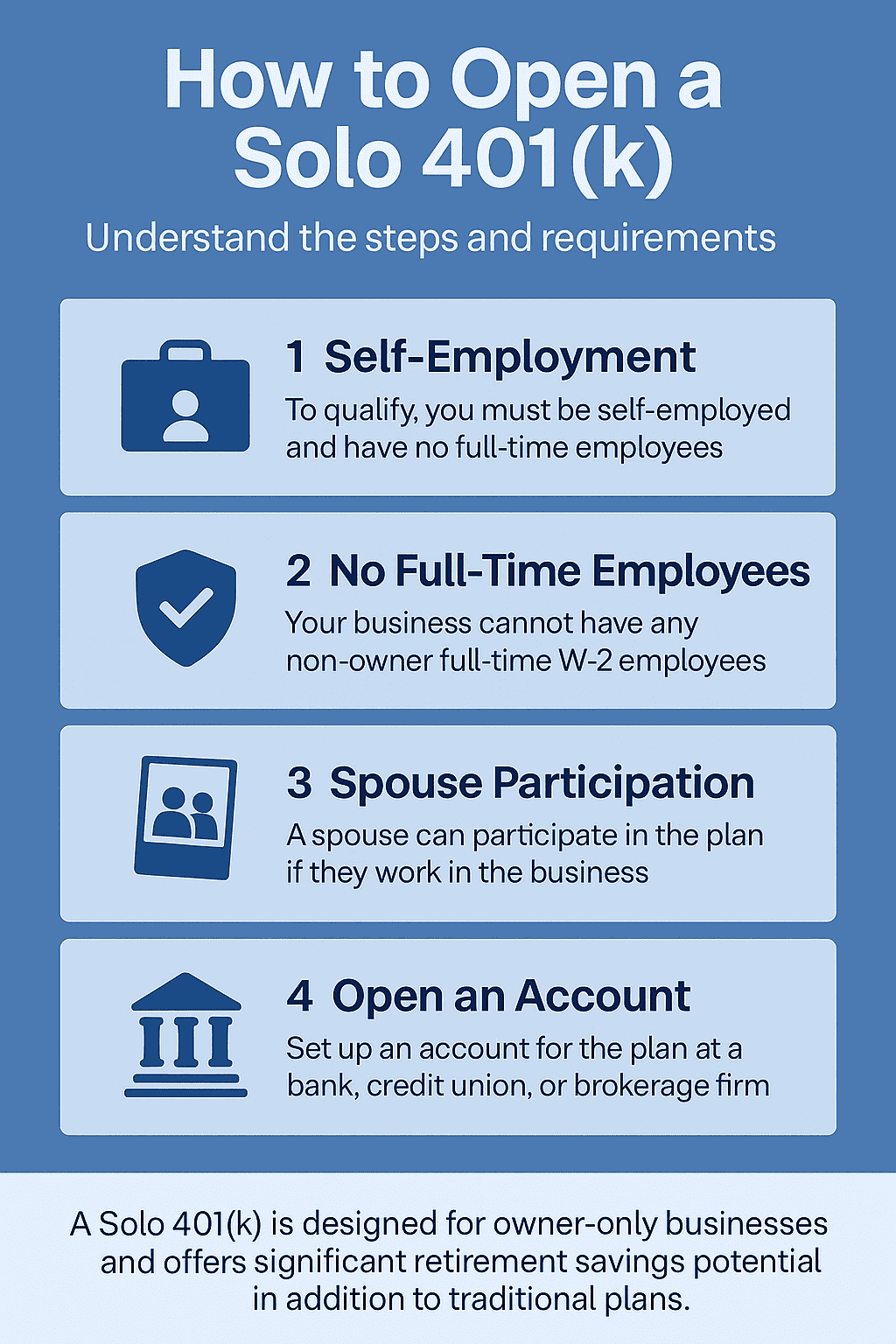
Solo 401(k) (or Self-Employed 401(k)): For business owners with no employees other than a spouse, this plan offers the highest contribution limits as you can contribute both as an employee and an employer.
Other Specialized Accounts (e.g., HSA for retirement)
While primarily designed for healthcare expenses, a Health Savings Account (HSA) can function as a powerful triple-tax-advantaged retirement vehicle if you have a high-deductible health plan (HDHP). Contributions are tax-deductible, growth is tax-free, and withdrawals for qualified medical expenses are tax-free. After age 65, you can withdraw funds for any purpose without penalty, taxed only as ordinary income if not for medical expenses, making it an excellent supplementary retirement account.
The Step-by-Step Guide to Opening Your Retirement Account
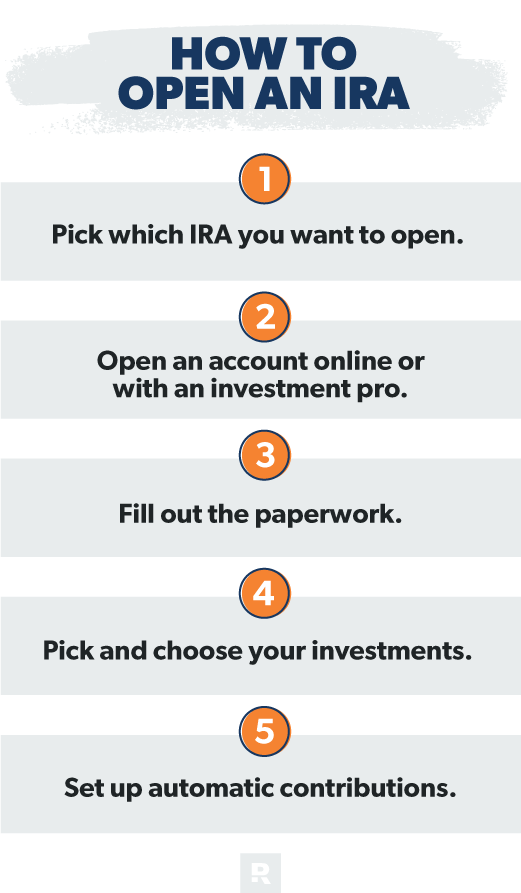
Opening a retirement account doesn’t have to be complicated. Following a clear sequence of steps can make the process straightforward and manageable.
Assess Your Eligibility and Financial Situation
Before you choose an account, evaluate your personal circumstances. Are you employed and eligible for a 401(k)? Are you self-employed? What is your income level? Your answers will guide you toward suitable account types. Consider your current budget and how much you can realistically contribute consistently, even if it’s a small amount to start. Understanding your financial goals – when you want to retire, what lifestyle you envision – will also help in setting appropriate targets.
Choose the Right Provider
Once you’ve identified the type of account, you need to select a financial institution. For employer-sponsored plans, your employer dictates the provider. For IRAs and self-employed plans, you have a choice among:
-
Brokerage Firms: Companies like Fidelity, Charles Schwab, Vanguard, E*TRADE, and Merrill Edge offer a wide range of investment options, from individual stocks and bonds to mutual funds and ETFs.
-
Mutual Fund Companies: Providers like Vanguard specialize in their own proprietary mutual funds and ETFs, often known for low expense ratios.
-
Robo-Advisors: Services like Betterment or Wealthfront use algorithms to manage your investments based on your risk tolerance and goals, offering a hands-off approach often with lower fees than traditional financial advisors.
When choosing a provider, consider factors such as fees (transaction fees, account maintenance fees, expense ratios of funds), the range of investment options, customer service quality, and the ease of use of their online platform.
Gather Necessary Documentation
To open an account, you’ll typically need:
-
Personal Identification: Government-issued ID (driver’s license, passport).
-
Social Security Number (SSN) or Taxpayer Identification Number (TIN).
-
Bank Account Information: To link for contributions and withdrawals (account number, routing number).
-
Beneficiary Information: Names, birth dates, and SSNs of primary and contingent beneficiaries. This is crucial for ensuring your assets are distributed according to your wishes upon your passing.
Fund Your Account and Select Investments
After your account is open, the next critical step is funding it and choosing where to invest your money.
-
Funding: Set up automatic contributions from your paycheck (for employer plans) or bank account (for IRAs). This ensures consistent savings and takes advantage of dollar-cost averaging.
-
Investment Selection:
-
Target-Date Funds: A popular choice, especially for beginners. These funds automatically adjust their asset allocation over time, becoming more conservative as you approach your target retirement date.
-
Index Funds and ETFs: Offer broad market exposure at low costs, tracking an index like the S&P 500.
-
Mutual Funds: Managed by professionals, these funds pool money from many investors to buy a diversified portfolio.
-
Individual Stocks/Bonds: For those who prefer more control and are comfortable with higher risk/reward, you can select individual securities.
-
Diversification is key – don’t put all your eggs in one basket. Match your investment choices to your risk tolerance and time horizon.
Set Up Beneficiaries and Review Periodically
Designating beneficiaries ensures your retirement savings go to your chosen individuals if you pass away. It’s often separate from your will, so ensure it’s up-to-date. Moreover, financial circumstances, goals, and market conditions change. It’s wise to review your retirement accounts annually, adjusting contributions, investment allocations, and beneficiaries as needed.
Optimizing Your Retirement Savings Strategy
Opening an account is just the beginning. The real power of retirement planning comes from consistent, optimized contributions and strategic investment management over the long term.
Maximizing Contributions and Employer Matches
Always strive to contribute at least enough to receive your employer’s full matching contribution – this is essentially a 100% return on your investment from day one. Beyond the match, increase your contributions gradually, aiming to maximize the annual contribution limits whenever possible. Even a 1% increase in your contribution rate each year can make a significant difference over decades. The earlier and more aggressively you save, the less financial stress you’ll likely experience in retirement.
Understanding Investment Strategies Within Retirement Accounts
Your investment strategy should align with your risk tolerance and time horizon. Younger investors with decades until retirement can typically afford to take on more risk, focusing on growth-oriented investments like stocks. As retirement approaches, a gradual shift towards more conservative assets like bonds and cash equivalents can help protect your accumulated wealth. Rebalancing your portfolio periodically ensures your asset allocation remains consistent with your strategy, selling some overperforming assets and buying underperforming ones to restore your target percentages. This disciplined approach prevents your portfolio from drifting too far from your intended risk profile.
The Power of Compounding and Dollar-Cost Averaging
We touched upon compounding earlier, but its importance cannot be overstated. It’s the engine of long-term wealth creation. Dollar-cost averaging, which involves investing a fixed amount of money at regular intervals regardless of market fluctuations, complements compounding beautifully. This strategy removes emotion from investing, as you buy more shares when prices are low and fewer when prices are high, often resulting in a lower average cost per share over time. Both strategies are passive yet incredibly effective in building a substantial retirement fund.
When to Convert and Consolidate Accounts
As your career progresses, you might accumulate several retirement accounts from different employers. Consider rolling over old 401(k)s into an IRA (often called a “direct rollover”) to consolidate your investments, simplify management, and potentially gain access to a broader range of investment options and lower fees. This also keeps your retirement savings growing tax-deferred. Additionally, explore Roth conversions if your income decreases or tax rates are particularly low. Converting a Traditional IRA to a Roth IRA means you pay taxes on the converted amount now, but future growth and withdrawals in retirement are tax-free. This strategy can be advantageous for long-term tax planning.
Common Pitfalls and Smart Strategies for Long-Term Success
While opening and optimizing a retirement account is crucial, avoiding common missteps and employing smart long-term strategies can ensure your journey to retirement is smooth and successful.
Avoiding Early Withdrawals and Understanding Penalties
One of the biggest threats to your retirement savings is early withdrawal. Most retirement accounts impose a 10% early withdrawal penalty on distributions taken before age 59½, in addition to regular income taxes. While there are exceptions (e.g., first-time home purchase from an IRA, certain medical expenses), these penalties significantly erode your savings and undermine the power of compounding. Think of your retirement account as sacred money, strictly for your future self, and resist the urge to tap into it prematurely.
Managing Fees and Expense Ratios
Fees, no matter how small they seem, can significantly impact your long-term returns. High expense ratios on mutual funds, account maintenance fees, or transaction costs can chip away at your gains over decades. Always review the fee structures of your chosen provider and the investment vehicles within your account. Opt for low-cost index funds or ETFs where appropriate. Even a difference of 0.5% in annual fees can translate to tens or even hundreds of thousands of dollars less in your retirement account by the time you retire. Be a diligent consumer when it comes to investment costs.
Staying Disciplined and Automating Savings
Consistency and discipline are perhaps the most undervalued components of successful retirement planning. Life inevitably throws financial curveballs, but sticking to your savings plan, especially through market downturns, is paramount. Automate your contributions so that money is transferred to your retirement account before you even see it in your checking account. This “set it and forget it” approach ensures you’re consistently saving and investing, removing the temptation to skip contributions. Treat your retirement contributions as a non-negotiable bill, ensuring your future self is always paid first.
Seeking Professional Guidance
While this guide provides a solid foundation, complex financial situations, specific investment goals, or significant life changes might warrant professional advice. A qualified financial advisor can help you create a personalized retirement plan, optimize your investment strategy, navigate tax complexities, and ensure you’re on track to meet your goals. Look for fee-only fiduciaries who are legally obligated to act in your best interest. They can provide invaluable insights and peace of mind, especially as your financial life becomes more intricate.
Opening a retirement account is more than a financial transaction; it’s an act of self-care for your future. By understanding your options, taking deliberate steps, and maintaining a disciplined approach, you can build a robust financial foundation that supports the retirement life you envision. Start today, and give your future self the gift of financial security.
aViewFromTheCave is a participant in the Amazon Services LLC Associates Program, an affiliate advertising program designed to provide a means for sites to earn advertising fees by advertising and linking to Amazon.com. Amazon, the Amazon logo, AmazonSupply, and the AmazonSupply logo are trademarks of Amazon.com, Inc. or its affiliates. As an Amazon Associate we earn affiliate commissions from qualifying purchases.