
Tax season is often viewed through a lens of apprehension, a period defined by complex forms, tight deadlines, and the looming shadow of the Internal Revenue Service. However, when you do your taxes, you are doing more than just fulfilling a legal obligation; you are conducting a comprehensive audit of your financial health. This annual ritual provides a unique vantage point from which to evaluate your income streams, spending habits, and investment growth. By shifting the perspective from compliance to strategy, taxpayers can transform a stressful obligation into a powerful tool for long-term wealth building and financial security.

Navigating the complexities of the tax code requires a blend of meticulous organization, a clear understanding of current legislation, and a proactive approach to financial planning. Whether you are a salaried employee, a freelance professional, or a small business owner, the way you approach your tax filing can significantly impact your net worth. The goal is not merely to “get it over with” but to ensure that you are utilizing every available legal avenue to minimize liability and maximize your financial potential.
The Foundations of Tax Readiness: Documentation and Organization
The quality of your tax return is directly proportional to the quality of your record-keeping. When you do your taxes, the single greatest cause of stress is the frantic search for missing documents. Establishing a robust organizational system throughout the year is the most effective way to mitigate this stress and ensure that you do not miss out on valuable deductions or credits.
Digital Record-Keeping and Automation
In the modern financial landscape, paper receipts are becoming obsolete. Transitioning to a digital record-keeping system is no longer just a convenience; it is a necessity for accuracy. Utilizing cloud-based storage or dedicated financial software allows you to capture expenses in real-time. Apps that sync with your bank accounts can automatically categorize transactions, flagging potential business expenses or deductible charitable contributions as they occur. This real-time tracking prevents the “memory leak” that happens when you try to recall the purpose of a specific transaction twelve months after the fact.
Categorizing Deductions and Credits
Understanding the difference between a deduction and a credit is fundamental to tax organization. A deduction reduces the amount of your income that is subject to tax, while a credit provides a dollar-for-dollar reduction in the actual tax you owe. When organizing your documents, it is helpful to group them into these two broad categories.
For deductions, maintain clear folders for mortgage interest statements (Form 1098), property taxes, medical expenses that exceed a certain percentage of your adjusted gross income (AGI), and records of charitable donations. For credits, keep records related to education expenses (Form 1098-T), childcare costs, and energy-efficient home improvements. Having these documents pre-sorted ensures that when you sit down to file, you are working from a position of clarity rather than chaos.
Maximizing Deductions and Credits for Individual Taxpayers
The tax code is designed with various incentives intended to encourage specific economic behaviors, such as homeownership, higher education, and charitable giving. When you do your taxes, your objective is to identify which of these incentives apply to your specific life situation.
Standard vs. Itemized Deductions
One of the most critical decisions an individual taxpayer faces is whether to take the standard deduction or to itemize. Since the passage of the Tax Cuts and Jobs Act, the standard deduction has increased significantly, leading fewer people to itemize. However, if your total deductible expenses—including mortgage interest, state and local taxes (subject to the $10,000 SALT cap), and charitable contributions—exceed the standard deduction threshold for your filing status, itemizing will result in a lower tax bill. It is essential to run the numbers both ways to ensure you are choosing the most advantageous path.
Key Tax Credits for Families and Education
Tax credits are particularly powerful because they directly lower your tax liability. The Child Tax Credit (CTC) remains a cornerstone for families, providing significant relief for those with qualifying children. Furthermore, the Child and Dependent Care Credit can help offset the costs of daycare or after-school care, which are often a family’s largest expenses.
For those pursuing higher education or supporting a dependent in college, the American Opportunity Tax Credit (AOTC) and the Lifetime Learning Credit (LLC) offer substantial benefits. The AOTC is particularly valuable as it is partially refundable, meaning you could receive money back even if your tax liability is zero. When you do your taxes, failing to claim these credits is essentially leaving money on the table.
Tax Considerations for the Modern Worker: Side Hustles and Self-Employment
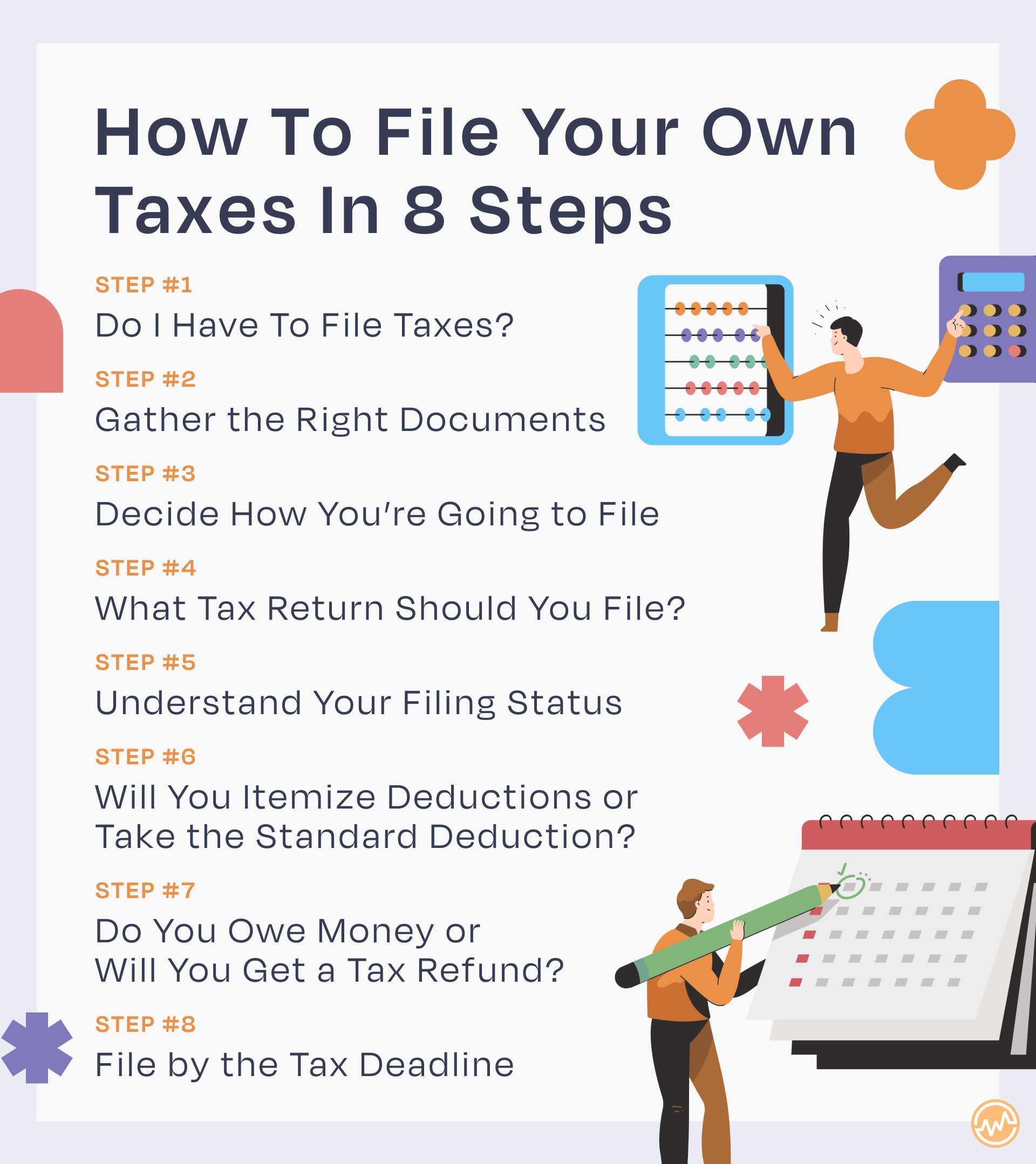
The rise of the gig economy has fundamentally changed the tax landscape for millions of people. When you do your taxes as a freelancer, contractor, or side-hustler, the complexity increases significantly, but so do the opportunities for strategic deductions.
Understanding the 1099 Landscape
If you earn more than $600 from a client as a non-employee, you should receive a Form 1099-NEC or 1099-K. It is important to remember that even if you do not receive a form, you are legally required to report all earned income. For the self-employed, the tax process involves calculating net profit by subtracting business expenses from gross income. This net profit is what is actually taxed, making accurate expense tracking vital.
The Home Office Deduction and Business Expenses
One of the most misunderstood areas of the tax code is the home office deduction. To qualify, a portion of your home must be used exclusively and regularly for your business. If you meet these criteria, you can deduct a portion of your rent or mortgage interest, utilities, insurance, and repairs.
Beyond the home office, self-employed individuals can deduct “ordinary and necessary” business expenses. This includes everything from software subscriptions and professional development courses to marketing costs and travel expenses. The key is to maintain a clear line of separation between personal and professional spending. Using a dedicated business bank account and credit card simplifies this process and provides a clean audit trail.
Navigating Self-Employment Tax
Unlike traditional employees, whose Social Security and Medicare taxes are split with their employers, self-employed individuals are responsible for both the employer and employee portions. This is known as the self-employment tax, which currently stands at 15.3%. While this can be a significant burden, half of this tax is deductible from your gross income, which helps to lower your overall income tax liability.
Strategic Year-Round Tax Planning
The most successful taxpayers do not wait until April to think about their taxes. Instead, they view tax planning as a year-round component of their financial strategy. When you do your taxes, you are looking at the past; when you engage in tax planning, you are looking at the future.
Retirement Contributions and Tax Benefits
Contributing to retirement accounts is one of the most effective ways to reduce your taxable income. Contributions to a traditional 401(k) or IRA are made with pre-tax dollars, meaning they are deducted from your income before the IRS ever sees it. For high-earners, this can result in thousands of dollars in immediate tax savings. Conversely, Roth accounts are funded with after-tax dollars, providing the benefit of tax-free growth and tax-free withdrawals in retirement. Choosing the right mix of “tax-now” vs. “tax-later” accounts is a critical part of a sophisticated tax strategy.
Tax-Loss Harvesting and Investment Strategy
For those with taxable brokerage accounts, tax-loss harvesting is a powerful technique. This involves selling investments that are at a loss to offset capital gains realized elsewhere in your portfolio. If your losses exceed your gains, you can use up to $3,000 of the excess loss to offset your ordinary income. This strategy allows you to “find the silver lining” in a market downturn, using investment underperformance to lower your tax bill.
Health Savings Accounts (HSAs)
The HSA is often described as the most tax-advantaged account in existence. Contributions are tax-deductible, the money grows tax-deferred, and withdrawals for qualified medical expenses are tax-free. For those with high-deductible health plans, maximizing HSA contributions is a triple-win for tax planning and long-term healthcare funding.
Leveraging Technology and Professional Guidance
As tax laws continue to evolve, the tools available to taxpayers have become increasingly sophisticated. When you do your taxes, you must decide whether to use automated software or seek the expertise of a professional.
Choosing the Right Tax Software
For taxpayers with straightforward financial situations—such as a single W-2 income and no complex investments—modern tax software is an efficient and cost-effective solution. These platforms use interview-style interfaces to guide users through the process, flagging potential errors and ensuring that common credits are not overlooked. Many of these services also offer “audit defense” or “expert review” features, providing an extra layer of security.

When to Hire a CPA or Enrolled Agent
While software is powerful, it cannot replace the nuanced advice of a human professional in complex situations. If you own a business with employees, have complex real estate holdings, or are dealing with international tax issues, hiring a Certified Public Accountant (CPA) or an Enrolled Agent is a wise investment. These professionals do more than just fill out forms; they provide strategic advice on entity structure, succession planning, and multi-year tax projections. A good tax professional often saves their clients far more in taxes than they charge in fees.
Ultimately, when you do your taxes, the objective is to reach a state of “tax efficiency.” This does not mean evading taxes, but rather organizing your financial life in a way that respects the law while protecting your hard-earned assets. By treating tax season as a period of reflection and strategic adjustment, you turn a mandatory task into a cornerstone of your journey toward financial independence.
aViewFromTheCave is a participant in the Amazon Services LLC Associates Program, an affiliate advertising program designed to provide a means for sites to earn advertising fees by advertising and linking to Amazon.com. Amazon, the Amazon logo, AmazonSupply, and the AmazonSupply logo are trademarks of Amazon.com, Inc. or its affiliates. As an Amazon Associate we earn affiliate commissions from qualifying purchases.