
The annual tax filing season is often viewed with a mixture of trepidation and meticulous planning. For the modern taxpayer, whether an employee, a freelancer, or a seasoned investor, the complexity of the tax code necessitates a disciplined approach to documentation. Navigating the labyrinth of Internal Revenue Service (IRS) forms is not merely about compliance; it is a critical component of financial health. Having the correct forms on hand ensures that you claim every deduction you are entitled to, report your income accurately to avoid audits, and ultimately optimize your tax liability.
Tax documentation generally falls into three primary categories: proof of income, documentation for adjustments and deductions, and specialized forms for investments or business ownership. Understanding the nuances of these forms is the first step toward a seamless filing process.
The Essential Income Documents: Tracking Your Inflow
The cornerstone of any tax return is the reporting of gross income. The IRS receives copies of most income-related forms directly from employers and financial institutions, making it imperative that your records match theirs to avoid red flags.
Form W-2: The Wage and Tax Statement
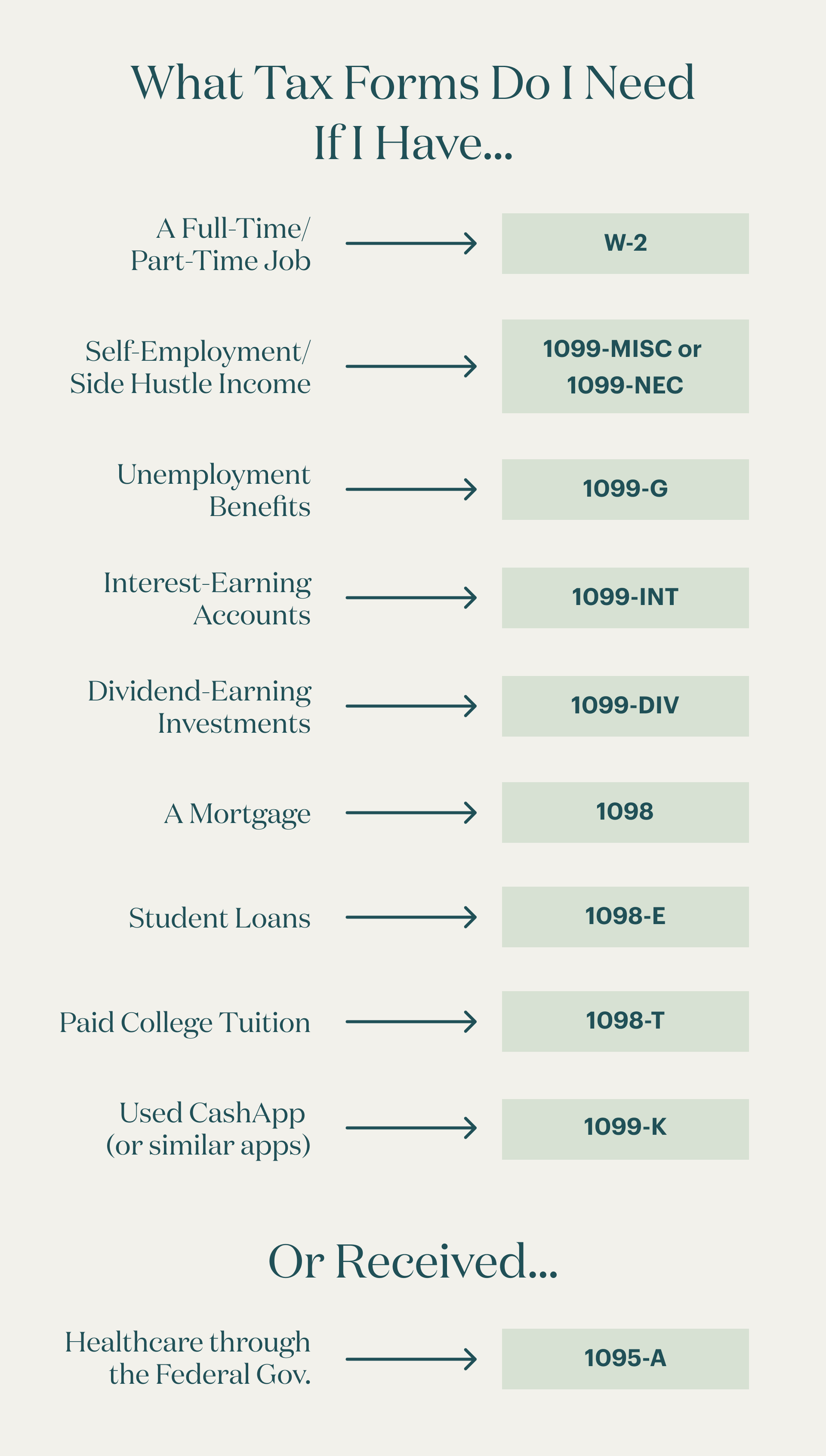
For the vast majority of traditional employees, the W-2 is the most vital document. Issued by your employer by January 31st, this form outlines your total earnings, federal and state income tax withheld, Social Security and Medicare taxes paid, and contributions to retirement plans or healthcare accounts. It is important to verify the accuracy of your Social Security number and the spelling of your name, as discrepancies here can delay the processing of your return and any potential refund.
The 1099 Series: A Diverse Array of Income
In the modern “gig economy” and investment-heavy landscape, 1099 forms have become increasingly prevalent.
-
1099-NEC: This is the primary form for non-employee compensation. If you performed freelance work or consulting and earned more than $600 from a single client, you should receive this form.
-
1099-MISC: While many freelance tasks moved to the NEC, the 1099-MISC is still used for rent payments, prizes, awards, and other miscellaneous income.
-
1099-INT and 1099-DIV: These forms report interest earned on savings accounts and dividends received from stocks or mutual funds. Even if you reinvest your dividends, they are considered taxable income in the year they were granted.
-
1099-K: This form has gained significant attention recently. It reports payments received through third-party settlement organizations like PayPal, Venmo, or Etsy. For those running small online businesses or side hustles, tracking these digital transactions is paramount.
SSA-1099 and 1099-R: Retirement and Social Security
If you are a retiree or have taken a distribution from a retirement account, these forms are essential. The SSA-1099 reports your annual Social Security benefits, a portion of which may be taxable depending on your total provisional income. The 1099-R covers distributions from IRAs, 401(k)s, or annuities. It specifically identifies whether the distribution was a normal withdrawal, an early withdrawal (which may incur penalties), or a direct rollover to another qualified plan.
Maximizing Adjustments and Deductions: Lowering Your Taxable Base
Once your income is established, the next phase of tax preparation involves identifying “above-the-line” adjustments and itemized deductions. These forms are the keys to reducing your Adjusted Gross Income (AGI) and, consequently, your total tax bill.
Form 1098: Mortgage Interest and Tuition
The 1098 series provides documentation for some of the largest deductions available to individual taxpayers.
-
Form 1098 (Mortgage Interest Statement): For homeowners, this form reports the amount of mortgage interest and points paid during the year. In many cases, this is the primary driver for choosing to itemize deductions rather than taking the standard deduction.
-
Form 1098-T (Tuition Statement): Students or parents paying for higher education use this form to claim credits like the American Opportunity Tax Credit (AOTC) or the Lifetime Learning Credit (LLC).
-
Form 1098-E (Student Loan Interest): If you are repaying student loans, this form reports the interest paid, which is often deductible even if you do not itemize.
Charitable Contributions and Medical Expenses
While there is no specific IRS “form” you receive for charitable giving, you must maintain your own documentation. For cash donations, a bank record or a written communication from the charity is required. For non-cash donations exceeding $500, you must file Form 8283. Similarly, if your medical and dental expenses exceed 7.5% of your AGI, you will need detailed receipts and logs to support these claims on Schedule A.
Health Insurance Documentation
The Affordable Care Act (ACA) introduced the 1095 series. Form 1095-A is sent to those who purchased insurance through the Health Insurance Marketplace. This form is vital for reconciling the Premium Tax Credit. If you received an advance on this credit based on estimated income, this form helps determine if you owe money back or are entitled to an additional credit.
Documentation for Entrepreneurs and Small Business Owners

For those who are self-employed or own a stake in a business entity, the complexity of tax filing increases exponentially. The transition from a simple 1040 to a return involving various schedules requires a rigorous approach to bookkeeping throughout the year.
Schedule C: Profit or Loss from Business
The Schedule C is the primary document for sole proprietors and single-member LLCs. It is where you list your total business income and subtract your business expenses, such as advertising, office supplies, utilities, and travel. To complete this form accurately, you need profit and loss statements, bank records, and detailed expense logs.
Schedule K-1: The Pass-Through Entity Document
If you are a partner in a partnership or a shareholder in an S-Corporation, you will not receive a W-2 or a 1099 for your share of the profits. Instead, you receive a Schedule K-1. This form reports your share of the entity’s income, deductions, and credits. Because K-1s are often issued later in the tax season (sometimes near the April deadline), many business owners find it necessary to file for an extension.
Vehicle and Home Office Logs
The IRS scrutinizes home office deductions and business vehicle usage heavily. To claim these, you must have documentation that proves the “exclusive and regular” use of a portion of your home for business. For vehicles, a contemporaneous mileage log—noting the date, distance, and business purpose of every trip—is the gold standard for defending these deductions during an inquiry.
Reporting Investments and Capital Assets
Investment income is taxed differently than earned income, often benefiting from lower long-term capital gains rates. However, the reporting requirements are strict, particularly as the IRS looks closer at digital assets.
Form 1099-B: Proceeds from Broker Transactions
When you sell stocks, bonds, or mutual funds, your brokerage firm issues a 1099-B. This form details the date of acquisition, the date of sale, the cost basis, and the gain or loss. Accuracy here is critical because the IRS uses this data to ensure you are paying the correct tax on your capital gains. If your cost basis is not reported (common with older securities), you are responsible for providing that information to avoid being taxed on the full sale price.
Form 8949 and Schedule D
Information from your 1099-B is transferred to Form 8949, where you categorize transactions as short-term or long-term. The totals are then summarized on Schedule D. This process allows you to offset capital gains with capital losses, a strategy known as tax-loss harvesting, which can significantly reduce your tax liability.
Cryptocurrency and Digital Assets
The IRS has moved the question regarding digital assets to the very top of Form 1040. If you sold, traded, or used cryptocurrency to purchase goods, you must report these transactions. While many exchanges now provide a version of the 1099-B or 1099-MISC for crypto, many do not. You may need to use specialized tax software to aggregate your wallet transactions and generate a report that mirrors the requirements of Form 8949.
The Final Filing: Form 1040 and Beyond
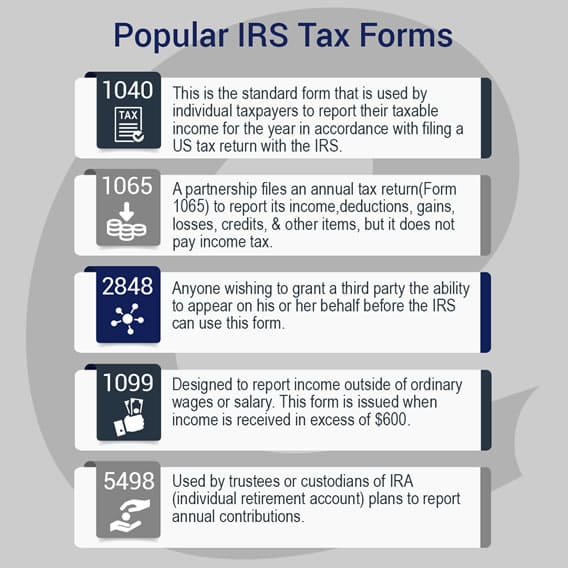
Every individual tax journey culminates in the Form 1040 (U.S. Individual Income Tax Return). This is the “trunk” of the tree from which all other schedules and forms branch out.
Choosing Between Standard and Itemized Deductions
One of the most important decisions on the 1040 is whether to take the standard deduction or itemize using Schedule A. For the 2023 and 2024 tax years, the standard deduction is quite high, meaning fewer people find it beneficial to itemize. However, if your mortgage interest, state and local taxes (up to $10,000), and charitable contributions exceed the standard threshold, you will need the documentation mentioned in the previous sections to justify itemizing.
Extension Forms (Form 4868)
If you find that you are missing key documents—such as a late Schedule K-1 or a corrected 1099—you can file Form 4868 for an automatic six-month extension to file your return. It is a common misconception that this provides an extension to pay. You must still estimate your tax liability and pay any amount owed by the original April deadline to avoid interest and penalties.
The Role of Financial Software and Professional Integration
In today’s financial landscape, manual filing is becoming a relic of the past. Digital tools and financial software can import data directly from employers and banks, significantly reducing the risk of manual entry errors. Furthermore, for those with complex portfolios involving rental properties, foreign accounts (requiring FBAR or Form 8938), or complex business structures, these digital platforms serve as a repository for the various forms discussed.
Successfully navigating tax season is a matter of organization and proactive data collection. By understanding which forms are required for your specific financial situation, you can transition from a reactive state of “searching for papers” to a proactive strategy of financial optimization. Whether it is a simple W-2 or a complex Schedule K-1, each form is a building block in the construction of your annual financial profile. Maintaining a centralized file for these documents—not just in April, but throughout the year—is the hallmark of a disciplined and financially savvy individual.
aViewFromTheCave is a participant in the Amazon Services LLC Associates Program, an affiliate advertising program designed to provide a means for sites to earn advertising fees by advertising and linking to Amazon.com. Amazon, the Amazon logo, AmazonSupply, and the AmazonSupply logo are trademarks of Amazon.com, Inc. or its affiliates. As an Amazon Associate we earn affiliate commissions from qualifying purchases.