
Missing a tax deadline can trigger a significant amount of financial anxiety. Whether due to personal emergencies, missing documentation, or simple procrastination, the realization that you haven’t filed your 2022 tax return—originally due in April 2023—can feel like a mounting weight. However, the Internal Revenue Service (IRS) and various financial technology platforms provide clear pathways for taxpayers to get back into compliance.
Filing late is not merely an administrative task; it is a critical step in preserving your financial health, protecting your creditworthiness, and ensuring you do not forfeit money that rightfully belongs to you. This guide explores the logistical, legal, and financial nuances of filing your 2022 taxes late using online resources.
The Financial Implications of Late Filing
Before diving into the “how,” it is vital to understand the “why” from a monetary perspective. The IRS distinguishes between two primary types of late actions: failure to file and failure to pay. Each carries its own set of penalties that can erode your savings over time.
Understanding Penalties and Interest
If you owe taxes for the 2022 tax year, the “Failure to File” penalty is generally more expensive than the “Failure to Pay” penalty. The late filing penalty is typically 5% of the unpaid taxes for each month or part of a month that a tax return is late, capping at 25%. If you file more than 60 days late, the minimum penalty is either a set dollar amount (which inflation-adjusts annually) or 100% of the underpayment, whichever is less.
The “Failure to Pay” penalty is 0.5% of the unpaid taxes for each month or part of a month the tax remains unpaid. Additionally, the IRS charges interest on underpayments that fluctuates quarterly. For those who owe, filing as soon as possible—even if you cannot pay the full amount immediately—is the most effective way to halt the accumulation of the 5% monthly filing penalty.
The Three-Year Refund Window
For many taxpayers, the situation is the opposite: the government owes them money. If you are due a refund for the 2022 tax year, there is no penalty for filing late. However, there is a strict statute of limitations. You generally have a three-year window from the original due date to claim your refund. For 2022 returns, this window typically closes in April 2026. If you fail to file by that deadline, your refund becomes the property of the U.S. Treasury, and you lose any associated tax credits, such as the Earned Income Tax Credit (EITC).
Digital Tools for Filing Prior-Year Taxes
While modern tax software makes current-year filing a breeze, filing for a prior year like 2022 requires a slightly different approach. Most “Free File” programs offered by the IRS are only active for the current tax season. To file 2022 taxes online today, you must navigate specific digital channels.
Utilizing Professional Tax Software
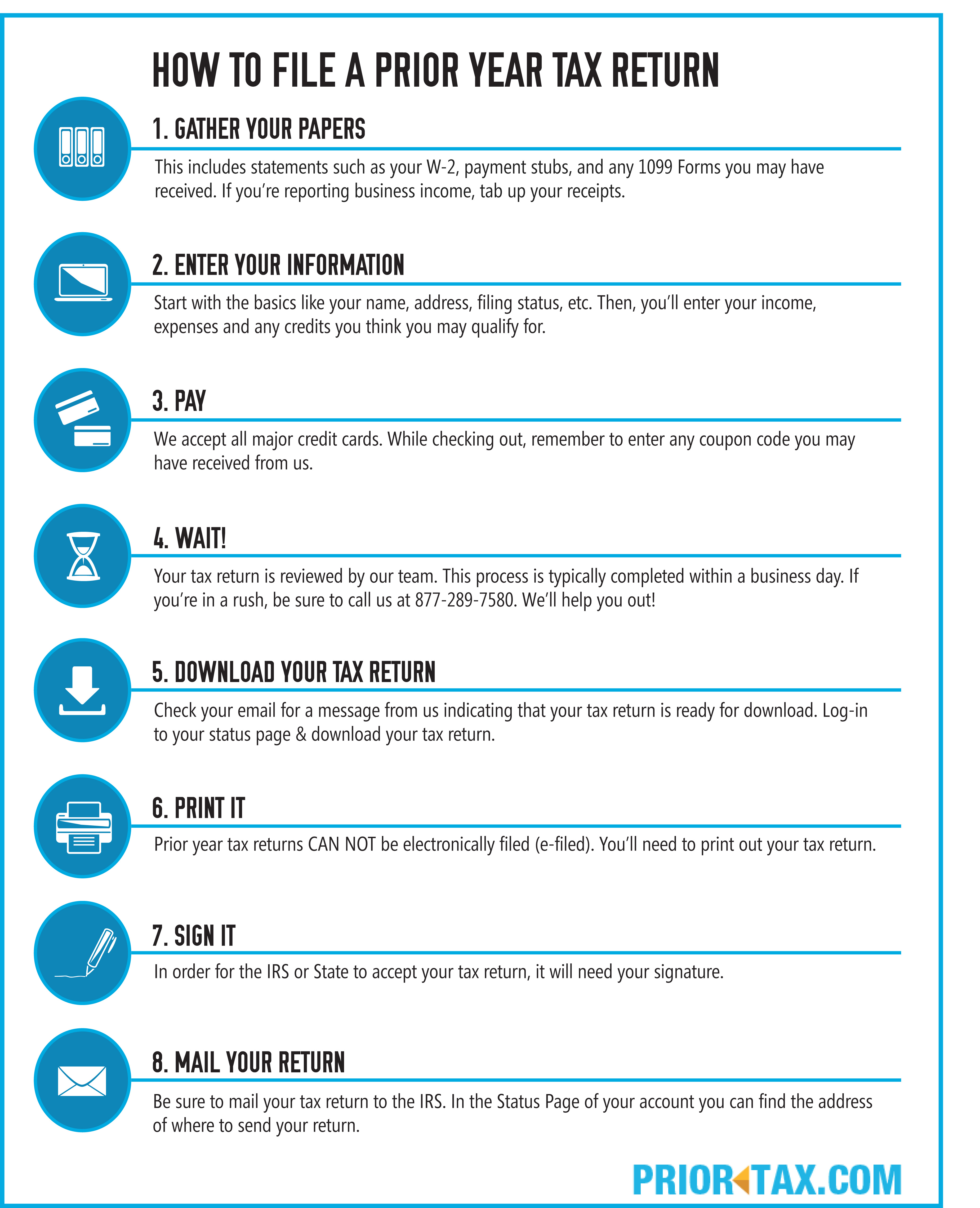
Most major online tax preparation platforms (such as TurboTax, H&R Block, and FreeTaxUSA) offer “Prior Year” modules. Unlike current-year filing, which is usually handled entirely within a web browser, some platforms may require you to download a specific software package for the 2022 tax year to your computer.
It is important to note that while you can prepare the 2022 return using these online tools, the IRS limits the ability of individual taxpayers to e-file prior-year returns. In many cases, after completing the data entry online, you will be prompted to print the forms and mail them to the IRS. However, if you work with an IRS-authorized e-file provider (a professional tax preparer), they often have the specialized software capability to electronically submit prior-year returns for the past two or three years.
Accessing IRS Transcripts Online
If you are filing late because you lost your 2022 W-2s or 1099s, the IRS “Get Transcript” tool is an invaluable digital resource. By creating an account through ID.me on the IRS website, you can download a “Wage and Income Transcript.” This document provides a summary of the data reported to the IRS by your employers and financial institutions for the 2022 tax year, allowing you to accurately reconstruct your return even if your physical paperwork is long gone.

Step-by-Step Guide to Completing Your 2022 Return
Filing a late return follows the same logic as a timely one, but it requires extra diligence to ensure that 2022-specific tax laws and deductions are applied correctly, rather than the rules for the current year.
Step 1: Gathering 2022 Documentation
Collect all income statements relevant to the period between January 1, 2022, and December 31, 2022. This includes:
-
W-2 Forms from employers.
-
1099-NEC or 1099-MISC for freelance or contract work.
-
1099-INT and 1099-DIV for interest and dividends.
-
1099-B for stock or cryptocurrency sales.
-
1099-K for payment app transactions (noting that 2022 had specific reporting thresholds).
Step 2: Choosing the Right Filing Status and Deductions
The standard deduction for 2022 was $12,950 for individuals and $25,900 for married couples filing jointly. Ensure the software you use is specifically calibrated for 2022 rates. If you had significant medical expenses, mortgage interest, or charitable contributions in 2022, check if itemizing is more beneficial than the standard deduction.
Step 3: Addressing Credits and Adjustments
Review your eligibility for 2022-specific credits. While the expanded Child Tax Credit from the pandemic era primarily impacted the 2021 tax year, there were still specific carry-overs and adjustments in 2022 that might apply to your situation. Online software will typically guide you through a series of questions to determine if you qualify for the EITC or the Child and Dependent Care Credit.
Step 4: Final Review and Submission
Once the data is entered, perform a final audit. Errors on late returns can lead to “math error” notices from the IRS, which further delay processing. If the software allows for e-filing of 2022 returns, proceed with the electronic signature. If it generates a PDF for mailing, ensure you sign the physical documents and send them via certified mail with a return receipt. This provides legal proof that you filed the return, which is essential if the IRS later claims they never received it.
Managing Tax Debt and Payment Plans
For many, the delay in filing is driven by the knowledge that they owe money they don’t have. From a financial management perspective, it is always better to file the return and then negotiate a payment plan rather than not filing at all.
Online Payment Agreements
The IRS offers a streamlined Online Payment Agreement application. If you owe $50,000 or less in combined tax, penalties, and interest, you can often set up an installment agreement digitally in a matter of minutes.
-
Short-term Payment Plans: Gives you up to 180 days to pay the balance in full.
-
Long-term Installment Agreements: Monthly payments for up to 72 months.
Setting these up online is significantly cheaper than doing so over the phone or via paper application. It demonstrates “good faith” to the IRS, which can sometimes lead to a “First-Time Penalty Abatement” if you have a clean history of compliance for the three years prior to 2022.
The “Fresh Start” Program and Offer in Compromise
If your financial situation is dire, you may look into an Offer in Compromise (OIC). This is a digital and physical application process where you propose to settle your tax debt for less than the full amount owed. The IRS considers your ability to pay, income, expenses, and asset equity. While the barrier for approval is high, it is a legitimate financial tool for those whose 2022 tax liability represents an insurmountable hurdle.

Conclusion: Securing Your Financial Future
Filing your 2022 taxes late online is a proactive step toward financial stability. By utilizing digital transcripts to recover lost data and leveraging prior-year tax software, you can navigate the complexities of the tax code with precision. Whether you are looking to claim a long-overdue refund or seeking to stop the bleeding from monthly penalties, the digital tools available today make the process manageable.
Remember that tax compliance is a cornerstone of personal finance. It impacts your ability to secure mortgages, obtain student loans, and even claim Social Security benefits in the future. Don’t let the 2022 tax year remain an open question on your financial ledger; use the online resources at your disposal to close that chapter today.
aViewFromTheCave is a participant in the Amazon Services LLC Associates Program, an affiliate advertising program designed to provide a means for sites to earn advertising fees by advertising and linking to Amazon.com. Amazon, the Amazon logo, AmazonSupply, and the AmazonSupply logo are trademarks of Amazon.com, Inc. or its affiliates. As an Amazon Associate we earn affiliate commissions from qualifying purchases.