
For many individuals and families, taxes represent the single largest annual expense, often exceeding the costs of housing, education, or healthcare. While paying taxes is a civic obligation, paying more than is legally required is a strategic failure in personal finance. Lowering your tax burden is not about evasion; it is about tax avoidance—using the legal framework provided by the tax code to keep more of your hard-earned money. Effective tax planning is a year-round endeavor that integrates with your investment strategy, career choices, and retirement goals.
By understanding the distinction between deductions, credits, and tax-advantaged accounts, you can create a multi-layered defense against high tax rates. This guide explores the most effective strategies for reducing your taxable income, optimizing your investments, and leveraging business structures to enhance your net worth.
Maximizing Deductions and Strategic Credits
The first step in any tax reduction strategy is narrowing the gap between your gross income and your taxable income. This is primarily achieved through deductions, which reduce the amount of income subject to tax, and credits, which provide a dollar-for-dollar reduction in the actual tax bill.
Navigating the Standard vs. Itemized Decision
Most taxpayers take the standard deduction, which is a fixed dollar amount that reduces the income you’re taxed on. However, if your eligible expenses—such as mortgage interest, state and local taxes (SALT) up to $10,000, medical expenses exceeding 7.5% of your adjusted gross income (AGI), and charitable contributions—exceed the standard deduction, itemizing becomes the superior choice.
A sophisticated technique often used is “deduction bunching.” This involves timing your expenses so that they fall into a single tax year to surpass the standard deduction threshold. For example, you might make two years’ worth of charitable donations in December of year one and none in year two, allowing you to itemize in the first year and take the standard deduction in the second.
Above-the-Line Deductions
“Above-the-line” deductions are particularly powerful because they reduce your Adjusted Gross Income (AGI). A lower AGI is beneficial because many tax credits and further deductions are phased out based on this number. Common above-the-line deductions include:
-
Student Loan Interest: You may be able to deduct up to $2,500 of interest paid on qualified student loans.
-
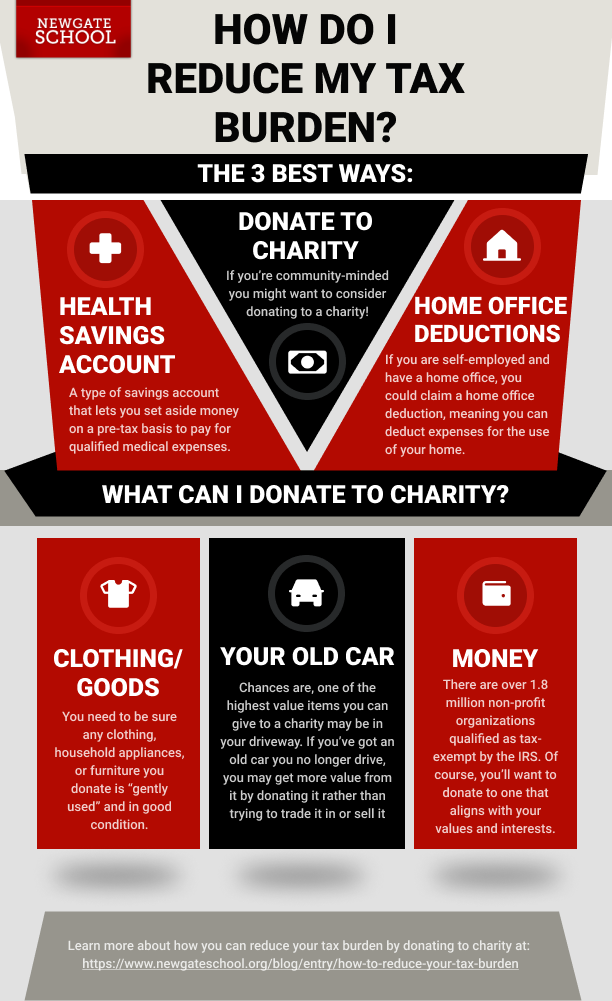
Health Savings Account (HSA) Contributions: If you have a high-deductible health plan, contributions to an HSA are 100% deductible.
-
Educator Expenses: Teachers can deduct out-of-pocket classroom expenses up to a specific limit.
Leveraging High-Value Tax Credits
Unlike deductions, which reduce taxable income, credits reduce your tax bill directly. The Child Tax Credit remains one of the most significant for families, but others are equally vital. The Earned Income Tax Credit (EITC) supports low-to-moderate-income workers, while the American Opportunity Tax Credit (AOTC) and the Lifetime Learning Credit (LLC) help offset the costs of higher education. Additionally, recent legislation has expanded credits for residential energy efficiency, such as installing solar panels or heat pumps, providing a dual benefit of lower utility bills and a lower tax bill.
Leveraging Retirement Accounts and Tax-Advantaged Vehicles
The tax code heavily incentivizes long-term saving. By utilizing retirement accounts, you can effectively “hide” income from the government during your peak earning years, allowing it to grow through the power of compounding without the drag of annual taxation.
Traditional vs. Roth Contributions
The choice between Traditional and Roth accounts is essentially a bet on your future tax rate. Contributions to a Traditional 401(k) or IRA are made with pre-tax dollars, reducing your current year’s taxable income. The trade-off is that withdrawals in retirement are taxed as ordinary income.
Conversely, Roth contributions are made with after-tax dollars. While they don’t lower your taxes today, the entire account—including all capital gains and dividends—is tax-free upon withdrawal in retirement. If you expect to be in a higher tax bracket in the future, the Roth is generally superior. If you are currently in your peak earning years, the immediate deduction of a Traditional account may be more valuable.
The Triple Tax Advantage of the HSA
Often overlooked as a retirement tool, the Health Savings Account (HSA) is arguably the most tax-efficient vehicle in existence. It offers a “triple” tax advantage:
-
Contributions are tax-deductible (or pre-tax via payroll).
-
The growth on investments within the account is tax-deferred.
-
Withdrawals for qualified medical expenses are entirely tax-free.
After age 65, the HSA functions much like a Traditional IRA; you can withdraw funds for any purpose and pay ordinary income tax, or continue using it tax-free for medical expenses. For those who can afford to pay medical bills out-of-pocket today, letting the HSA grow untouched for decades is a premier wealth-building strategy.
Maximizing Employer Matches and Catch-Up Contributions
Failing to contribute enough to receive a full employer match is equivalent to leaving a 100% return on investment on the table. Furthermore, individuals aged 50 and older are eligible for “catch-up” contributions, allowing them to shield even more income as they approach retirement. For 2024 and beyond, these limits have increased, providing a significant opportunity for high-earners to accelerate their tax-advantaged savings.

Tax-Efficient Investing and Capital Gains Management
How you manage your brokerage account can have a profound impact on your annual tax liability. Investors who ignore “tax drag”—the reduction in returns caused by taxes—can lose a significant percentage of their portfolio’s value over time.
Tax-Loss Harvesting
Tax-loss harvesting is the practice of selling an investment that is trading at a loss to offset capital gains realized elsewhere in your portfolio. If your losses exceed your gains, you can use up to $3,000 of the excess loss to offset your ordinary income, such as your salary. Any remaining losses can be “carried forward” to future years. The key is to avoid the “wash sale” rule, which prevents you from claiming the loss if you buy a “substantially identical” security within 30 days before or after the sale.
Long-Term vs. Short-Term Capital Gains
The duration for which you hold an asset determines its tax rate. Assets held for one year or less are subject to short-term capital gains tax, which is the same as your ordinary income tax bracket (up to 37%). However, assets held for more than one year qualify for long-term capital gains rates, which are significantly lower (0%, 15%, or 20% depending on income). Strategically waiting to sell an appreciated asset until day 366 can result in a tax saving of nearly 20% for high earners.
Asset Location Strategy
Not all investments should be held in the same types of accounts. Asset location is the practice of placing tax-inefficient investments (like high-yield bonds or actively managed funds that trigger frequent capital gains) into tax-deferred accounts like a 401(k). Meanwhile, tax-efficient investments (like index funds or municipal bonds) are better suited for taxable brokerage accounts. Municipal bonds are particularly attractive for high-net-worth individuals in high-tax states because the interest is generally exempt from federal and, in many cases, state taxes.
Business Ownership and Side Hustle Advantages
The tax code is notably generous toward business owners and entrepreneurs. Even a small side hustle can unlock deductions that are unavailable to W-2 employees.
The Qualified Business Income (QBI) Deduction
One of the most potent tools for small business owners is the Section 199A deduction, commonly known as the QBI deduction. This allows eligible self-employed individuals and small business owners to deduct up to 20% of their qualified business income from their taxes. While there are income thresholds and complexity regarding “specified service trades,” this deduction significantly lowers the effective tax rate for entrepreneurs.
Deducting Business Expenses and the Home Office
When you run a business, many expenses that were previously personal become deductible business expenses. This includes a portion of your internet, phone bill, and professional development costs. If you use a portion of your home exclusively for business, you can claim the home office deduction, which allows you to deduct a prorated share of your mortgage interest, utilities, and insurance.
Self-Employed Retirement Plans
Self-employed individuals have access to powerful retirement accounts like the SEP IRA or the Solo 401(k). A Solo 401(k) is particularly advantageous because it allows you to contribute both as an employee (up to the standard limit) and as an employer (up to 25% of compensation), with a total contribution limit that is far higher than a standard workplace 401(k). This allows high-earning freelancers to shield a massive portion of their income from taxes.
Charitable Giving as a Tax Strategy
Philanthropy offers a way to support causes you care about while simultaneously reducing your tax liability. However, the method of giving matters as much as the amount.
Donating Appreciated Securities
Instead of selling a stock, paying the capital gains tax, and then donating the cash, it is much more efficient to donate the appreciated security directly to a 501(c)(3) nonprofit. By doing this, you avoid the capital gains tax entirely, and you can still deduct the full fair market value of the stock (if held for more than a year). This “double benefit” makes it one of the most effective strategies for charitable high-earners.
Donor-Advised Funds (DAFs)
A Donor-Advised Fund (DAF) acts like a charitable savings account. You can contribute a large sum of cash or assets to the fund in a high-income year and receive an immediate tax deduction. You can then distribute those funds to various charities over several years. This is an excellent tool for “bunching” deductions into a year where you need a large tax break.

Qualified Charitable Distributions (QCDs)
For those aged 70½ or older, a Qualified Charitable Distribution allows you to transfer up to $105,000 (as of 2024) directly from your IRA to a qualified charity. This amount counts toward your Required Minimum Distribution (RMD) but is not included in your adjusted gross income. Because it lowers your AGI, it can also help prevent increases in Medicare premiums or the taxation of Social Security benefits.
Lowering your taxes is not a one-time event that happens in April; it is the result of consistent, informed decision-making throughout the year. By integrating these strategies—from maximizing retirement contributions and optimizing investment locations to leveraging business deductions and charitable giving—you can significantly reduce your tax burden and accelerate your journey toward financial independence.
aViewFromTheCave is a participant in the Amazon Services LLC Associates Program, an affiliate advertising program designed to provide a means for sites to earn advertising fees by advertising and linking to Amazon.com. Amazon, the Amazon logo, AmazonSupply, and the AmazonSupply logo are trademarks of Amazon.com, Inc. or its affiliates. As an Amazon Associate we earn affiliate commissions from qualifying purchases.