
Managing a paycheck is about more than just ensuring the bills are paid on time; it is about designing a framework that allows your current self to live comfortably while your future self gains financial independence. For many, the arrival of a paycheck triggers a cycle of reactive spending—paying whatever bill is most urgent and spending the remainder until the balance hits zero. To break this cycle, you need a proactive strategy for splitting your income.
The way you allocate your earnings dictates your ability to weather emergencies, eliminate debt, and eventually stop trading your time for money. While there is no one-size-fits-all percentage that works for every household, several proven frameworks can serve as a foundation for your financial architecture.

The 50/30/20 Rule: The Foundational Blueprint
The 50/30/20 rule is perhaps the most recognized method for paycheck allocation. Popularized by Senator Elizabeth Warren in her book All Your Worth, this strategy provides a balanced approach that accounts for survival, lifestyle, and long-term security.
Understanding the 50%: Essential Needs
The first and largest portion of your paycheck—50%—should be reserved for “needs.” These are the non-negotiable expenses that you must pay to maintain a basic standard of living. This includes housing (rent or mortgage), utilities, groceries, transportation, insurance premiums, and minimum debt payments.
The challenge many face is misclassifying “wants” as “needs.” For example, while food is a need, a $50 dinner at a restaurant is a want. To make the 50/30/20 rule work, you must be disciplined in your definitions. If your essential expenses exceed 50% of your take-home pay, it is a signal that you may be “house poor” or “car poor,” and you may need to find ways to downsize or increase your income to bring the ratio back into balance.
The 30%: Discretionary Wants
The 30% category is for lifestyle choices. This includes dining out, travel, hobbies, streaming services, and the latest gadgets. This category is vital because a budget that is too restrictive often leads to “frugal fatigue,” causing people to abandon their financial plans entirely. By intentionally setting aside 30% for enjoyment, you create a sustainable system where you can enjoy your life today without guilt, knowing that your essentials and savings are already covered.
The 20%: Savings and Debt Repayment
The final 20% is the engine of your wealth creation. This portion is dedicated to “financial goals.” This includes building an emergency fund, contributing to retirement accounts (like a 401(k) or IRA), and making extra payments toward high-interest debt beyond the minimum requirements. This 20% is what allows you to build a safety net and eventually retire. If you have significant high-interest credit card debt, this 20% should be aggressively funneled there first, as the interest rates on debt often outpace the returns on investments.
Advanced Allocation Models for Specific Financial Goals
While the 50/30/20 rule is a great starting point, it may not be aggressive enough for those with high-income aspirations or significant debt burdens. Depending on your current net worth and career stage, you might consider alternative models.
The 70/20/10 Rule for High Living Costs or Debt Paydown
In high-cost-of-living areas, 50% for needs is often unrealistic. The 70/20/10 rule offers a different perspective. In this model, 70% of your income goes toward all living expenses (both needs and wants). The remaining 30% is split: 20% toward savings or debt reduction and 10% toward tithing, charity, or additional investments. This model simplifies the process by grouping all spending into one large bucket, which can be easier for those who find the distinction between needs and wants too blurry.
The 80/20 “Pay Yourself First” Method
For those who find detailed budgeting tedious, the 80/20 rule is the ultimate simplification. Under this model, you take 20% of your paycheck off the top and immediately send it to savings or investments. The remaining 80% is yours to spend on everything else—bills, groceries, and fun. As long as you don’t exceed that 80%, you are guaranteed to meet your savings goals. This “pay yourself first” mentality ensures that your future self is prioritized before any vendors or service providers get a cent of your money.
Zero-Based Budgeting: Maximum Efficiency
Zero-based budgeting is not about having zero dollars in your bank account; it is about ensuring that every single dollar has a specific “job” to do. At the start of the month, you take your total expected income and subtract every anticipated expense, including savings and investments, until the balance equals zero.
If you have $100 left over after accounting for all bills and fun, you don’t just leave it in your checking account to be spent mindlessly; you assign it to a category like “New Car Fund” or “Extra Mortgage Payment.” This method is highly effective for those who feel like their money “disappears” and want maximum control over their cash flow.
Automating Your Financial Infrastructure
A plan is only as good as its execution. In the modern financial landscape, manual transfers are a recipe for inconsistency. To successfully split your paycheck, you should leverage technology to automate the process.
Direct Deposit Splitting
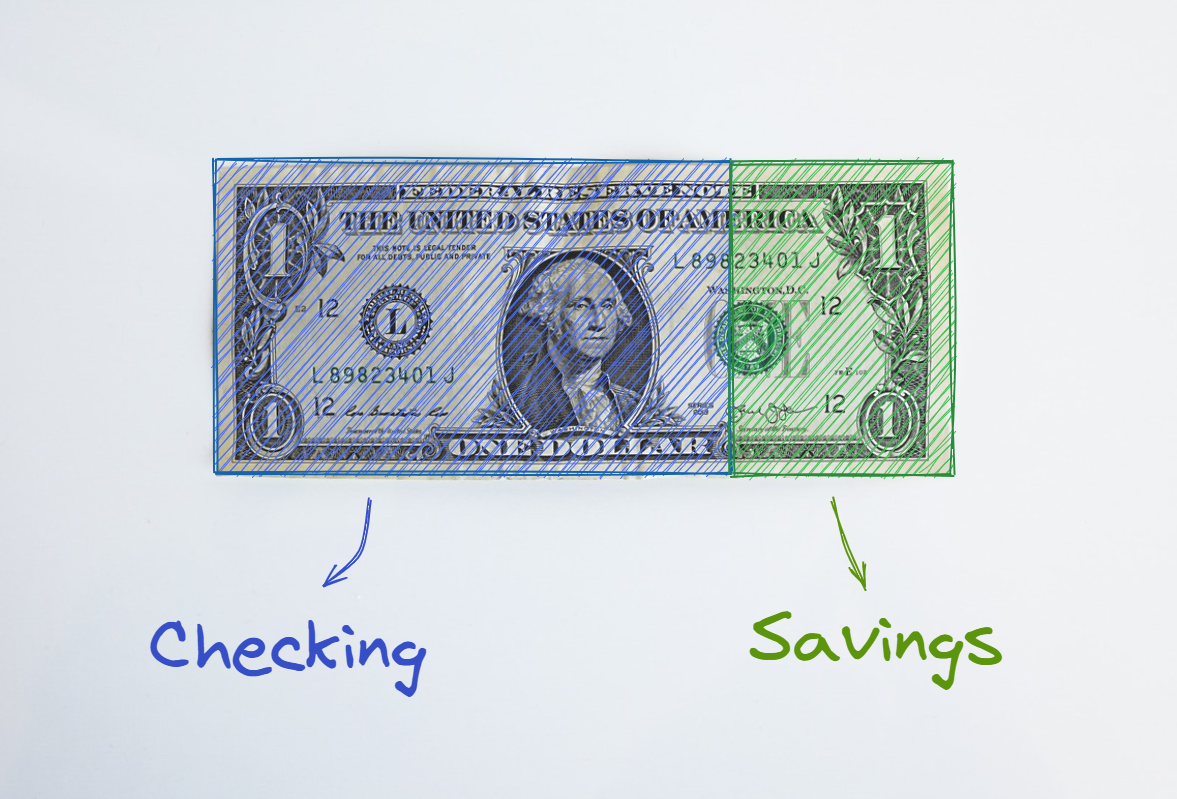
Most employers allow you to split your direct deposit into multiple bank accounts. This is one of the most powerful psychological hacks in personal finance. By having 20% of your paycheck sent directly to a high-yield savings account or a brokerage account at a different bank, you never “see” that money in your primary checking account. If you don’t see it, you are less likely to spend it.
The “Bucket” System for Sinking Funds
Many digital banks now offer “buckets” or “vaults” within a single savings account. You can use these to further split your savings portion. For example, within your 20% savings allocation, you might have buckets for:
-
Emergency Fund: 3-6 months of expenses.
-
Annual Expenses: Car registration, insurance premiums, and holiday gifts.
-
Travel: Future vacations.
-
Home Maintenance: Expected repairs.
By splitting your paycheck into these micro-categories, you prevent the “surprise” expenses that usually derail a budget. When the car insurance bill arrives, you aren’t scrambling; you are simply withdrawing from a bucket you’ve been filling all year.
Strategic Adjustments Based on Life Stages
Your paycheck allocation should evolve as your life does. A 22-year-old just starting their career has different priorities than a 45-year-old in their peak earning years.
Early Career: The Emergency Fund Phase
In the early stages of your career, your primary goal is stability. Before you worry about aggressive investing or luxury wants, your paycheck split should prioritize the emergency fund. Having $1,000 to $2,000 in a “starter” fund can prevent most minor crises from turning into high-interest debt. During this phase, you might even temporarily reduce your “wants” to 10% or 15% to build that wall of security faster.
Mid-Career: Maximizing Tax-Advantaged Accounts
As your income grows, your focus should shift toward tax efficiency. If you receive a raise, instead of increasing your “wants” (a phenomenon known as lifestyle creep), you should increase your contributions to tax-advantaged accounts like a 401(k), 403(b), or Health Savings Account (HSA). These contributions often come out of your paycheck “pre-tax,” which lowers your overall taxable income and effectively allows you to save more for less out-of-pocket cost.
High Earners: Guarding Against Lifestyle Creep
For those in high-earning brackets, the traditional 50/30/20 rule may actually be too conservative regarding savings. If you earn $200,000 a year, spending $60,000 (30%) on “wants” might be excessive. High earners often benefit from an “inverted” split, where they keep their needs and wants at a fixed dollar amount and funnel any excess income—sometimes 40% or 50% of their paycheck—directly into wealth-building assets.
The Psychology of Sustainable Budgeting
The most common reason paycheck splitting fails is not a lack of math skills, but a lack of psychological sustainability. If you treat your paycheck split as a punishment, you will eventually rebel against it.
The “Buffer” Strategy
Always leave a small “buffer” in your checking account—perhaps $200 to $500—that is not assigned to a specific category. This acts as a shock absorber for the small variances in utility bills or grocery costs. Knowing you have this cushion reduces the stress of “perfect” budgeting.

Quarterly Rebalancing
Your life changes, and your budget should too. Set a calendar reminder every three months to review your paycheck split. Are you consistently overspending in your “wants” category? Perhaps you need to be more honest about your lifestyle costs. Are you sitting on too much cash in a low-interest savings account? It might be time to move that money into the market.
Ultimately, splitting your paycheck is about intentionality. It is the process of deciding that your future goals are more important than impulsive purchases. By choosing a framework—whether it’s 50/30/20, zero-based, or the 80/20 rule—and automating the process, you transform your paycheck from a source of stress into a powerful tool for building the life you want.
aViewFromTheCave is a participant in the Amazon Services LLC Associates Program, an affiliate advertising program designed to provide a means for sites to earn advertising fees by advertising and linking to Amazon.com. Amazon, the Amazon logo, AmazonSupply, and the AmazonSupply logo are trademarks of Amazon.com, Inc. or its affiliates. As an Amazon Associate we earn affiliate commissions from qualifying purchases.