
Budgeting is often perceived as a practice of restriction—a financial diet designed to curb spending and limit enjoyment. However, in the realm of professional personal finance, a budget is far from a cage. Instead, it is a strategic roadmap. It is the process of assigning a purpose to every dollar you earn, ensuring that your capital is deployed in a way that aligns with your long-term objectives, whether that involves achieving debt freedom, building a robust investment portfolio, or securing a comfortable retirement.
To calculate a budget effectively, one must move beyond simple arithmetic. It requires a deep dive into cash flow patterns, an honest assessment of lifestyle choices, and the implementation of structured frameworks that turn abstract goals into tangible results. This guide explores the foundational and advanced methods of calculating a budget that serves as a pillar for financial stability and wealth creation.
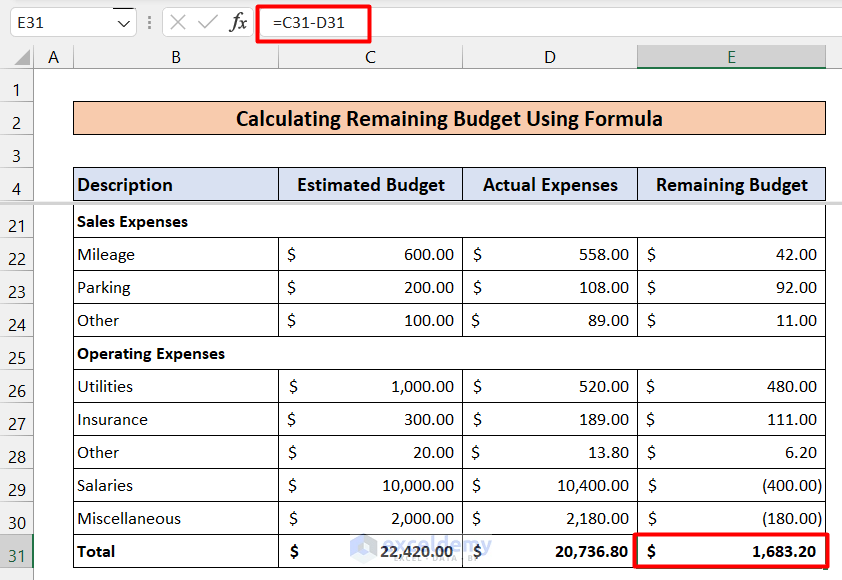
Establishing Your Financial Baseline: Income and Expenses
The first step in calculating any budget is to determine your “Net Zero” point. You cannot plan for the future without an uncompromisingly accurate picture of your current financial state. This begins with an analysis of two primary vectors: your total net income and your categorized expenses.
Determining Your True Net Income
Many individuals make the mistake of budgeting based on their gross salary. This leads to immediate discrepancies because your gross pay does not account for taxes, health insurance premiums, 401(k) contributions, or Social Security deductions. To calculate a functional budget, you must use your “take-home pay”—the actual amount that hits your bank account.
If you are a salaried employee, this calculation is straightforward. However, for freelancers, contractors, or those with variable commission structures, calculating income requires a more conservative approach. In these instances, it is best to look at the previous 12 months of income and identify the lowest-earning month. Using this “floor” as your baseline ensures that your budget remains solvent even during lean periods. Any income earned above that baseline can then be redirected toward aggressive savings or debt repayment.
Categorizing Fixed vs. Variable Expenses
Once your income is defined, you must track where it goes. Expenses generally fall into two categories: fixed and variable.
-
Fixed Expenses: These are the non-negotiables that remain relatively constant month to month. This includes rent or mortgage payments, car insurance, loan installments, and subscription services. These are the easiest to track but often the hardest to reduce without significant lifestyle changes.
-
Variable Expenses: These fluctuate based on behavior and necessity. This includes groceries, fuel, dining out, entertainment, and utilities.
To get an accurate average of variable expenses, audit your bank and credit card statements from the last ninety days. Total the amounts in each category and divide by three. This provides a realistic starting point for your monthly allocations, rather than an idealized version of what you wish you spent.
Choosing the Right Budgeting Framework
Calculating a budget is not a one-size-fits-all endeavor. Depending on your financial temperament and your specific goals, different frameworks may offer better results. Selecting the right model is essential for long-term sustainability.
The 50/30/20 Rule
Popularized as a standard for general financial health, the 50/30/20 rule provides a balanced framework for those who want a simple, high-level view of their finances. Under this model, you calculate your budget by dividing your net income into three buckets:
-
50% for Needs: This covers the absolute essentials—housing, utilities, basic groceries, and minimum debt payments. If your needs exceed 50%, it is a signal that you may be “house poor” or over-leveraged in your lifestyle.
-
30% for Wants: This is your discretionary spending. It includes hobbies, travel, dining out, and the premium versions of basic necessities.
-
20% for Savings and Debt Repayment: This is the wealth-building engine. This portion should go toward emergency funds, retirement accounts, and extra principal payments on high-interest debt.
The strength of the 50/30/20 rule lies in its flexibility. It acknowledges that life should be enjoyed today while still prioritizing the future.
Zero-Based Budgeting
For those who require more granular control, Zero-Based Budgeting (ZBB) is the gold standard. The philosophy behind ZBB is that your income minus your expenses should equal exactly zero at the end of the month. This does not mean you have zero dollars in your bank account; rather, it means every single dollar has been assigned a specific task.
If you have $5,000 in monthly income, you allocate $4,800 to your various expense categories and the remaining $200 is explicitly assigned to a “miscellaneous” fund or an investment account. By giving every dollar a job, you eliminate the “leakage” that occurs when unallocated cash is spent mindlessly.
The Envelope System and Digital Alternatives

For those who struggle with overspending in specific categories like groceries or entertainment, the envelope system is a tactile way to calculate and manage a budget. You determine a set amount of cash for a category and place it in an envelope. Once the cash is gone, spending in that category stops for the month. In the modern digital economy, many banking apps allow for “virtual envelopes” or “vaults,” providing the same psychological barrier without the need for physical currency.
Tactical Steps to Execute and Refine Your Calculations
After selecting a framework, the execution phase involves specific tactics to ensure the budget remains realistic. A budget that is too tight will be abandoned within weeks, while one that is too loose will fail to move the needle on your financial goals.
Setting Realistic Financial Goals
A budget without a goal is just a list of numbers. To calculate an effective budget, you must define what you are working toward. Are you saving for a 20% down payment on a home? Are you looking to achieve “Fire” (Financial Independence, Retire Early)?
Your goals dictate your allocations. For instance, if your goal is aggressive debt repayment, you might temporarily shift your 50/30/20 budget to a 50/10/40 structure. By quantifying your goals—attaching a dollar amount and a deadline to them—you can work backward to calculate exactly how much needs to be diverted from your monthly income.
Factoring in Sinking Funds
One of the most common reasons budgets fail is the “unexpected” expense that was actually predictable. Car repairs, annual insurance premiums, holiday gifts, and home maintenance are not emergencies; they are irregular expenses.
To handle these, you should calculate “sinking funds.” Estimate the total cost of these items over a year, divide by twelve, and include that amount as a fixed monthly expense in your budget. By the time the expense arises, the money is already set aside, preventing you from dipping into your emergency fund or relying on credit cards.
The Role of Debt Repayment Strategies
When calculating your budget, debt should be treated as a priority. There are two primary schools of thought: the Debt Snowball and the Debt Avalanche.
-
The Debt Snowball: You focus on paying off the smallest balance first while maintaining minimum payments on others. This builds psychological momentum.
-
The Debt Avalanche: You focus on the debt with the highest interest rate. Mathematically, this is the most efficient way to save money on interest over time.
Whichever method you choose, your budget must explicitly reflect this strategy in your monthly allocations.
Advanced Optimization and Long-Term Sustainability
Calculating a budget is not a “set it and forget it” task. As your career progresses and your life circumstances change, your budget must evolve. Optimization is the process of fine-tuning your allocations to maximize efficiency.
Reviewing and Adjusting Monthly
The first three months of a new budget are often the most difficult. You will likely find that you underestimated certain categories or overestimated your discipline. This is a normal part of the process. At the end of each month, conduct a “budget vs. actual” audit. If you consistently overspend on groceries, don’t just resolve to “do better”—adjust the budget calculation to reflect the reality of your costs, and find a corresponding reduction in a “want” category to balance the books.
Leveraging Automation for Consistency
The greatest enemy of a successful budget is human friction. The more manual steps required to save or pay bills, the more likely a mistake will occur. Professional financial management relies heavily on automation.
Set up automatic transfers to your savings and investment accounts to occur immediately after your paycheck is deposited. This is known as “paying yourself first.” By removing the money from your spending account before you have a chance to touch it, you effectively lower your “perceived” income, forcing your lifestyle to adapt to the remaining balance.
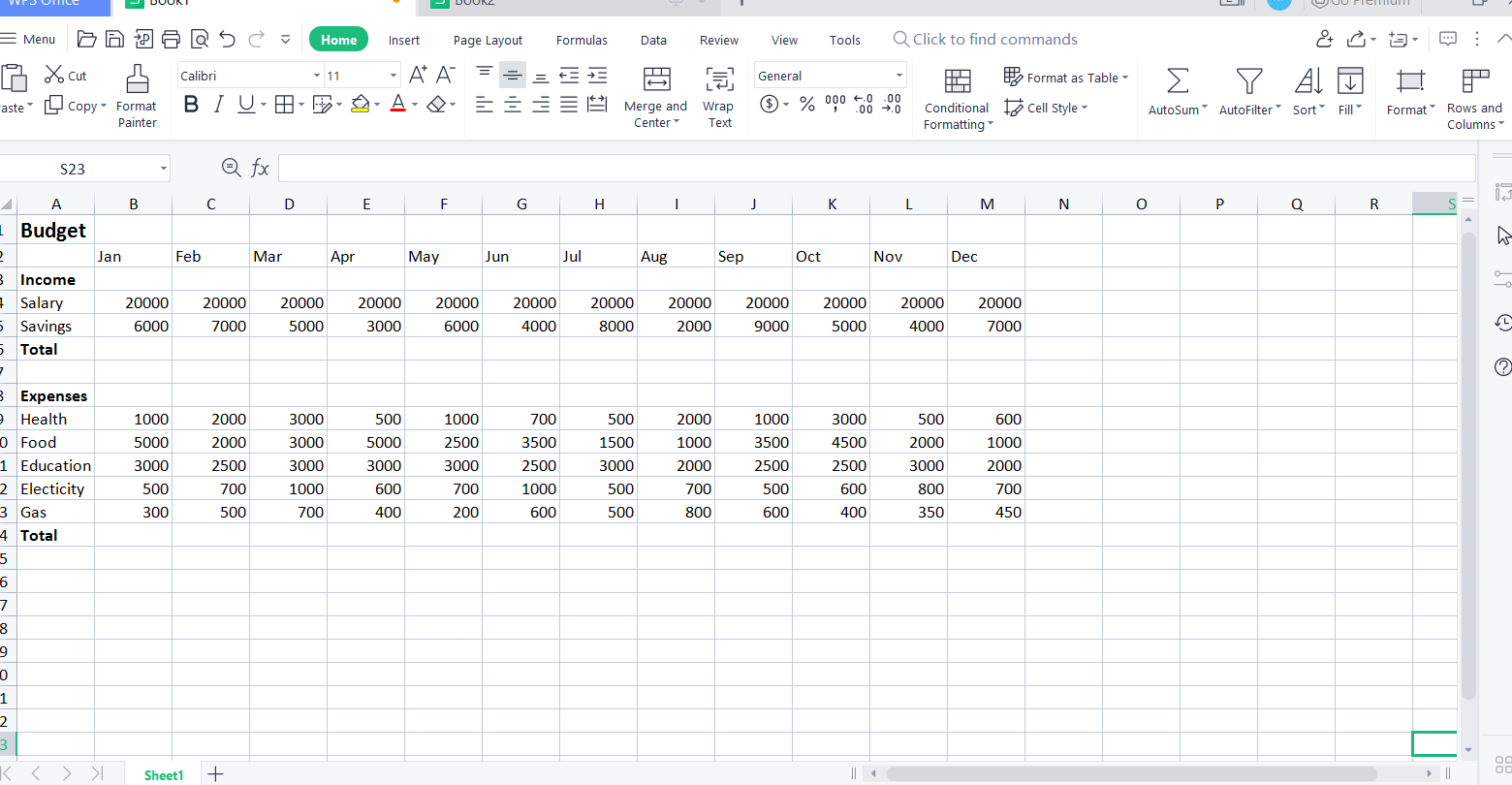
Navigating Lifestyle Creep and Financial Windfalls
As your income increases through raises, bonuses, or side hustles, you face the danger of “lifestyle creep”—the tendency for expenses to rise in tandem with income. To combat this, decide in advance how you will calculate the allocation of any future windfalls. A common strategy is the “50/50 Rule for Raises”: apply 50% of any increase in pay to your standard of living and the other 50% directly to your long-term savings or debt repayment. This allows you to enjoy the fruits of your labor while simultaneously accelerating your path to financial independence.
In conclusion, calculating a budget is the most fundamental skill in personal finance. It requires a blend of historical data analysis, strategic planning, and psychological awareness. By establishing a clear baseline, choosing a structured framework, and continuously optimizing your approach, you transform your finances from a source of stress into a powerful engine for growth. A well-calculated budget doesn’t just tell you where your money went—it tells your money where to go.
aViewFromTheCave is a participant in the Amazon Services LLC Associates Program, an affiliate advertising program designed to provide a means for sites to earn advertising fees by advertising and linking to Amazon.com. Amazon, the Amazon logo, AmazonSupply, and the AmazonSupply logo are trademarks of Amazon.com, Inc. or its affiliates. As an Amazon Associate we earn affiliate commissions from qualifying purchases.