
Alphabet Inc. is far more than just Google. While its search engine, advertising platforms, and Android operating system remain its foundational pillars, Alphabet has strategically assembled a sprawling empire of subsidiaries and ventures that touch nearly every aspect of the digital and physical world. For investors and market observers, understanding this complex web of ownership is crucial. It reveals the company’s long-term vision, its diversification strategy, and the manifold revenue streams and future growth opportunities that extend well beyond its well-known core products.
This article delves into Alphabet’s extensive portfolio through a financial lens, exploring the strategic rationale behind its acquisitions and “Other Bets,” and analyzing how these entities contribute to its overall market valuation, competitive advantage, and long-term financial stability.
The Strategic Imperative Behind Alphabet’s Acquisitions
Alphabet’s acquisition strategy is a masterclass in leveraging financial strength to secure future growth, diversify risk, and maintain market dominance. Each investment, whether a multi-billion-dollar corporate takeover or a nascent startup, serves a broader strategic purpose that ultimately aims to enhance shareholder value.
Diversification and Market Dominance
Alphabet’s reliance on advertising revenue, primarily from Google Search and YouTube, while immensely profitable, also presents a concentration risk. Acquisitions are a primary tool for mitigating this risk by diversifying its revenue base and expanding its footprint into new, high-growth sectors. By owning companies in areas like autonomous vehicles (Waymo), life sciences (Verily, Calico), artificial intelligence (DeepMind), and cybersecurity (Mandiant), Alphabet isn’t just buying market share; it’s buying into entirely new markets and future industries. This strategy aims to ensure the company remains relevant and profitable even as technological landscapes shift, reducing its vulnerability to fluctuations in the digital advertising market or regulatory pressures on its core businesses. For investors, this diversification offers a more resilient earnings profile, potentially cushioning against downturns in any single segment.
Fueling Innovation and Future Growth
Many of Alphabet’s acquisitions are less about immediate profitability and more about acquiring cutting-edge technology, intellectual property, and top-tier talent. Companies like DeepMind, a leader in AI research, were acquired not for their existing products but for their potential to revolutionize future technologies. These investments in R&D-intensive firms position Alphabet at the forefront of technological innovation, allowing it to integrate advanced capabilities into its existing products (e.g., AI improvements in Search, Android, and Cloud) and to seed entirely new ventures. From a financial perspective, these acquisitions represent long-term capital investments in proprietary technology and human capital, essential for sustaining competitive advantage and unlocking future revenue streams that might be decades away. They are bets on the exponential growth of new technological paradigms.
Financial Synergies and Ecosystem Expansion
Beyond simple diversification, many acquisitions are carefully chosen for their potential to create powerful synergies within Alphabet’s existing ecosystem. For instance, the acquisition of Android enabled Google to dominate the mobile operating system market, providing a massive platform for its search, app store, and advertising services. Similarly, companies like Waze (acquired 2013) not only bring in a user base but also enrich Google Maps’ data, improving its utility and, by extension, the value of location-based advertising. These synergistic acquisitions allow Alphabet to extend the reach and utility of its core products, foster greater user engagement across its services, and create network effects that make its ecosystem incredibly sticky and valuable. For investors, these synergies translate into increased user engagement, richer data for targeted advertising, and opportunities for cross-promotion and bundling, all of which contribute to stronger revenue growth and higher profitability margins over time.
Navigating Alphabet’s Core Subsidiaries and “Other Bets”
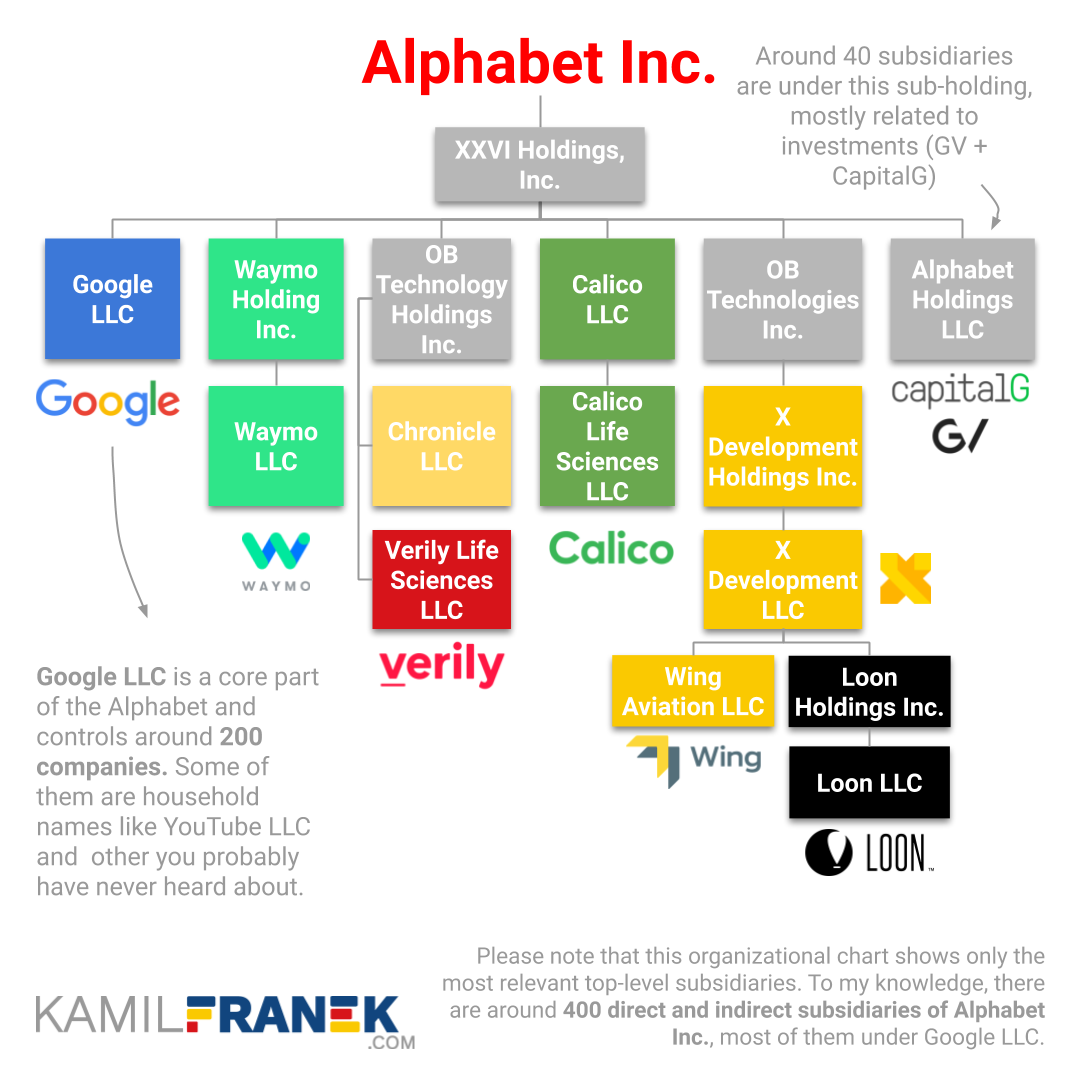
Alphabet’s corporate structure is designed to delineate its highly profitable core Google operations from its more speculative, capital-intensive ventures, collectively known as “Other Bets.” This segmentation offers transparency into the financial performance of each segment, crucial for investor analysis.
Google LLC – The Revenue Powerhouse
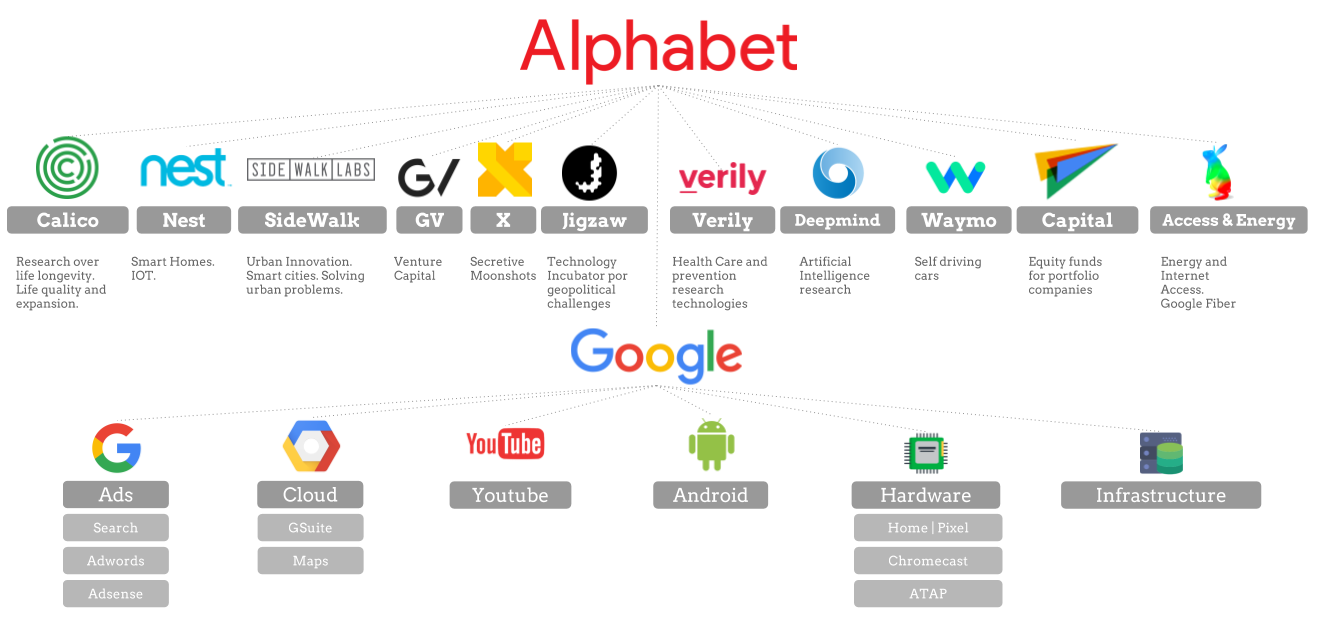
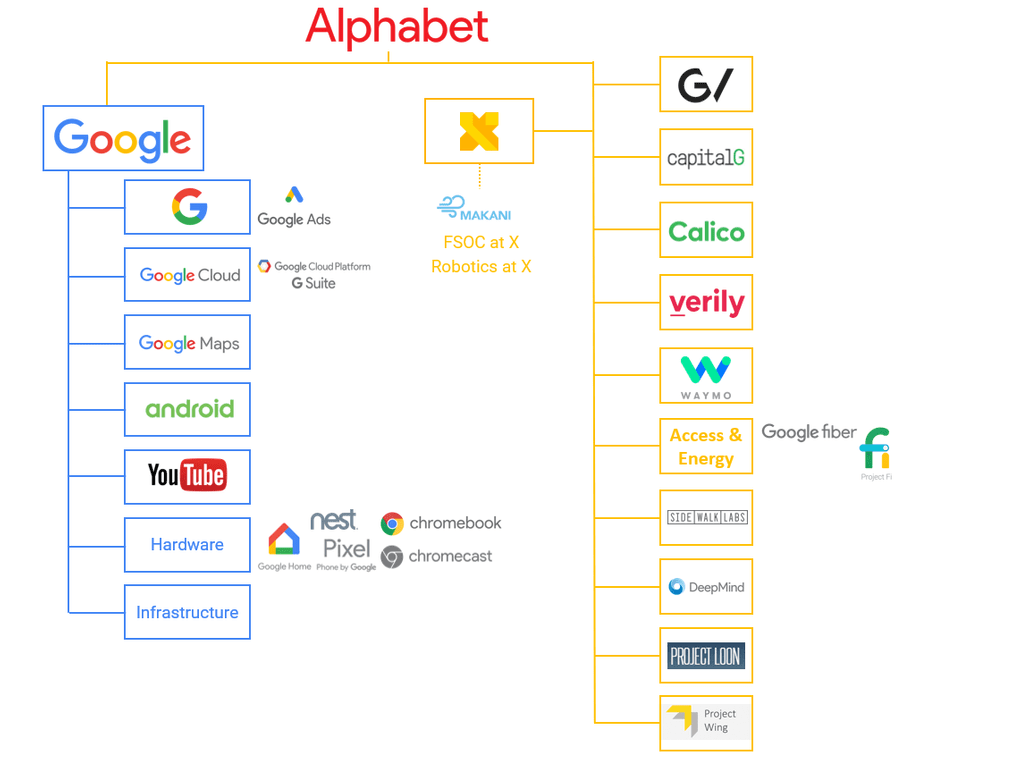
Google LLC is the undisputed financial engine of Alphabet, encompassing all the products and services that generate the vast majority of the company’s revenue and profit. This includes Google Search and its related advertising businesses, YouTube (another massive advertising and subscription platform), Android, Chrome, Google Maps, Google Play, and Google Cloud.
The financial success of Google LLC is staggering. Its advertising revenue alone makes it one of the most profitable companies globally, funding not only its own extensive R&D but also the significant losses incurred by the “Other Bets.” Google Cloud, though still trailing market leaders, is growing rapidly and represents a significant future revenue stream in the enterprise sector. For investors, Google LLC represents a cash cow with strong, predictable earnings, underpinned by its dominant market positions in search, mobile, and digital advertising. Understanding the growth trajectory and profitability of these core segments is paramount for valuing Alphabet as a whole.
“Other Bets” – High-Risk, High-Reward Investments
The “Other Bets” segment comprises a diverse portfolio of early-stage, often loss-making ventures with the potential for massive long-term returns. These companies operate with a higher degree of autonomy but receive significant capital investment from Alphabet. They are typically focused on pioneering new technologies and markets.
-
Waymo: Alphabet’s autonomous driving technology company. While incurring substantial R&D costs, Waymo is a frontrunner in the self-driving car industry, a market projected to be worth trillions. Its financial value lies in its potential to revolutionize transportation, logistics, and ride-hailing, opening up entirely new, multi-billion dollar revenue streams in the future.
-
Verily and Calico: These are Alphabet’s life sciences and health technology ventures. Verily focuses on data-driven healthcare, developing tools and devices to collect and organize health information, while Calico is dedicated to understanding and combating aging and age-related diseases. These are incredibly long-term investments, with the potential for high-impact scientific breakthroughs and significant returns in the vast healthcare market, though commercialization paths are often lengthy and complex.
-
DeepMind: A leading artificial intelligence research company. While its AI breakthroughs often find their way back into Google’s core products, DeepMind also explores general AI applications. Its financial value is primarily in its intellectual property, its ability to attract top AI talent, and its role in keeping Alphabet at the cutting edge of AI development, which is becoming integrated into virtually every industry.
-
Google Fiber: An initiative to build high-speed internet infrastructure. While facing intense competition and high capital expenditure, Fiber represents an investment in critical digital infrastructure, potentially creating new service revenue and enhancing Alphabet’s overall connectivity ecosystem.
For investors, the “Other Bets” represent Alphabet’s long-term growth options and innovation engine. While they collectively generate losses in the present, their strategic value lies in their potential to become the next Google, diversifying Alphabet’s portfolio for sustained leadership in emerging industries.
Key Acquisitions and Their Impact on Alphabet’s Financial Landscape
Alphabet’s history is punctuated by significant acquisitions that have profoundly shaped its financial trajectory and market position. These strategic moves were not merely about expanding; they were about integrating crucial technologies, securing market share, and creating new revenue streams.
YouTube: A Masterclass in Content Monetization
Acquired for a relatively modest $1.65 billion in 2006, YouTube has since blossomed into a multi-billion-dollar advertising and subscription powerhouse. It dramatically diversified Alphabet’s revenue streams beyond search advertising, establishing a dominant position in online video. YouTube’s financial success is staggering, contributing tens of billions of dollars annually to Alphabet’s top line through video ads, premium subscriptions (YouTube Premium, YouTube Music), and creator monetization tools. For investors, YouTube represents a testament to Alphabet’s foresight and ability to scale acquired assets into global revenue generators, creating a highly valuable segment that continually attracts massive user engagement and advertiser spend.
Android: The Mobile OS Monopoly and Ecosystem Value
Google acquired Android Inc. in 2005 for around $50 million, a move that proved to be one of the most impactful in corporate history. Android’s open-source nature allowed it to become the world’s most popular mobile operating system, providing Google with unparalleled access to mobile users globally. Financially, Android’s value is multi-faceted: it ensures Google Search remains the default search engine on billions of devices, drives app downloads and revenue through Google Play, enables data collection for targeted advertising, and acts as a platform for Google’s other services. While Android itself doesn’t directly generate revenue through licenses, its strategic importance in controlling the mobile ecosystem makes it an invaluable asset, contributing indirectly to vast advertising revenues and securing Google’s pervasive presence in the digital lives of billions.
Waze: Enhancing Geo-Location Data and Ad Targeting
The acquisition of Waze in 2013 for approximately $1 billion was a strategic move to bolster Google’s mapping and navigation capabilities. While Waze continues to operate as a standalone app, its integration has provided Google Maps with real-time traffic data, crowd-sourced information, and an alternative user interface. Financially, Waze enhances Google’s core advertising business by enriching its location data, allowing for more precise geo-targeted ads. It also strengthens Google’s competitive edge in the navigation market against rivals. For investors, this acquisition demonstrates how Alphabet uses complementary technologies to improve its core offerings and enhance its advertising engine’s precision and profitability.
Mandiant: Bolstering Cybersecurity and Cloud Offerings
In 2022, Alphabet acquired Mandiant, a prominent cybersecurity firm, for $5.4 billion. This was a direct response to the escalating global threat of cyberattacks and a strategic move to significantly enhance Google Cloud’s security capabilities. Financially, Mandiant strengthens Google Cloud’s enterprise offerings, making it more attractive to large organizations with stringent security requirements. It allows Google to offer end-to-end security solutions, from threat intelligence to incident response, tapping into the rapidly growing cybersecurity market. For investors, this acquisition signals Alphabet’s commitment to expanding its high-margin cloud business and establishing itself as a dominant player in enterprise security, a market with substantial recurring revenue potential.
Fitbit: Expanding into Wearables and Health Data
Alphabet’s 2021 acquisition of Fitbit for $2.1 billion marked a clear entry into the wearables market and a significant investment in health data. This move positions Alphabet to compete more directly with Apple in the consumer health technology space. Financially, Fitbit allows Alphabet to integrate its AI and software capabilities with health and fitness hardware, creating a richer data ecosystem. This data can be used to improve Google’s health-related services, enhance personalized advertising, and explore new revenue models in digital health. For investors, Fitbit represents a long-term play in the intersection of health, data, and consumer technology, aligning with Alphabet’s broader “Other Bets” strategy of exploring future growth markets.
Financial Implications for Investors and Market Analysis
Alphabet’s diverse portfolio of companies has profound implications for its financial stability, growth prospects, and overall market valuation. Analyzing these aspects is critical for any investor considering Alphabet stock.
Revenue Diversification and Stability
The vast array of companies owned by Alphabet contributes to significant revenue diversification. While advertising remains dominant, the growth of Google Cloud, the expansion of YouTube’s subscription services, and the nascent revenues from “Other Bets” provide multiple income streams. This diversification reduces Alphabet’s exposure to economic downturns or regulatory challenges in any single market, offering a more stable and resilient earnings profile over the long term. For investors, this means a reduced risk profile compared to companies with more concentrated revenue sources.
Valuation and Growth Prospects
Valuing Alphabet requires a nuanced approach. Investors must assess the core Google LLC segment, which consistently delivers robust profits, alongside the “Other Bets” segment, which typically incurs losses but holds immense long-term potential. Analysts often use a “sum-of-the-parts” valuation, attributing value to YouTube, Google Cloud, Waymo, and other significant entities independently, then aggregating them. The growth prospects are tied not only to the continued expansion of Google’s core businesses but critically to the successful commercialization and scaling of the “Other Bets,” which represent the company’s future growth engines. Understanding the capital allocation decisions and the progress of these ventures is key to forecasting Alphabet’s future financial performance.
Competitive Edge and Market Power
Alphabet’s ownership structure provides a formidable competitive advantage. By owning critical components across the digital ecosystem – from mobile operating systems (Android) to web browsers (Chrome), search (Google Search), video (YouTube), cloud computing (Google Cloud), and emerging technologies (AI, autonomous driving) – Alphabet can create powerful network effects and cross-platform synergies. This extensive reach makes it incredibly difficult for competitors to challenge its dominance in multiple sectors simultaneously. For investors, this translates into strong pricing power, high barriers to entry for rivals, and sustained market leadership, which are strong indicators of long-term profitability.
Regulatory Scrutiny and Anti-Trust Concerns
However, Alphabet’s vast ownership and market power also attract intense regulatory scrutiny globally. Governments and antitrust bodies are increasingly concerned about the potential for anti-competitive practices, data privacy issues, and monopolistic behavior. This scrutiny can lead to substantial fines, forced divestitures, or restrictions on future acquisitions, posing significant financial risks. Investors must therefore consider the potential impact of ongoing and future regulatory challenges on Alphabet’s business model, profitability, and ability to continue its acquisition-driven growth strategy. The threat of regulatory intervention is a material risk factor that influences market sentiment and valuation.
In conclusion, Alphabet Inc. is a sophisticated financial conglomerate operating at the cutting edge of technology. Its expansive portfolio of owned companies, ranging from the immensely profitable Google LLC to the speculative “Other Bets,” reflects a calculated long-term investment strategy. For investors, grasping the breadth and strategic intent behind these holdings is essential for accurately assessing its financial health, understanding its growth trajectory, and anticipating its sustained influence across diverse global markets. Alphabet’s ability to innovate, integrate, and monetize this vast empire will continue to dictate its financial success and market leadership for decades to come.
aViewFromTheCave is a participant in the Amazon Services LLC Associates Program, an affiliate advertising program designed to provide a means for sites to earn advertising fees by advertising and linking to Amazon.com. Amazon, the Amazon logo, AmazonSupply, and the AmazonSupply logo are trademarks of Amazon.com, Inc. or its affiliates. As an Amazon Associate we earn affiliate commissions from qualifying purchases.