
Tokyo remains one of the most critical global hubs for commerce, technology, and international investment. For the high-net-worth individual, the corporate traveler, or the savvy personal finance enthusiast, choosing an airline for the transpacific or Eurasian trek to Japan is not merely a matter of convenience—it is a significant financial decision. The “Tokyo Route” is one of the most profitable and competitive corridors in aviation, served by a sophisticated mix of legacy flag carriers, massive international conglomerates, and disruptive low-cost models.
To navigate this landscape effectively, one must look beyond the seat map and analyze the underlying economic value, loyalty program ROI, and the cost-benefit ratios of the various carriers servicing Narita (NRT) and Haneda (HND) airports.

Analyzing the Market Dominance and Pricing Structures of Major Carriers
The competitive landscape of airlines flying to Tokyo is a study in market segmentation. On one end, you have the “Five-Star” premium experiences that command a price premium; on the other, you have the industrial efficiency of North American and European giants.
The Legacy Carriers: ANA and Japan Airlines (JAL)
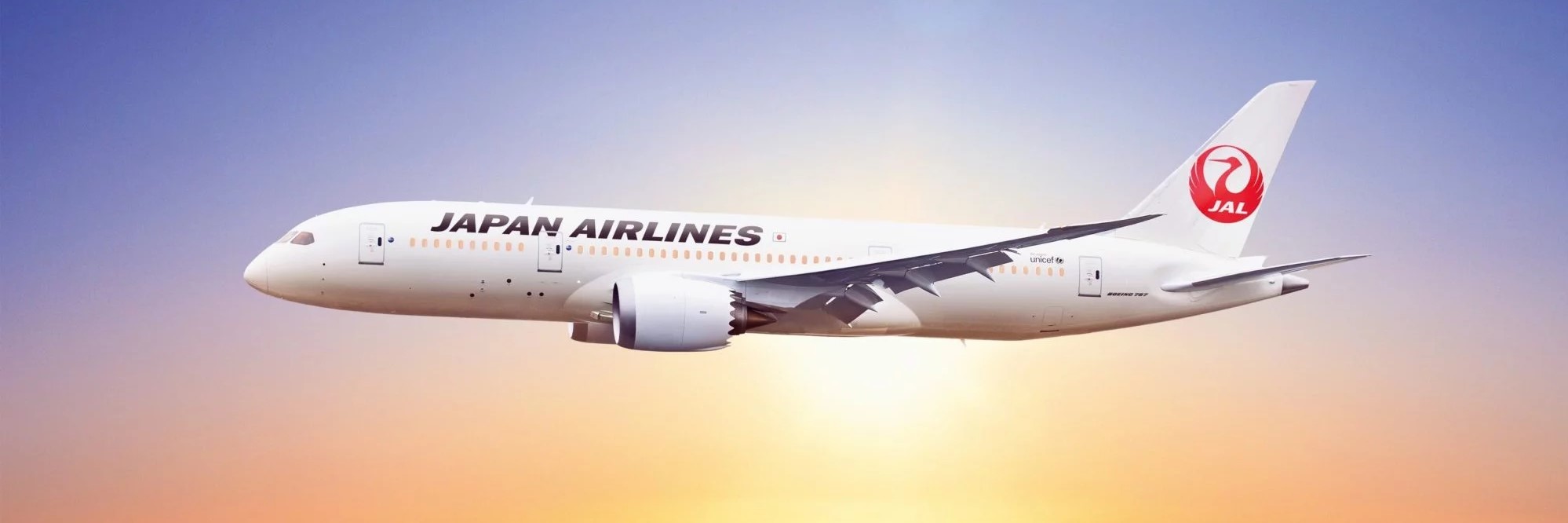
All Nippon Airways (ANA) and Japan Airlines (JAL) are the two primary domestic titans. From a financial perspective, these carriers represent the “Blue Chip” investments of the aviation world. They consistently command higher ticket prices, often 20% to 40% above their competitors, justified by superior service levels and operational reliability.
For the business traveler, the value proposition of ANA and JAL lies in “soft product” efficiency. Time is a finite resource; the seamlessness of their check-in, the speed of their WiFi, and the quality of their arrivals lounges allow for immediate productivity upon landing. When calculating the “opportunity cost” of a day lost to jet lag or poor sleep in a sub-par business class cabin, the premium for JAL’s Apex Suites or ANA’s “The Room” becomes a justifiable business expense with a clear return on investment.
North American Powerhouses: United, Delta, and American Airlines
The “Big Three” U.S. carriers operate extensive networks into Tokyo, primarily leveraging their joint venture partnerships. United is closely aligned with ANA (Star Alliance), while American Airlines partners with JAL (Oneworld). Delta, operating independently of a Japanese domestic partner, has pivoted its strategy to focus almost exclusively on Haneda.
These airlines are the workhorses of the corporate world. Their financial appeal lies in their massive loyalty ecosystems. For an entrepreneur or executive, the ability to earn “MQDs” (Model Qualifying Dollars) or “Loyalty Points” on a $5,000 business class fare to Tokyo can often trigger elite status that provides thousands of dollars in value through upgrades and fee waivers for the rest of the fiscal year.
The Budget Disruption: Zipair and the Rise of Low-Cost Long-Haul
A new entrant has shifted the economic calculus of flying to Tokyo: Zipair. A subsidiary of Japan Airlines, Zipair offers a “stripped-down” model that allows travelers to purchase a lie-flat business class seat for a fraction of the cost of a traditional carrier. From a personal finance standpoint, Zipair represents the ultimate “unbundled” asset. By allowing passengers to pay only for the services they use (luggage, meals, WiFi), it enables a high-comfort transit while preserving capital for investment elsewhere. For the budget-conscious professional or the digital nomad, this carrier has lowered the barrier to entry for high-end transpacific travel.
Maximizing ROI: Leveraging Points, Miles, and Business Credit
In the realm of personal finance, a flight to Tokyo is often the single best use of transferable credit card points. Because the “cash price” of these flights—particularly in premium cabins—is so high, the “Cents Per Mile” (CPM) valuation can reach extraordinary levels.

Understanding Valuation: CPM on Transpacific Flights
To determine the financial efficiency of a booking, one must calculate the CPM. For example, a round-trip Business Class ticket from New York to Tokyo might cost $8,000. If that same flight can be booked for 150,000 miles plus $500 in taxes, the value of each mile is approximately 5 cents. Given that most points are “earned” at a cost-basis of 1 to 2 cents, this represent a 250% to 500% return on the “currency” held in your loyalty account.
Strategic Transfer Partners for Tokyo-Bound Travelers
For those looking to optimize their liquid point assets, certain “sweet spots” exist in the airline award charts:
-
Virgin Atlantic for ANA: Historically, one of the most famous financial maneuvers in the “travel hacking” world involves using Virgin Atlantic points to book ANA First Class. The arbitrage opportunity here is immense, allowing travelers to experience a $15,000 product for a relatively small amount of points transferred from American Express or Chase.
-
Alaska Airlines for JAL: Alaska Airlines remains a high-value partner for Japan Airlines. Their mileage plan allows for stopovers, meaning a traveler can fly to Tokyo, stay for a week, and then continue to another Asian destination for no additional miles—effectively a “two-for-one” investment on travel spend.
-
Air Canada Aeroplan: For those flying from the East Coast or Midwest, Aeroplan’s distance-based chart often provides a more predictable and stable “valuation” for Star Alliance flights to Tokyo than the dynamic pricing models used by United or Delta.
Corporate Travel and Business Deductions: The Economics of the Tokyo Hub
When selecting an airline for Tokyo, the decision often hinges on the destination airport within the city. Tokyo is served by two main international gateways: Narita (NRT) and Haneda (HND). The choice between them is a classic cost-benefit analysis involving time, ground transportation expenses, and logistics.
Haneda vs. Narita: A Cost-Benefit Analysis for Professionals
Haneda is located significantly closer to the Tokyo city center (approximately 15–30 minutes by taxi or train to major business districts like Minato or Chuo). Narita, while often having lower landing fees for airlines and thus slightly lower ticket prices, is roughly 60–90 minutes away.
From a business finance perspective, Haneda is almost always the superior choice. If an executive’s time is valued at $200/hour, the extra three hours spent commuting to and from Narita represents a $600 “hidden cost.” When you add the $200 round-trip taxi fare from Narita versus the $50 fare from Haneda, the “cheaper” flight to Narita often turns out to be the more expensive option in terms of total economic impact.
Tax Implications and Travel as a Business Expense
For business owners and independent contractors, the cost of flying to Tokyo is generally a deductible business expense, provided the primary purpose of the trip is professional. However, the financial strategy changes when “bleisure” (business + leisure) comes into play. By selecting airlines with robust “multi-city” booking engines, travelers can structure their itineraries to maximize the deductible portion of their airfare while exploring Japan.
It is also vital to track “ancillary spend.” Many premium airlines include all-inclusive pricing (meals, drinks, WiFi), which simplifies bookkeeping and expense reporting. Conversely, low-cost carriers generate dozens of small receipts for every “extra,” which can increase the administrative burden on a company’s accounting department.
Future Trends: How Fuel Surcharges and Currency Fluctuations Impact Pricing
The cost of flying to Tokyo is currently being shaped by two major macroeconomic factors: the volatility of the jet fuel market and the historical weakness of the Japanese Yen.
Navigating the Weak Yen: A Financial Window of Opportunity
The depreciation of the Yen against the Dollar and the Euro has created a unique “arbitrage” opportunity for international travelers. While ticket prices departing from the US or Europe remain high, the “on-the-ground” costs in Japan—hotels, dining, and internal transportation—are at their lowest levels in decades. For a business looking to host a conference or a retreat, the “all-in” cost of a Tokyo trip, despite high airfares, may currently be lower than a domestic trip to a city like New York or San Francisco.
Hedging Against Rising Aviation Costs
Airlines flying to Japan often employ “Fuel Surcharges” (YQ), which are passed directly to the consumer. These surcharges can fluctuate monthly based on oil prices. For those paying with points, it is critical to identify which airlines do not pass these surcharges through to award tickets. For instance, booking a United-operated flight to Tokyo through the United MileagePlus program typically results in zero fuel surcharges, whereas booking the same flight through a partner like Lufthansa might incur $600+ in additional fees.
Conclusion: The Strategic Selection
Choosing which airline to fly to Tokyo is an exercise in asset management. Whether you are maximizing the ROI of your credit card points, optimizing your corporate travel budget for time-efficiency at Haneda, or leveraging the unbundled pricing of a carrier like Zipair to keep overhead low, the “best” airline is the one that aligns with your broader financial goals. In the competitive transpacific market, the savvy traveler doesn’t just buy a seat; they execute a well-calculated financial transaction.
aViewFromTheCave is a participant in the Amazon Services LLC Associates Program, an affiliate advertising program designed to provide a means for sites to earn advertising fees by advertising and linking to Amazon.com. Amazon, the Amazon logo, AmazonSupply, and the AmazonSupply logo are trademarks of Amazon.com, Inc. or its affiliates. As an Amazon Associate we earn affiliate commissions from qualifying purchases.