
The American healthcare landscape is often criticized for its opacity, particularly regarding the pricing of prescription medications. For the average consumer, the cost of a necessary drug can fluctuate wildly depending on which pharmacy they visit, what insurance plan they hold, and whether they are aware of the underlying financial mechanisms at play. In this environment, GoodRx has emerged not just as a tool for convenience, but as a critical financial instrument that enables individuals to navigate the complex world of medical expenditures. Understanding how GoodRx works requires a deep dive into the economics of the pharmaceutical supply chain, the role of middlemen, and the strategic decisions consumers must make to protect their personal finances.
The Fragmented Economy of Prescription Drug Pricing
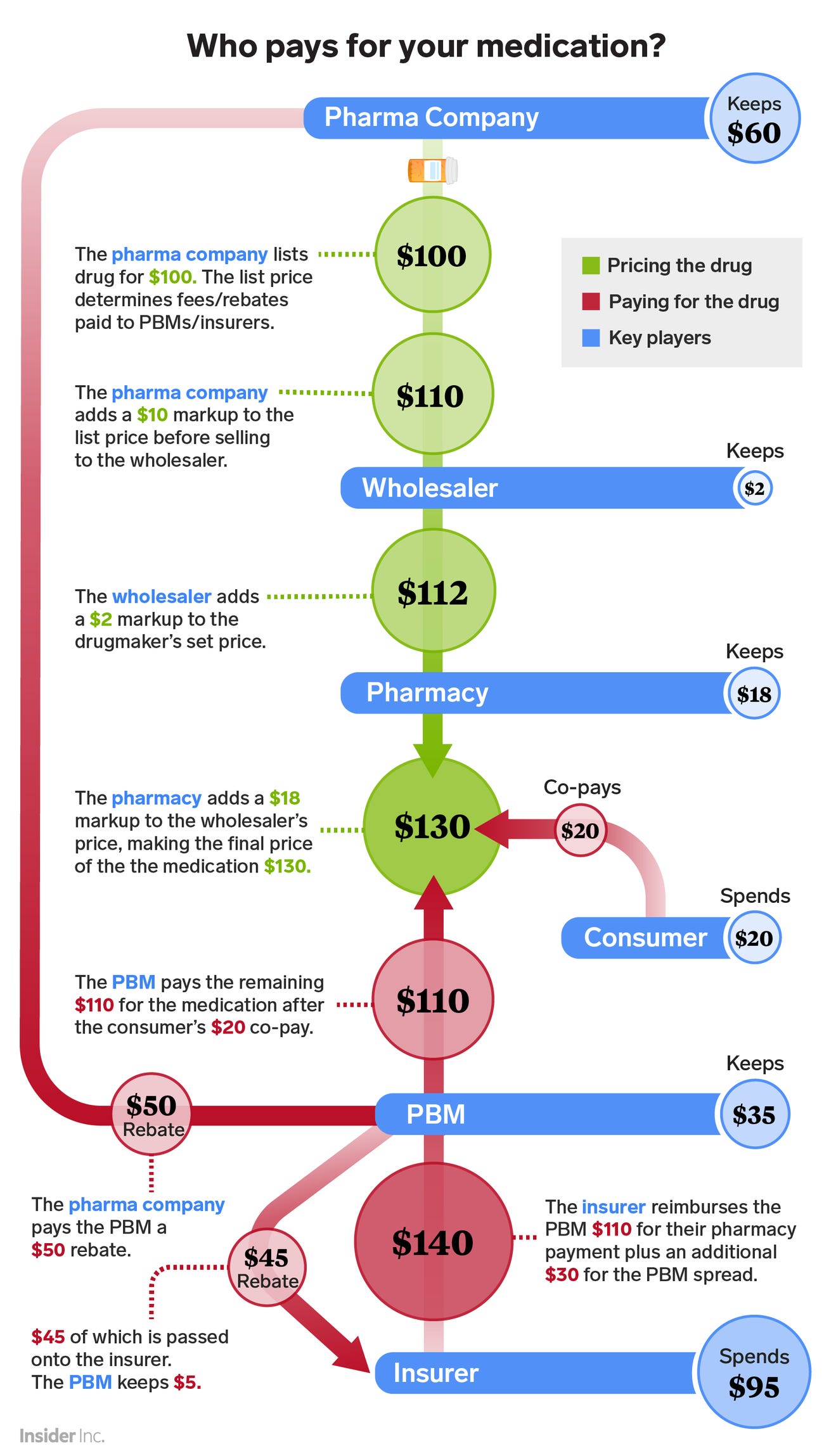
To understand how a savings platform can offer significant discounts, one must first recognize that the “list price” of a drug is rarely the price that is paid. The pharmaceutical economy is built on a series of negotiated rates, rebates, and administrative fees that create a massive disparity between what a drug costs to manufacture and what the consumer sees at the register.
The Role of Pharmacy Benefit Managers (PBMs)
At the heart of prescription finance are Pharmacy Benefit Managers (PBMs). These are third-party administrators that manage prescription drug programs for health insurers, Medicare Part D plans, and large employers. PBMs are the unseen giants of the industry; they negotiate with both drug manufacturers and pharmacies to determine which drugs are covered on a formulary and at what price.
GoodRx functions by tapping into the negotiated rates that these PBMs have already established with pharmacies. When a consumer uses a GoodRx coupon, they are essentially accessing a “discounted cash price” that has been pre-negotiated by a PBM for individuals without insurance or for those whose insurance does not provide a competitive rate for that specific medication.
Why Cash Prices Vary Between Pharmacies
Unlike most retail products, the price of a medication is not standardized. A single bottle of Atorvastatin might cost $15 at a large grocery chain and $150 at a corner drugstore. This variance exists because pharmacies have different contracts with different PBMs, varying overhead costs, and diverse business models. Some pharmacies use low drug prices as a “loss leader” to drive foot traffic into the store, hoping the consumer will purchase high-margin retail items while waiting for their script. GoodRx acts as a financial aggregator, collecting these disparate price points into a single interface, allowing the consumer to engage in “price arbitrage”—the practice of taking advantage of a price difference between two or more markets.
Understanding the GoodRx Financial Mechanism
GoodRx does not manufacture drugs, nor is it a pharmacy. It is a financial technology platform that leverages data to provide transparency. The mechanics of the platform are rooted in data aggregation and contractual partnerships that allow it to bypass the traditional insurance-patient relationship when it is financially advantageous for the user to do so.
Aggregated Pricing and Real-Time Data Finance
The primary value proposition of GoodRx is its ability to provide real-time financial data. The platform tracks the prices of thousands of medications across more than 70,000 pharmacies in the United States. This data is not static; it reflects the ongoing shifts in PBM contracts and pharmacy pricing strategies. For a consumer, this means that the “best price” today might not be the best price next month. By providing this transparency, GoodRx shifts the power dynamic from the provider to the consumer, enabling a market-driven approach to healthcare spending.
The Contractual Relationship with PBMs
GoodRx earns revenue through a symbiotic relationship with PBMs and pharmacies. Every time a consumer uses a GoodRx discount code at a pharmacy, the pharmacy pays a small referral fee. This fee is typically split between the PBM that negotiated the rate and GoodRx itself. For the pharmacy, this is a customer acquisition cost. They would rather sell a drug at a lower margin than not sell it at all. For the PBM, it is an opportunity to earn a fee on a transaction that would have otherwise occurred outside of their network. For the consumer, the financial benefit is the immediate reduction in out-of-pocket costs.
GoodRx Gold: The Financial Utility of Subscription Healthcare
Beyond its free coupons, the platform offers a subscription-based model known as GoodRx Gold. From a personal finance perspective, this represents a shift toward the “premiumization” of healthcare savings. For a monthly fee, users gain access to even lower negotiated rates, often outperforming the standard free coupons. For individuals with multiple chronic conditions requiring monthly maintenance medications, the ROI (Return on Investment) of a Gold membership can be calculated by comparing the monthly subscription cost against the incremental savings provided over the free version. This creates a predictable, fixed cost for healthcare that can be easily integrated into a monthly household budget.
Strategic Financial Planning with GoodRx
Managing a personal budget requires an understanding of when to use specific financial tools. In the context of healthcare, this means knowing when to use insurance and when to bypass it in favor of a cash-pay discount tool.

GoodRx vs. Insurance: When to Opt-Out of Your Plan
It is a common misconception that insurance always provides the lowest price. In reality, many insurance plans have “co-pays” that are higher than the discounted cash price available through GoodRx. This occurs due to “clawbacks,” where a PBM requires a pharmacy to charge a higher co-pay and then remits the excess profit back to the PBM.
Strategically, consumers should check the GoodRx price for every medication, even if they have insurance. If the GoodRx price is lower than the insurance co-pay, paying cash is the superior financial move. However, there is a trade-off: payments made via GoodRx typically do not count toward an insurance deductible or out-of-pocket maximum. Therefore, a consumer must weigh the immediate savings against their long-term healthcare spending for the year.
Navigating High-Deductible Health Plans (HDHPs)
For those enrolled in High-Deductible Health Plans, GoodRx is often an essential tool. In an HDHP, the consumer is responsible for the full “negotiated rate” of a drug until their deductible (which can be several thousand dollars) is met. Because the insurance-negotiated rate is often higher than the GoodRx cash rate, using the platform can significantly reduce the cash flow strain during the “deductible phase” of the year.
HSA and FSA Compatibility
From a tax-strategy perspective, it is important to note that funds from Health Savings Accounts (HSAs) and Flexible Spending Accounts (FSAs) can generally be used to pay for medications purchased using GoodRx. This allows consumers to pair the immediate discount of the platform with the triple-tax advantage of an HSA (tax-deductible contributions, tax-free growth, and tax-free withdrawals for medical expenses). Utilizing this combination is one of the most effective ways to minimize the net economic impact of healthcare costs.
The Revenue Model: How the Platform Sustains Its Ecosystem
A common question in personal finance is “how does the service make money if it’s free?” GoodRx’s business model is a masterclass in lead generation and data monetization within a highly regulated industry.
Transaction Fees and Commission Structure
As mentioned previously, the bulk of the platform’s revenue comes from transaction fees. When a pharmacist scans a GoodRx code, it triggers a financial settlement process. The pharmacy pays a fee to the PBM, and a portion of that fee is directed to GoodRx as a commission for directing the customer to that specific pharmacy. This creates a recurring revenue stream that scales with the volume of prescriptions filled.
Brand Integration and Direct-to-Consumer Marketing
GoodRx also serves as a marketing platform for pharmaceutical manufacturers. When a patent-protected “brand name” drug is searched, GoodRx may display manufacturer co-pay cards or advertisements. Manufacturers pay for this placement because it helps them retain patients who might otherwise switch to a cheaper generic alternative. By acting as a bridge between the manufacturer’s financial assistance programs and the consumer, GoodRx earns advertising revenue while simultaneously helping the consumer navigate the high costs of brand-name therapy.
Future-Proofing Your Medical Budget
As healthcare costs continue to outpace inflation, the ability to audit and manage medical expenses becomes a core competency of financial literacy. The existence of platforms like GoodRx signals a broader trend toward the “retailization” of healthcare, where the consumer is expected to shop for services just as they would for any other commodity.
The Shift Toward Price Transparency in Personal Finance
The traditional model of healthcare finance—where the patient is a passive recipient of costs determined by insurers and providers—is being replaced by a model of active participation. Financial advisors are increasingly recommending that clients use price transparency tools to preserve their wealth. By saving $50 or $100 per month on prescriptions, an individual can redirect those funds into retirement accounts or emergency funds, compounding the long-term benefit of the initial saving.

Mitigating the Impact of Inflation on Healthcare Costs
Inflation affects the pharmaceutical supply chain just as it affects the grocery store. However, because prescription prices are often shielded by insurance layers, many consumers don’t realize they are being overcharged until they see the impact on their premiums or co-pays. Using an aggregator allows the consumer to see the effects of inflation in real-time and switch to more cost-effective pharmacies or request generic alternatives from their physicians.
In conclusion, GoodRx functions as a powerful financial intermediary that exploits the inefficiencies and lack of transparency in the American drug pricing system. By understanding the underlying mechanics of PBM negotiations, the strategic timing of insurance opt-outs, and the tax advantages of HSA integration, consumers can transform their approach to healthcare from a burden of unpredictable costs to a manageable component of a disciplined financial plan.
aViewFromTheCave is a participant in the Amazon Services LLC Associates Program, an affiliate advertising program designed to provide a means for sites to earn advertising fees by advertising and linking to Amazon.com. Amazon, the Amazon logo, AmazonSupply, and the AmazonSupply logo are trademarks of Amazon.com, Inc. or its affiliates. As an Amazon Associate we earn affiliate commissions from qualifying purchases.