
Despite the rapid evolution of digital payments, peer-to-peer apps, and cryptocurrency, the traditional paper check remains a fundamental tool in the global financial landscape. Whether you are setting up a direct deposit for a new job, paying a contractor, or establishing an automated monthly mortgage payment, you will frequently be asked for your bank account and routing numbers. For many, staring at the string of digits at the bottom of a check can be confusing. Knowing exactly where to find your account number—and distinguishing it from the other sequences of numbers—is a vital skill in managing your personal finances securely and efficiently.

Understanding the anatomy of a check is not just about identifying numbers; it is about understanding how the banking system communicates. Every digit serves a specific purpose in the movement of capital. This guide provides a comprehensive breakdown of where your account number is located, how it differs from other identifiers, and why this information is the cornerstone of your financial identity.
The Anatomy of a Check: Decoding the MICR Line
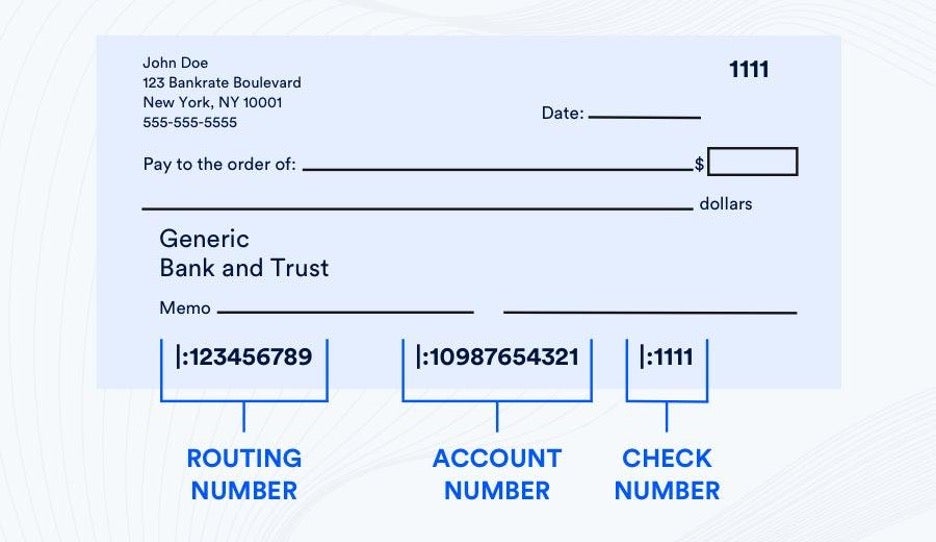
When you look at the bottom of a check, you will see a series of numbers printed in a unique, slightly blocky font. This is known as the MICR line, which stands for Magnetic Ink Character Recognition. This technology allows bank sorting machines to read the information quickly and accurately, even if the check has been folded or lightly stained. The MICR line is typically composed of three distinct sets of numbers.
The Routing Number (The First Set)
The first sequence of numbers on the far left of the MICR line is your bank’s routing transit number (RTN). This is a nine-digit code assigned by the American Bankers Association (ABA) that identifies the specific financial institution responsible for the funds. Think of the routing number as the “address” of your bank. It tells the clearinghouse exactly which bank in which region of the country needs to be contacted to process the transaction.
The routing number is always nine digits long. If the number you are looking at is shorter or longer, you are likely looking at the account number or the check number. In most standard personal checks, the routing number is flanked by a specific symbol that looks like a vertical line with a colon or a small bracket, which helps the scanning machine identify where the sequence begins and ends.
The Account Number (The Second Set)
In the vast majority of personal checks, the account number is the second set of digits, located in the center of the MICR line, immediately following the routing number. While the routing number identifies the bank, the account number identifies your specific, unique “vault” within that institution.
Unlike routing numbers, which are always nine digits, account numbers vary in length depending on the bank’s internal systems. They typically range from 8 to 12 digits, though some institutions use shorter or longer sequences. On a standard check, the account number is usually separated from the routing number and the check number by spaces or special MICR symbols. If you are ever unsure, remember that the account number is almost always to the right of the routing number.
The Check Number (The Final Piece)
The third set of numbers on the bottom of the check is the check number. This is a short sequence—usually three to four digits—that corresponds to the number printed in the top-right corner of the check. Its purpose is record-keeping. It allows both you and your bank to track which specific check was used for a transaction, helping to prevent duplicate processing and making it easier to balance your checkbook at the end of the month.
On some business checks or unconventional layouts, the check number may appear between the routing number and the account number, but on the overwhelming majority of personal checks, it is the final set of digits on the far right.
Why Your Account Number is Essential for Personal Finance Management
In the modern economy, your account number is more than just a label on a piece of paper; it is the primary bridge between your liquid assets and the world of commerce. Managing this number correctly is a key aspect of maintaining a healthy financial life.
Direct Deposits and Automated Payments
The most common reason people search for their account number is to facilitate the movement of money without a physical check. When you start a new job, the HR department requires your account and routing numbers to set up a direct deposit. By providing these, you are essentially giving the employer’s bank the “GPS coordinates” to send your salary directly into your holdings.
Similarly, setting up Automated Clearing House (ACH) transfers for recurring bills—such as electricity, internet, or insurance—requires these numbers. Using your account number for these transactions is often more reliable than using a debit card, as debit cards expire and can be canceled due to fraud, whereas your bank account number remains constant for the life of the account.
Wire Transfers and ACH Transactions
While the terms are often used interchangeably, there is a technical difference between an ACH transfer and a wire transfer, though both require your account number. ACH transfers are usually processed in batches and are used for routine payments. Wire transfers are used for high-value, time-sensitive transactions, such as a down payment on a home.
In both cases, providing an incorrect account number can lead to significant delays or, in worst-case scenarios, funds being sent to the wrong individual. Understanding exactly where that number is on your check ensures that you are providing the correct data to financial intermediaries, protecting your liquidity and your reputation with creditors.
Key Differences: Routing Number vs. Account Number
A common mistake in personal finance is confusing the routing number with the account number. While they look similar and live in the same neighborhood on your check, they serve fundamentally different functions in the architecture of a transaction.
Identifying the Financial Institution
The routing number is public information. You can often find your bank’s routing number on their public website or by a simple internet search. It is shared by every customer at that specific branch or region of the bank. Because it is a public identifier for the institution, possessing someone’s routing number does not grant access to their funds. It is merely a directional signal for the banking network.
Identifying Your Unique Secure Vault
The account number, conversely, is private and sensitive information. It is unique to you. If the routing number is the street address of a massive apartment building, the account number is your specific apartment number. No one else at your bank has that same number. Because this number identifies your specific funds, it must be guarded with the same level of care you would provide to a social security number or a digital password.
Security Best Practices for Protecting Your Account Information
Since your account number is the “key” to your funds, maintaining security is paramount. Financial fraud is a multi-billion dollar “industry,” and much of it relies on bad actors obtaining account and routing number combinations to create counterfeit checks or initiate unauthorized ACH transfers.
Handling Physical Checks Safely
If you still use physical checks, treat the checkbook like cash. Never sign a check and leave the “Pay to the Order Of” or “Amount” lines blank. If a checkbook is lost or stolen, contact your bank immediately to freeze those specific check numbers. Additionally, when you receive canceled checks back from the bank (or view images of them online), ensure that the amounts match your records.
When disposing of old checks or deposit slips, always use a cross-cut shredder. Simply tearing a check in half is not enough to protect your MICR line. Modern scanners can easily reconstruct the digits from pieces of paper, giving a fraudster everything they need to attempt an account takeover.
The Rise of Digital Banking and Electronic Checks
For those who no longer carry a physical checkbook, your account number is still accessible through your bank’s mobile app or online portal. Most banking apps have a “Direct Deposit Info” or “Account Details” section that displays a digital image of a check. This is a secure way to verify your numbers without needing to carry paper.
Furthermore, many consumers are moving toward “eChecks.” An eCheck uses the same account and routing number system but processes the transaction entirely digitally. This reduces the risk of physical theft but increases the need for digital hygiene, such as using two-factor authentication (2FA) on your banking apps and avoiding public Wi-Fi when accessing financial accounts.
Variations in Check Design and How to Spot Your Information
While there is a standard format for checks in the United States, variations do exist, particularly when dealing with business accounts or checks issued by specialized financial entities like credit unions or brokerage firms.
Business Checks vs. Personal Checks
Business checks are often larger than personal checks and may contain more information in the MICR line. In some cases, the check number might appear first, followed by the routing number and then the account number. To identify your account number in these instances, look for the longest string of digits that is not the nine-digit routing number. Most business accounting software, such as QuickBooks, allows for some customization of check layouts, so it is always wise to double-check the labels if you are unsure.

Mobile Deposit Features and Readability
With the advent of mobile deposit technology, your account number’s clarity is more important than ever. When you take a photo of a check to deposit it into your account, the app’s software specifically looks for the MICR line at the bottom. If the account number is obscured by a signature that loops too far down or by a smudge, the deposit may be rejected. Understanding that your account number lives in that bottom-center area will help you ensure that you aren’t obstructing it when you endorse the back or handle the front of the check.
In conclusion, the account number is a vital piece of the personal finance puzzle. Located typically in the center of the MICR line at the bottom of your check, it acts as your unique identifier within the global banking system. By mastering the ability to locate and protect this number, you empower yourself to navigate the world of direct deposits, automated billing, and secure transfers with confidence. Whether you are using a paper check or a digital equivalent, this small string of digits remains one of your most important financial assets.
aViewFromTheCave is a participant in the Amazon Services LLC Associates Program, an affiliate advertising program designed to provide a means for sites to earn advertising fees by advertising and linking to Amazon.com. Amazon, the Amazon logo, AmazonSupply, and the AmazonSupply logo are trademarks of Amazon.com, Inc. or its affiliates. As an Amazon Associate we earn affiliate commissions from qualifying purchases.