
In an era dominated by instantaneous digital transfers, mobile wallets, and contactless payments, the traditional paper check remains a surprisingly resilient fixture in the world of personal and business finance. Whether you are setting up a direct deposit for a new job, paying rent to a landlord who prefers physical records, or establishing an automated bill payment system, understanding how to read a check is a fundamental financial skill.
The most critical information on any check is the string of numbers at the bottom, specifically your account number. While it may seem like a simple sequence of digits, this number is the key to your financial identity within the banking system. Knowing exactly where to find it—and how to distinguish it from other numerical sequences—is essential for avoiding costly administrative errors and protecting yourself from potential fraud.

The Anatomy of a Check: Decoding the MICR Line
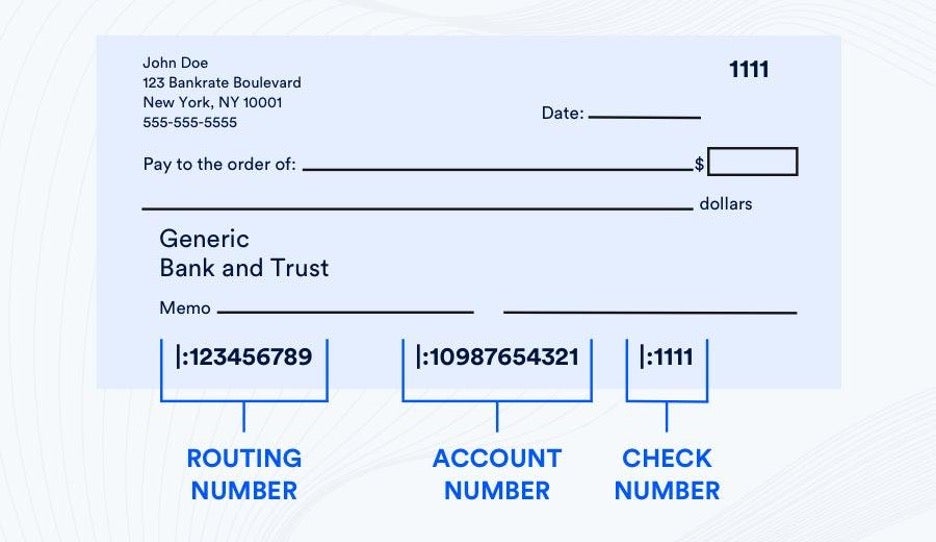
Every standard check issued by a financial institution in the United States and many other countries follows a specific layout designed for both human readability and machine processing. The most important area for identifying your account number is the bottom edge of the check, known as the MICR (Magnetic Ink Character Recognition) line.
The MICR line is printed using a special ink or toner that contains magnetic particles. This allows high-speed processing machines at clearinghouses and banks to “read” the data even if it has been written over or lightly smudged. The MICR line is typically composed of three distinct sets of numbers.
The Routing Number
The first set of numbers, appearing on the far left, is the American Bankers Association (ABA) routing transit number. This is always nine digits long. The routing number serves as an “address” for your financial institution; it tells the banking system exactly which bank holds your funds. The first two digits of the routing number indicate the Federal Reserve district where the bank is located, while the subsequent digits identify the specific institution.
The Account Number
The second set of numbers is your unique bank account number. This is the sequence you are looking for. Unlike the routing number, which is the same for every customer at a particular bank branch or region, the account number is unique to you. It identifies your specific checking or savings account within that institution.
On a standard personal check, the account number is usually located in the center of the MICR line, sandwiched between the routing number and the check number. It can vary in length, typically ranging from 8 to 12 digits, though some institutions use shorter or longer sequences.
The Check Number
The third set of numbers, usually located on the far right of the MICR line, is the check number. This should match the number printed in the top right-hand corner of the check. Its purpose is internal tracking; it allows you and your bank to keep a record of which specific checks have been processed, helping to prevent duplicate payments and assisting in bank reconciliation.
Identifying the Account Number Across Different Layouts
While the “Routing-Account-Check” order is standard for most personal checks in the United States, there are variations that can occasionally cause confusion. Understanding these nuances is vital for accurate financial management.
Personal vs. Business Checks
Business checks are often larger than personal checks and may contain additional information, such as voucher sections or detailed “remittance advice” stubs. On many business checks, the check number actually appears before the routing number in the MICR line, or it may be omitted from the bottom line entirely and appear only in the top right corner. In these cases, the account number is still typically the middle or final long string of digits. If you see a set of digits that matches your bank statement’s account list, that is your target.
Internal Bank Symbols
If you look closely at the MICR line, you will notice strange, non-numeric symbols separating the blocks of numbers. These are called “transit,” “on-us,” and “dash” symbols.
-
The Transit Symbol (two vertical bars and a colon) surrounds the routing number.
-
The On-Us Symbol (a rectangle with a vertical line) often follows the account number.
These symbols are cues for the bank’s sorting machines. For the human eye, the account number is almost always the sequence immediately preceding or following the “on-us” symbol.
Electronic and Replacement Checks
In the modern banking landscape, you may encounter “substitute checks” or digital images of checks. When a bank processes a check electronically (under the Check 21 Act), they create a digital version. Even in these digital formats, the account number remains in the same relative position at the bottom of the image. If you are looking at a digital “voided check” provided by an online banking portal, the account number is usually clearly labeled to facilitate the setup of ACH (Automated Clearing House) transfers.
The Role of the Account Number in Modern Finance
The account number is more than just a label for a paper document; it is the primary identifier for a vast array of electronic financial activities. In the context of personal finance and business operations, the account number is the “destination” for incoming and outgoing funds.
Setting Up Direct Deposits and Automated Payments
When you start a new job, the payroll department will ask for your routing and account numbers to set up direct deposit. Similarly, when you pay utilities, insurance, or mortgage premiums online, you are often given the option to pay via “e-check” or ACH transfer. This process requires you to input the account number found at the bottom of your checks. Using the account number from a check is often preferred over using a debit card number because ACH transfers typically do not incur the processing fees associated with card networks, and they do not “expire” like a plastic card does.
Wire Transfers vs. ACH Transfers
It is a common misconception that the account number on a check is the only information needed for all types of transfers. While it is sufficient for ACH transfers (common for domestic bills and payroll), international wire transfers often require additional information, such as a SWIFT code or an IBAN (International Bank Account Number). However, even in these complex transactions, your basic domestic account number forms the core of the identifier.
Mobile Check Deposits
With the rise of fintech, most consumers now deposit checks by taking a photo of them through a mobile app. The app’s software uses optical character recognition (OCR) to identify the account number on the check you are depositing. This ensures the funds are pulled from the correct external account. Understanding where this number is helps you ensure that you are capturing a clear, legible photo of the MICR line, which is the most common reason for mobile deposit failures.
Safeguarding Your Financial Information
Because the account number and routing number together provide enough information for someone to initiate a withdrawal from your account, security is paramount. Your checkbook is essentially a collection of documents that contain your most sensitive financial “keys.”
Preventing Check Fraud and Identity Theft
Check fraud remains a significant concern for financial institutions. “Check washing” involves using chemicals to erase the payee and amount on a check while leaving the MICR line (and your account number) intact, allowing a fraudster to rewrite the check to themselves. To mitigate this risk, financial experts recommend using gel pens with indelible ink, which permeate the paper fibers and are resistant to chemical washing.
Furthermore, you should never leave blank checks lying around and should shredded any canceled or voided checks that are no longer needed. If you are sending a check through the mail, it is safer to drop it off inside a post office rather than leaving it in an unsecured residential mailbox.
The “Voided Check” Requirement
Many service providers ask for a “voided check” to verify your account information. When you write “VOID” in large letters across the front of a check, you are rendering the individual check unusable for payment while keeping the routing and account numbers at the bottom legible. This allows the provider to double-check the digits to ensure no typos occur during the data entry process for your automated payments.
Digital Security and Monitoring
In addition to physical security, regular monitoring of your bank statements is the best defense against account number misuse. If someone gains access to your account number and attempts an unauthorized ACH transfer, you generally have a limited window (often 60 days for consumers) to report the fraud to your bank and recover the funds. Utilizing bank alerts that notify you of any “out-of-pattern” withdrawals can provide an extra layer of protection.

The Future of the Account Number in a Digital World
As we move toward a “cashless” society, the physical check may eventually become a relic of the past, but the account number itself is likely to endure. The banking infrastructure built over the last century relies heavily on these numerical identifiers.
New technologies, such as “tokenization,” are beginning to change how we share this information. Just as Apple Pay uses a virtual “token” instead of your actual credit card number, some advanced banking systems are experimenting with virtual account numbers for one-time use. This would allow a consumer to provide a temporary number to a merchant, keeping their “real” account number—the one found on their checks—completely private.
However, until such technology becomes the universal standard, the paper check remains the most accessible source for your banking data. Whether you are a student opening your first account or a business owner managing complex cash flows, the ability to glance at a check and immediately identify the routing and account numbers is a vital component of financial literacy. It bridges the gap between the physical world of paper documents and the high-speed world of global digital finance, ensuring that your money moves exactly where it is supposed to go.
aViewFromTheCave is a participant in the Amazon Services LLC Associates Program, an affiliate advertising program designed to provide a means for sites to earn advertising fees by advertising and linking to Amazon.com. Amazon, the Amazon logo, AmazonSupply, and the AmazonSupply logo are trademarks of Amazon.com, Inc. or its affiliates. As an Amazon Associate we earn affiliate commissions from qualifying purchases.