
In an era defined by contactless payments, mobile wallets, and instantaneous digital transfers, the humble paper check remains a cornerstone of the global financial system. Whether you are setting up direct deposit for a new job, authorizing a recurring utility payment, or moving funds between brokerage accounts, you will inevitably be asked for your bank account number and routing number. For many, the physical check is the primary source for this information. However, glancing at the string of numbers at the bottom of a check can be confusing if you don’t know exactly what you are looking for.

Understanding the anatomy of a check is more than just a matter of convenience; it is a fundamental aspect of financial literacy. Misidentifying these numbers can lead to failed transactions, late fees, or even security vulnerabilities. This guide provides a detailed breakdown of where to find your account number, how to distinguish it from other identifiers, and why these sequences of digits are the backbone of personal and business finance.
Decoding the Anatomy of a Personal Check
Every standard check issued by a financial institution in the United States follows a specific format regulated by the American Bankers Association (ABA). This standardization ensures that high-speed processing machines, known as Magnetic Ink Character Recognition (MICR) readers, can accurately scan and process millions of documents daily.
The MICR Line: The Bottom Row
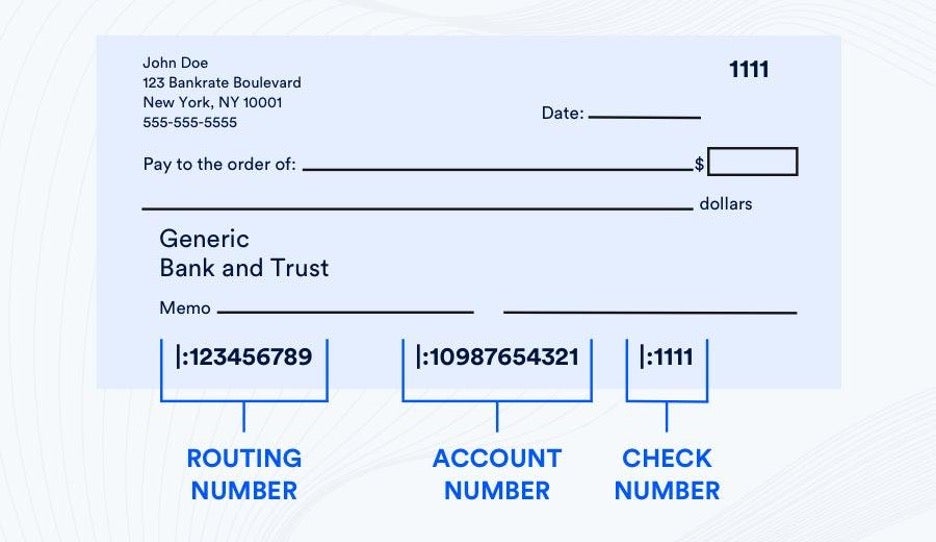
The most important part of the check for identifying your account details is the MICR line. This is the row of numbers and special symbols printed at the very bottom of the document. This line typically consists of three distinct sets of numbers: the routing transit number, the account number, and the check number.
-
The Routing Number (The First Set): On a standard personal check, the routing number is the first nine-digit sequence on the far left. This number identifies the specific financial institution that holds your account. Think of it as the “address” of your bank within the national banking network. It tells the clearinghouse where to send the request for funds.
-
The Account Number (The Middle Set): Your account number is usually the second set of numbers, located to the right of the routing number. Unlike the routing number, which is the same for every customer at a specific bank branch or region, the account number is unique to you. It identifies your specific “vault” or ledger within that bank.
-
The Check Number (The Final Set): The third set of digits, usually the shortest, is the check number. This matches the number printed in the top right-hand corner of the check. It is used for record-keeping and tracking purposes, allowing you to see which specific payments have cleared your account.
Visual Cues and Symbols
Between these numbers, you will notice strange, blocky symbols. These are not decorative; they are “transit” and “on-us” symbols that tell the machine where one data field ends and another begins. On most personal checks, the account number is followed by a symbol that looks like a vertical bar with a dash (the “on-us” symbol), which separates it from the check number.
Variations in Business Checks
It is worth noting that business checks can sometimes deviate from the standard layout of personal checks. In some business formats, the check number may appear before the routing number in the MICR line. However, the routing number will always be nine digits long, and the account number will be the unique sequence associated with your business entity. If you are ever unsure, most banking apps now provide a digital “voided check” view that clearly labels these fields for you.
Why the Account Number Matters in the Digital Age
While we may write fewer physical checks than previous generations, the information contained on them is more relevant than ever. The account number and routing number are the dual keys required to access the Automated Clearing House (CH) network, which handles the vast majority of electronic payments in the United States.
Facilitating Direct Deposits and Withdrawals
When you start a new position, your employer’s payroll department requires your account and routing numbers to push funds into your account. Similarly, when you set up an “Auto-Pay” feature for your mortgage or car insurance, you are granting the service provider permission to pull funds directly from your account using these same identifiers. Understanding where these numbers are on your check allows you to bridge the gap between physical paper and digital convenience.
Linking Fintech and Investment Apps
The rise of fintech has introduced a plethora of apps designed for investing, budgeting, and peer-to-peer transfers. Whether you are connecting your bank to a brokerage like Vanguard or a payment platform like PayPal, you will often need to manually enter your account number. While “instant verification” services exist, they often fail or are unsupported by smaller credit unions. In these cases, your checkbook becomes the ultimate source of truth for your banking coordinates.
Wire Transfers vs. ACH Transfers
It is a common misconception that the routing number on your check is the only routing number your bank uses. Many larger institutions have a specific “Wire Routing Number” that differs from the “ACH Routing Number” found on your check. Using the routing number from your check for a domestic or international wire transfer can result in the transaction being rejected. Always verify with your bank if you are performing a high-value wire transfer, but for almost every other purpose—checks, direct deposits, and bill pay—the numbers on your check are the ones you need.
Security Best Practices for Your Banking Information
Your account number is sensitive financial data. In the wrong hands, it can be used to initiate unauthorized ACH withdrawals or create fraudulent checks. Protecting the information found on your checks is a critical component of modern digital security.
The Danger of “Check Washing”
Criminals sometimes use a technique called “check washing,” where they use chemicals to erase the ink on a physical check (the payee and the amount) while leaving the MICR line intact. They then rewrite the check to themselves for a much larger amount. To prevent this, always use a gel pen with ink that permeates the paper fibers, making it nearly impossible to “wash” without destroying the document.
Safeguarding Digital Images
In the age of social media, it is surprisingly common for individuals to post photos of their first paycheck or a check they received as a gift. Even if you blur out your name, leaving the MICR line visible at the bottom exposes your routing and account numbers to anyone on the internet. Treat a photo of a check with the same level of caution you would treat a photo of your credit card.
Monitoring for Unauthorized Transactions
Even with the best security, data breaches can occur. It is essential to review your bank statements regularly. Look for small, unfamiliar ACH withdrawals. Sometimes, fraudsters will test an account with a “micro-deposit” or a small withdrawal of a few cents to see if the account is active before attempting a larger theft. If you spot anything suspicious, contact your bank’s fraud department immediately to freeze the account and issue a new account number.
Disposal of Old Checks
If you close a bank account or receive a new batch of checks because of a name or address change, do not simply throw the old ones in the trash. Use a cross-cut shredder to destroy the MICR line. Since the account number is printed in magnetic ink, it remains readable to specialized equipment even if the paper is slightly damaged. Total destruction is the only way to ensure the information cannot be harvested.
The Future of Checks and Digital Banking
As we look toward the future of finance, the role of the physical check is evolving into something more digital and abstract. However, the underlying infrastructure—the account and routing number system—is likely to remain for decades.
Mobile Deposit Technology
One of the most significant innovations in recent years is the ability to deposit checks via smartphone. By taking a photo of the front and back of the check, the bank’s software uses optical character recognition (OCR) to read the MICR line and process the deposit. This technology has extended the life of the check by removing the need to visit a physical branch or ATM.
eChecks and Virtual Identifiers
We are seeing a move toward “eChecks,” which are essentially digital versions of the paper document. When you pay a bill online by entering your account and routing numbers, you are essentially issuing an eCheck. Some banks are also experimenting with “virtual account numbers” for added security, allowing users to generate a temporary account number for a single transaction, thereby keeping their “real” account number hidden from merchants.

The Shift Toward Real-Time Payments (RTP)
While the current system relies on the numbers found on your check, newer systems like FedNow and RTP are designed to move money instantly without the traditional clearing delays associated with checks. However, even these systems generally require a way to identify the destination account. Whether the identifier is an account number, a phone number, or an email address, the principle remains the same: accuracy in your financial coordinates is the key to successful money management.
Understanding where the account number is on your check is a small but vital piece of the financial puzzle. It empowers you to manage your cash flow, secure your assets, and navigate the intersection of traditional banking and modern fintech with confidence. By mastering these basics, you ensure that your financial life remains organized, efficient, and, most importantly, secure.
aViewFromTheCave is a participant in the Amazon Services LLC Associates Program, an affiliate advertising program designed to provide a means for sites to earn advertising fees by advertising and linking to Amazon.com. Amazon, the Amazon logo, AmazonSupply, and the AmazonSupply logo are trademarks of Amazon.com, Inc. or its affiliates. As an Amazon Associate we earn affiliate commissions from qualifying purchases.