
In an era dominated by contactless payments, mobile wallets, and instant peer-to-peer transfers, the humble paper check remains a cornerstone of the global financial system. Whether you are setting up direct deposit for a new job, paying a contractor, or establishing an automated clearing house (ACH) link between your brokerage account and your savings, you will inevitably need to identify your bank account and routing numbers. While digital banking apps provide this information in a few taps, the physical check serves as the ultimate “source of truth” for these vital digits.
Understanding how to read a check is more than a clerical skill; it is a fundamental aspect of financial literacy. Misidentifying these numbers can lead to failed transactions, late fees, or even security vulnerabilities. To the untrained eye, the string of numbers at the bottom of a check may look like a random sequence of digits. However, these numbers follow a standardized format designed for Magnetic Ink Character Recognition (MICR) systems, which allow banks to process trillions of dollars with precision.
Anatomy of a Personal Check: Decoding the MICR Line
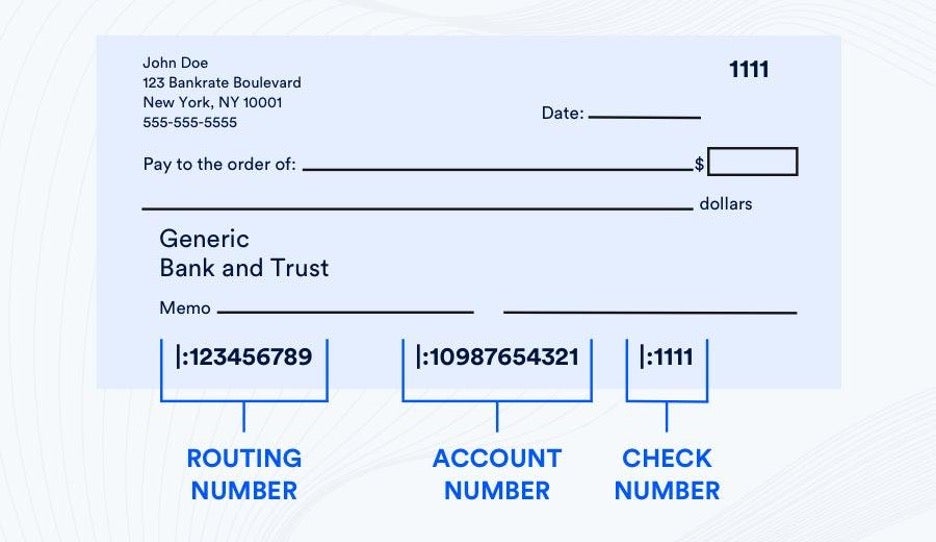
The most important information on any check is located at the very bottom. This area is known as the MICR line. It is printed in a special ink that contains magnetic particles, allowing high-speed processing machines to read the data even if it has been obscured by stamps or handwriting. On a standard personal check, you will see three distinct groups of numbers separated by unique symbols.
The Routing Number (The First Set)
The first sequence of nine digits on the far left is the American Bankers Association (ABA) routing transit number. This number serves as a “home address” for your financial institution. It tells the clearinghouse exactly which bank holds the funds. Routing numbers are not unique to you; every customer at a specific bank in a specific region will likely share the same routing number. It is bounded by a specific symbol known as the “transit” symbol, which looks like a vertical dash and a colon.
The Account Number (The Middle Set)
Directly to the right of the routing number—usually separated by a symbol that resembles a bracket or a colon—is your unique bank account number. This is the specific identifier for your checking or savings account. Unlike the routing number, which identifies the bank, the account number identifies you.
The length of an account number can vary significantly depending on the financial institution. Some banks use eight digits, while others may use up to twelve or more. It is crucial to note that the account number is often followed by a small “on-us” symbol. When you are asked for your account number for a financial form, you should exclude the symbols and only provide the numeric digits.
The Check Number (The Final Set)
On the far right of the MICR line (and usually printed in the top-right corner of the check as well), you will find the check number. This is a short sequence—typically three or four digits—that helps you and your bank keep track of individual transactions. When you write a check, you record this number in your check register to ensure you don’t double-count a payment. When identifying your account number, be careful not to include these last few digits, as they change with every check in your book.
Why Your Account and Routing Numbers are the Keys to Your Financial House
In the world of personal finance, your account and routing numbers are the primary keys to your liquid assets. While your debit card number can change if the card is lost or expires, your account and routing numbers remain constant for the life of that specific bank account. This stability makes them the preferred method for long-term financial configurations.
Establishing Direct Deposits and Payroll
One of the most common reasons you’ll need to find your account number on a check is for a direct deposit authorization form. Employers require this information to “push” your salary directly into your account. Providing a voided check is often the standard operating procedure because it eliminates the risk of a typo. If you provide an incorrect account number, your paycheck could be delayed or, in rare cases, deposited into a stranger’s account, necessitating a lengthy recovery process through the bank’s ACH department.

Powering the ACH Network
The Automated Clearing House (ACH) network is the backbone of the U.S. financial system. When you pay a utility bill online or link your checking account to an investment platform like Vanguard or Fidelity, you are using the ACH network. This system relies entirely on the routing and account numbers found on your check. Because ACH transfers are generally cheaper or free compared to wire transfers, they are the preferred method for moving money between different financial institutions you own.
The Security Implications of Your Bank Credentials
Because these numbers allow for both “push” (deposits) and “pull” (withdrawals) transactions, they are highly sensitive data. If an unauthorized individual obtains your account and routing numbers, they can theoretically initiate fraudulent ACH withdrawals. This is why financial experts recommend never sharing photos of your checks on social media and ensuring that any “voided” checks provided to vendors are clearly marked in large, indelible ink across the center.
Variations and Special Cases: Business Checks and Digital Voids
While the layout described above is standard for personal checks, you may encounter variations depending on the type of account or the financial institution’s internal software.
Business Check Layouts
Business checks are often larger and may have a different sequence at the bottom. In some business formats, the check number actually appears before the routing number on the MICR line. If you are using a business check to find your account number, look for the nine-digit routing number first; the account number will be the sequence that is neither the nine-digit routing number nor the short check number.
Cashier’s Checks and Money Orders
If you are looking at a cashier’s check or a money order, the numbers at the bottom may not represent your personal account. A cashier’s check uses the bank’s own internal account number, as the bank has already moved your funds into their own coffers to guarantee the payment. If you need your personal account number for a form, do not use the numbers found on a cashier’s check; always refer back to your standard personal checkbook or your digital banking portal.
The Rise of the “E-Check”
As we transition toward a paperless society, many people no longer carry physical checkbooks. However, the requirement for account and routing numbers persists. Most mobile banking apps now offer a feature called “Direct Deposit Information” or “Check Image,” which displays a digital representation of a check. This digital version follows the same formatting rules as the physical one, allowing you to identify your numbers without needing to hunt through a desk drawer for a checkbook you haven’t used in months.
Best Practices for Managing and Protecting Your Banking Information
Knowing where to find your account number is only the first step; managing that information securely is vital for your long-term financial health. The checkbook is a powerful financial tool, but it is also a legacy system that lacks the multi-factor authentication of modern apps.
How to Properly Void a Check
When a service provider asks for a voided check to set up autopay, do not simply hand over a blank check. Write “VOID” in large, bold letters across the front of the check—specifically covering the “Amount” box and the “Signature” line. Ensure that the “VOID” does not cover the MICR line at the bottom, as the recipient needs to be able to read the routing and account numbers clearly to input them into their system.
Reconciling Your Accounts
Because your account number is a permanent fixture of your account, any check you write can be tracked. Use the check number (the third set of digits) to reconcile your bank statement every month. In the age of instant notifications, many people have stopped doing this, but “balancing a checkbook” remains an excellent way to spot unauthorized transactions or errors made by merchants.

Transitioning to Secure Digital Alternatives
While the check is a reliable way to find your account details, consider using “Secure Tokenization” or services like Plaid when linking bank accounts to apps. These services act as a middleman, allowing you to link accounts without manually sharing your raw account and routing numbers with every third-party app. This adds a layer of security between your “keys to the house” and the digital world.
In conclusion, the bottom of your check is a map of your financial identity. By identifying the nine-digit routing number on the left and the unique account number in the center, you gain the ability to navigate the complex world of modern finance. Whether you are building wealth through automated investments or simply ensuring your bills are paid on time, these numbers are the essential components that keep your personal economy moving forward. Always treat your checkbook with the same level of security you would give your social security card or your digital passwords, ensuring that your account number remains a tool for your benefit rather than a liability.
aViewFromTheCave is a participant in the Amazon Services LLC Associates Program, an affiliate advertising program designed to provide a means for sites to earn advertising fees by advertising and linking to Amazon.com. Amazon, the Amazon logo, AmazonSupply, and the AmazonSupply logo are trademarks of Amazon.com, Inc. or its affiliates. As an Amazon Associate we earn affiliate commissions from qualifying purchases.