
In the intricate world of personal finance, a few seemingly small pieces of information hold immense power. Among them is your bank’s routing number – a nine-digit code that acts as a digital fingerprint for your financial institution. While often overlooked until needed, understanding what it is, why it’s important, and crucially, where to find it, is a cornerstone of effective money management. This guide will demystify the routing number, equipping you with the knowledge and tools to confidently navigate your financial transactions.
A routing number, officially known as an ABA (American Bankers Association) Routing Transit Number, is essential for securely and accurately moving money between different banks within the United States. From receiving your paycheck via direct deposit to paying bills electronically or sending funds to a friend, this seemingly simple number is the backbone of modern electronic funds transfers. Knowing where to quickly and reliably locate it can save you time, prevent errors, and ensure your financial life runs smoothly.

Understanding Your Routing Number: The Foundation of Financial Transactions
Before diving into where to find your routing number, it’s vital to grasp what it is and why it holds such significance in your financial landscape. This foundational understanding will underscore its importance and guide your actions whenever it’s required.
What Exactly is an ABA Routing Number?
At its core, an ABA routing number is a nine-digit numerical code used to identify a specific financial institution within the United States. It’s akin to a bank’s address in the national banking system. The American Bankers Association established these numbers in 1910 to facilitate the processing of paper checks. While checks remain a use case, their primary function today is to enable electronic funds transfers (EFTs).
Each digit in the nine-digit code has a specific purpose, identifying factors such as the bank’s district, the Federal Reserve Bank that serves it, and the bank itself. Crucially, a single bank might have multiple routing numbers depending on its size, location, or the specific type of transaction (e.g., standard ACH vs. wire transfers). This nuance is particularly important and often a source of confusion for consumers, highlighting the need for careful verification.
Why Is It So Crucial for Your Finances?
The routing number is an unsung hero in personal finance, facilitating a wide array of essential transactions that keep your economic life humming. Without it, many of the conveniences we take for granted would be impossible or significantly more cumbersome.
Firstly, it is indispensable for direct deposits. Whether it’s your salary, government benefits (like Social Security or tax refunds), or pension payments, your employer or the paying entity requires your bank’s routing number (along with your account number) to deposit funds directly into your account. This eliminates the need for physical checks, accelerating access to your money and reducing the risk of lost or stolen payments.
Secondly, routing numbers are critical for automatic bill payments and electronic transfers. Setting up recurring payments for utilities, mortgage, rent, car loans, or subscriptions often involves providing your bank’s routing and account numbers. This automation is a cornerstone of modern budgeting, helping you avoid late fees and manage cash flow effectively. Similarly, when linking external accounts for transfers between banks or setting up peer-to-peer payment services like Zelle or Venmo (though some of these services might abstract the routing number from the user), the underlying mechanism relies on these identifiers.
Finally, while less common for everyday transactions, routing numbers are fundamental for wire transfers. These are often used for large, time-sensitive transfers, both domestically and internationally. It’s worth noting that some banks use a different routing number specifically for wire transfers than they do for ACH (Automated Clearing House) transactions like direct deposits. Understanding this distinction is paramount to avoid costly errors in high-value transfers.
Common Scenarios Requiring Your Routing Number
Knowing when and why you’ll need your routing number is just as important as knowing where to find it. Various financial situations demand this unique identifier, making it a piece of information you’ll likely use repeatedly throughout your financial life.
Setting Up Direct Deposit for Employment or Benefits
This is perhaps the most frequent scenario where your routing number comes into play. When you start a new job, your employer will provide you with a direct deposit form. This form typically asks for your name, account number, and your bank’s routing number. The same applies to receiving government benefits, such as Social Security, veterans’ benefits, or tax refunds from the IRS; they all require this information to send funds directly to your bank account. Establishing direct deposit is a key step towards financial efficiency and security, ensuring your funds are available quickly without the hassle of cashing paper checks.
Initiating Automatic Bill Payments and Transfers
Many individuals opt for automated bill payments to simplify their finances and avoid late fees. Whether it’s your monthly rent, utility bills, credit card payments, or loan installments, setting up these recurring transactions often involves providing your bank’s routing and account numbers to the service provider. This allows the provider to “pull” funds directly from your account on the due date. Similarly, if you want to transfer money between your accounts at different banks (e.g., moving money from a checking account at one bank to a savings account at another), you’ll need the routing number for both institutions.
Sending or Receiving Wire Transfers
Wire transfers are a distinct type of electronic fund transfer, often used for larger sums of money or when funds need to be transferred very quickly. Unlike ACH transfers (which can take 1-3 business days), wire transfers are typically immediate and irrevocable. Because of their immediacy and high value, wire transfers often use a specific routing number that is different from the one used for standard ACH transactions. If you need to send or receive a wire transfer, it’s crucial to confirm the exact wire routing number with your bank, as using the standard ACH number can lead to significant delays or rejections.
Ordering New Checks or Setting Up Third-Party Payments
While less common in a digital age, ordering new physical checks from a third-party printer will require your bank’s routing number, along with your account number, to ensure the checks are correctly linked to your account. Additionally, when you link your bank account to certain financial apps, investment platforms, or online payment services (beyond direct peer-to-peer apps that sometimes use a different verification method), you may be prompted to enter your routing number to establish the connection for deposits or withdrawals.
Multiple Avenues to Locate Your Routing Number
Fortunately, finding your routing number is usually straightforward, as banks make this information readily accessible through several common channels. Knowing all your options ensures you can retrieve it whenever and wherever you need it.
The Easiest Spot: Your Checkbook
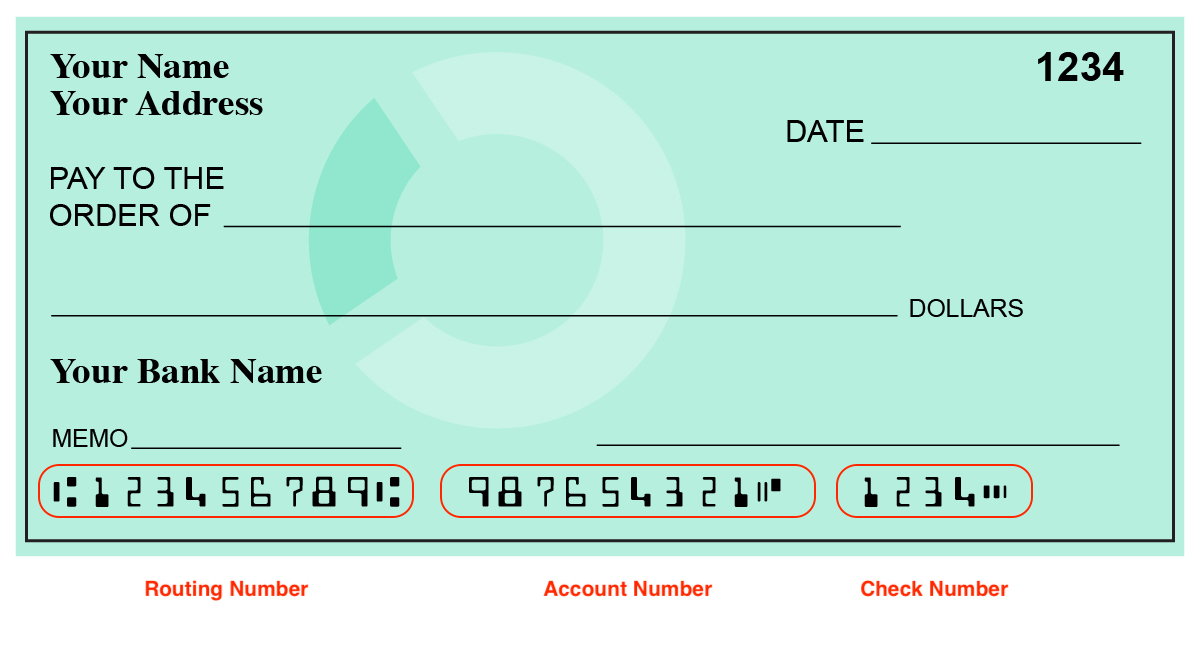
For many, the quickest and most traditional way to find your routing number is on a physical check. Look at the bottom of a check from your checkbook. You’ll typically see three sets of numbers printed in magnetic ink. From left to right, these are usually:
-
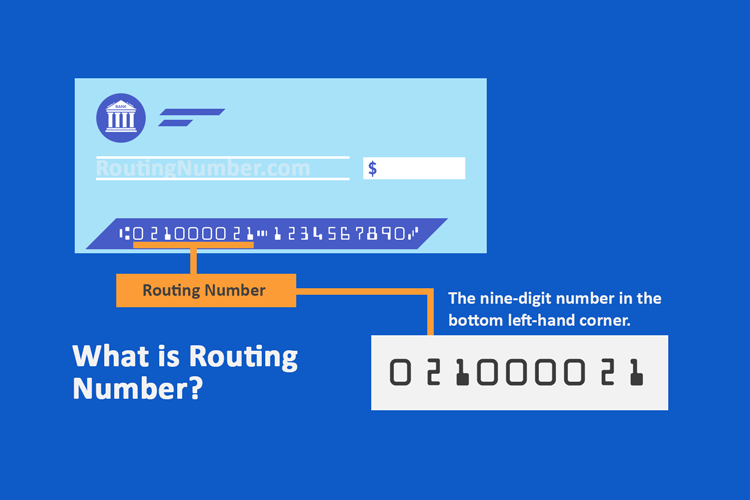
Your bank’s nine-digit routing number.
-
Your account number.
-
The individual check number.
This placement is standardized, making it a reliable source. However, be aware that some banks may have slightly different routing numbers for different types of accounts or branches, though this is less common today.
Leveraging Online Banking Portals and Mobile Apps
In our increasingly digital world, your online banking portal or mobile app is an excellent resource. Most financial institutions prominently display this information within your account details. Look for sections labeled:
-
“Account Details”
-
“Direct Deposit Information”
-
“Statements”
-
“Transfer Funds” or “External Accounts”
Within these sections, you should find your routing number clearly listed. This method offers 24/7 access and is often the most convenient, as you can retrieve it from anywhere with an internet connection.
Contacting Your Financial Institution Directly
If you can’t find your routing number through other means, or if you need to confirm the specific routing number for a particular type of transaction (especially wire transfers), calling your bank’s customer service or visiting a local branch is always a reliable option. A customer service representative will be able to provide you with the correct routing number for your account and clarify any distinctions, such as those for ACH versus wire transfers. This is particularly recommended if you are dealing with large sums or complex transfers to ensure absolute accuracy.
Bank Statements and Official Documents
Your monthly or quarterly bank statements, whether paper or electronic, typically include your routing number. It’s often found near your account number or within a section dedicated to your account details. Additionally, any welcome kits or official documents you received when opening your account might also contain this information. While not the most immediate method, these documents serve as a reliable backup.
Utilizing Public Resources (with Caution)
For general verification or if you’re trying to identify the bank associated with a routing number, public resources exist. The Federal Deposit Insurance Corporation (FDIC) has a BankFind tool, and the American Bankers Association (ABA) also maintains a routing number directory. You can usually search by bank name or by the routing number itself. However, it’s crucial to use these tools with caution. Public directories often list generic routing numbers and may not specify if a particular bank uses different numbers for different purposes (e.g., wire transfers vs. ACH). Always cross-reference with your bank directly for specific transaction needs.
Why Accuracy Matters: Avoiding Financial Pitfalls
The routing number is a critical piece of financial data, and even a single incorrect digit can lead to significant headaches and financial setbacks. Precision is paramount to ensure your money goes exactly where it’s intended.
Consequences of Incorrect Routing Numbers
The most immediate consequence of using an incorrect routing number is a delayed or failed transaction. A direct deposit might not go through, meaning your paycheck is held up. An automatic bill payment could be rejected, potentially incurring late fees from the service provider and overdraft fees from your bank if you don’t have sufficient funds for the resubmission.
More severely, if the incorrect routing number corresponds to another legitimate financial institution and the account number happens to match an existing account there, your funds could be sent to the wrong account or institution. Retrieving these funds can be a lengthy, complex, and sometimes impossible process, requiring the cooperation of multiple banks and potentially legal intervention. This highlights the importance of not just having a routing number, but having the correct one for your bank and your specific transaction type.
Best Practices for Verification
To mitigate these risks, always adopt a meticulous approach:
-
Double-Check Every Digit: Before submitting your routing number for any transaction, carefully compare it against a reliable source (your check, online banking, or bank statement).
-
Confirm for Wire Transfers: For wire transfers, always contact your bank directly to confirm the specific wire routing number. Do not rely on a number from a check or online banking that isn’t explicitly designated for wires.
-
Understand Bank Variations: Be aware that some larger banks, or those operating across different regions, might have multiple routing numbers. Confirm which one applies to your specific account and transaction type.
-
Beware of Scams: While a routing number alone isn’t enough to compromise your account, it’s a piece of sensitive information. Be wary of phishing attempts or requests for your routing number from untrusted sources. Never share it via unsecured public channels.
Beyond the Basics: Special Considerations and Security
As you become more comfortable with your routing number, it’s helpful to be aware of a few nuances and best practices for safeguarding your financial information.
The Difference Between ACH and Wire Transfer Routing Numbers
This distinction is perhaps the most important special consideration. Most everyday electronic transactions – direct deposits, automatic bill pays, P2P transfers – use the Automated Clearing House (ACH) network and the standard ACH routing number. However, wire transfers, which are often used for larger sums and offer immediate settlement, typically utilize a different routing number. This is because wire transfers go through the Federal Reserve’s Fedwire system and require specific identification for the receiving bank’s wire department. Using the wrong routing number for a wire transfer is a common and costly mistake, often leading to significant delays or even funds being returned. Always confirm the wire routing number with your bank for such transactions.
Routing Numbers for Different Account Types
For most individuals, their checking and savings accounts at the same institution will share the same routing number. However, it’s always prudent to verify. If you have accounts at different institutions (e.g., a credit union and a traditional bank), they will certainly have different routing numbers. Be mindful of which account you’re referencing when retrieving the number.
Protecting Your Financial Information
While a routing number by itself is generally not enough for someone to drain your bank account, combined with your account number, it becomes potent. This pair of numbers is all that’s typically needed for someone to set up direct debits from your account. Therefore, treating your routing and account numbers as sensitive information is crucial.
-
Be cautious online: Only enter your routing and account numbers on secure, trusted websites.
-
Shred old documents: Before discarding old checks or bank statements, shred them to prevent information theft.
-
Monitor your accounts: Regularly review your bank statements and transaction history for any unauthorized activity.
-
Use strong passwords: Ensure your online banking accounts are protected with robust, unique passwords and, where available, two-factor authentication.
Conclusion
The routing number, though a seemingly small detail, is a pivotal component of your financial infrastructure. It facilitates the seamless flow of money, enabling everything from receiving your salary to paying your bills. By understanding its purpose, recognizing the common scenarios where it’s needed, and knowing the multiple reliable avenues for locating it, you empower yourself with greater control over your personal finance. Always prioritize accuracy, especially for high-value transactions like wire transfers, and remain vigilant in protecting this vital piece of financial information. With this knowledge, you can navigate your financial dealings with confidence and precision, ensuring your money always lands exactly where it’s supposed to be.
aViewFromTheCave is a participant in the Amazon Services LLC Associates Program, an affiliate advertising program designed to provide a means for sites to earn advertising fees by advertising and linking to Amazon.com. Amazon, the Amazon logo, AmazonSupply, and the AmazonSupply logo are trademarks of Amazon.com, Inc. or its affiliates. As an Amazon Associate we earn affiliate commissions from qualifying purchases.