
Navigating the complexities of personal finance often involves diligent monitoring of your financial accounts. Despite your best efforts, you might occasionally spot an unfamiliar or incorrect charge on your credit card statement. When this happens on a Chase credit card, understanding the proper dispute process is crucial for protecting your finances and maintaining your credit health. Disputing a charge isn’t just about getting your money back; it’s about asserting your consumer rights and ensuring the integrity of your financial records. This comprehensive guide will walk you through everything you need to know about disputing a charge on your Chase credit card, from identifying the issue to understanding the resolution process.
Understanding When to Dispute a Charge
Before initiating a dispute, it’s essential to clearly identify the nature of the questionable charge. Not every transaction you don’t immediately recognize warrants a formal dispute, and understanding the nuances can save you time and ensure a smoother resolution.
Identifying Common Reasons for Disputes
Charges typically fall into a few categories that make them eligible for a dispute. The most common reasons include:
-
Fraudulent Charges: These are charges made without your authorization, often due to a stolen card, compromised account number, or identity theft. This is perhaps the most serious type of charge to dispute.
-
Billing Errors: This covers a broad range of mistakes, such as being charged the wrong amount for a legitimate purchase, being double-charged for a single item or service, or being charged for items you returned but for which no credit was issued.
-
Merchandise or Service Not Received: You paid for a product or service but never received it, or what you received was significantly different from what was advertised or agreed upon.
-
Unauthorized Recurring Charges: A subscription or recurring service was charged after you canceled it, or a free trial period ended and you were charged without proper notification or consent.
-
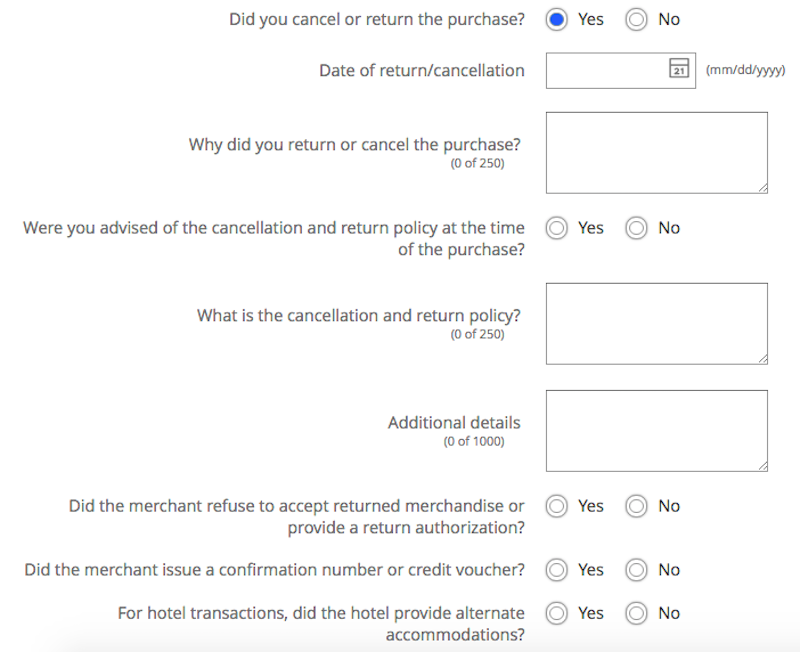
Credit Not Processed: You returned an item or canceled a service, and the merchant promised a refund, but it never appeared on your statement.
Differentiating Between Fraud and Billing Errors
While both can result in financial loss, the distinction between fraud and billing errors is important for how Chase processes your claim. Fraudulent charges are usually handled with a higher sense of urgency due to the risk of ongoing unauthorized activity. Billing errors, while serious, often involve a more direct interaction with the merchant first before involving the credit card issuer. Understanding this difference helps you frame your claim correctly. For instance, if your card was stolen and used for multiple purchases, that’s fraud. If a restaurant simply charged you $100 instead of $10, that’s a billing error.
When a Dispute Might Not Be Necessary
Sometimes, what appears to be an unfamiliar charge is actually legitimate. Before jumping to a dispute, consider these scenarios:
-
A “Forgotten” Purchase: Many people forget small online purchases or automatic renewals. Check your email for receipts from unfamiliar merchant names, as they might be parent companies or payment processors.
-
Authorized User Purchases: If you have an authorized user on your account, they might have made the purchase. Always check with them first.
-
Pending Charges: Sometimes a charge appears as “pending” for a few days, especially with gas stations or hotels that place a temporary hold. These usually correct themselves.
-
Merchant Name Variations: Businesses often have different legal names or parent companies that appear on statements, which can be confusing. A quick online search of the merchant name on your statement can often clarify this.
If, after checking these possibilities, the charge remains a mystery or is clearly erroneous, then proceeding with a dispute is the appropriate next step.
Preparing for Your Dispute: Gathering Essential Information
A successful dispute hinges on clear, concise, and well-documented information. The more evidence you can provide, the stronger your case will be, and the faster Chase can work towards a resolution.
Collecting Transaction Details
The absolute first step is to accurately identify the charge. You’ll need:
-
Date of the Transaction: The precise date the charge appeared.
-
Amount of the Charge: The exact dollar amount.
-
Merchant Name: The name of the business as it appears on your statement.
-
Transaction ID (if available): Some online purchases or receipts will have a unique transaction identifier.
-
Statement Period: The billing cycle in which the charge occurred.
Accessing your Chase online account or recent statements will provide all this information clearly.
Documenting Your Attempts to Resolve with the Merchant
For non-fraudulent disputes (like billing errors or merchandise issues), Chase typically expects you to have attempted to resolve the issue directly with the merchant first. This demonstrates good faith and often resolves simpler issues without involving the credit card company. Keep records of:
-
Dates and Times of Contact: When you called, emailed, or visited the merchant.
-
Names of People You Spoke To: If you spoke to customer service representatives.
-
Summary of Conversations: What was discussed, what was agreed upon, and what was the merchant’s proposed solution (or lack thereof).
-
Correspondence: Save emails, chat transcripts, or letters exchanged with the merchant. Screenshots can also be very useful.
-
Reason for Merchant’s Refusal: If the merchant refused to help, note their reasons.
Chase will ask about these attempts and may require evidence before proceeding with a formal dispute.
Assembling Supporting Evidence
Beyond transaction details and merchant communication, any additional evidence can bolster your claim. This might include:
-
Receipts or Order Confirmations: If you have a receipt showing a different amount, or an order confirmation for an item you never received.
-
Proof of Cancellation: If you canceled a subscription, provide the confirmation email or reference number.
-
Photos or Videos: If the product received was damaged or not as described, visual evidence can be powerful.
-
Police Report: For cases of severe fraud or identity theft, a police report can be critical evidence.
-
Delivery Tracking Information: If an item was supposed to be delivered but wasn’t, tracking numbers can confirm this.
Organize all your documents clearly. Creating a folder (digital or physical) dedicated to the dispute can prevent confusion and ensure you have everything ready when you contact Chase.
Navigating the Chase Dispute Process
Once you have all your information compiled, it’s time to formally initiate the dispute with Chase. There are primarily two ways to do this, each with its own advantages.
Initiating a Dispute Online or by Phone
Chase offers convenient ways to start your dispute:
-
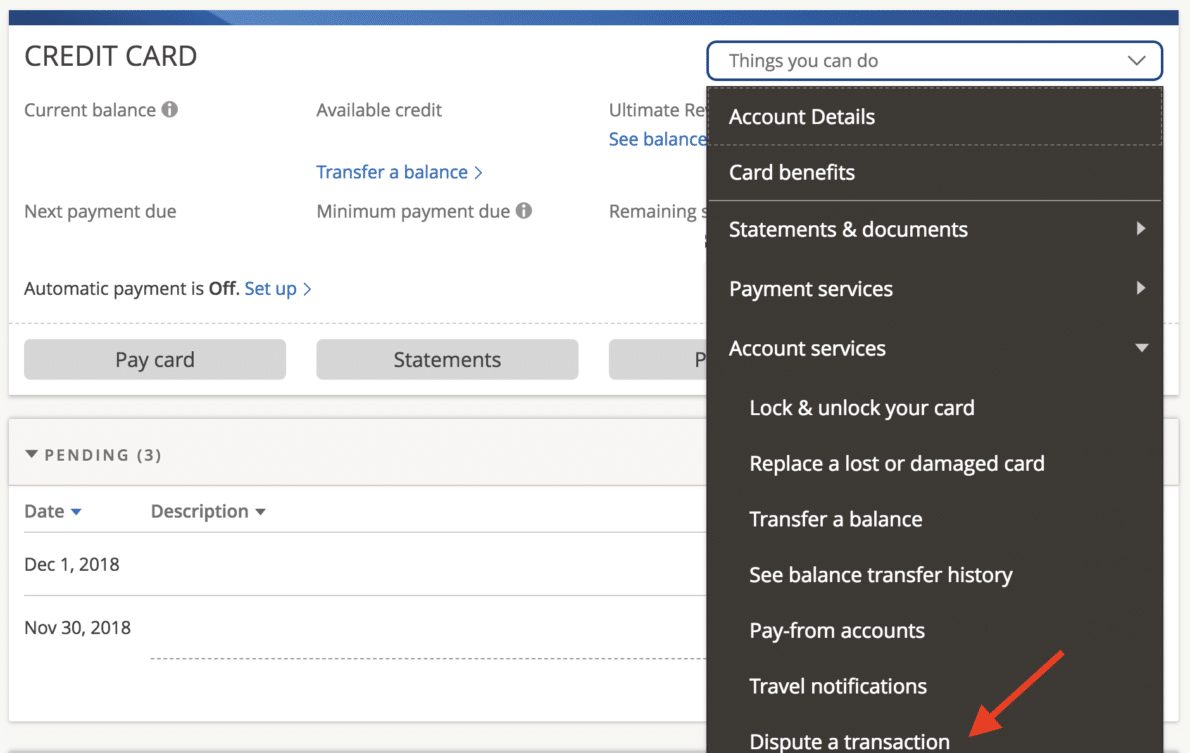
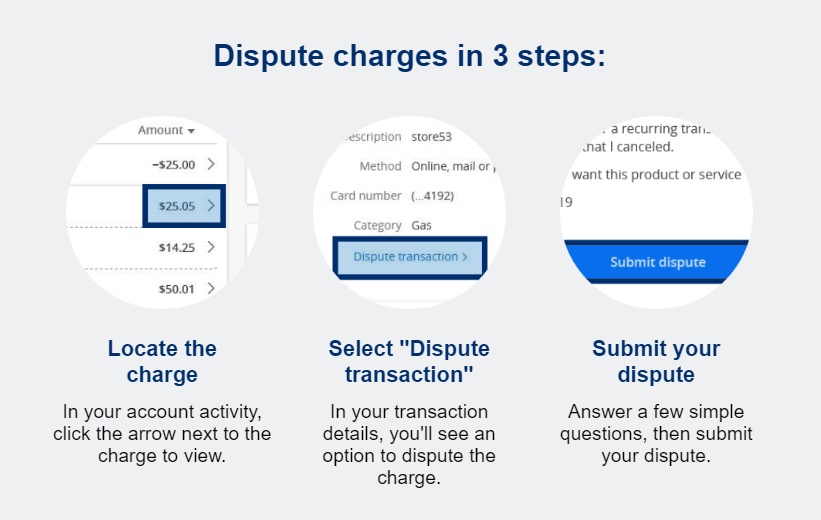
Online: This is often the quickest and most preferred method. Log in to your Chase online account, navigate to the specific transaction, and look for an option to “Dispute this charge” or “Report a problem.” You’ll be prompted to provide details and upload any supporting documents. The online portal keeps a clear record of your dispute.
-
By Phone: You can call the customer service number on the back of your Chase credit card. Be prepared to speak with a representative and provide all the details you’ve gathered. While less convenient for document submission, a phone call allows you to ask questions and get immediate clarification. Make sure to note the date, time, and name of the representative you speak with.
It’s generally recommended to initiate the dispute as soon as possible, ideally within 60 days of the statement date on which the charge first appeared, as per the Fair Credit Billing Act (FCBA) guidelines. While Chase might still process disputes beyond this timeframe, your legal protections are strongest within this window.
What Happens After You Submit Your Dispute
Once you submit your dispute, Chase will review your claim and usually provide you with a dispute case number. Here’s a general overview of the process:
-
Initial Review: Chase will first determine if the dispute is valid and falls under applicable consumer protection laws (like the FCBA).
-
Merchant Contact: Chase will typically contact the merchant to present your claim and request their side of the story or supporting documentation. The merchant has a specific timeframe (usually 30-45 days) to respond.
-
Investigation: Chase acts as a mediator, reviewing evidence from both you and the merchant. This investigation can take some time, often weeks or even months, depending on the complexity of the case.
-
Provisional Credit: In many cases, especially for fraudulent charges or clear billing errors, Chase will issue a “provisional credit” to your account while the investigation is ongoing. This temporarily removes the charge from your balance and prevents you from incurring interest on it.
Understanding Provisional Credits and Timelines
A provisional credit is a temporary credit to your account for the disputed amount. It’s important to understand that this is not a final resolution. If the investigation concludes that the charge was legitimate, Chase has the right to reverse this provisional credit, and you would then be responsible for the charge.
The timeline for a dispute resolution can vary significantly:
-
FCBA Timelines: Under the Fair Credit Billing Act, a credit card issuer must acknowledge your dispute in writing within 30 days of receiving it and resolve it within two billing cycles (but no more than 90 days).
-
Chase Specifics: While Chase aims to resolve disputes quickly, complex cases requiring extensive back-and-forth with merchants can extend these timelines. You should regularly check your Chase online account or call customer service for updates on your dispute’s status.
Be patient but persistent. Keep all communications from Chase and follow up if you don’t hear back within expected timeframes.
Key Regulations and Consumer Protections
Your ability to dispute charges on your Chase credit card is backed by robust consumer protection laws, primarily the Fair Credit Billing Act (FCBA). Understanding these regulations empowers you as a cardholder.
The Fair Credit Billing Act (FCBA) Explained
The FCBA is a federal law that provides protections for consumers who dispute “billing errors” on their credit card statements. Key provisions of the FCBA include:
-
Definition of Billing Errors: It broadly defines billing errors to include unauthorized charges, charges for goods or services not accepted or not delivered, incorrect amounts, failure to post payments or credits, and mathematical errors.
-
Notification Requirements: You must notify your credit card issuer of the billing error in writing (though many issuers accept phone or online notification now) within 60 days after the first statement containing the error was mailed to you.
-
Issuer’s Responsibilities: The issuer must acknowledge your complaint within 30 days and resolve the dispute within two billing cycles (but no more than 90 days).
-
Withholding Payment: While the dispute is pending, you are not required to pay the disputed amount or any associated finance charges. However, you must continue to pay the undisputed portions of your bill.
-
Credit Reporting Protections: During the dispute, the card issuer cannot report the disputed amount as delinquent to credit bureaus.
Your Rights and Responsibilities
As a consumer, your rights under the FCBA are clear, but you also have responsibilities:
-
Your Rights: To dispute errors, withhold payment on disputed amounts, receive provisional credit, and have your dispute investigated fairly.
-
Your Responsibilities: To notify Chase promptly, provide truthful and accurate information, cooperate with the investigation, and continue paying undisputed amounts on your bill.
For fraudulent charges, separate regulations like the Electronic Fund Transfer Act (EFTA) and Visa/Mastercard zero-liability policies offer additional protections, often limiting your liability to $0 if you report the fraud promptly.
Potential Outcomes and Next Steps
Once the investigation is complete, Chase will notify you of the outcome:
-
Dispute Resolved in Your Favor: The disputed charge will be permanently removed from your account, and any provisional credit will become permanent. You’ll receive a final credit to your account.
-
Dispute Resolved in Merchant’s Favor: If Chase determines the charge was legitimate, the provisional credit will be reversed, and you will be responsible for the charge, including any accumulated interest if applicable. Chase will explain their reasoning, often based on evidence provided by the merchant.
-
Further Action: If the dispute is resolved against you, but you still believe you are in the right, you might have further recourse, such as filing a complaint with the Consumer Financial Protection Bureau (CFPB) or seeking legal advice. However, these are rare scenarios for typical credit card disputes.
Preventing Future Unauthorized or Erroneous Charges
While the dispute process provides a safety net, proactive measures are always better. Minimizing the risk of encountering questionable charges is key to financial peace of mind.
Monitoring Your Statements Regularly
This is arguably the most crucial step. Make it a habit to:
-
Review Online Statements Weekly: Don’t wait for your monthly paper statement. Log into your Chase account frequently to check recent transactions.
-
Scrutinize Every Line Item: Look beyond the total amount and review each individual charge, especially for smaller amounts that might be overlooked.
-
Reconcile Purchases: If you keep a budget or track your spending, compare your records against your statement.
Early detection of an unauthorized or erroneous charge allows for a quicker dispute and minimizes potential damage.
Safeguarding Your Account Information
Protecting your credit card details is paramount:
-
Be Wary of Phishing Scams: Never click on suspicious links or provide your card details in response to unsolicited emails or messages. Chase will never ask for your full card number or PIN via email.
-
Use Strong, Unique Passwords: For your Chase online account and any online retailers where your card is stored.
-
Secure Public Wi-Fi: Avoid making purchases or accessing sensitive financial information on unsecured public Wi-Fi networks.
-
Shred Old Documents: Securely dispose of old credit card statements, receipts, and pre-approved credit offers.
-
Physical Card Security: Never let your card out of sight during transactions, and report a lost or stolen card immediately.
Utilizing Chase’s Alert Features
Chase offers several tools to help you stay on top of your account activity:
-
Transaction Alerts: Set up alerts to be notified via email or text message for various activities, such as purchases over a certain amount, international transactions, or online purchases.
-
Balance Alerts: Get notified if your balance goes above or below a certain threshold.
-
Payment Due Date Alerts: Ensure you don’t miss payments, which can prevent additional fees or interest.
By leveraging these features, you can receive real-time notifications of activity on your card, allowing you to quickly identify and address any suspicious charges before they become bigger problems.
Disputing a charge on your Chase credit card, while sometimes a hassle, is a vital consumer right and a necessary skill for managing your personal finances effectively. By understanding the reasons for disputes, preparing thoroughly, navigating the process with diligence, and taking preventative measures, you can safeguard your financial well-being and ensure your Chase credit card serves you reliably.
aViewFromTheCave is a participant in the Amazon Services LLC Associates Program, an affiliate advertising program designed to provide a means for sites to earn advertising fees by advertising and linking to Amazon.com. Amazon, the Amazon logo, AmazonSupply, and the AmazonSupply logo are trademarks of Amazon.com, Inc. or its affiliates. As an Amazon Associate we earn affiliate commissions from qualifying purchases.