
Moving to a new home is often an exciting, albeit busy, life event. Amidst the packing, unpacking, and settling in, one crucial task that frequently gets overlooked, or postponed, is updating your address with your financial institutions. For customers of JPMorgan Chase Bank, one of the largest financial institutions globally, ensuring your address is current is not just a matter of convenience; it’s a critical component of your financial security, regulatory compliance, and overall peace of mind.
This comprehensive guide will walk you through the various methods available to change your address with Chase, delve into the profound financial implications of keeping your information current, and offer expert tips to ensure a smooth transition. From safeguarding your identity to receiving vital financial documents, understanding the “how” and “why” behind this seemingly simple task is paramount for sound personal finance management.

The Financial Imperative: Why Updating Your Address with Chase Matters
Beyond merely receiving mail at the correct location, keeping your address updated with your bank, especially one as central to many people’s financial lives as Chase, has significant financial ramifications. It touches upon security, compliance, and the very flow of your financial information.
Safeguarding Your Financial Security
An outdated address is a gaping vulnerability in your financial security perimeter. Consider the risks:
-
Mail Interception and Identity Theft: Financial statements, new credit cards, debit cards, checks, and other sensitive documents sent to an old address could fall into the wrong hands. An identity thief could potentially redirect your mail, open new accounts in your name, or gain access to existing ones.
-
Delayed Fraud Alerts: If Chase detects suspicious activity on your account, they often send alerts via mail in addition to digital notifications. A delay in receiving these could mean a critical window to prevent or mitigate fraud is missed.
-
Compromised Account Access: In some cases, if your address doesn’t match official records, accessing certain services or even performing specific transactions, particularly those involving high values or sensitive data, might be temporarily restricted as a security measure.
Ensuring Seamless Financial Communication
Your address is the primary physical link between you and Chase. Accurate information ensures:
-
Receipt of Essential Documents: This includes monthly statements for checking, savings, credit cards, and investment accounts, which are vital for tracking spending, reconciling balances, and detecting unauthorized transactions. Tax documents like 1099-INT for interest earned, 1099-DIV for dividends, or 1099-B for investment sales are legally required and depend on your current address. Failure to receive these can complicate tax filing and lead to potential penalties.
-
New Card Delivery: When your debit or credit card expires, or if you request a new one, it will be mailed to your address on file. An incorrect address means delays, inconvenience, and the aforementioned security risks.
-
Important Notices and Updates: Chase regularly sends out important notices regarding changes to account terms, privacy policy updates, or new services. Staying informed is key to making sound financial decisions.
-
Credit Reporting Accuracy: While not directly tied to credit scores, ensuring your address with financial institutions is consistent helps maintain accurate records with credit bureaus, which can indirectly support your credit profile.
Regulatory Compliance and Account Access
Financial institutions like Chase operate under stringent “Know Your Customer” (KYC) regulations. These rules require banks to verify the identity and address of their customers to prevent financial crimes such as money laundering and terrorist financing.
-
Legal Obligation: By providing accurate and current information, you help Chase comply with these legal obligations.
-
Uninterrupted Service: Non-compliance or a significant mismatch in information could, in extreme cases, lead to account restrictions or even temporary closure until the data is verified, causing significant financial disruption. This is especially true for international moves or changes in citizenship status.
Navigating the Process: Methods for Updating Your Chase Address
Chase, understanding the varied preferences of its diverse customer base, offers multiple convenient channels for updating your address. Each method caters to different comfort levels and situations, ensuring flexibility in managing your financial data.
The Digital Path: Online Banking and Mobile App
For most customers, updating your address online is the quickest and most straightforward method. It leverages the robust security infrastructure of Chase’s digital platforms.
-
Chase Online Banking:
-
Log In: Visit the official Chase website (www.chase.com) and log in to your account using your username and password.
-
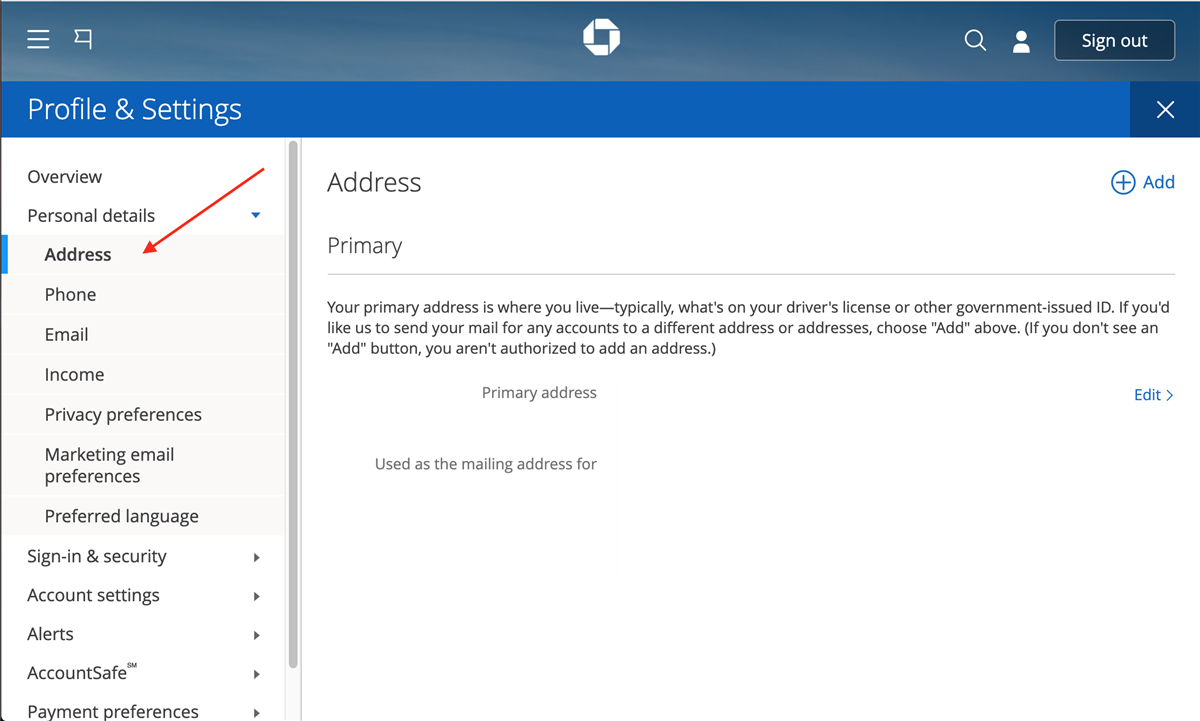
Navigate to Profile/Settings: Once logged in, look for a “Profile & Settings” or “Customer Center” section. This is typically found in the top right corner, under your name, or within a main navigation menu.
-
Find Contact Information: Within the profile section, locate the “Contact Information,” “Personal Details,” or “Address” tab.
-
Edit Address: Click on the “Edit” or “Change” button next to your current address.
-
Enter New Details: Carefully input your new street address, apartment number, city, state, and zip code. Double-check for typos.
-
Verify and Confirm: Follow any on-screen prompts for verification (e.g., sending a code to your registered phone or email). Review the new address for accuracy and confirm the change.
-
Confirmation: You should receive an immediate confirmation on screen and often an email notification that your address has been updated.
-
-
Chase Mobile App: The process on the Chase mobile app mirrors the online banking experience. Log in, navigate to your profile settings, find the contact information section, and update your address there. The app offers the convenience of updating on the go.
-
Security Reminder: Always ensure you are on the official Chase website or using the official Chase app. Use strong, unique passwords and enable two-factor authentication (2FA) for added security.
The Personal Touch: In-Branch Assistance
While digital methods are efficient, some individuals prefer or require face-to-face interaction, especially for more complex situations or if they need immediate verification.
-
When to Choose In-Branch:
-
You prefer speaking directly with a representative.
-
You are updating multiple complex accounts (e.g., personal and business accounts simultaneously).
-
You are new to Chase or have specific verification challenges online.
-
You’re making an international address change which might involve more stringent documentation.
-
-
What to Bring: Always bring a valid, government-issued photo ID (e.g., driver’s license, passport) and proof of your new address. Acceptable proof often includes a utility bill (electricity, gas, water), a lease agreement, mortgage statement, or a voter registration card showing your new address.
-
Benefits: A Chase representative can guide you through the process, answer any questions, and ensure all your linked accounts are updated correctly. You’ll receive immediate confirmation and often a printed verification.
The Traditional Route: Phone and Mail

For those who may not have internet access or prefer speaking over the phone, these traditional methods remain viable, though generally slower than online or in-branch options.
-
Phone Customer Service:
-
Call Chase: Dial the customer service number provided on the back of your debit/credit card or on the official Chase website (e.g., 1-800-935-9935 for general banking).
-
Verification: Be prepared to go through a rigorous verification process to confirm your identity. This typically involves providing personal details, answering security questions, and potentially verifying recent transactions.
-
Request Address Change: Clearly state that you wish to update your mailing and/or physical address.
-
Confirmation: The representative will confirm the change and inform you when to expect it to be reflected in your account.
-
-
Mail: While less common for address changes due to security and speed concerns, it is sometimes an option, particularly for specific forms or account types.
-
Inquire First: It’s best to call customer service or visit a branch to confirm if mailing an address change request is appropriate for your situation and what specific forms or documentation would be required.
-
Secure Mail: If you do mail sensitive documents, use a secure, trackable mailing service.
-
Essential Considerations Before and After Your Address Change
Updating your address with Chase is just one step in a broader financial administrative task. Strategic planning and follow-up are essential to ensure comprehensive financial integrity.
Gathering Necessary Documentation
Before initiating the address change, especially if you plan to visit a branch or foresee potential verification issues, compile relevant documents:
-
Government-Issued Photo ID: Your driver’s license, state ID, or passport.
-
Proof of New Address: A recent utility bill (dated within the last 60-90 days), a signed lease agreement, mortgage statement, or a property deed. These documents confirm your residency at the new location.
-
Account Information: Have your Chase account numbers readily available, though often your identity verification will link to all your accounts.
Verifying the Update and Confirming Changes
Once you’ve submitted your address change request, follow up to ensure it has been correctly processed.
-
Online Banking/Mobile App: Log in a few days later to check your profile for the updated address.
-
Next Statement: Your next monthly statement (whether physical or e-statement) should reflect the new address.
-
Confirmation Email/Letter: Keep any confirmation emails or letters from Chase as proof of the change.
-
What if it’s Not Reflected? If the address hasn’t updated within a reasonable timeframe (usually 3-5 business days for online/phone), contact Chase customer service or visit a branch to investigate.
-
Update Linked Services: Remember to update your address for any services linked to your Chase accounts, such as Zelle, online bill pay payees (if sending physical checks), or third-party budgeting apps that rely on your Chase data.
Beyond Chase: A Holistic Financial Address Update Strategy
Changing your address with Chase is crucial, but it’s often just the first domino in a much larger chain of financial entities that need to be informed. Develop a comprehensive checklist to ensure you don’t miss anything.
-
Other Financial Institutions:
-
All other banks and credit unions (checking, savings).
-
Credit card companies (other than Chase).
-
Investment firms (brokerage accounts, retirement accounts like 401(k)s, IRAs).
-
Loan providers (mortgage, auto, student loans).
-
Insurance companies (auto, home, life, health).
-
-
Government Agencies:
-
Internal Revenue Service (IRS) – critical for tax refunds and correspondence. Use Form 8822 for individual changes.
-
Department of Motor Vehicles (DMV) – for driver’s license and vehicle registration.
-
Social Security Administration (SSA) – if you receive benefits.
-
U.S. Postal Service (USPS) – set up mail forwarding, but remember it’s a temporary solution, not a permanent replacement for informing senders.
-
-
Other Services: Utilities (electricity, gas, water, internet), subscriptions, online retailers, employers (for payroll and W-2s).
Common Pitfalls and Expert Tips for a Smooth Transition
While the process is generally straightforward, being aware of potential issues and adopting a proactive approach can save you time and stress.
Avoiding Delays and Errors
-
Double-Check Everything: The most common error is a simple typo in the new address. Proofread meticulously.
-
Account-Specific Requirements: Be aware that certain specialized accounts (e.g., some business accounts, trust accounts, or international accounts) might have slightly different or additional requirements for an address change. Inquire specifically if your situation is complex.
-
Clear Communication: If you’re updating via phone or in-branch, clearly state all parts of your address, including apartment numbers, and confirm them with the representative.
-
Timeliness: Don’t wait until the last minute. Update your address as soon as you have confirmed your new residential details to prevent any mail from going to your old address.
Proactive Planning for International Moves
Moving out of the country introduces an entirely new layer of complexity to financial address changes.
-
Tax Implications: International moves can significantly impact your tax residency and reporting obligations to the IRS and potentially to your new country’s tax authority. Consult with a tax professional specializing in international taxation.
-
Account Eligibility: Some Chase accounts may not be supported for non-U.S. residents, or certain services may be restricted. You might need to close some accounts and open new ones that are compatible with your new residency status.
-
Documentation: Be prepared to provide additional documentation, such as proof of international residency, new foreign identification, or specific tax forms.
-
Communication Channels: Ensure you have an international phone number and email address on file that Chase can use to contact you.
Leveraging Chase’s Resources
Don’t hesitate to use the resources Chase provides to assist you.
-
Customer Service: Their representatives are trained to guide you through these processes.
-
Website FAQ: Chase’s website often has detailed FAQ sections that cover common administrative tasks.
-
Secure Message Center: For non-urgent inquiries, the secure message center within your online banking portal allows for documented communication.
Conclusion
Updating your address with Chase is more than just an administrative chore; it’s a fundamental aspect of maintaining sound personal financial health. By ensuring your contact information is accurate and current, you fortify your financial security, guarantee the timely receipt of critical documents, and ensure compliance with regulatory standards.
Whether you opt for the convenience of online banking, the personal touch of an in-branch visit, or the traditional phone method, Chase provides the avenues to manage this essential update. Remember to verify the change, broaden your focus to include all other financial entities, and plan proactively, especially for international transitions. Taking these steps offers not just logistical convenience, but also invaluable peace of mind, knowing that your financial life is organized, secure, and ready for your next chapter.
aViewFromTheCave is a participant in the Amazon Services LLC Associates Program, an affiliate advertising program designed to provide a means for sites to earn advertising fees by advertising and linking to Amazon.com. Amazon, the Amazon logo, AmazonSupply, and the AmazonSupply logo are trademarks of Amazon.com, Inc. or its affiliates. As an Amazon Associate we earn affiliate commissions from qualifying purchases.