
In the intricate tapestry of personal finance, managing your accounts effectively is paramount. One seemingly minor detail that can have significant ripple effects across your financial life is your residential address. For customers of Chase Bank, one of the largest and most influential financial institutions globally, ensuring your address is current and accurate is not just a matter of convenience, but a critical component of financial security, regulatory compliance, and seamless banking operations. An out-of-date address can lead to missed communications, compromised security, and even legal complications, underscoring the necessity of understanding the process for updating this vital information.

This comprehensive guide will demystify how to change your address with Chase Bank, approaching it from the indispensable lens of personal finance. We’ll explore why this administrative task holds such importance, walk through the various methods available for making the change, and discuss the broader financial implications and best practices for managing your financial life during and after a move.
Why Your Address Accuracy is Paramount for Financial Well-being
Changing your address might seem like a simple bureaucratic step, but within the realm of personal finance, its implications are far-reaching. Maintaining an accurate address with your bank is foundational to your financial health and security.
Safeguarding Your Financial Identity and Security
An incorrect address poses a tangible threat to your financial security. Physical mail containing sensitive account information—such as statements, new credit cards, debit cards, or transaction alerts—could be misdirected to an old address. If this mail falls into the wrong hands, it can become a conduit for identity theft or fraud. Malicious actors could use this information to access your accounts, open new lines of credit in your name, or compromise your existing financial standing. By ensuring Chase Bank has your current address, you significantly reduce the risk of your sensitive financial information being exposed to unauthorized individuals, thereby fortifying your defenses against financial crime.
Ensuring Timely Access to Critical Financial Documents
Beyond security, your address is the primary channel through which Chase Bank delivers crucial financial documents. These include monthly statements for checking, savings, and credit card accounts, which provide a detailed record of your transactions and help you monitor your spending and identify any discrepancies. Perhaps even more critical are year-end tax documents, such as 1099-INT for interest earned, 1099-DIV for dividends, or 1098 for mortgage interest paid. These documents are essential for accurately filing your income taxes. If these forms are sent to an outdated address, you could face delays in tax preparation, potential penalties for late filing, or even incorrect tax reporting, all of which can lead to significant financial stress and complications. Prompt receipt of these documents is a cornerstone of responsible financial management.
Avoiding Disruptions in Financial Services and Communications
An outdated address can severely disrupt your access to financial services. For instance, if Chase needs to send you a new debit card or credit card due to expiration or compromise, it will be mailed to the address on file. If that address is incorrect, you could be left without access to your funds or credit lines for an extended period, leading to inconvenience and potential financial hardship. Furthermore, important communications regarding account updates, policy changes, fraud alerts, or even promotional offers could be missed, leaving you uninformed about critical aspects of your banking relationship. Seamless communication is vital for effective financial planning and decision-making.
Compliance and Regulatory Importance
From a regulatory standpoint, banks are legally obligated to maintain accurate customer information, including addresses, as part of “Know Your Customer” (KYC) regulations aimed at preventing money laundering and terrorist financing. An accurate address helps Chase Bank comply with these strict requirements. For the individual, maintaining updated information ensures you remain in good standing with your financial institution and helps avoid any flags or issues that might arise from discrepancies, which could potentially complicate future transactions or account services.
Navigating the Address Change Process at Chase Bank
Chase Bank offers several convenient methods for updating your address, catering to different preferences and situations. Understanding each option will help you choose the most efficient and secure way to make your change.
Online Banking: The Digital Pathway to Seamless Updates
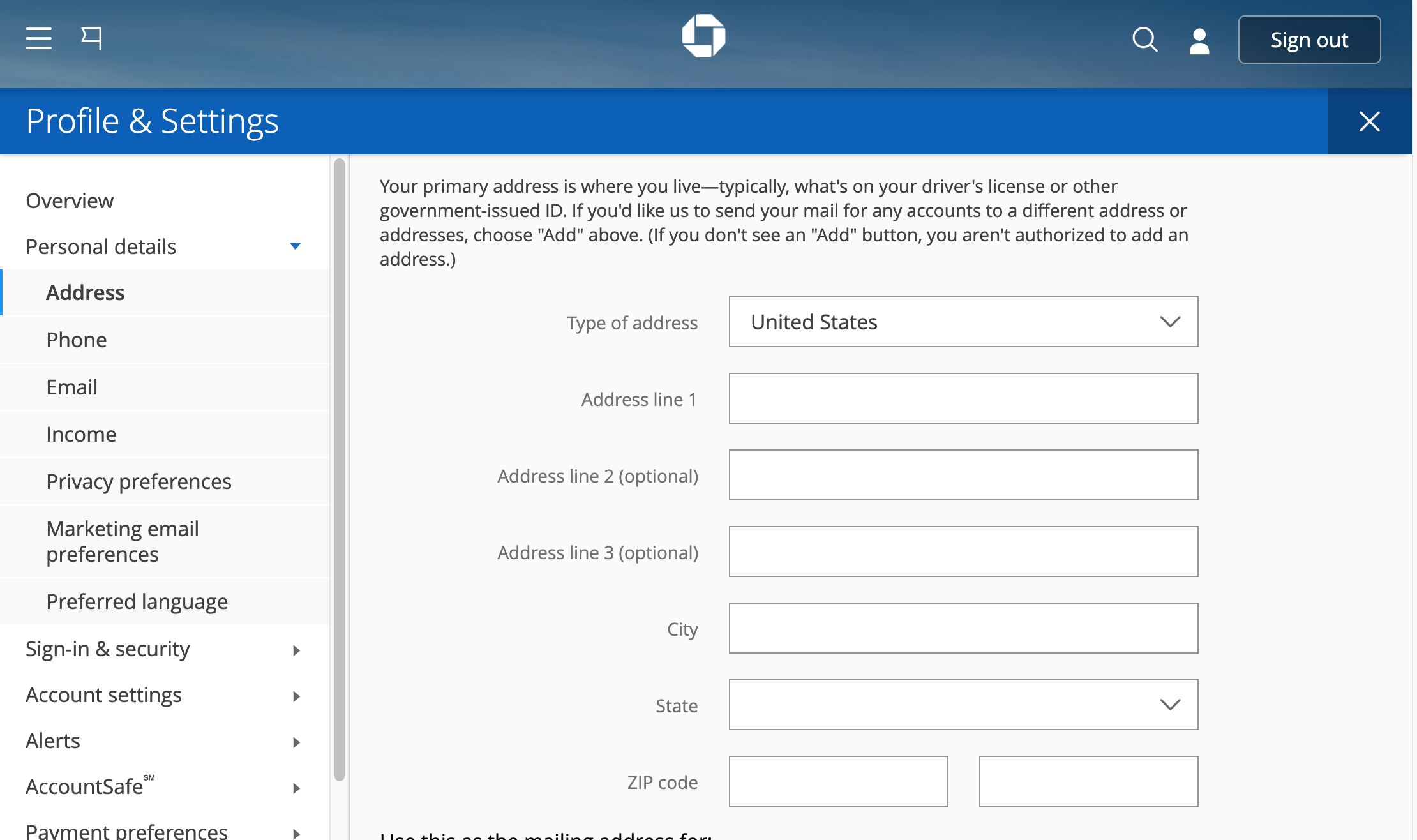
For most Chase customers, the easiest and quickest way to change an address is through their online banking portal or the Chase Mobile app. This method offers unparalleled convenience, allowing you to update your information from the comfort of your home at any time.
-
Log In: Access your Chase Online account via the website (chase.com) or the Chase Mobile app using your username and password.
-
Navigate to Profile/Settings: Once logged in, look for a “Profile,” “Settings,” or “Customer Service” section. This is typically located in the top right corner of the website or within the main menu of the app.
-
Find Address Information: Within your profile, locate the “Contact Information,” “Address,” or “Personal Information” section.
-
Edit and Verify: You will typically see your current address displayed. Select an “Edit” or “Change” option. Enter your new address details carefully, ensuring all fields (street, apartment/unit number, city, state, ZIP code) are correct.
-
Confirm and Submit: Review the new information for accuracy one last time before submitting the change. Chase may require you to verify your identity through a security question, a one-time passcode sent to your phone/email, or by re-entering your password.
This method is generally the fastest for updates to personal checking, savings, and credit card accounts. For business accounts or more complex scenarios, other methods might be necessary.
In-Person: The Branch Visit Option for Personalized Support
If you prefer face-to-face interaction, have complex account structures, or need to update a business address, visiting a Chase branch is a viable option.
-
Locate a Branch: Use the Chase website or app to find the nearest Chase bank branch.
-
Gather Documentation: You will likely need to bring a valid government-issued photo ID (e.g., driver’s license, passport) and potentially proof of your new address (e.g., utility bill, lease agreement, mail with your new address) for verification purposes. While not always strictly required for personal accounts, it’s always best to be prepared. For business accounts, additional business documentation may be necessary.
-
Speak with a Representative: Inform the bank teller or personal banker that you wish to change your address. They will guide you through the necessary forms and verification steps. This method is particularly useful if you have questions or need assistance with other account-related matters during your visit.
By Phone: Direct Assistance for Specific Scenarios
For those who prefer speaking directly with a representative but cannot visit a branch, calling Chase customer service is another option.
-
Find the Right Number: Locate the customer service number on the back of your debit/credit card or on the Chase Bank website (typically under “Contact Us”). Ensure you call the correct number for your specific account type (personal banking, credit card, business banking).
-
Verify Your Identity: Be prepared to answer several security questions to verify your identity. This might include your account number, Social Security number (SSN), date of birth, mother’s maiden name, or recent transaction details.
-
Provide New Address: Clearly state your new address to the representative. They will input the information and confirm the change with you.
This method is suitable if you have a straightforward address change and are comfortable with phone-based verification. It’s often quicker than an in-person visit if documentation isn’t complex.
What You’ll Need: Preparing for a Smooth Transition
Regardless of the method you choose, being prepared can significantly streamline the process. Always have:
-
Your Chase Account Details: Account numbers for checking, savings, credit cards, and any other relevant accounts.
-
Valid Government-Issued Photo ID: Essential for in-person and sometimes for phone verifications.
-
Your New Address Details: Ensure you have the full, accurate address, including any apartment or unit numbers, city, state, and ZIP code.
-
Proof of New Address (Optional but Recommended): While often not required for online or phone changes to personal accounts, having a utility bill, lease agreement, or driver’s license with your new address can expedite in-person changes or resolve any verification issues.

Beyond the Address Change: Proactive Financial Management After a Move
Updating your address with Chase is a crucial first step, but a change of residence often necessitates a broader review of your financial ecosystem. Proactive management after a move ensures all your financial bases are covered.
Updating Other Financial Institutions
Chase is likely just one piece of your financial puzzle. It’s imperative to update your address with all other financial institutions you interact with. This includes:
-
Other Banks and Credit Unions: For any additional checking or savings accounts.
-
Credit Card Companies: For cards not issued by Chase.
-
Investment Firms: For brokerage accounts, mutual funds, IRAs, 401(k)s, and other investment vehicles.
-
Loan Servicers: For mortgages (if not with Chase), student loans, auto loans, or personal loans.
-
Insurance Providers: For auto, home, renter’s, life, and health insurance policies.
-
Utility Providers: Gas, electricity, water, internet, and cable companies.
-
Government Agencies: Especially the IRS (for tax purposes) and the Social Security Administration if you receive benefits. The U.S. Post Office also offers a mail forwarding service, which is a good temporary measure but not a substitute for updating each entity directly.
Failing to update these entities can lead to the same security risks, missed documents, and service disruptions discussed earlier, but across a wider spectrum of your financial life.
Reviewing Your Credit Report Post-Move
After updating your address with various financial entities, it’s a good practice to obtain a copy of your credit report from each of the three major credit bureaus (Equifax, Experian, TransUnion). You can do this for free annually at AnnualCreditReport.com. Reviewing your credit report ensures that your new address is correctly reflected across your credit history and that no fraudulent activity has occurred during your transition. It also helps you spot any discrepancies or accounts that you might have forgotten to update. An accurate credit report is fundamental to your ability to secure future loans, mortgages, or even certain jobs, as it reflects your financial responsibility.
Adjusting Your Budget for New Location Expenses
Moving isn’t just about changing an address; it often involves a significant shift in your cost of living. Your new location might have different property taxes, utility costs, transportation expenses, insurance premiums, or even varying costs for groceries and entertainment. A critical aspect of post-move financial management is to revise your budget to reflect these new realities.
-
Housing Costs: Re-evaluate rent/mortgage, property taxes, homeowner’s insurance, and HOA fees.
-
Utilities: Research average costs for electricity, gas, water, and internet in your new area.
-
Transportation: Account for new commuting costs, gas prices, public transit options, and vehicle registration fees.
-
Insurance: Your auto and renter’s/homeowner’s insurance premiums might change based on your new ZIP code.
-
Local Taxes: Be aware of any new state or local income taxes, sales taxes, or other levies that might impact your take-home pay or purchasing power.
Adjusting your budget helps you maintain financial stability and avoid unexpected financial strain as you settle into your new environment.
Exploring Local Chase Bank Services in Your New Area
If your move takes you to a new town or state, take advantage of Chase Bank’s extensive branch network. Visit a local branch in your new neighborhood to familiarize yourself with their services, meet local bankers, and understand any regional offerings. Building a relationship with a local branch can be beneficial for future financial needs, such as applying for a mortgage, discussing investment options, or simply getting personalized support.
Common Pitfalls and Best Practices for Address Updates
Navigating a change of address efficiently can prevent numerous financial headaches. Being aware of common pitfalls and adopting best practices can streamline the entire process.
The Dangers of Delay: What Happens When You Don’t Update Promptly
Delaying your address change with Chase, or any financial institution, can lead to a cascade of negative consequences. Aside from the aforementioned security risks and missed documents, delayed updates can:
-
Impact Credit Score: If a new credit card is sent to an old address and never activated, or if you miss bill payments due to misdirected statements, it can negatively impact your credit score.
-
Account Freezes/Restrictions: For significant discrepancies, especially related to fraud alerts or regulatory compliance, your bank might temporarily freeze or restrict access to your accounts until your information is verified, leading to severe inconvenience.
-
Legal and Tax Issues: Missing tax documents can lead to incorrect tax filings, audits, or penalties. For those with legal or trust accounts, an incorrect address can complicate legal communications.
Prompt action is always the best defense against these potential problems.
Verifying the Change: How to Confirm Your Update Was Successful
After you’ve submitted your address change, it’s crucial to confirm that it has been successfully processed.
-
Online Banking/Mobile App: Log back into your Chase account a few business days after the change to verify that your new address is reflected in your profile.
-
Check Mail: Expect a confirmation letter or email from Chase acknowledging the address change. Keep an eye out for this correspondence at your new address.
-
Customer Service: If in doubt, call Chase customer service to confirm the update.
-
Statements: The ultimate confirmation will be your next statement arriving at your new address.
Consolidating Your Financial Contacts for Future Moves
To simplify future relocations, maintain a comprehensive list of all your financial institutions, loan servicers, and important service providers, along with their customer service numbers or online update procedures. This centralized record will be invaluable for future address changes, ensuring no entity is overlooked. Consider using a digital spreadsheet or a secure password manager to store this information safely.
Understanding Different Address Types (Mailing vs. Physical)
Be aware that some institutions differentiate between a physical street address and a mailing address (e.g., a P.O. Box). Ensure you understand which address Chase requires for specific purposes, especially for card delivery or legal notifications. Generally, banks require a physical street address for primary residence, even if you opt to receive mail at a P.O. Box. Clarify this distinction during the update process if you use both.
Conclusion
Changing your address with Chase Bank is more than a mere administrative task; it’s a fundamental aspect of diligent personal financial management. From safeguarding your financial identity and ensuring timely access to critical documents to maintaining compliance and avoiding service disruptions, the accuracy of your residential information plays a pivotal role in your overall financial well-being. By utilizing the convenient methods offered by Chase—be it online, in-person, or by phone—and by adopting a proactive approach to updating all your financial relationships, you can navigate the complexities of a move with confidence and ensure your financial life remains secure, organized, and on track. Prioritize this small but significant action to protect your financial future.
aViewFromTheCave is a participant in the Amazon Services LLC Associates Program, an affiliate advertising program designed to provide a means for sites to earn advertising fees by advertising and linking to Amazon.com. Amazon, the Amazon logo, AmazonSupply, and the AmazonSupply logo are trademarks of Amazon.com, Inc. or its affiliates. As an Amazon Associate we earn affiliate commissions from qualifying purchases.