
Navigating the complexities of modern banking requires a firm grasp of the fundamental identifiers that facilitate the movement of capital. For Chase customers, the routing number is a critical piece of information that serves as the digital address for your financial assets. Whether you are setting up a direct deposit for a new career opportunity, organizing your tax returns, or establishing a link to an external investment platform, knowing exactly where to find and how to use your Chase routing number is essential for seamless financial management.
As one of the largest financial institutions in the United States, JPMorgan Chase utilizes a sophisticated network of routing numbers that vary based on geographic location and the specific type of transaction being performed. Understanding the nuances of these numbers is not just a matter of convenience; it is a foundational aspect of personal finance and digital security.

Understanding the Significance of Your Routing Number in Modern Banking
Before diving into the specific locations where you can retrieve your Chase routing number, it is vital to understand what this number represents in the broader ecosystem of the American financial system. A routing transit number (RTN) is a nine-digit code used by financial institutions to identify themselves during the processing of checks, electronic funds transfers, and various other transactions.
What is an ABA Routing Number?
The American Bankers Association (ABA) developed the routing number system in 1910 to improve the efficiency of check processing. Today, these numbers act as the primary directive for the Federal Reserve’s automated clearinghouse (ACH) system. Each digit in the nine-digit sequence holds specific meaning: the first four digits represent the Federal Reserve district, the next four identify the specific institution, and the final digit is a “check digit” used for verification purposes.
Why Your Routing Number Matters for Financial Transactions
In the realm of personal finance, the routing number is the bridge between your account and the rest of the world. It is required for:
-
Direct Deposits: Ensuring your salary or government benefits reach your account without delay.
-
Automated Bill Pay: Linking your utility, mortgage, or credit card accounts for recurring payments.
-
Wire Transfers: Moving large sums of money domestically or internationally, which often requires a specific type of routing number.
-
Tax Refunds: The IRS requires both your routing and account numbers to issue electronic refunds securely.
Direct Methods to Locate Your Chase Routing Number
Chase provides multiple avenues for customers to access their routing information, ranging from traditional paper methods to modern digital interfaces. Because Chase is a national bank with a massive footprint, your specific routing number is usually determined by the state in which you originally opened your account.
Using the Chase Mobile App
In an era dominated by mobile-first banking, the Chase Mobile app is often the most efficient way to find your financial details. To locate your routing number within the app:
-
Log in using your biometric credentials or passcode.
-
Tap on the specific checking or savings account you wish to view.
-
Scroll down to the “Account details” section.
-
Tap on the “Show details” or “Routing and account numbers” link.
-
The app will display both your routing number and your full account number. This interface also frequently distinguishes between “Electronic” and “Wire” routing numbers, which is crucial for preventing transaction errors.
Accessing the Chase Online Banking Portal
For those who prefer a desktop environment for managing their business or personal finances, the Chase website offers a clear path to account information. Once logged in to the secure portal:
-
Navigate to the “Accounts” summary page.
-
Click on the account name (e.g., “Chase Total Checking”).
-
Look for the “Account details” tab or a similar dropdown menu located near the top of the account activity list.
-
The routing number will be listed alongside your account number and current balance.
Checking Your Physical Checks
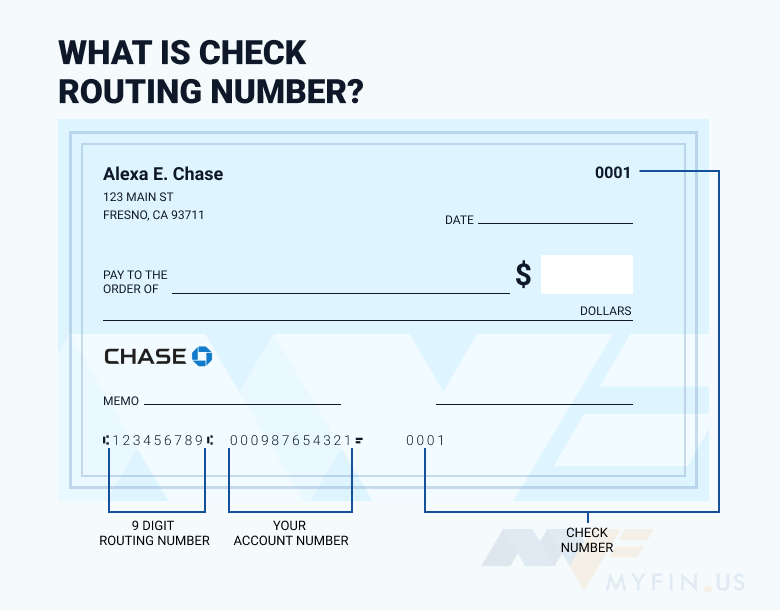
If you have a physical checkbook, your routing number is printed directly on every check. This is often the fastest way to find the number if you are offline. At the bottom of a Chase check, you will see a string of numbers printed in a specialized font (MICR).
-
The first nine digits on the left-hand side are your routing number.
-
The middle set of numbers is your account number.
-
The final set of numbers on the right is the check number.
It is important to note that the routing number on a check is generally the “Paper” or “ACH” routing number, which is appropriate for most standard transactions like direct deposit and bill pay.
Differentiating Between Routing Numbers for Transfers and Direct Deposits
One of the most common pitfalls in personal finance management is using the wrong routing number for a specific type of transaction. Chase, like many large institutions, often maintains separate routing numbers for different financial activities. Using the wrong one can lead to delayed payments, returned checks, or even financial penalties.
Electronic vs. Paper Routing Numbers
Most Chase customers will use the same routing number for both paper checks and electronic ACH transfers (like direct deposit). However, if you are looking at a list of routing numbers on the Chase website, you may see columns for “ACH” and “Wires.” ACH (Automated Clearing House) is the standard for most consumer transactions. If you are setting up a payroll deposit or a subscription payment, the ACH routing number is the correct choice.
Wire Transfers vs. ACH Payments
Wire transfers are a distinct financial tool used for high-value or time-sensitive transactions, such as a down payment on a home. Chase often utilizes a specific, centralized routing number for all domestic wire transfers, regardless of which state the account was opened in.
If you are receiving an international wire transfer, the process becomes even more specialized. You will likely need a SWIFT code (also known as a BIC) in addition to your routing and account numbers. Failure to provide the specific “Wire Routing Number” for these transactions can result in the funds being held in a clearing account or returned to the sender, which can be a costly mistake in a high-stakes business environment.
Security Best Practices for Your Banking Information
Your routing and account numbers are the keys to your financial kingdom. While a routing number is not private information (as it identifies the bank, not the person), the combination of your routing number and your account number can be exploited if they fall into the wrong hands.
Safeguarding Your Routing and Account Numbers
In the context of personal branding and digital security, how you handle this data matters. Never share your full banking details over unsecured channels like email or SMS. When setting up new financial tools or side hustle payment platforms, ensure the website uses “https” and has a valid security certificate.
Furthermore, if you are a business owner or a freelancer, be cautious about where you print your banking details. While it is necessary to provide this information for B2B transactions, using secure invoicing software that masks sensitive data can add an extra layer of protection to your corporate identity.
Recognizing Potential Scams and Fraud
Phishing attacks often target banking information. Be wary of any communication—be it an email, text, or phone call—claiming to be from Chase asking you to “verify” your routing or account number. Chase will never ask you to provide these details through an unsolicited message. If you are ever in doubt, navigate directly to the official Chase website or app rather than clicking on provided links.
Optimizing Your Financial Workflow with Chase Digital Tools
Once you have identified your routing number, you can leverage Chase’s suite of digital tools to enhance your financial efficiency. Understanding these tools is a key component of sophisticated money management.
Setting Up Automated Deposits
Automation is a cornerstone of wealth building. By using your routing number to direct a portion of your paycheck into a savings or investment account, you ensure that “paying yourself first” becomes a friction-less process. Most payroll systems allow you to split deposits between multiple accounts; knowing your routing number allows you to direct funds into specific Chase accounts tailored for emergency funds, travel, or long-term growth.
Managing External Linked Accounts
If you use third-party financial tools—such as investment apps, high-yield savings accounts at other institutions, or budgeting software—you will need your Chase routing number to create a “bridge” between accounts. Linking these accounts allows for the easy movement of capital, enabling you to take advantage of higher interest rates elsewhere while maintaining the convenience of Chase’s physical branch network and robust mobile app.
Utilizing Chase QuickDeposit and Zelle
While these tools often use your phone number or email address as identifiers, they are built upon the foundation of your account and routing numbers. By keeping your information updated and understood, you can move money with confidence, knowing exactly how the underlying architecture of your bank operates.
In summary, finding your Chase routing number is a simple task that opens the door to a wide array of financial possibilities. Whether you retrieve it via the app, the web, or a physical check, this nine-digit code is the essential link between your labor and your capital. By mastering these small details of your financial life, you position yourself for greater security, efficiency, and growth in an increasingly digital economy.
aViewFromTheCave is a participant in the Amazon Services LLC Associates Program, an affiliate advertising program designed to provide a means for sites to earn advertising fees by advertising and linking to Amazon.com. Amazon, the Amazon logo, AmazonSupply, and the AmazonSupply logo are trademarks of Amazon.com, Inc. or its affiliates. As an Amazon Associate we earn affiliate commissions from qualifying purchases.