
In the landscape of global retail, few entities command as much respect and scrutiny from investors as Costco Wholesale Corporation. For those tracking the pulse of the market, the question of how many Costco locations exist is more than a matter of simple geography; it is a fundamental metric of the company’s growth trajectory, financial health, and long-term value proposition. As of early 2024, Costco operates approximately 876 warehouses worldwide, a figure that continues to climb as the company executes its measured, high-conviction expansion strategy.
Understanding the distribution and growth of these locations offers a masterclass in business finance. Unlike traditional retailers that prioritize blanket market saturation, Costco’s approach is surgical. Each new warehouse represents a massive capital investment and a commitment to a membership-driven ecosystem that generates some of the most consistent returns in the equity markets. To understand the significance of the 870-plus locations, one must look beneath the surface at the unit economics, the international diversification, and the strategic real estate plays that define the brand.
Mapping the Global Presence: Where Costco Stands Today
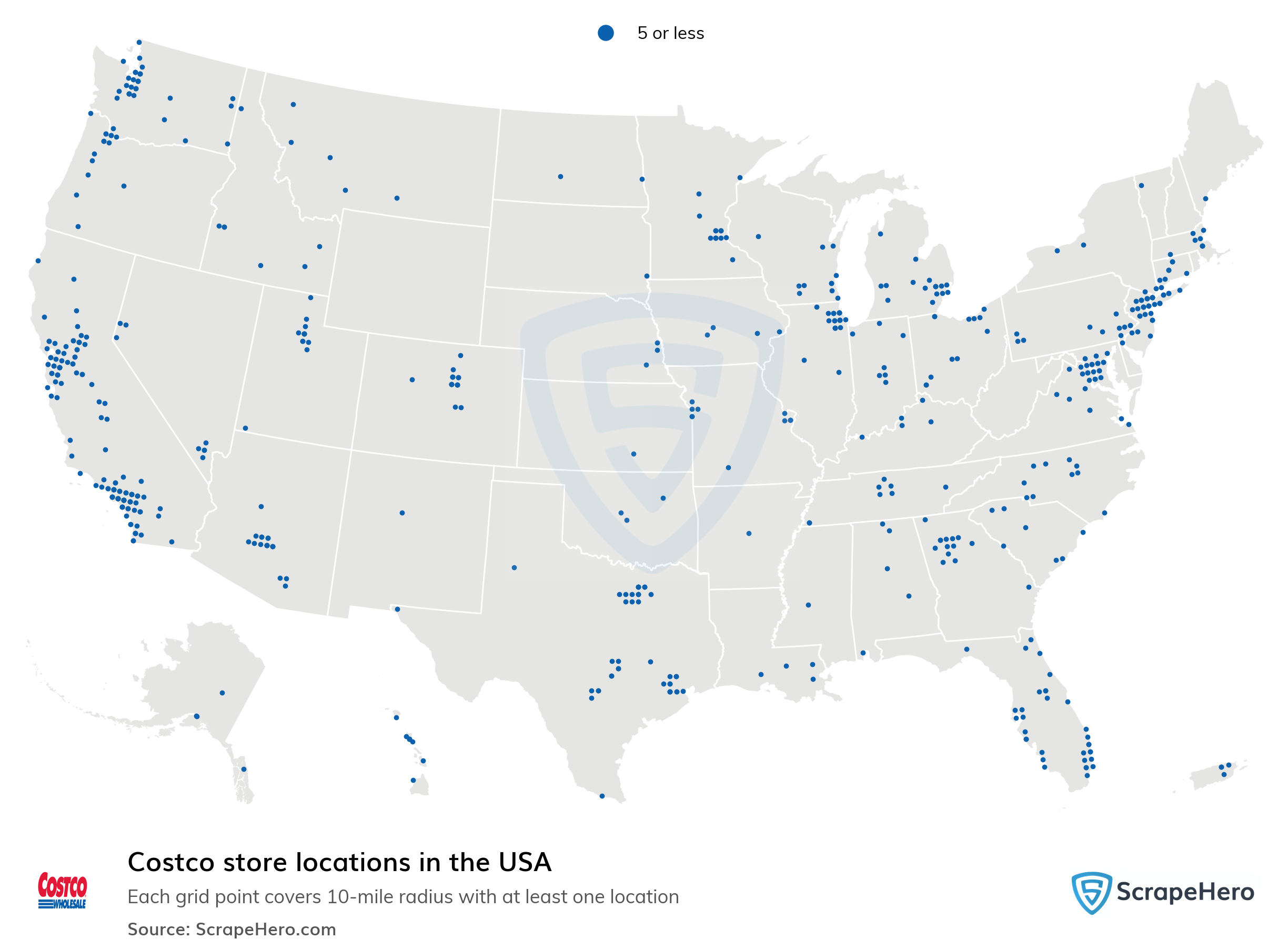
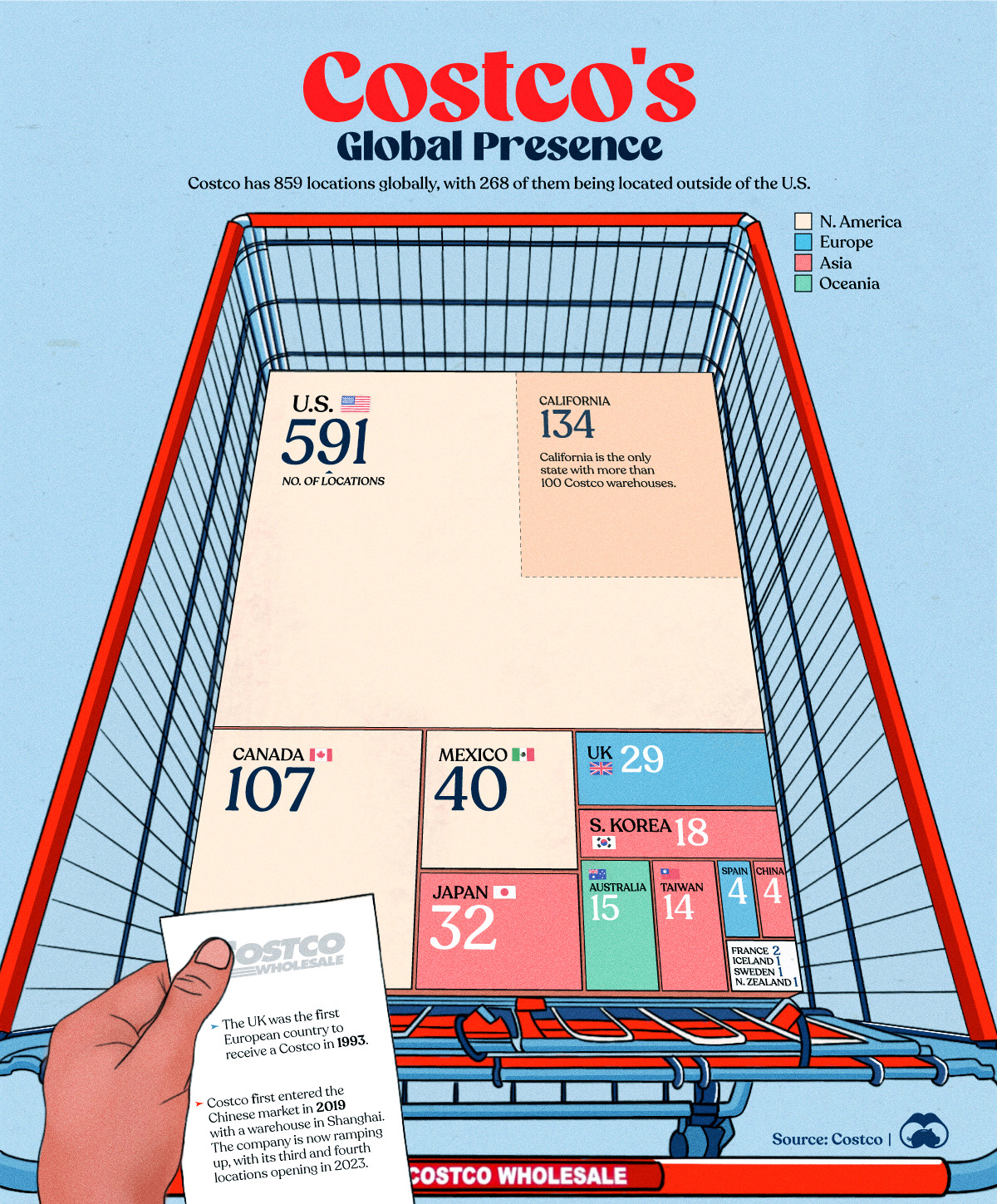
The vast majority of Costco’s footprint remains anchored in North America, but the internal composition of its growth is shifting toward international diversification. The United States and Puerto Rico account for the lion’s share of the portfolio, with over 600 locations. This domestic dominance provides the cash flow necessary to fund more expensive and complex international ventures.
The Dominance of the North American Market
In the United States, Costco has established a presence in 46 states and the District of Columbia. The concentration is highest in California, followed by Texas and Florida. From a business finance perspective, this concentration is a deliberate choice. By clustering locations in high-income, densely populated regions, Costco optimizes its supply chain and logistics. The proximity of warehouses allows for regional distribution centers to operate at peak efficiency, lowering the “cost of goods sold” (COGS) and enabling the company to maintain its legendary slim margins on products while maximizing membership renewals.
Canada represents the second-largest market for Costco, with over 100 locations. The Canadian market is particularly lucrative for the company; per-warehouse sales in Canada often exceed those in the U.S., proving that the bulk-buy membership model has high cultural and economic resonance across borders.
International Expansion: Conquering the Global Stage
Beyond North America, Costco is aggressively but carefully expanding. Mexico hosts 40 locations, followed by Japan (33), the United Kingdom (29), and South Korea (18). Each of these markets serves as a testing ground for the scalability of the warehouse model in different regulatory and consumer environments.
The financial significance of these international locations cannot be overstated. International warehouses often see higher membership growth rates than mature domestic markets. For investors, this represents a massive “runway” for growth. When Costco enters a market like Japan or South Korea, it isn’t just selling groceries; it is securing a recurring revenue stream in a new currency, providing a natural hedge against domestic economic downturns.
The Financial Blueprint of the Warehouse Model
To understand why the number of Costco locations is relatively small compared to Walmart’s 10,000+ units, one must examine the fundamental unit economics of the warehouse model. Costco does not aim for convenience; it aims for value. This requires a specific financial architecture that prioritizes high volume over high margins.
Quality Over Quantity: Comparing Costco to Its Competitors
While competitors might open hundreds of smaller-format stores to capture local foot traffic, Costco’s strategy is built on the concept of the “destination store.” A typical Costco warehouse is roughly 146,000 square feet and carries only 4,000 Stock Keeping Units (SKUs). In contrast, a typical supermarket might carry 30,000 SKUs, and a Walmart Supercenter can exceed 100,000.
By limiting the number of locations and the number of products within them, Costco achieves immense purchasing power. When Costco buys a specific brand of detergent for 870 locations, it buys in such massive quantities that it can dictate pricing to suppliers. This efficiency is reflected in the company’s inventory turnover ratio—a key financial metric that measures how many times a company’s inventory is sold and replaced over a period. Costco turns its inventory roughly 12 to 13 times a year, which is significantly higher than the industry average. In many cases, Costco sells its inventory before it even has to pay its suppliers for it, creating a “negative cash conversion cycle” that is the envy of the retail world.
Membership Fees: The Engine Behind the Expansion
The true genius of the Costco business model—and the reason the number of locations is so critical—lies in its membership fees. In the most recent fiscal years, membership fees accounted for a vast majority of the company’s net income. Essentially, Costco sells products at near-cost to drive membership loyalty.
Each new location represents a fresh pool of membership revenue. With renewal rates hovering around 92% in the U.S. and Canada and 90% worldwide, every new warehouse added to the global count represents a predictable, high-margin annuity. This recurring revenue provides the capital needed to build new warehouses, which cost upwards of $100 million each to develop, without relying heavily on high-interest debt.
The Economics of Scaling: Why Every New Location Matters
For a firm with a market capitalization in the hundreds of billions, the opening of a single new warehouse might seem incremental. However, in the world of business finance, each opening is a high-stakes deployment of capital that signals the company’s internal assessment of regional economic health.
Capital Expenditures and Real Estate Strategy
Costco generally prefers to own its land and buildings rather than lease them. This is a significant distinction from many other retailers. Owning the real estate provides long-term stability and acts as a massive asset on the balance sheet. From an accounting perspective, this allows the company to benefit from depreciation while avoiding the rising costs of commercial rents.
When Costco evaluates a new location, it looks for specific demographic markers: household income levels, education levels, and population density. The decision to open a new location is the result of years of data analysis. Because the “Costco member” tends to have a higher disposable income, the company is effectively “buying” access to a premium consumer base with every new site it develops.
Average Revenue Per Warehouse: A Key Performance Indicator
One of the most impressive figures in Costco’s financial reports is the average sales per warehouse. On average, a single Costco location generates over $250 million in annual revenue. Some high-performing locations, particularly in markets like Taiwan or Korea, have been known to exceed this significantly.
For investors, “Same-Store Sales” (or comparable-store sales) is a vital metric. It measures the growth in revenue of locations that have been open for at least a year. Costco’s ability to consistently grow same-store sales while simultaneously adding 20 to 30 new locations per year demonstrates that the market is nowhere near saturated. Each new location doesn’t just add to the total count; it strengthens the brand’s overall leverage with global suppliers.
Future Outlook: Where Will the Next 100 Warehouses Be?
As the company looks toward the next decade, the strategy for increasing the number of locations is shifting toward “white space” in international markets and filling in gaps in the U.S. sunbelt.
The China Opportunity
Perhaps the most watched area of expansion is mainland China. After the massive success of its first few locations in Shanghai and Suzhou—where opening days saw such high traffic that stores had to be temporarily closed—Costco is signaling a more aggressive push into the Chinese market. The financial implications are staggering. If Costco can successfully replicate its membership model in China’s tier-one and tier-two cities, the potential for new locations could reach into the hundreds, fundamentally changing the company’s revenue profile and decreasing its reliance on the North American consumer.
E-commerce Integration and the Logistics Backbone
While the physical location count is the primary focus, Costco is also investing heavily in “Business Centers” and logistics hubs. These are not standard warehouses open to all members but are focused on B2B (business-to-business) sales and last-mile delivery for bulky items like appliances and furniture.
From a finance perspective, these locations are highly efficient. They require less “front-of-house” aesthetic investment and operate as fulfillment centers that support the growing e-commerce side of the business. By integrating its physical warehouses with a robust digital presence, Costco ensures that its “location count” includes a diverse array of touchpoints that serve different consumer needs.

The Value Proposition of a Controlled Footprint
Ultimately, the question of “how many Costco locations are there” is a window into a company that values discipline over reckless growth. With approximately 876 locations, Costco remains small compared to the footprints of its global peers, yet it generates more revenue per square foot than almost any other major retailer.
For the investor and the business professional, Costco’s footprint is a testament to the power of a focused business model. Each warehouse is a fortress of efficiency, funded by loyal members and designed to squeeze every possible cent of value out of the global supply chain. As the count inches toward 1,000 locations in the coming years, the company’s financial stability remains anchored in the same principle that started it all: providing the best possible quality at the lowest possible price, one warehouse at a time. The growth is not just about numbers; it is about the strategic expansion of a financial ecosystem that has redefined modern retail.
aViewFromTheCave is a participant in the Amazon Services LLC Associates Program, an affiliate advertising program designed to provide a means for sites to earn advertising fees by advertising and linking to Amazon.com. Amazon, the Amazon logo, AmazonSupply, and the AmazonSupply logo are trademarks of Amazon.com, Inc. or its affiliates. As an Amazon Associate we earn affiliate commissions from qualifying purchases.