
In the rapidly evolving landscape of digital finance, peer-to-peer payment applications like Cash App have become indispensable tools for managing everyday transactions. From splitting dinner bills with friends to sending funds to family, these platforms offer unparalleled convenience. However, a common question that arises for both new and seasoned users alike is: “How much money can I send on Cash App?” Understanding the nuances of Cash App’s sending limits is crucial for efficient financial planning and seamless money management. These limits are not arbitrary; they are meticulously designed by Cash App, a Square, Inc. product, to balance user convenience with stringent security protocols and regulatory compliance, primarily aimed at combating fraud and money laundering.
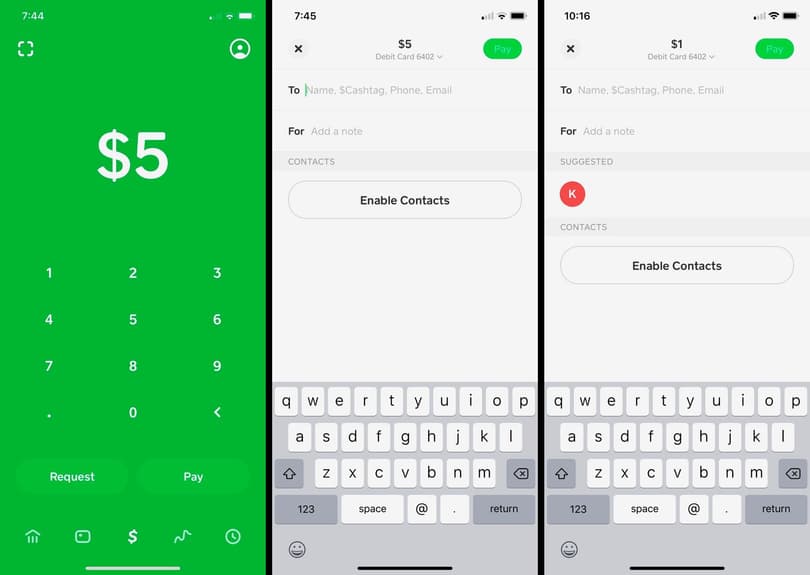
Navigating these financial guardrails can seem complex at first glance, but with a clear understanding of the factors that influence them, users can maximize the utility of their Cash App accounts. This comprehensive guide will delve deep into Cash App’s sending limitations, explaining the various tiers, the critical role of account verification, and practical strategies for users needing to transfer larger sums. By the end of this article, you will possess a robust understanding of how much you can send, why these limits exist, and how to effectively manage your financial transfers using one of the most popular financial tools available today.
Understanding Cash App’s Sending Limits
Cash App implements various sending limits that depend primarily on the user’s verification status. These limits are in place to protect both the user and the platform from potential fraudulent activities and to comply with financial regulations. Knowing these tiers is the first step toward effective financial management on the app.
Default Sending Limits for Unverified Accounts
When you first sign up for Cash App, your account is considered unverified. This initial status comes with specific restrictions designed for basic usage while mitigating higher risks. For unverified accounts, the typical sending limit is $250 within any 7-day period. This means you can send a cumulative total of $250 over seven consecutive days. Similarly, there’s a receiving limit, often around $1,000 within any 30-day period. These limits are relatively low, making them suitable for casual, small-value transactions. They act as a foundational security measure, ensuring that even if an unverified account is compromised, the potential financial damage is limited. While convenient for occasional small transfers, these default limits quickly become restrictive for users who wish to utilize Cash App for more significant or frequent financial interactions.
Enhanced Limits for Verified Accounts
The true power and flexibility of Cash App unlock once your account is verified. Verification significantly expands your transaction capabilities, transforming Cash App into a much more robust financial tool. For verified users, the sending limit typically increases dramatically to $7,500 per week. This seven-day rolling limit offers substantial freedom for larger personal or small business transactions. Crucially, there is often no limit on the amount you can receive once your account is fully verified. This distinction is vital for anyone using Cash App for income, business payments, or receiving significant sums from others. The enhanced limits reflect Cash App’s increased trust in the account holder, predicated on the additional personal information provided during the verification process, which allows for better identity confirmation and risk assessment.
Daily, Weekly, and Monthly Overviews
It’s important to understand that Cash App’s limits are often structured on a rolling basis. A “weekly” limit doesn’t necessarily reset every Monday; rather, it typically refers to a 7-day period from your last transaction. Similarly, other limits might apply over a 30-day period. While the most commonly cited limits are the $250/7 days for unverified and $7,500/7 days for verified sending, users should be aware that these can be subject to dynamic adjustments based on account history and other internal risk assessments. Cash App does not typically publish a strict “monthly” sending limit for verified users, implying that the weekly limit serves as the primary constraint, allowing for considerable cumulative transfers over a month if managed correctly. For instance, a verified user could potentially send up to $30,000 in a 30-day period by consistently utilizing their weekly $7,500 allowance. This flexibility is a key differentiator for verified accounts, enabling them to handle a wider spectrum of financial needs.
Factors Influencing Your Cash App Limits
Beyond the basic distinction between verified and unverified accounts, several other elements can subtly, or sometimes significantly, impact your specific sending and receiving limits on Cash App. Understanding these factors provides a more holistic view of your account’s capabilities.
Verification Status: The Key Determinant
As established, verification status is the single most critical factor determining your Cash App limits. An unverified account, which is essentially an account created with just a phone number or email, is heavily restricted. The moment you provide and successfully verify your personal identity, including your full name, date of birth, and the last four digits of your Social Security Number (SSN), your limits are substantially increased. This process is not merely an arbitrary hurdle; it’s a legal and security imperative. Financial institutions, including digital payment platforms, are mandated by “Know Your Customer” (KYC) regulations to verify the identities of their users. This helps prevent financial crimes such as money laundering, terrorist financing, and identity theft. Without robust verification, Cash App could not offer higher transaction limits while remaining compliant with federal and international financial laws.
Transaction History and Account Age
While not explicitly stated as a primary factor for fixed limits, a user’s transaction history and the age of their account can implicitly influence their perceived trustworthiness and potentially their dynamic limits. Accounts that have a long history of successful, legitimate transactions without any flags for suspicious activity or disputes may enjoy greater flexibility within the established verified limits. Conversely, new accounts, even if verified, might sometimes face initial scrutiny or slightly more conservative limits until a pattern of regular, compliant usage is established. Consistently using Cash App responsibly, avoiding frequent chargebacks, and engaging in transparent transactions builds a positive financial profile within the platform’s algorithms, contributing to a smoother experience with higher value transfers.
Geographic Location and Regulatory Differences
Cash App operates primarily within the United States and the United Kingdom. While the core limits are generally consistent across these regions, subtle differences can arise due to varying local financial regulations. Each country has its own set of anti-money laundering (AML) and KYC laws that Cash App must adhere to. For example, specific reporting thresholds or data retention requirements might differ, which could theoretically influence how limits are applied or enforced for users in different jurisdictions. Users traveling or operating across these regions should be mindful that their experiences might not be identical. Always refer to Cash App’s official terms of service and support documentation specific to your geographic location for the most accurate and up-to-date information on limits and compliance requirements.
How to Increase Your Cash App Sending Limits
For most users, especially those using Cash App for more than just occasional small transactions, increasing the sending limits is a necessary step. The process is straightforward and involves providing essential personal information to Cash App for verification.
The Verification Process: A Step-by-Step Guide

Increasing your Cash App sending limits is synonymous with verifying your identity. The app makes this process relatively intuitive:
-
Initiate a Large Transaction: Often, the app will prompt you for verification if you attempt to send an amount exceeding the unverified limit of $250.
-
Navigate to Profile: You can also proactively start the process by going to your profile icon on the Cash App home screen.
-
Scroll to Personal: Within your profile, look for the “Personal” section.
-
Enter Information: Here, you’ll be asked to provide specific details.
Required Information: Name, DOB, SSN
To verify your account and unlock higher sending limits, Cash App requires you to submit the following information:
-
Full Legal Name: This must match your government-issued identification.
-
Date of Birth (DOB): You must be at least 18 years old to have a verified Cash App account.
-
Last Four Digits of Your Social Security Number (SSN): This is the primary piece of information Cash App uses to confirm your identity with credit bureaus and other databases. For UK users, equivalent national identification details would be required.
Cash App uses this information to verify your identity through third-party databases, much like a traditional bank or financial institution would. This process typically takes only a few moments. It’s crucial to enter accurate information; any discrepancies can delay or prevent successful verification. Cash App emphasizes the security of this data, explaining that it is encrypted and handled in compliance with privacy regulations.
What Happens After Verification?
Once your identity is successfully verified, Cash App will automatically update your account status. You will receive a notification confirming that your limits have been increased. At this point, you can typically send up to $7,500 per week and receive an unlimited amount. It’s important to note that while the weekly sending limit is substantial, it’s not an absolute monthly cap. You can continue sending $7,500 each week, effectively allowing for significant transfers over a longer period. This enhanced capability makes Cash App a viable financial tool for larger personal expenses, rent payments, or even small business transactions, moving it beyond just a casual peer-to-peer payment app.
Strategies for Managing Large Transfers on Cash App
Even with increased limits, managing substantial financial transfers on any digital platform requires thoughtful planning and adherence to best practices. Cash App, while convenient, has its specific considerations when dealing with larger sums.
Planning Ahead for Significant Transactions
If you anticipate needing to send an amount close to or exceeding your weekly Cash App limit, it’s prudent to plan ahead.
-
Verify Your Account Early: Do not wait until the last minute to verify your account. The verification process, while usually quick, can sometimes experience delays.
-
Monitor Your Weekly Limit: Keep track of the total amount you’ve sent within the rolling 7-day period. The app might not always explicitly show your remaining limit, so manual tracking can be helpful for large senders.
-
Break Down Large Payments: If a payment exceeds the $7,500 weekly limit, you might need to split it into multiple transactions over two or more weekly cycles. For example, a $10,000 payment could be sent as $7,500 in one week and $2,500 in the next. Communicate this strategy with the recipient to avoid confusion.
-
Consider Timing: Be mindful of when your 7-day rolling period resets. If you sent a large sum on a Monday, that portion of your limit won’t free up until the following Monday.
Alternative Methods for Exceeding Cash App Limits
While Cash App is excellent for its intended purpose, it’s not designed to be a primary vehicle for extremely large-scale financial transfers that might typically go through traditional banks. If your transfer needs consistently exceed the $7,500 weekly limit, or if you need to send a single transaction far beyond it, alternative methods are more appropriate:
-
Bank Wire Transfers: For very large sums (e.g., house down payments, business acquisitions), traditional bank wire transfers are the most secure and established method, though they often come with higher fees and longer processing times.
-
ACH Transfers: Automated Clearing House (ACH) transfers are commonly used for direct deposits and bill payments. They are generally free or low-cost but take 1-3 business days to process. Many banks offer free online ACH transfers.
-
Other Payment Apps with Higher Limits: Some other payment apps or services might offer different limit structures that better suit your needs. Researching competitors can provide suitable alternatives for specific situations.
-
Certified Checks/Cashier’s Checks: For significant person-to-person transfers where physical documentation is preferred, these bank-issued checks offer a secure way to transfer funds.
Best Practices for High-Value Transactions
Executing high-value transactions, regardless of the platform, demands careful attention to detail. When using Cash App for larger sums:
-
Double-Check Recipient Details: Always verify the recipient’s $Cashtag, phone number, or email address before initiating a transfer. A mistake can lead to funds being sent to the wrong person, and recovery can be challenging, if not impossible.
-
Confirm with Recipient: Especially for critical payments, confirm with the recipient that they have received the funds.
-
Keep Records: Maintain your own records of transactions, including dates, amounts, and recipient details, for personal financial tracking and dispute resolution if necessary.
-
Be Aware of Scams: High-value transactions are often targets for scammers. Be extremely wary of requests for large sums from unknown individuals or unusual circumstances. Cash App transactions are generally irreversible.
Security and Compliance Considerations
The limits imposed by Cash App, and indeed all financial technology platforms, are not merely inconvenient hurdles; they are fundamental components of a robust financial security and compliance framework. Understanding their purpose enhances user trust and encourages responsible usage.
Why Limits Exist: Combating Fraud and Money Laundering
The primary reasons for transaction limits are to combat financial crimes.
-
Anti-Money Laundering (AML): Governments worldwide have strict regulations to prevent money laundering, which is the process of disguising the origins of illegally obtained money. Transaction limits, combined with KYC verification, make it harder for criminals to move large sums of illicit funds through payment platforms without detection.
-
Fraud Prevention: Limits act as a deterrent to fraudsters. If an account is compromised, or if a user falls victim to a scam, the amount of money that can be quickly moved out of the account is restricted, minimizing potential losses. Cash App also uses sophisticated algorithms to monitor transactions for unusual patterns that might indicate fraudulent activity, and limits help in managing the scale of such events.
-
Regulatory Compliance: As a financial tool, Cash App is subject to various federal and state regulations in the US, as well as equivalent laws in the UK. These regulations often mandate specific reporting thresholds and identity verification requirements for transactions above certain amounts, which the limits help manage.
Protecting Your Account During Transfers
While Cash App and other platforms have their own security measures, users bear significant responsibility for protecting their financial accounts.
-
Use Strong, Unique Passwords: Never reuse passwords. Enable two-factor authentication (2FA) for an added layer of security.
-
Be Skeptical of Unsolicited Requests: Do not send money to people you don’t know, especially if they promise something in return that seems too good to be true. Cash App is designed for sending money to friends, family, and trusted businesses.
-
Verify Email and Phone Scams: Be wary of phishing attempts via email or text messages that claim to be from Cash App. Always verify the sender and never click suspicious links or provide personal information.
-
Secure Your Device: Ensure your phone or tablet is password-protected and that your Cash App is locked with a PIN or biometric security.

Reporting Suspicious Activity
If you encounter any suspicious activity on your Cash App account, receive unusual requests, or suspect you’ve been targeted by a scam, it’s critical to act immediately.
-
Contact Cash App Support: Use the official channels within the app to report issues. Do not rely on external phone numbers or websites that claim to be support.
-
Report to Authorities: For serious fraud or theft, consider reporting the incident to local law enforcement and relevant financial fraud authorities.
-
Block and Report Users: If a specific user is engaging in suspicious behavior, block them within the app and report their activity to Cash App.
In conclusion, understanding “how much money you can send on Cash App” goes beyond just knowing a number. It involves appreciating the system of security, compliance, and user responsibility that underpins digital financial transactions. By verifying your account, planning your transfers, and adhering to robust security practices, you can leverage Cash App as an incredibly effective and secure financial tool for managing your personal finances.
aViewFromTheCave is a participant in the Amazon Services LLC Associates Program, an affiliate advertising program designed to provide a means for sites to earn advertising fees by advertising and linking to Amazon.com. Amazon, the Amazon logo, AmazonSupply, and the AmazonSupply logo are trademarks of Amazon.com, Inc. or its affiliates. As an Amazon Associate we earn affiliate commissions from qualifying purchases.