
In the rapidly evolving landscape of digital finance, the lines between traditional banking and technology platforms have become increasingly blurred. For millions of users, Cash App has become a primary vehicle for sending money to friends, receiving paychecks, and even investing in the stock market. However, a common point of confusion remains: is Cash App a bank? The short answer is no. Cash App is a financial services platform developed by Block, Inc. (formerly Square, Inc.). To provide banking services, it partners with established, regulated financial institutions.

Understanding which banks support Cash App is not just a matter of curiosity; it is essential for managing direct deposits, understanding your FDIC insurance coverage, and ensuring the security of your personal finances. To navigate the ecosystem effectively, one must look under the hood at the partnerships that power this fintech giant.
The Strategic Partnership: Why Cash App Isn’t Actually a Bank
To understand why Cash App uses partner banks, one must understand the regulatory landscape of the United States. Obtaining a full-scale national banking charter is a rigorous, multi-year process that requires massive capital reserves and adherence to strict federal oversight. For a fast-moving technology company like Block, Inc., the more efficient route to market is the “Banking-as-a-Service” (BaaS) model.
In this model, Cash App handles the user interface, customer experience, and software development, while licensed banks handle the movement of money, the holding of deposits, and the issuance of debit cards. This allows Cash App to innovate at the speed of software while operating within the legal framework of the banking industry.
The relationship is symbiotic. Cash App gains the ability to offer financial products like checking-style accounts and debit cards, while the partner banks gain access to a massive, modern user base they might otherwise struggle to reach. For the consumer, this means that while you interact with the Cash App interface, your funds are actually moving through the ledgers of traditional banks.
Identifying the Partners: Sutton Bank and Lincoln Savings Bank
Cash App does not rely on a single institution to manage its financial services. Instead, it utilizes different banks for different functionalities. If you use Cash App for its core features—the Cash Card and direct deposits—you are likely interacting with Sutton Bank and Lincoln Savings Bank.
Sutton Bank and the Cash Card
Sutton Bank, a community bank based in Attica, Ohio, is the primary issuer of the Cash App Visa Debit Card, commonly known as the Cash Card. When you order a physical card to spend your Cash App balance at retailers or withdraw money from an ATM, Sutton Bank is the entity authorizing those transactions.
Sutton Bank has carved out a significant niche in the fintech world by specializing in prepaid card programs. Because the Cash Card is technically a prepaid debit card (rather than a traditional debit card linked to a checking account), it allows Cash App to offer spending capabilities to users who may not have a history with traditional banks.
Lincoln Savings Bank and Direct Deposits
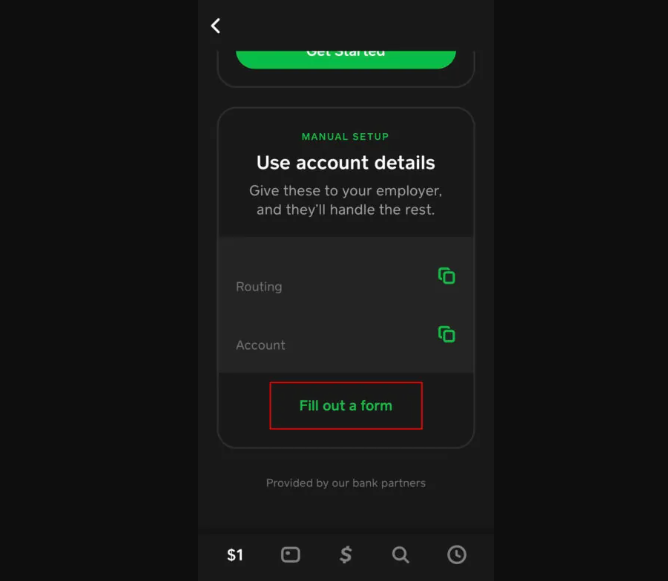
When it comes to the “banking” side of Cash App—specifically your routing and account numbers—Lincoln Savings Bank is the primary partner. If you navigate to the “Money” tab in your Cash App and view your account details for direct deposit, you will often see Lincoln Savings Bank listed as the holding institution.
Based in Iowa, Lincoln Savings Bank provides the infrastructure that allows Cash App to function like a traditional bank account. This partnership enables users to have their paychecks, tax refunds, and government stimulus payments deposited directly into their Cash App balance. By providing these essential account structures, Lincoln Savings Bank allows Cash App to move beyond a simple peer-to-peer payment tool and into the realm of a comprehensive personal finance hub.
FDIC Insurance and Protecting Your Assets
One of the most critical questions users ask is: “Is my money safe?” In a traditional bank, your deposits are insured by the Federal Deposit Insurance Corporation (FDIC) for up to $250,000. Because Cash App is a technology platform and not a bank, the insurance situation is slightly more nuanced, involving what is known as “pass-through” insurance.
How Pass-Through Insurance Works
When you deposit money into Cash App, the funds are not held by Block, Inc. in a corporate vault. Instead, the funds are moved to the partner banks (Sutton or Lincoln). Because these institutions are FDIC-insured, your funds are covered under their insurance policies, provided certain conditions are met.
This insurance protects you against the failure of the bank itself. If Lincoln Savings Bank were to go under, the FDIC would step in to ensure you receive your funds, up to the legal limit. However, it is important to note that FDIC insurance does not protect you against scams, unauthorized access to your phone, or if Cash App as a company faces issues unrelated to the banking partners.
The Role of the Cash Card in Insurance
It is also worth noting that for some users, FDIC insurance only kicks in once they have obtained a Cash Card. The terms of service for many fintech apps stipulate that funds held in a “balance” account might be treated differently than funds held in a “card” account. To maximize your financial security within the app, experts generally recommend verifying your identity and ordering the Cash Card, as this firms up the link between your identity, the partner bank, and the insurance coverage.
The Evolution of Financial Tools: More Than Just Payments
The reason the “Which bank?” question has become so prominent is that Cash App has aggressively expanded its feature set. It is no longer just a way to split a dinner bill; it is a sophisticated financial ecosystem that competes with traditional brokerage firms and tax preparation services.
Bitcoin and Investing
While Sutton and Lincoln handle the “cash” side of the app, other entities handle the investment side. Cash App Investing LLC (a subsidiary of Block, Inc.) acts as the broker-dealer for stock transactions. For Bitcoin transactions, Block, Inc. utilizes its own internal infrastructure and specialized partnerships to facilitate the buying, selling, and withdrawal of cryptocurrency.
This multi-faceted approach means that within a single app, a user is interacting with a community bank in Ohio, a savings bank in Iowa, and a technology-driven brokerage firm. This integration is what makes the app so powerful for personal finance, as it allows for the seamless movement of capital between a liquid cash balance and long-term investments.
Cash App Taxes
Block’s acquisition of Credit Karma Tax (now Cash App Taxes) added another layer to the ecosystem. By integrating tax filing directly into the app, the company has created a closed-loop financial system. You can earn your money via direct deposit (Lincoln Savings Bank), spend it via your card (Sutton Bank), grow it via the stock market (Cash App Investing), and file your taxes—all within the same digital environment.
Evaluating the Neobank Model for Your Personal Finance Strategy
As we move further into a digital-first economy, the “neobank” model—technology platforms partnered with traditional banks—is becoming the standard for many consumers. However, choosing to use Cash App as your primary financial institution requires an understanding of the trade-offs involved.
Accessibility vs. Full-Service Banking
The primary advantage of Cash App and its partner banks is accessibility. Traditional banks often require minimum balances, monthly fees, and credit checks. Cash App, by leveraging the prepaid model of Sutton Bank, lowers the barrier to entry. This is a massive boon for the “underbanked” population, providing them with a secure way to participate in the digital economy.
The trade-off is the lack of “high-touch” service. If you have an issue with a transaction, you cannot walk into a local branch and speak to a manager. You are reliant on digital support channels. Furthermore, while the partner banks handle the back-end, they do not offer the full suite of products you might find at a major national bank, such as mortgages, small business loans, or sophisticated wealth management services.
Who Should Use Cash App as a Primary Bank?
For individuals with straightforward financial lives—those who need to receive a paycheck, pay bills, and occasionally invest—the partnership between Cash App, Sutton Bank, and Lincoln Savings Bank is often sufficient. It provides the core utility of a bank account without the friction of traditional banking bureaucracy.
However, for those with high net worth, complex business needs, or a requirement for personalized financial advice, Cash App is better used as a secondary tool. It functions excellently as a “spending account” or a “digital wallet” while a traditional, full-service bank holds the bulk of one’s long-term assets and debt obligations.
Conclusion: A New Era of Banking
The question “What is the bank for Cash App?” reveals the hidden complexity of modern finance. While we see a simple green interface on our smartphones, the reality is a sophisticated network of regional banks and technology companies working in tandem.
By partnering with Sutton Bank and Lincoln Savings Bank, Cash App has successfully bridged the gap between old-world financial stability and new-world technological convenience. As a user, knowing these partners gives you clarity on how your money moves, how it is insured, and how the digital economy is being rewritten. Whether you are using it for a quick P2P payment or as your primary direct deposit account, understanding this infrastructure is the first step toward true financial literacy in the digital age.
aViewFromTheCave is a participant in the Amazon Services LLC Associates Program, an affiliate advertising program designed to provide a means for sites to earn advertising fees by advertising and linking to Amazon.com. Amazon, the Amazon logo, AmazonSupply, and the AmazonSupply logo are trademarks of Amazon.com, Inc. or its affiliates. As an Amazon Associate we earn affiliate commissions from qualifying purchases.