
In the rapidly evolving landscape of digital finance, platforms like Cash App have redefined how individuals manage their money, interact with financial services, and even invest. Yet, for many, the precise nature of a “Cash App account” remains a point of confusion. Is it a bank account? A digital wallet? A brokerage? Understanding the foundational financial identity of Cash App is crucial for maximizing its benefits and appreciating its place within the broader financial ecosystem. This article will delve deep into the financial characteristics of a Cash App account, exploring its core functionalities, regulatory standing, and how it compares to more traditional financial instruments.
Understanding Cash App’s Financial Identity
Cash App, developed by Block, Inc. (formerly Square), has transcended its initial purpose as a simple peer-to-peer payment application. Today, it presents a multifaceted financial service platform, often blurring the lines between a traditional bank, a digital wallet, and an investment broker. To accurately categorize a Cash App account, we must look beyond its user interface and examine the underlying financial services it provides and the regulatory framework it operates within.
More Than Just a Peer-to-Peer App
At its genesis, Cash App gained prominence for facilitating instant transfers of money between individuals, simplifying bill splitting, gift-giving, and informal payments. This peer-to-peer (P2P) functionality remains a cornerstone, allowing users to send and receive funds directly using a unique “$Cashtag” or phone number/email. However, the platform has aggressively expanded its offerings, integrating features that venture into banking, investing, and even tax services. This expansion means that while P2P payments are central, they represent only one facet of a comprehensive financial toolkit. The funds held within a Cash App account are not merely transient; they can be stored, spent, and grown, indicating a more robust financial infrastructure than a simple transaction facilitator.
Distinguishing from Traditional Bank Accounts
A common misconception is that a Cash App account is synonymous with a traditional bank account. While it offers several bank-like functionalities—such as direct deposit, a debit card, and the ability to hold a balance—it is fundamentally different. Cash App itself is a financial technology (fintech) company, not a chartered bank. This distinction is critical from a regulatory and consumer protection standpoint. Traditional banks are subject to stringent regulations from entities like the Federal Reserve, FDIC (Federal Deposit Insurance Corporation), and state banking authorities. They offer FDIC insurance, which protects depositors’ money up to $250,000 per account type in case the bank fails. Cash App, while often partnering with FDIC-insured banks to hold customer funds, does not directly provide this insurance for all funds held or for all its services. This nuance dictates how user funds are held and the level of protection afforded to them, a significant departure from the security blanket of a conventional bank account.
The Core Financial Services Offered
The versatility of Cash App stems from its broad spectrum of integrated financial services, each designed to cater to various aspects of personal finance. These services collectively define the “type” of account it represents—a hybrid model that amalgamates several financial functions.
Sending and Receiving Money (P2P Transfers)
The foundational utility of Cash App lies in its seamless P2P transfer capabilities. Users can instantly send money to friends and family or request payments, often without fees for standard transfers linked to a debit card or bank account. This feature positions Cash App as a primary digital wallet for casual transactions, bypassing the need for cash or checks and simplifying digital remittances. The ability to hold a balance directly within the app provides an immediate fund source for these transfers, enhancing convenience.
Cash App Card: A Debit Card Functionality
One of the most significant features that elevates Cash App beyond a mere P2P app is the Cash App Card. This is a customizable, free-to-order Visa debit card that draws directly from the user’s Cash App balance. It functions exactly like a traditional debit card, allowing users to make purchases online, in stores, and withdraw cash from ATMs (though ATM withdrawals may incur fees). The Cash App Card effectively turns the digital balance into a liquid asset accessible anywhere Visa is accepted, thus mimicking a core functionality of a checking account. This card also comes with “Boosts,” which are instant discounts at specific merchants, adding a unique value proposition.
Direct Deposit: Receiving Income
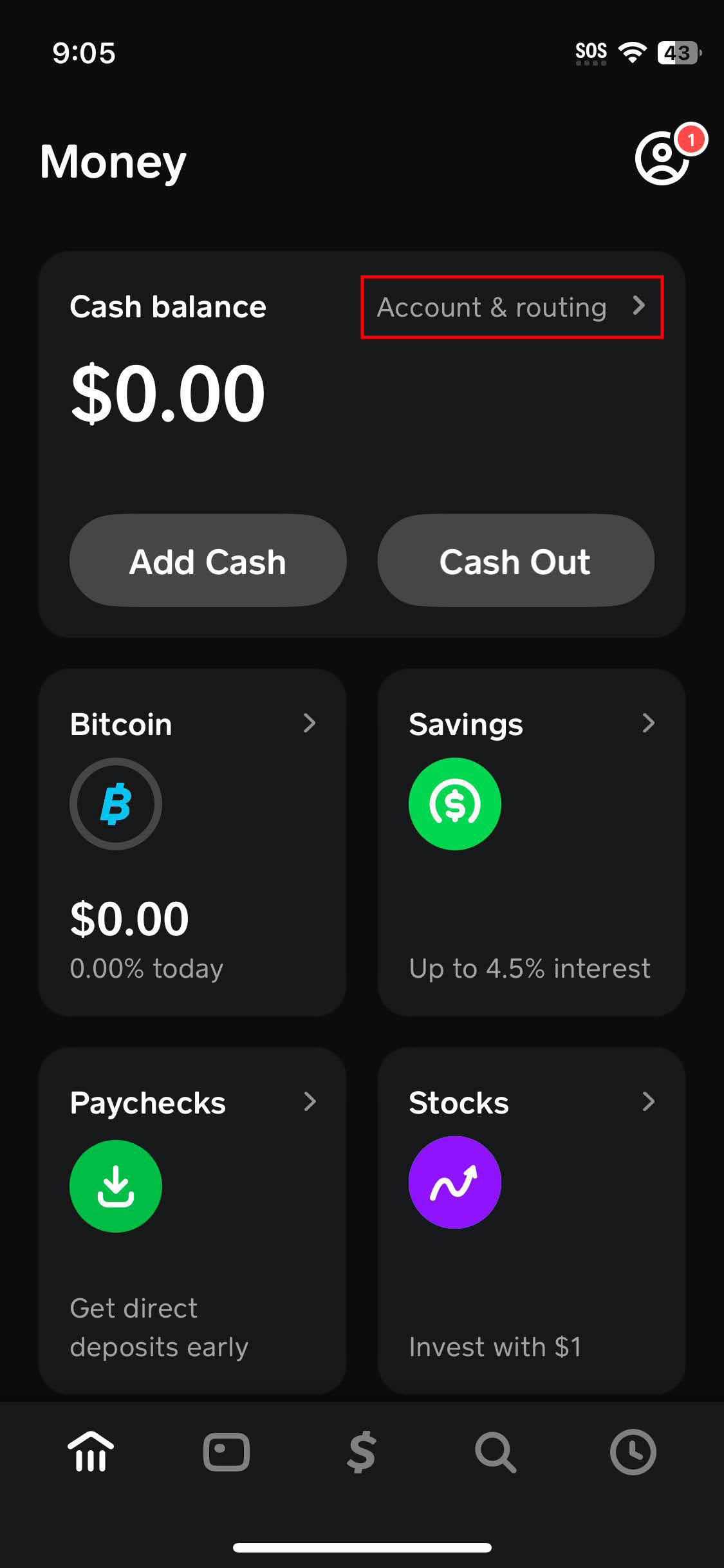
Cash App further simulates a banking experience through its direct deposit feature. Users are provided with an account and routing number, enabling them to receive paychecks, government benefits, or tax refunds directly into their Cash App account. This functionality is a strong indicator of Cash App’s ambition to be a primary financial hub for its users. By facilitating direct deposit, Cash App allows individuals to manage their primary income stream within the app, reducing their reliance on traditional banks for routine financial operations.
Investing Features: Stocks and Bitcoin
Beyond transactional services, Cash App has ventured into investment facilitation, distinguishing it from many other fintech apps. Users can buy and sell fractional shares of stocks directly within the application, starting with as little as $1. This lowers the barrier to entry for stock market investing, making it accessible to a broader audience. Similarly, Cash App pioneered simple Bitcoin trading within a mainstream financial app, allowing users to buy, sell, and even send Bitcoin. These investment features transform the Cash App account into a rudimentary brokerage platform, albeit with a limited scope compared to dedicated investment apps. This integration of investing directly alongside daily spending and saving tools reflects a holistic approach to personal finance management.
Navigating Account Types and Limitations
While Cash App aims for simplicity, understanding its underlying account structure and associated limitations is crucial for effective use, especially from a financial perspective.
Individual vs. Business Accounts
Primarily, Cash App is designed for individual personal use. However, it does offer some features that cater to small businesses or freelancers. Users can designate certain payments as “for business” and receive payments as a business. While a full-fledged “Cash App Business Account” akin to a traditional business banking account isn’t explicitly separate in the same way, the distinction in transaction handling (e.g., fee structures for business payments) implies a recognition of different user needs. For significant business operations, a dedicated business banking solution is generally recommended due to more robust features, higher limits, and specific accounting tools.
Verification Tiers and Their Impact on Limits
To comply with financial regulations, particularly KYC (Know Your Customer) and AML (Anti-Money Laundering) laws, Cash App operates with different verification tiers. Unverified accounts typically have lower limits on sending, receiving, and withdrawing funds. To increase these limits and unlock features like direct deposit and the Cash App Card, users must verify their identity by providing personal information such as their full name, date of birth, and the last four digits of their Social Security Number (SSN). Full verification often requires a full SSN. These verification tiers directly impact the financial utility of the account, ensuring that higher-value transactions are associated with a verified identity, a standard practice across the financial industry.
Understanding Fees Associated with Services
While many of Cash App’s core services are free, certain transactions incur fees, which users must be aware of to manage their finances effectively. Standard peer-to-peer transfers using a linked debit card or bank account are typically free. However, instant deposits (transferring money from Cash App to a linked bank account immediately) usually come with a small percentage-based fee. Similarly, using a credit card to send money incurs a fee, typically 3%. ATM withdrawals using the Cash App Card can also incur fees, both from Cash App (if it’s not a covered ATM after direct deposit setup) and from the ATM operator. Investment transactions, such as buying stocks or Bitcoin, may also have their own spread or fees, which users should review before transacting. Understanding this fee structure is essential for financially prudent use of the platform.
Security and Regulatory Aspects
The financial nature of Cash App necessitates a robust discussion of its security measures and its compliance within the regulatory landscape. For a platform handling money, trust and protection are paramount.
FDIC Insurance and Partner Banks
As mentioned, Cash App itself is not a bank and thus does not directly provide FDIC insurance. However, for certain services like the Cash App Card and direct deposit, Cash App partners with FDIC-insured banks (such as Sutton Bank or Lincoln Savings Bank). When funds are held in these partner bank accounts on behalf of Cash App users, those funds are eligible for FDIC insurance up to $250,000 per user, per partner bank, provided they meet specific criteria. This is a critical detail for users who rely on Cash App for substantial direct deposits or keep significant balances. It’s important for users to understand that not all funds or services within Cash App are necessarily covered by FDIC insurance directly by Cash App itself, but rather through its banking partners.
Data Protection and Transaction Security
Cash App employs standard industry-level security measures to protect user data and transactions. This includes encryption for data in transit and at rest, fraud detection systems, and two-factor authentication (2FA) options for account access. Users are also advised to use strong, unique passwords and be vigilant against phishing scams. The platform provides tools for users to report unauthorized transactions and has a customer support system for dispute resolution. While no digital platform is entirely immune to threats, Cash App’s security protocols aim to safeguard user financial information and transactional integrity.
Compliance with Financial Regulations
Operating in the financial sector, even as a fintech company, requires adherence to a complex web of regulations. Cash App is subject to various federal and state laws, including those related to money transmission (requiring specific licenses in different states), anti-money laundering (AML), and consumer protection. These regulations dictate how Cash App handles user funds, verifies identities, reports suspicious activities, and manages privacy. This regulatory oversight, though different from traditional banking, is crucial for maintaining the legitimacy and trustworthiness of Cash App as a financial service provider.
Is Cash App a Bank? Debunking the Myth
The recurring question, “Is Cash App a bank?” deserves a definitive answer within the context of its financial operations. Based on regulatory definitions and direct services, the answer is no, Cash App is not a bank.
Role of Partner Banks
The functionalities that make Cash App feel like a bank—the debit card, direct deposit, and balance holding—are predominantly facilitated through partnerships with chartered banks. These partner banks are the actual financial institutions holding customer funds, issuing debit cards, and providing the underlying banking infrastructure that Cash App leverages. Cash App acts as the front-end interface, the technology layer that simplifies access to these traditional banking services. This model is common among “neobanks” or “challenger banks” which offer modern banking experiences without holding a traditional banking charter themselves.
Consumer Protections Compared to Traditional Banks
While Cash App strives to offer robust security and leverages FDIC-insured partners, the full scope of consumer protections may not always mirror that of a traditional, federally regulated bank. For instance, specific regulations like Regulation E, which governs electronic funds transfers and limits consumer liability for unauthorized transactions, generally apply to Cash App. However, the exact mechanisms for dispute resolution and the depth of recourse might differ slightly compared to dealing directly with a traditional bank. Users should always be informed about Cash App’s terms of service and how disputes are handled.

The Future of Neobanks and Fintech
Cash App represents a significant trend in the financial industry: the rise of fintech companies and neobanks that offer innovative, mobile-first financial services. These platforms are designed for convenience, speed, and often, lower fees, appealing to a demographic comfortable with digital interactions. While they may not be banks in the traditional sense, they are increasingly fulfilling many of the roles historically reserved for banks. Their continued evolution, potentially leading to more direct banking charters in the future, will shape how we perceive and interact with financial institutions. For now, Cash App stands as a powerful hybrid: a digital wallet, a P2P payment system, a debit card provider, and a limited investment platform, all rolled into one app, operating in collaboration with, rather than as a replacement for, the underlying traditional banking system.
In conclusion, a Cash App account is best characterized as a comprehensive digital financial service platform. It integrates elements of a digital wallet, a peer-to-peer payment system, a debit card service, and basic investment functionalities, all built atop partnerships with traditional FDIC-insured banks. It is not a bank itself, but it provides many bank-like services through innovative technology and strategic financial collaborations, offering a modern and convenient way for users to manage their daily finances and venture into the world of digital investing.
aViewFromTheCave is a participant in the Amazon Services LLC Associates Program, an affiliate advertising program designed to provide a means for sites to earn advertising fees by advertising and linking to Amazon.com. Amazon, the Amazon logo, AmazonSupply, and the AmazonSupply logo are trademarks of Amazon.com, Inc. or its affiliates. As an Amazon Associate we earn affiliate commissions from qualifying purchases.