
Navigating the world of car insurance can feel daunting, especially in a state like New York with its unique regulations and bustling urban centers. However, securing the right auto insurance policy isn’t just a legal requirement; it’s a critical financial safeguard. Without adequate coverage, a single accident could lead to devastating financial consequences, impacting your savings, assets, and future financial stability. This comprehensive guide aims to demystify the process, providing you with the knowledge and strategies to secure optimal car insurance in New York, ensuring both compliance and robust financial protection without breaking the bank.

Understanding New York’s Car Insurance Requirements
Before you can effectively shop for car insurance, it’s paramount to grasp the legal landscape of New York State. Understanding these requirements is the first step toward making financially sound decisions about your coverage.
Minimum Coverage Mandates
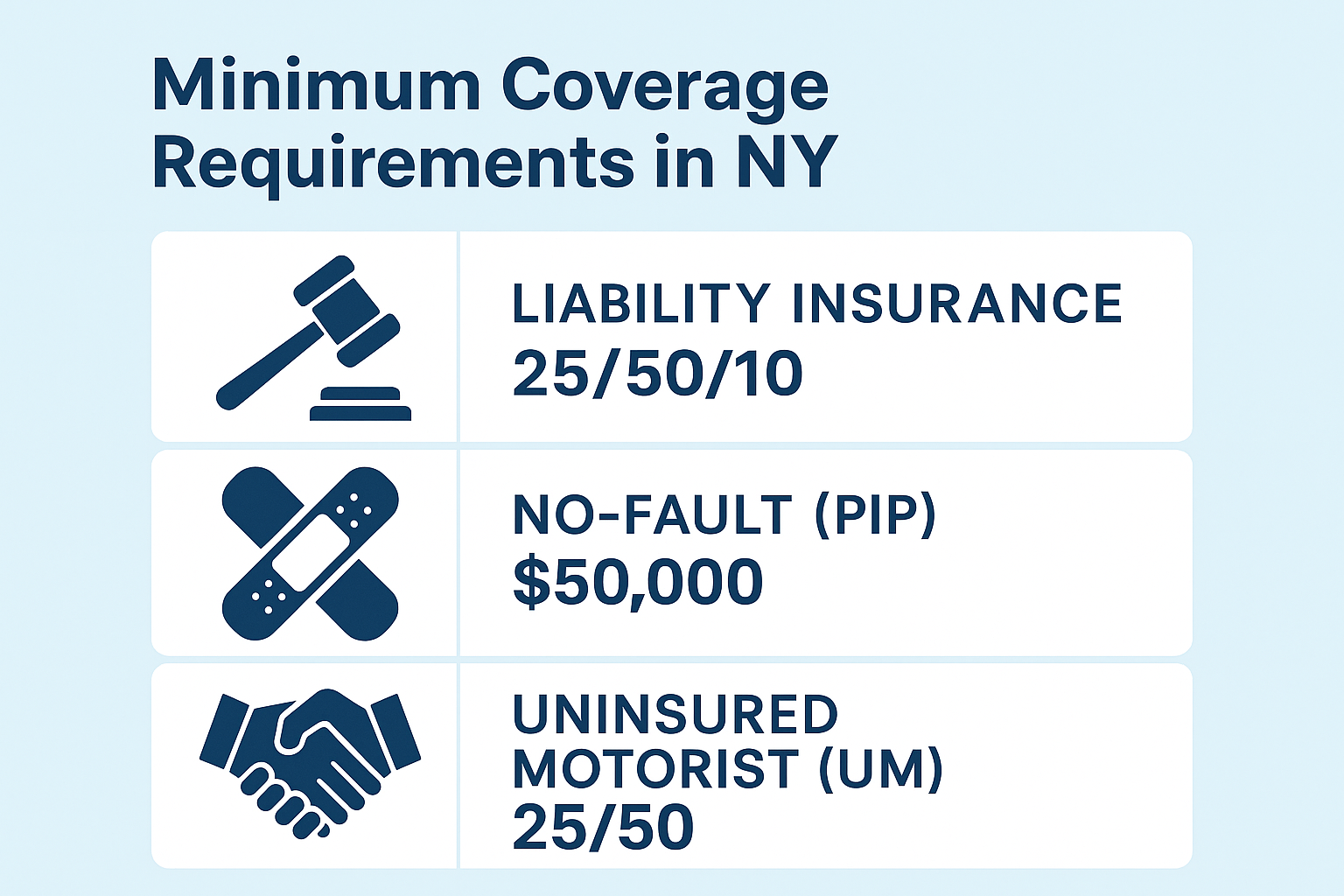
New York operates under a “no-fault” insurance system, which means your own insurance company typically pays for medical expenses and lost wages if you’re injured in an accident, regardless of who was at fault. This system is designed to streamline claims and reduce litigation, but it also dictates specific minimum coverages. In New York, drivers are legally required to carry:
-
Bodily Injury Liability: $25,000 per person / $50,000 per accident. This covers costs for injuries or death you cause to others in an accident. From a financial perspective, this protects your assets from lawsuits by injured parties.
-
Property Damage Liability: $10,000 per accident. This covers damage you cause to another person’s property (like their car or fence). Without this, you would be personally responsible for these costs.
-
Personal Injury Protection (PIP) / No-Fault Coverage: $50,000 per person. This covers medical expenses, lost wages, and other necessary expenses for you and your passengers, regardless of fault. This is a cornerstone of New York’s financial protection system for accident victims.
-
Uninsured Motorist Bodily Injury: $25,000 per person / $50,000 per accident. This coverage protects you and your passengers if you’re hit by a driver who doesn’t have insurance or is underinsured. This is a crucial financial safety net in a state with many drivers.
Why Minimum Isn’t Always Enough
While these minimums allow you to legally drive in New York, they offer very limited financial protection. Consider a scenario where you cause an accident resulting in severe injuries to multiple individuals and significant damage to an expensive vehicle. The state minimums would quickly be exhausted, leaving you personally liable for potentially hundreds of thousands of dollars in medical bills, lost wages, and property repairs. This could necessitate liquidating assets, wage garnishment, or even bankruptcy.
Opting for higher liability limits—for example, $100,000/$300,000 for bodily injury and $50,000 for property damage—provides a far more robust financial shield, protecting your net worth and ensuring peace of mind. The incremental cost for increased liability is often surprisingly small compared to the immense financial risk it mitigates. It’s a fundamental principle of risk management: invest a little more upfront to avoid catastrophic financial loss later.
Beyond the Basics: Optional Coverages
For comprehensive financial security, consider adding optional coverages that address specific risks not covered by the mandatory policies:
-
Collision Coverage: Pays for damage to your own vehicle resulting from a collision with another car or object, regardless of fault. This is essential for protecting the financial value of your car.
-
Comprehensive Coverage: Protects your vehicle from non-collision incidents like theft, vandalism, fire, natural disasters, or hitting an animal. This is particularly valuable if your car is new or expensive.
-
Rental Reimbursement: Covers the cost of a rental car while your vehicle is being repaired after a covered incident, preventing additional out-of-pocket transportation expenses.
-
Roadside Assistance: Offers financial help for towing, jump-starts, or tire changes, saving you from unexpected costs when stranded.
Each of these optional coverages serves a distinct financial purpose, reducing potential out-of-pocket expenses and offering a more complete safety net for your vehicle and transportation needs.
Navigating the Search and Quote Process
The journey to securing car insurance involves more than just picking the cheapest policy. It’s a strategic financial decision that requires careful planning and comparison to find the best value for your money.
Gathering Your Information
Before you even begin to solicit quotes, consolidate all necessary information. This will not only streamline the process but also ensure the accuracy of your quotes, preventing financial surprises later. You’ll need:
-
Vehicle Information: Make, model, year, VIN, current odometer reading, and safety features. Newer, safer, or less theft-prone vehicles often qualify for lower premiums due to reduced risk.
-
Driver Information: Name, date of birth, marital status, occupation, driver’s license number for all drivers on the policy. Your age, experience, and perceived stability can influence financial risk assessments by insurers.
-
Driving History: Any accidents, traffic violations, or claims within the last 3-5 years. A clean driving record is your most valuable asset for lower premiums.
-
Desired Coverage Levels: Having a clear idea of the liability limits, deductibles, and optional coverages you want will ensure consistent, comparable quotes.
Providing accurate information from the outset is crucial. Misrepresenting facts, even unintentionally, could lead to your policy being voided or claims being denied, resulting in severe financial detriment when you need coverage most.
Comparing Insurers: Online vs. Agent
When it comes to obtaining quotes, you generally have two primary avenues, each with distinct financial implications:
-
Online Comparison Tools: Websites that allow you to input your information once and receive multiple quotes from various insurers.
-
Pros: Convenience, speed, ability to compare many options quickly. Can be efficient for tech-savvy individuals confident in their coverage choices.
-
Cons: Less personalized advice, may not capture all available discounts, the onus is on you to understand complex policy details. You might miss out on nuanced financial advice tailored to your specific situation.
-
-
Insurance Agents:
-
Captive Agents: Work for a single insurance company (e.g., State Farm, GEICO, Allstate). They have deep knowledge of their company’s products and can help you maximize their specific discounts.
-
Independent Agents: Represent multiple insurance companies and can shop around on your behalf.
-
Pros: Personalized advice, help navigating complex policies, uncovering all eligible discounts, and advocating for you during claims. They can often provide a more holistic financial assessment of your insurance needs.
-
Cons: May take longer than online quotes, and an independent agent’s commission structure could subtly influence their recommendations, though ethical agents prioritize client needs.
-
For significant financial decisions like car insurance, especially if your situation is complex, consulting with an agent can provide invaluable insights and ensure you’re not overlooking critical financial protections or opportunities for savings.
The Role of Financial Stability and Reputation
When choosing an insurer, look beyond just the premium. The financial stability and reputation of the company are paramount, particularly when it comes to paying out claims. A financially shaky insurer might delay or deny legitimate claims, leaving you in a dire financial situation after an accident.
Check ratings from independent agencies like A.M. Best, Standard & Poor’s, or Moody’s. These ratings assess an insurer’s financial strength and ability to meet its policyholder obligations. A strong rating (e.g., A+ from A.M. Best) indicates a company’s robust financial health, offering greater assurance that they will be able to fulfill their financial promises when you file a claim. This due diligence is a critical step in protecting your financial investment in insurance.
Factors Influencing Your Insurance Premiums in NY
Car insurance premiums are not arbitrary; they are meticulously calculated based on a multitude of factors, each contributing to the perceived financial risk you present to an insurer. Understanding these influences can empower you to make more financially informed decisions.
Personal Driving Profile
Your individual characteristics as a driver are significant determinants of your premium.
-
Age and Experience: Younger, less experienced drivers, statistically, are involved in more accidents, leading to higher premiums. As drivers mature and gain experience without incidents, their rates typically decrease.
-
Driving Record: A clean driving record is your best financial asset. Accidents, moving violations (speeding tickets, DUIs), or excessive claims will dramatically increase your premiums, sometimes for several years. Each incident signals higher financial risk to the insurer.
-
Marital Status: Married individuals often receive lower rates, as statistics suggest they are less likely to file claims.
-
Credit Score (where allowed): In New York, insurers are not allowed to use credit scores to determine initial rates. However, they can use it for renewal decisions, so maintaining a good credit score is still a good financial practice. Insurers correlate higher credit scores with lower claim frequency, reflecting overall financial responsibility.
-
Occupation: Some professions are statistically associated with lower risk profiles, potentially leading to small discounts.
Vehicle Characteristics
The car you drive plays a crucial role in its insurance cost due to its potential for damage, theft, and repair expenses.
-
Make, Model, Year: Generally, luxury, high-performance, or expensive-to-repair vehicles will cost more to insure because the financial exposure for collision and comprehensive claims is higher. Conversely, family sedans or older, more common models might be cheaper.
-
Safety Features: Cars equipped with advanced safety features (e.g., anti-lock brakes, airbags, adaptive cruise control, lane departure warning) often qualify for discounts because they reduce the likelihood or severity of accidents, thus reducing potential claims costs.
-
Theft Rates: Models frequently targeted by thieves will have higher comprehensive coverage costs.
Before purchasing a vehicle, it’s financially prudent to research its average insurance costs. A seemingly good deal on a car could be offset by disproportionately high insurance premiums, affecting your overall cost of ownership.
Location-Based Pricing
Where you live and primarily drive in New York State significantly influences your premium.
-
Urban vs. Rural: Drivers in densely populated urban areas like New York City, Buffalo, or Rochester typically pay more for insurance due to higher rates of accidents, theft, and vandalism. More vehicles on the road mean a higher probability of incidents and higher claims costs.
-
Garaging Location: Where you park your car overnight (e.g., secure garage versus street parking in a high-crime area) can impact your comprehensive premium.
-
Claim Frequency in Area: Insurers analyze historical claims data for specific zip codes. If your area has a high number of claims (regardless of whether you were involved), your rates may be higher to reflect this increased risk pool.
These geographical factors are a direct reflection of the financial risk associated with operating and parking a vehicle in different environments. It’s a factor largely beyond your control, but one to be aware of when considering relocating.
Strategies for Saving Money on Car Insurance
While car insurance is a necessary expense, there are numerous strategies to mitigate its financial impact without compromising essential coverage. Being proactive and informed can lead to significant savings.
Bundling Policies
One of the most effective ways to save money is to combine your car insurance with other policies, such as home, renters, or even life insurance, with the same provider. Insurers offer “multi-policy” or “bundling” discounts because it fosters customer loyalty and simplifies their administrative processes. These discounts can often be substantial, sometimes reducing overall premiums by 10-25% or more across all bundled policies. It’s a simple financial win-win: the insurer gets more of your business, and you get a lower bill.
Maximizing Discounts
Beyond bundling, many insurers offer a myriad of discounts that can add up to significant savings. Always ask your insurer or agent about every discount they offer. Common examples include:
-
Good Driver/Accident-Free Discount: For maintaining a clean driving record over a specified period.
-
Good Student Discount: For high school or college students maintaining a certain GPA.
-
Anti-Theft Device Discount: For vehicles equipped with alarms, immobilizers, or tracking systems.
-
Low Mileage Discount: For drivers who don’t drive frequently or have short commutes.
-
Defensive Driving Course Discount: Completing an approved defensive driving course can reduce your premium and even potentially reduce points on your license.
-
Professional/Affiliation Discounts: Membership in certain professional organizations, alumni associations, or employers might qualify you for group rates.
-
Payment Discounts: Paying your premium in full upfront, or enrolling in automatic payments, can often lead to small but valuable savings.
Systematically inquiring about and qualifying for these discounts can substantially reduce your annual insurance expenditure.
Adjusting Deductibles
Your deductible is the amount you agree to pay out of pocket before your insurance coverage kicks in for collision and comprehensive claims. This is a direct financial leverage point.
-
Higher Deductible = Lower Premium: If you choose a higher deductible (e.g., $1,000 instead of $250), your premium will be lower because you’re taking on more of the initial financial risk.
-
Lower Deductible = Higher Premium: A lower deductible means the insurer pays more sooner, so your premium will be higher.
The key is to choose a deductible that you can comfortably afford to pay out of your emergency fund without financial strain. For financially stable individuals with a robust emergency savings, a higher deductible can be an excellent strategy to lower monthly expenses. However, for those with limited liquid funds, a lower deductible might be a more prudent choice, even with a higher premium, to avoid a potential financial crisis after an accident.
Regular Policy Review
Car insurance isn’t a “set it and forget it” financial product. Your circumstances change, as do market rates.
-
Annual Review: At least once a year, preferably before your policy renewal, review your coverage. Has your financial situation changed? Is your car older and worth less (meaning you might drop collision/comprehensive)? Have you moved?
-
Shop Around Regularly: Don’t assume your current insurer still offers the best rates. Get quotes from competing companies annually. Insurers frequently adjust their pricing models, and loyalty doesn’t always guarantee the best deal. A few hours of comparison shopping could save you hundreds of dollars per year, a tangible financial benefit.
Proactive management of your policy is a crucial element of sound personal finance.
Final Steps and Policy Management
Once you’ve navigated the choices and selected a policy, the final steps ensure you’re fully covered and prepared for any eventuality.
Reviewing Your Policy Document
Before making any payment, meticulously read your entire policy document. This legally binding contract outlines every detail of your coverage, including:
-
Coverage Limits and Deductibles: Confirm these match what you agreed upon.
-
Exclusions: Understand what your policy doesn’t cover.
-
Payment Schedule and Penalties: Be clear on due dates and any late payment fees, which can quickly erode your financial savings.
-
Contact Information: Know how to reach your agent or the insurer’s claims department.
Understanding the fine print is vital for avoiding future financial disputes and ensuring you truly have the protection you believe you’ve paid for. If anything is unclear, ask your agent for clarification.
Understanding Claims Processes (Financial Impact)
While we hope to never use it, knowing how to file a claim is crucial. Familiarize yourself with your insurer’s claims process: whom to call, what information you’ll need, and the typical timeline. A smooth and efficient claims process is paramount for timely financial recovery after an incident, minimizing out-of-pocket expenses and stress during an already difficult time. Review how deductibles apply and what documentation is required to ensure a swift financial resolution.
Staying Compliant and Prepared
Maintaining continuous car insurance coverage in New York is not optional; it’s a legal mandate. Lapses in coverage can lead to severe penalties, including fines, license suspension, and vehicle registration revocation, all of which carry significant financial and logistical burdens. Always ensure your policy is renewed on time and that proof of insurance is kept in your vehicle. Staying compliant protects your legal standing and ensures you’re always financially prepared for the unexpected.

Conclusion
Obtaining car insurance in New York is a multi-faceted process that goes far beyond simply meeting legal requirements. It is a fundamental aspect of personal financial management, designed to protect your assets, income, and peace of mind from the potentially catastrophic costs of auto accidents. By understanding New York’s specific mandates, diligently comparing options, leveraging available discounts, and proactively managing your policy, you can secure comprehensive coverage that aligns with your financial goals. Treat your car insurance decision with the financial gravity it deserves, and you’ll build a crucial layer of protection around your future.
aViewFromTheCave is a participant in the Amazon Services LLC Associates Program, an affiliate advertising program designed to provide a means for sites to earn advertising fees by advertising and linking to Amazon.com. Amazon, the Amazon logo, AmazonSupply, and the AmazonSupply logo are trademarks of Amazon.com, Inc. or its affiliates. As an Amazon Associate we earn affiliate commissions from qualifying purchases.