
The question of when to claim Social Security benefits is one of the most pivotal financial decisions many Americans face as they approach retirement. For many, age 62 represents the earliest possible opportunity to begin receiving these benefits. While the prospect of immediate income can be appealing, understanding the implications of claiming at this age, particularly the average benefit amount and the factors that influence it, is crucial for sound financial planning. This article will delve into what the average Social Security benefit at age 62 entails, how it’s calculated, and the broader financial considerations that should inform your decision.
Understanding Social Security Benefits at Age 62
Claiming Social Security benefits at age 62 means you are initiating payments at the earliest possible age, which also means receiving a permanently reduced monthly benefit compared to waiting until your Full Retirement Age (FRA) or even later. This early claiming decision has significant long-term financial consequences that merit careful consideration.
The Full Retirement Age (FRA) and Early Claiming
Your Full Retirement Age (FRA) is the age at which you are entitled to receive 100% of your primary insurance amount (PIA). This age varies depending on your birth year. For those born between 1943 and 1954, the FRA is 66. It then gradually increases for subsequent birth years, reaching 67 for anyone born in 1960 or later.
Claiming benefits before your FRA results in a permanent reduction. The Social Security Administration (SSA) applies a reduction factor to your monthly benefit for each month you claim early. This reduction is designed to balance the fact that you will be receiving benefits for a longer period of time. For example, if your FRA is 67, claiming at age 62 means your benefit will be reduced by approximately 30%. This is not a temporary reduction; it lasts for the remainder of your life. The reduction is calculated as 5/9 of 1% for each of the first 36 months you claim early, and 5/12 of 1% for each additional month.
How Benefits are Calculated: A Brief Overview
Your Social Security benefit amount is primarily determined by your earnings history. The SSA calculates your Primary Insurance Amount (PIA) based on your highest 35 years of indexed earnings. “Indexed earnings” means your past earnings are adjusted for changes in the average wage level in the country over time, ensuring that your past income has a comparable value to current earnings.
-
Average Indexed Monthly Earnings (AIME): This is the average of your highest 35 years of indexed earnings. If you have fewer than 35 years of earnings, zeros will be factored into the calculation, reducing your AIME.
-
Primary Insurance Amount (PIA): The PIA is the benefit you would receive if you claim at your Full Retirement Age. It’s calculated using a progressive formula that applies different percentages to different segments of your AIME. This progressive formula means that lower-income earners receive a higher percentage of their average earnings back as benefits compared to higher-income earners, though higher-income earners will still receive a larger absolute dollar amount.
The Impact of Claiming at 62: Permanent Reduction
As mentioned, claiming at age 62 permanently reduces your monthly benefit. If your FRA is 67, claiming at 62 means you’ll receive 70% of your PIA. If your FRA is 66, claiming at 62 means you’ll receive 75% of your PIA. This reduction applies to not only your own benefit but also potentially to survivor benefits that your spouse might receive after your passing. A lower base benefit for the primary earner translates to lower survivor benefits for dependents. This permanent reduction is a critical factor that often encourages individuals to weigh the immediate need for income against the long-term desire for a higher monthly payment.
The Numbers: What to Expect
While the national average provides a general benchmark, it’s crucial to understand that individual benefit amounts can vary significantly based on a multitude of factors unique to each person’s work history and earnings.
Average Benefits vs. Individual Reality
The Social Security Administration regularly publishes data on average benefit amounts. While these averages provide a useful snapshot, they should not be mistaken for a guarantee of what you will receive. The average benefit for all retired workers at any age, or specifically for those claiming at age 62, is an aggregate figure that smooths out the wide range of individual circumstances. For example, someone who had a sporadic work history or consistently low earnings will likely receive less than the average, while someone with a long history of high earnings will receive more.
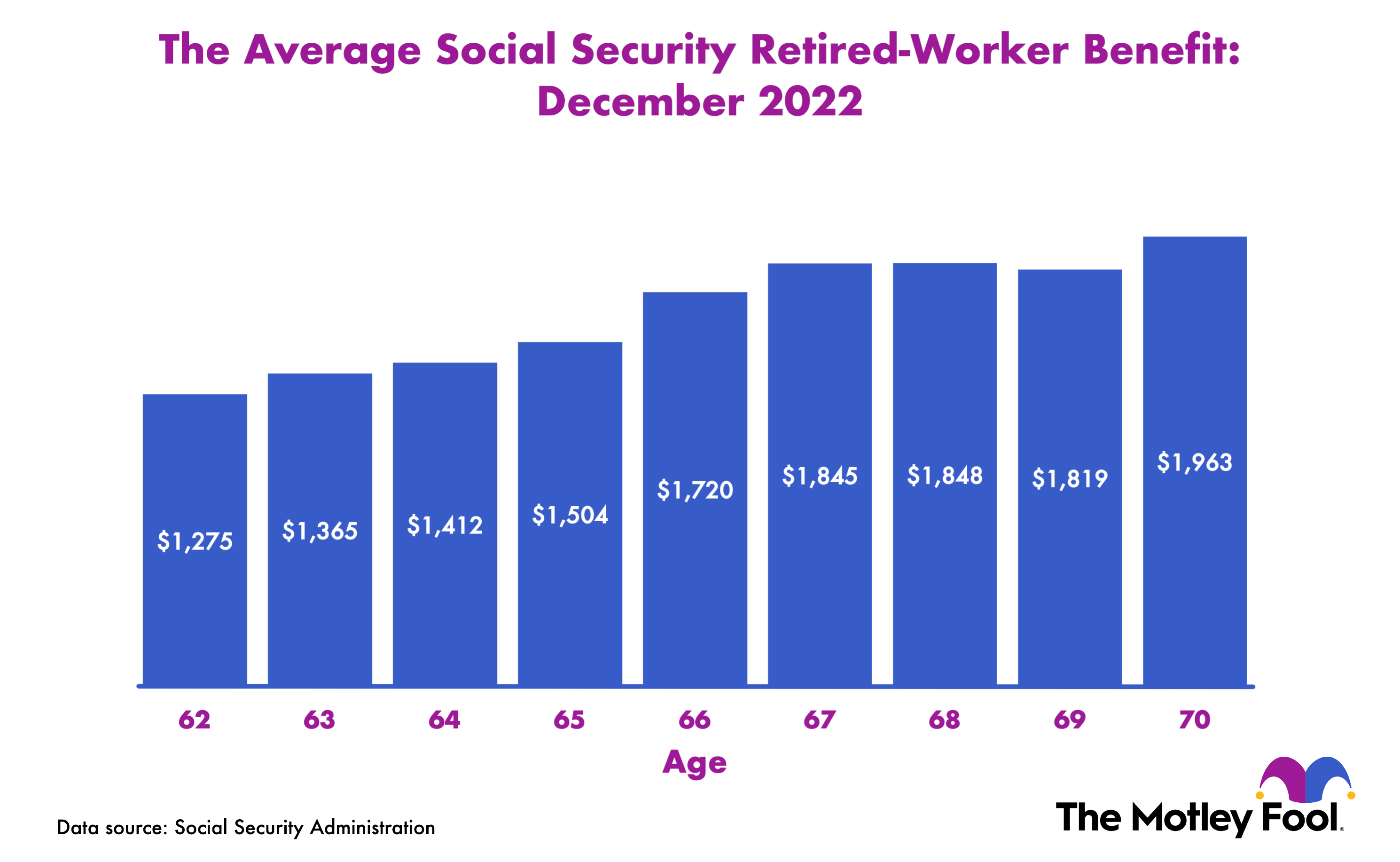
As of recent data, the average Social Security benefit for a retired worker at age 62 is typically lower than the overall average for all retired workers because of the permanent reduction applied for early claiming. While specific numbers fluctuate with annual Cost-of-Living Adjustments (COLAs), it’s common for the average benefit at age 62 to be somewhere in the range of $1,200 to $1,400 per month. However, it’s important to note this is a historical approximation, and current figures should always be checked directly with the SSA or their official publications. This number represents what the average person who chooses to claim at 62 receives, not what every 62-year-old is eligible for.
Factors Influencing Your Personal Benefit Amount
Several key factors determine your specific Social Security benefit:
-
Earnings History: This is the most significant factor. Your highest 35 years of indexed earnings are used to calculate your benefit. Consistent, high earnings over a long career will result in a higher benefit. Conversely, years with no earnings or low earnings will reduce your average.
-
Number of Years Worked: As mentioned, if you have fewer than 35 years of earnings, the SSA will factor in zeros for the missing years, which will reduce your Average Indexed Monthly Earnings (AIME) and, consequently, your Primary Insurance Amount (PIA).
-
Age When You Start Benefits: This is the core of our discussion. Claiming at 62 results in a permanent reduction, while waiting until your FRA or even age 70 (when benefits max out) results in higher monthly payments.
-
Cost-of-Living Adjustments (COLAs): Once you start receiving benefits, they are subject to annual COLAs, which are designed to help your benefits keep pace with inflation.
-
Windfall Elimination Provision (WEP) / Government Pension Offset (GPO): If you worked for a government agency or other employer where you did not pay Social Security taxes and receive a pension from that employment, your Social Security benefit might be reduced under WEP or GPO.
Recent Averages and Projections
To get the most accurate and up-to-date average figures, it’s always best to consult the official Social Security Administration website or their annual statistical supplement. These resources provide detailed breakdowns by age, gender, and other demographics. While I cannot provide real-time data, understanding that the average for someone claiming at 62 will always be significantly lower than the average for someone claiming at their FRA is a fundamental principle. This gap in benefit amounts underscores the financial trade-off inherent in early claiming. Financial planners often project these differences over a lifetime to help individuals make informed decisions.
The Pros and Cons of Claiming Early
Deciding to claim Social Security benefits at age 62 is a highly personal choice with both potential advantages and significant disadvantages. Understanding these trade-offs is essential for aligning your decision with your broader retirement goals.
Advantages: Immediate Income and Flexibility
The most obvious advantage of claiming at age 62 is the immediate access to income. This can be particularly beneficial for individuals who:
-
Are involuntarily retired: Due to layoffs, health issues, or caregiving responsibilities, some individuals may find themselves unable to continue working up to their desired retirement age. Social Security benefits can provide a much-needed financial bridge.
-
Have health concerns: If you have a serious health condition or a family history of shorter lifespans, claiming early might mean receiving more in total lifetime benefits, as you would be collecting payments for a longer duration, even if each payment is smaller.
-
Need funds for immediate expenses: Some retirees might have pressing financial needs, such as paying off high-interest debt, making necessary home repairs, or funding essential medical treatments that are not fully covered by other insurance.
-
Wish to pursue other endeavors: Some individuals might want to use the early income to fund a passion project, start a new part-time venture, or simply enjoy early retirement pursuits while they are still relatively young and healthy.
Disadvantages: Reduced Lifetime Income and Spousal Benefits
The disadvantages of claiming at 62 are primarily centered around the permanent reduction in benefit amount and its cascading effects:
-
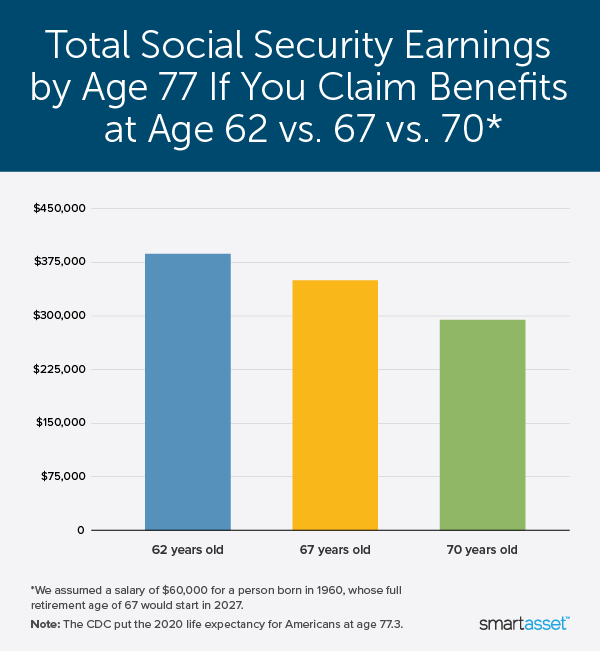
Permanently Lower Monthly Payments: As discussed, claiming at 62 means receiving approximately 25-30% less per month than you would at your FRA. Over a retirement that could last 20, 30, or even more years, this translates to a substantial cumulative loss of income.
-
Reduced Survivor Benefits: If you are the higher earner in a couple, claiming early will result in a lower survivor benefit for your spouse if you predecease them. Your spouse’s survivor benefit is based on your benefit amount, so a reduced benefit means less income for your surviving partner.
-
Less Inflation Protection: While benefits receive COLAs, a smaller starting benefit means that even with COLAs, the absolute dollar increase will be smaller each year compared to a higher starting benefit.
-
Potential for Earnings Limit Penalties: If you claim benefits early (before your FRA) and continue to work, your benefits may be temporarily reduced if your earnings exceed a certain limit. Once you reach your FRA, these reductions are credited back to you, but it’s an important consideration for those planning to “semi-retire.”
Navigating Health and Employment Considerations
The decision to claim early often intertwines with an individual’s health status and employment situation. Those in poor health might wisely choose to claim early to maximize their total lifetime receipts. Conversely, healthy individuals with good job prospects might benefit more from delaying benefits. Similarly, job market conditions, the availability of alternative income sources, and the presence of a supportive spouse who might be delaying their own benefits all play a role in making this complex decision.
Strategies for Maximizing Your Social Security
Optimizing your Social Security benefits requires a thoughtful approach that considers your personal financial landscape, health, and retirement goals. It’s not just about the average benefit, but how you can make your individual benefit work best for you.
The Break-Even Point: A Lifetime Income Perspective
A common analytical tool used in Social Security planning is the “break-even point.” This is the age at which the total cumulative benefits received by delaying will surpass the total cumulative benefits received by claiming early. For example, if you claim at 62, you start receiving money immediately. If you wait until 67, you get higher monthly payments, but you miss out on five years of payments. The break-even analysis helps determine how long you would need to live for the higher monthly payment to “catch up” and exceed the total amount you would have received by claiming early.
While the exact break-even point varies for everyone, it typically falls in the mid-70s to early 80s. If you expect to live beyond your break-even point, delaying benefits generally results in more lifetime income. If you anticipate a shorter lifespan, claiming early might be financially advantageous. This calculation is a critical piece of personal finance, requiring a realistic assessment of your health and longevity expectations.
Coordinating with Other Retirement Income Sources
Social Security is rarely the sole source of retirement income. For most individuals, it’s one leg of a three-legged stool, alongside personal savings (e.g., 401(k)s, IRAs) and pensions. The decision of when to claim Social Security should be coordinated with the drawdown strategy for these other assets.
-
Delaying Social Security: If you have sufficient personal savings or a pension to cover your expenses in your early 60s, you might choose to delay Social Security. This allows your personal savings to be drawn down first, while your Social Security benefit continues to grow, providing a larger, inflation-adjusted income stream later in life.
-
Claiming Early to Preserve Savings: Conversely, some might claim Social Security at 62 to preserve their personal retirement accounts, allowing those investments more time to grow. This strategy might be suitable if you anticipate needing significant lump sums from your retirement accounts later or if you have concerns about market volatility impacting your investments.
-
Spousal and Survivor Benefits: If you are married, coordinating with your spouse’s benefits is paramount. Strategies like “file and suspend” (no longer available for most) and “restricted application” (for certain birth years) allowed one spouse to claim spousal benefits while their own benefit continued to grow. Even without these, understanding how your claiming decision impacts your spouse’s future spousal or survivor benefits is crucial.
The Importance of Financial Planning and Professional Advice
Given the complexity and the long-term implications of the Social Security claiming decision, seeking advice from a qualified financial planner is highly recommended. A financial professional can help you:
-
Project your personalized benefit amounts at different claiming ages.
-
Analyze your break-even point based on your specific circumstances.
-
Integrate your Social Security strategy with your overall retirement income plan, including pensions, 401(k)s, IRAs, and other investments.
-
Consider tax implications of your Social Security benefits and other income sources.
-
Review potential spousal and survivor benefit strategies if you are married.
These professionals can use specialized software to model different scenarios and help you visualize the impact of your choices over your lifetime, moving beyond generic averages to a truly personalized recommendation.
Beyond the Average: Personalizing Your Decision
While understanding the average Social Security benefit at age 62 provides a valuable starting point, the ultimate decision is deeply personal. It requires a thorough self-assessment of your individual health, financial resources, and personal goals.
Assessing Your Health and Longevity
One of the most significant unknown variables in Social Security planning is your individual lifespan. If you come from a family with a history of long lifespans, and you are in good health, delaying benefits could lead to a substantial increase in your total lifetime income. Conversely, if you have chronic health issues or a family history of shorter lifespans, claiming early might be the more prudent choice. This assessment should be realistic, not overly optimistic or pessimistic, and ideally discussed with your healthcare provider.
Evaluating Your Financial Needs and Resources
Before making a decision, conduct a comprehensive review of your financial situation.
-
Current Expenses: How much do you need to cover your essential living expenses each month?
-
Other Income Sources: Do you have a pension, substantial savings, rental income, or part-time work that can cover your expenses until you claim Social Security?
-
Debt: Are you carrying high-interest debt that could be mitigated by early Social Security income?
-
Emergency Fund: Do you have an adequate emergency fund to cover unexpected costs without having to dip into long-term retirement savings prematurely?
A clear understanding of your cash flow and asset availability will guide whether you need the income at 62 or if you can afford to wait for a higher benefit.
Using the Social Security Administration’s Tools
The Social Security Administration (SSA) provides excellent resources to help you make an informed decision:
-
“my Social Security” Account: Create an online account at www.ssa.gov/myaccount. Here, you can view your earnings history, get estimates of your future benefits at different claiming ages (62, FRA, and 70), and review your Social Security Statement. This is the most accurate source for your personal benefit information.
-
Benefit Calculators: The SSA website offers various online calculators that can help you estimate benefits and understand different scenarios.
-
Publications and Fact Sheets: The SSA publishes numerous free resources that explain different aspects of Social Security, including early retirement, spousal benefits, and survivor benefits.
By leveraging these tools and combining them with personal financial analysis and, ideally, professional advice, you can move beyond the “average” and craft a Social Security claiming strategy that is perfectly tailored to your unique retirement journey. The goal isn’t just to get a benefit, but to get the optimal benefit for your specific circumstances.
aViewFromTheCave is a participant in the Amazon Services LLC Associates Program, an affiliate advertising program designed to provide a means for sites to earn advertising fees by advertising and linking to Amazon.com. Amazon, the Amazon logo, AmazonSupply, and the AmazonSupply logo are trademarks of Amazon.com, Inc. or its affiliates. As an Amazon Associate we earn affiliate commissions from qualifying purchases.