
For many, the phrase “Social Security” conjures images of retirement checks and a distant future. Yet, understanding what Social Security is, how it works, and what your specific benefits might be is a fundamental pillar of sound financial planning for individuals at every stage of life. Far from being a simple government handout, Social Security is a comprehensive social insurance program that provides a vital safety net for millions of Americans, extending beyond just retirement to cover disability, survivorship, and even certain family benefits.
In an increasingly complex financial landscape, demystifying Social Security is not just a matter of curiosity; it’s a strategic imperative. Knowing your potential benefits, understanding the claiming strategies, and integrating this knowledge into your broader financial picture can significantly impact your long-term security and peace of mind. This article aims to shed light on “your” Social Security – not just the system, but the personalized benefits and records that are unique to you, empowering you to make informed decisions about your financial future.
Demystifying Social Security: More Than Just a Retirement Check
At its core, Social Security is a federal program established in 1935, designed to provide economic security for Americans. It operates on a pay-as-you-go system, where current workers’ contributions fund the benefits of current retirees, disabled individuals, and survivors. This cyclical funding mechanism has been the bedrock of financial stability for generations.
The Foundation of America’s Social Safety Net
Social Security was born out of the Great Depression as a response to widespread poverty among the elderly and disabled. It was never intended to be the sole source of retirement income but rather a foundational layer, a “three-legged stool” alongside personal savings and pensions (or 401(k)s). Its original intent was to provide a basic income floor, preventing destitution and offering dignity in old age or incapacitation. Over time, its scope expanded to include a broader array of benefits, solidifying its role as the most significant social insurance program in the United States. Its broad reach touches nearly every American family, either directly through benefits received or indirectly through payroll tax contributions.
Who Contributes and Who Benefits?
The system is primarily funded through dedicated payroll taxes, known as Federal Insurance Contributions Act (FICA) taxes. Most employees pay 6.2% of their earnings (up to an annual maximum, which adjusts yearly) into Social Security, with their employers matching that contribution. Self-employed individuals pay both halves, totaling 12.4% through the Self-Employment Contributions Act (SECA) tax. These contributions are credited to your earnings record under your Social Security number, which then determines your eligibility and the amount of future benefits.
Eligibility for benefits is primarily based on “credits” earned through work. Most people need 40 credits (earned by working about 10 years) to qualify for retirement benefits. However, fewer credits may be needed for disability or survivor benefits, depending on age and circumstances. Those who benefit include:
-
Retired workers: Individuals who have reached the minimum claiming age (62) and are fully insured.
-
Disabled workers: Individuals unable to work due to a severe medical condition expected to last at least 12 months or result in death.
-
Survivors: Spouses, children, and dependent parents of deceased workers.
-
Dependents: Spouses and minor or disabled children of retired or disabled workers.
Types of Social Security Benefits
While retirement benefits are the most commonly recognized, Social Security offers a broader spectrum of support:
-
Retirement Benefits: The most prevalent, providing monthly income to eligible retirees based on their earnings history and age at which they claim benefits.
-
Disability Benefits: Provides income to individuals who are unable to work due to a severe disability, and to their eligible family members.
-
Survivors Benefits: Paid to eligible family members (spouse, children, dependent parents) of a deceased worker who had earned sufficient Social Security credits.
-
Spousal Benefits: Available to a spouse (or divorced spouse) of a retired or disabled worker, based on the worker’s earnings record.
-
Children’s Benefits: Paid to minor or disabled children of a retired, disabled, or deceased worker.
Understanding these different categories is crucial because eligibility criteria and benefit amounts vary significantly, and strategizing around them can have substantial financial implications for families.
Finding Your Social Security Information and Earnings Record
In the past, receiving your annual Social Security statement in the mail was the primary way to track your earnings and estimated benefits. While statements are still mailed to certain age groups, the digital age has made accessing your personal Social Security information more convenient and immediate than ever before. Knowing how to access and interpret this data is the first step toward understanding “your” Social Security.
Creating Your My Social Security Account
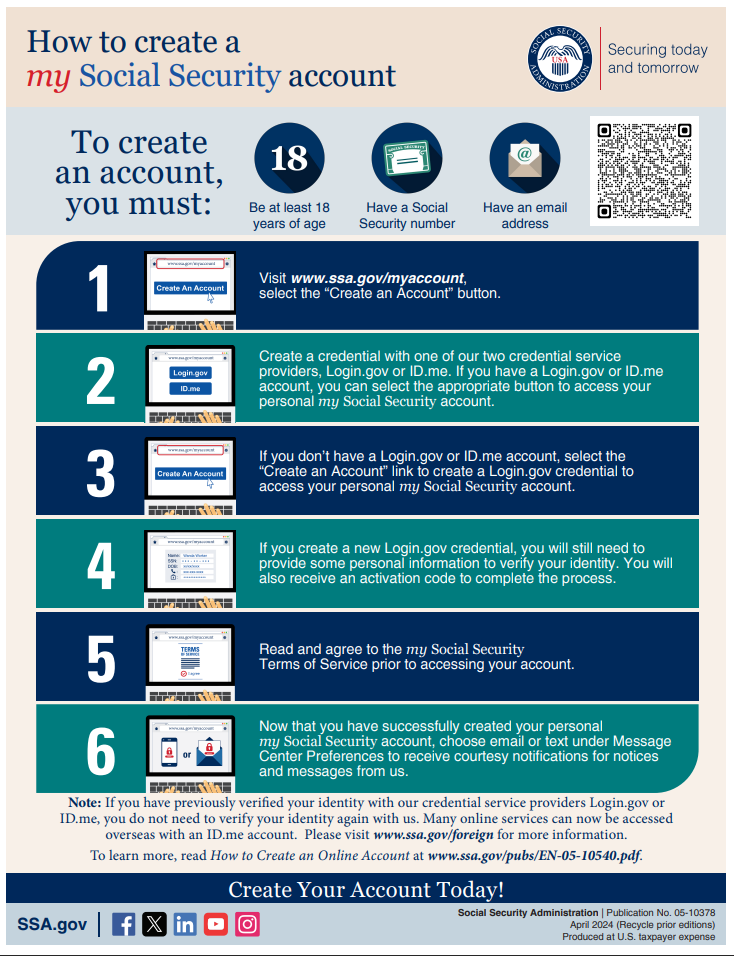
The Social Security Administration (SSA) provides a secure online portal called “my Social Security account” (ssa.gov/myaccount). Creating an account is free and essential for anyone wanting to monitor their Social Security record. Once registered, you can:
-
Review your earnings record: This is a crucial step to ensure that all your past earnings have been accurately reported to the SSA. Errors can lead to lower benefits in the future.
-
Get your Social Security Statement: This statement provides a personalized estimate of your future retirement, disability, and survivors benefits based on your earnings record.
-
Check the status of an application: If you’ve applied for benefits, you can track its progress online.
-
Request a replacement Social Security card: A convenient way to manage vital documents.
-
Manage your benefits: If you’re already receiving benefits, you can change your address, direct deposit information, or get a proof of income letter.
Setting up this account is a proactive measure that provides clarity and control over a significant component of your financial planning. It requires identity verification to ensure the security of your personal data.
Understanding Your Social Security Statement
Your Social Security Statement is a goldmine of personalized financial information. It details:
-
Your estimated benefits: This includes estimates for retirement benefits at different ages (early, full, and delayed retirement), disability benefits, and survivor benefits for your family. These estimates are based on your current earnings history and project various future scenarios.
-
Your detailed earnings record: A year-by-year breakdown of your reported earnings that were subject to Social Security taxes. This is vital for verifying accuracy.
-
Estimated taxes paid: It shows how much you and your employers have contributed in Social Security and Medicare taxes.
-
Information about how benefits are calculated: A brief explanation of the factors that determine your benefit amounts.
-
Important messages: General information about Social Security, how to contact them, and other relevant advice.
Reviewing this statement annually is paramount. It allows you to catch errors early and plan effectively, giving you a clearer picture of your financial foundation.
Correcting Errors on Your Earnings Record
Discovering an error on your Social Security earnings record can be concerning, but it’s often correctable. Common errors include missing years of earnings, incorrect reported amounts, or discrepancies due to a name change or administrative mistake. Since your future benefits are calculated based on your lifetime earnings, even a small error can have a cumulative impact.
If you find an error, you should contact the SSA immediately. You’ll generally need to provide documentation to support your claim, such as W-2 forms, tax returns (Form 1040), or pay stubs. While the SSA aims for accuracy, the responsibility for verifying your record ultimately rests with you. Correcting these inaccuracies ensures that you receive every dollar you are entitled to in the future.
Maximizing Your Social Security Benefits: Strategic Considerations
While your earnings record forms the basis of your Social Security benefits, strategic decisions about when and how you claim these benefits can significantly impact the total amount you receive over your lifetime. This is where personal finance intersects with governmental programs, requiring careful consideration and sometimes, professional advice.
The Impact of When You Claim Benefits
The most critical decision for many retirees is when to start taking their Social Security benefits. You can begin receiving retirement benefits as early as age 62, but doing so will result in a permanent reduction in your monthly payment. Conversely, delaying benefits past your Full Retirement Age (FRA) can substantially increase your monthly payment, up to age 70.
-
Claiming Early (Age 62-FRA): Your monthly benefit will be reduced by a certain percentage for each month you claim before your FRA. This reduction is permanent. While it provides income earlier, the cumulative effect over a long retirement can be substantial.
-
Claiming at Full Retirement Age (FRA): This is the age at which you are entitled to 100% of your primary insurance amount (PIA). Your FRA depends on your birth year, ranging from 66 to 67 for most current and future retirees.
-
Delaying Benefits (FRA-Age 70): For each year you delay claiming benefits past your FRA, your monthly payment increases by a certain percentage, known as “Delayed Retirement Credits” (DRCs), up to age 70. This can result in a significant boost to your monthly income, which continues for life.
The optimal claiming strategy is highly personal and depends on factors like your health, other income sources, family situation, and life expectancy.

Understanding Your Full Retirement Age (FRA)
Your Full Retirement Age (FRA) is a pivotal number in Social Security planning. It’s the age at which the Social Security Administration considers you eligible for 100% of your accrued benefits.
-
For those born in 1943-1954, FRA is 66.
-
For those born in 1955, FRA is 66 and 2 months.
-
For those born in 1956, FRA is 66 and 4 months.
-
For those born in 1957, FRA is 66 and 6 months.
-
For those born in 1958, FRA is 66 and 8 months.
-
For those born in 1959, FRA is 66 and 10 months.
-
For those born in 1960 or later, FRA is 67.
Knowing your FRA allows you to calculate the impact of early or delayed claiming. For instance, claiming at age 62 can result in a reduction of up to 30% of your full benefit for those with an FRA of 67. Conversely, delaying until 70 can increase your benefit by up to 32% (for those with an FRA of 67) compared to claiming at FRA.
How Earnings While Receiving Benefits Can Affect You
If you claim Social Security benefits before your FRA and continue to work, your benefits may be temporarily reduced if your earnings exceed a certain annual limit. This is known as the “earnings test.”
-
Before FRA: If you are under your FRA for the entire year, the SSA deducts $1 from your benefits for every $2 you earn above the annual limit.
-
In the year you reach FRA: A higher earnings limit applies. The SSA deducts $1 from your benefits for every $3 you earn above a different annual limit, but only for earnings before the month you reach FRA.
-
At or after FRA: The earnings test no longer applies. You can earn any amount without it affecting your Social Security benefits.
It’s important to note that any benefits withheld due to the earnings test are not lost forever; your monthly benefit will be recalculated at your FRA to account for the withheld amounts, potentially increasing your payments later. However, understanding this rule is vital for planning retirement income, especially for those who wish to transition gradually from full-time work.
Spousal and Survivor Benefits: A Critical Component
Social Security benefits extend beyond an individual’s own earnings record to provide crucial support to family members.
-
Spousal Benefits: A spouse may be eligible for benefits based on their living spouse’s earnings record. This benefit can be up to 50% of the working spouse’s full retirement amount. Even divorced spouses (if the marriage lasted at least 10 years and other conditions are met) may be eligible.
-
Survivor Benefits: If a worker dies, their eligible spouse, children, and dependent parents may receive benefits. A surviving spouse can receive up to 100% of the deceased worker’s benefit amount if they wait until their own FRA. These benefits are a vital lifeline for families after the loss of an income earner.
These auxiliary benefits underscore the importance of understanding the full scope of Social Security. They can provide significant financial protection and should be factored into family financial planning and estate considerations.
The Future of Social Security: Challenges and Outlook
While Social Security has been a cornerstone of American financial security for nearly a century, its long-term solvency is a recurring topic of debate. Understanding the challenges and potential outlook is crucial for realistic financial planning.
Funding Mechanisms and Long-Term Solvency
Social Security is funded primarily through payroll taxes (FICA/SECA), with additional income from taxation of benefits and interest earned on trust fund investments. For decades, the system collected more in taxes than it paid out in benefits, building up the Social Security Trust Funds. However, demographic shifts – namely, an aging population, lower birth rates, and increased life expectancy – mean that fewer workers are contributing per beneficiary. The annual Trustees’ Report regularly projects that the trust funds will be able to pay 100% of promised benefits for several more years, but after that, they will only be able to pay a reduced percentage (e.g., around 80% if no legislative changes are made).
This does not mean Social Security will “run out of money”; it means that without reform, it would only be able to pay a portion of scheduled benefits after the trust funds are depleted. The program would still be able to pay out benefits from ongoing payroll tax contributions.
Potential Reforms and What They Could Mean for You
Discussions around reforming Social Security typically revolve around a few key levers:
-
Raising the Full Retirement Age: Gradually increasing the FRA further could reduce benefit outlays.
-
Increasing the Payroll Tax Rate: Even a small increase in the FICA tax rate could significantly boost revenue.
-
Raising or Eliminating the Taxable Earnings Cap: Currently, earnings above a certain annual limit are not subject to Social Security taxes. Raising or removing this cap would increase contributions from high earners.
-
Modifying the Cost-of-Living Adjustment (COLA): Changing how annual benefit increases are calculated could slow the growth of benefits.
-
Means-Testing Benefits: Reducing benefits for higher-income retirees.
The political feasibility and economic impact of these reforms are complex. While changes are likely inevitable at some point, they are typically implemented gradually, allowing individuals time to adjust their financial plans. Staying informed about legislative discussions is part of proactive financial management.
Why Personal Planning Remains Paramount
Regardless of any future legislative changes, the fundamental principle remains: Social Security is a foundational benefit, not a comprehensive retirement plan. Its potential adjustments underscore the critical importance of robust personal savings and diversified investment strategies. Relying solely on Social Security for your golden years is a risky proposition. Instead, view it as a guaranteed income stream that complements your 401(k), IRA, personal investments, and other assets. This holistic approach ensures resilience against potential future modifications to the program and provides a greater degree of control over your financial destiny.
Integrating Social Security into Your Broader Financial Plan
Understanding “what is my Social Security” is not merely about calculating a number; it’s about integrating this vital information into a coherent, long-term financial strategy. Social Security is a powerful tool, but it’s only one piece of a larger puzzle.
Social Security as a Pillar, Not the Whole House
Think of your retirement income as a sturdy house. Social Security should be a strong, foundational pillar, providing a guaranteed, inflation-adjusted income stream for life. However, it cannot, and was never intended to be, the entire structure. The other pillars must include personal savings, investments, and potentially other income sources like part-time work or rental properties. A diversified approach ensures that if one pillar faces challenges, the entire structure remains stable. This perspective is vital, particularly given the discussions around Social Security’s long-term solvency.
Complementary Retirement Savings Strategies
To ensure a comfortable retirement, it’s crucial to actively build upon the Social Security foundation. This includes:
-
Employer-Sponsored Retirement Plans: Maximize contributions to 401(k)s, 403(b)s, or other workplace plans, especially if your employer offers a matching contribution (which is essentially free money).
-
Individual Retirement Accounts (IRAs): Utilize Traditional or Roth IRAs for additional tax-advantaged savings. Roth IRAs, in particular, can be valuable for tax-free withdrawals in retirement.
-
Taxable Investment Accounts: For those who max out their tax-advantaged options, brokerage accounts provide flexibility and growth potential.
-
Health Savings Accounts (HSAs): If eligible, HSAs offer a triple tax advantage (tax-deductible contributions, tax-free growth, tax-free withdrawals for qualified medical expenses) and can effectively serve as an additional retirement savings vehicle.
These strategies, when combined with a well-informed Social Security claiming decision, create a powerful financial ecosystem designed to support your lifestyle throughout retirement.

The Role of Financial Advisors
Navigating the complexities of Social Security, integrating it with other financial assets, and optimizing claiming strategies can be challenging. A qualified financial advisor can be an invaluable resource. They can help you:
-
Analyze your specific Social Security statement: Provide context and clarity.
-
Develop a personalized claiming strategy: Based on your individual circumstances, health, and other income sources.
-
Integrate Social Security into your overall retirement plan: Ensuring all your assets work together efficiently.
-
Understand tax implications: How Social Security benefits interact with other income sources for tax purposes.
While the information on your “my Social Security account” is a great starting point, expert guidance can help unlock the full potential of your benefits and ensure they align perfectly with your broader financial goals.
By taking the time to understand “what is my Social Security,” accessing your personalized information, and making informed strategic decisions, you empower yourself to build a more secure and predictable financial future. It’s an investment in your well-being that pays dividends for years to come.
aViewFromTheCave is a participant in the Amazon Services LLC Associates Program, an affiliate advertising program designed to provide a means for sites to earn advertising fees by advertising and linking to Amazon.com. Amazon, the Amazon logo, AmazonSupply, and the AmazonSupply logo are trademarks of Amazon.com, Inc. or its affiliates. As an Amazon Associate we earn affiliate commissions from qualifying purchases.