
Determining what constitutes a “good” salary is one of the most subjective challenges in personal finance. For a single person, this calculation is both simpler and more precarious than it is for a household with multiple earners. While you have total control over your spending and financial priorities, you also lack the safety net of a second income. A good salary, therefore, is not merely a number that covers your rent; it is a figure that allows for a balanced lifestyle, consistent wealth building, and protection against the unexpected.
To arrive at an objective answer, one must look past arbitrary six-figure milestones and instead analyze the interplay between cost of living, personal financial goals, and the economic reality of solo living.

The Geographic Variable: Why Location Dictates Value
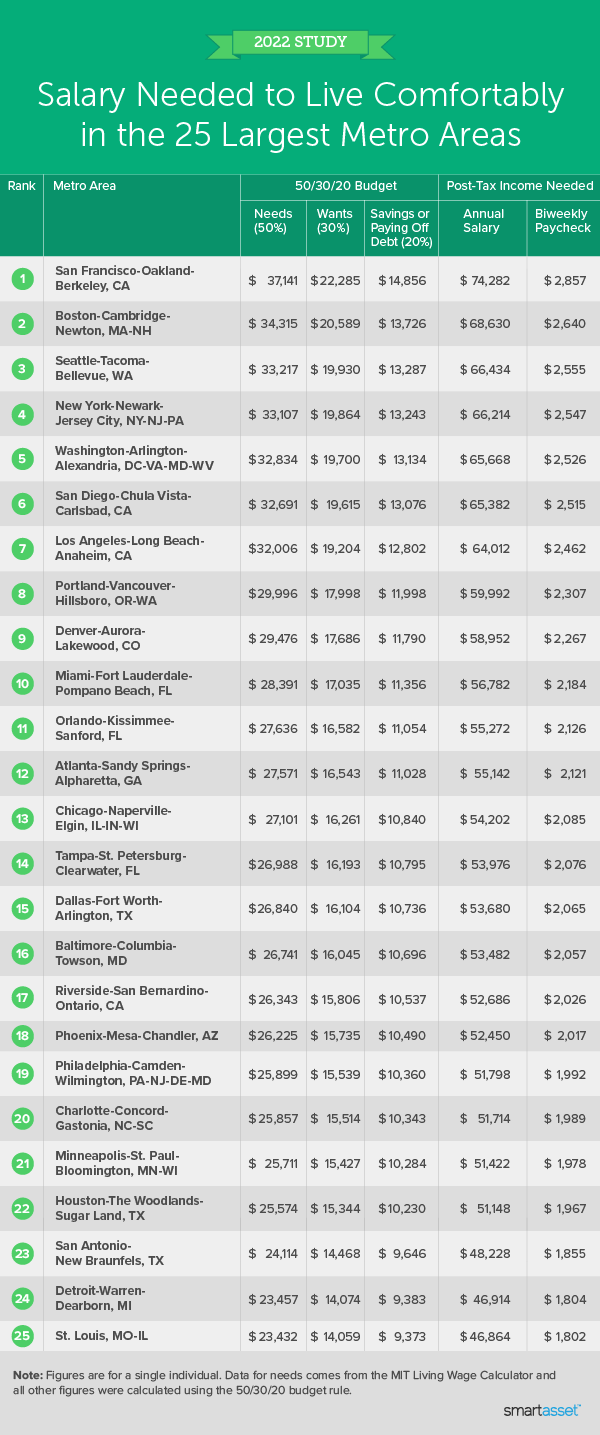
The most significant factor in determining the adequacy of a salary is geography. A $70,000 annual income provides a vastly different quality of life in Des Moines, Iowa, than it does in Manhattan or San Francisco. When evaluating a salary, you must first calculate the local cost of living (COL) to understand your purchasing power.
High-Cost vs. Low-Cost Regions
In major metropolitan hubs, housing often consumes a disproportionate share of a single person’s income. In cities like New York or London, a “good” salary might need to be 40% to 60% higher than the national average just to maintain a basic standard of living. For a single individual, the “singles tax”—the inability to split rent, utilities, and grocery costs—is most acutely felt in these high-cost areas. Conversely, in Tier 2 or Tier 3 cities, a more modest salary can go much further, allowing for homeownership or aggressive investing much earlier in a career.
The Remote Work Paradigm Shift
The rise of remote work has decoupled salary from location for many professionals. This has created a unique opportunity for single people to “geo-arbitrage” their income. By earning a salary scaled for a high-cost tech hub while living in a region with lower taxes and real estate prices, a salary that was once “adequate” can become “exceptional.” When assessing whether a salary is good, consider your mobility. If your income allows you to live comfortably in your current city while remaining portable, its value increases significantly.
Defining Financial Benchmarks: The 50/30/20 Rule
A professional and structured way to determine if a salary is sufficient is to apply the 50/30/20 budgeting framework. This rule suggests that 50% of your after-tax income should go to needs, 30% to wants, and 20% to savings and debt repayment.
Evaluating the “Needs” Category
For a single person, the “needs” category—housing, utilities, transportation, and basic groceries—is the most rigid. If a salary does not allow you to cover these essentials within 50% of your take-home pay, the salary is likely insufficient for your current location. Single filers often face higher effective tax rates than married couples filing jointly, meaning your gross salary must be high enough to account for a smaller net paycheck. If your rent alone is consuming 40% of your income, you are “house burdened,” and your salary is not providing the necessary margin for financial health.
The “Wants” and the Quality of Life
A good salary should provide for more than just survival. The 30% allocated to “wants” represents your ability to enjoy life—dining out, travel, hobbies, and entertainment. For a single person, social engagement often involves higher external spending compared to families who may focus more on home-based activities. If a salary forces you to eliminate your social life or personal growth activities just to pay the bills, it fails the test of being a “good” salary.
The 20% Savings Mandate
This is where many single earners fall behind. Because there is no second income to rely on in the event of a job loss or medical emergency, a single person’s 20% savings rate is non-negotiable. A good salary must allow you to contribute to your 401(k) or IRA, build an emergency fund, and invest in brokerage accounts simultaneously. If you are living paycheck to paycheck on a “high” salary, that salary is not serving you effectively.
Beyond the Basics: Building Wealth on a Single Income
A truly good salary is one that enables long-term wealth creation. Being single provides a unique window of opportunity to take calculated risks and front-load investments, but it also requires a more rigorous approach to financial planning.

Retirement Planning as a Solo Filer
Without a partner’s retirement accounts to bolster the household’s future, a single person must be diligent. A good salary allows you to maximize your tax-advantaged accounts. In the United States, for example, being able to max out a 401(k) and a Roth IRA while still covering living expenses is a hallmark of an excellent salary. This level of income ensures that your “future self” is being paid alongside your current self, reducing the anxiety of solo aging.
The Importance of the Six-Month Emergency Fund
For a single person, an emergency fund is not just a suggestion; it is an insurance policy. A good salary provides enough surplus income to build a liquid cash reserve that covers at least six months of all expenses. When you are the sole breadwinner, the impact of an unexpected car repair or a period of unemployment is amplified. A salary that allows you to build this cushion within a year or two of starting a role is a strong indicator of financial viability.
The Single Person’s Tax Burden
It is important to acknowledge that the tax code is often less favorable to single individuals. Without the deductions or credits often associated with marriage and children, single high-earners often find themselves in higher tax brackets quickly. A good salary must be high enough to offset this “tax penalty,” leaving you with enough discretionary income to compete with dual-income households in the housing and investment markets.
Lifestyle Inflation and the Single Person
As income increases, there is a natural tendency for expenses to rise—a phenomenon known as lifestyle inflation. For a single person, this is particularly easy to do because there is no one to provide a “second opinion” on large purchases.
Identifying “Needs” vs. “Wants”
A good salary can quickly become a mediocre one if your lifestyle expands to meet it. Upgrading to a luxury apartment, frequenting high-end restaurants, or purchasing a premium vehicle can consume the surplus that makes a salary “good.” To maintain the benefits of a high income, a single person must remain disciplined. The goal is to increase your “gap”—the difference between what you earn and what you spend. A good salary is one that allows for a high quality of life while maintaining a wide gap for investment.
The Cost of Independence
There are hidden costs to being single that a good salary must cover. This includes everything from the lack of bulk-buy savings at grocery stores to the higher cost per person for travel and housing. When calculating what you need to earn, you must factor in these “solo premiums.” A salary that looks good on paper for a couple might be tight for a single person who has to bear 100% of the fixed costs of life.
Strategies for Increasing Your Earning Potential
If your current salary does not meet these criteria, the focus must shift to career strategy and income diversification. In the modern economy, a single person’s greatest asset is their earning capacity.
Skill Acquisition and Career Growth
A “good” salary is rarely static. It should be part of a trajectory. In fields like technology, finance, and specialized consulting, the delta between an entry-level salary and a senior-level salary is massive. Investing in certifications, advanced degrees, or soft-skill development is the most effective way to move your income from “adequate” to “wealth-building.” For a single person, the ability to relocate for a promotion or spend extra hours on professional development can be a significant competitive advantage.
Diversifying Income Streams
Relying on a single source of income is the primary risk factor for single individuals. A truly robust financial life involves creating secondary income streams, such as freelance consulting, dividend-paying investments, or rental properties. A salary is “good” if it provides the initial capital necessary to start these ventures. By using your primary salary to fund assets that produce passive income, you effectively create your own “second income,” mimicking the stability of a dual-earner household.
The Verdict on the “Good” Salary
Ultimately, a good salary for a single person is one that provides three things: security, autonomy, and growth. It must be high enough to protect you against the risks of solo living, flexible enough to allow you to make life choices without financial duress, and substantial enough to ensure that your net worth grows every month.
While the specific number will fluctuate based on whether you live in a high-cost urban center or a quiet rural town, the principles remain the same. If you can cover your needs, enjoy your life, and save for a secure future without constant stress, you have achieved a good salary. In the realm of personal finance, the goal isn’t just to earn more; it’s to ensure that every dollar you earn is working toward your long-term independence.
aViewFromTheCave is a participant in the Amazon Services LLC Associates Program, an affiliate advertising program designed to provide a means for sites to earn advertising fees by advertising and linking to Amazon.com. Amazon, the Amazon logo, AmazonSupply, and the AmazonSupply logo are trademarks of Amazon.com, Inc. or its affiliates. As an Amazon Associate we earn affiliate commissions from qualifying purchases.