
At first glance, the question “what is 1/2 divided by 5?” might seem like a simple arithmetic problem, perhaps a relic from a grade school textbook. The answer, a straightforward 1/10 or 0.1, appears almost trivial. Yet, beneath this seemingly basic calculation lies a profound truth about financial literacy: mastery of money begins not with complex algorithms or advanced investment strategies, but with a solid grasp of fundamental mathematical principles. In the intricate world of personal finance, investing, and business operations, the ability to understand and manipulate fractions, percentages, and basic division is not just an academic exercise; it is the bedrock upon which sound financial decisions are built.
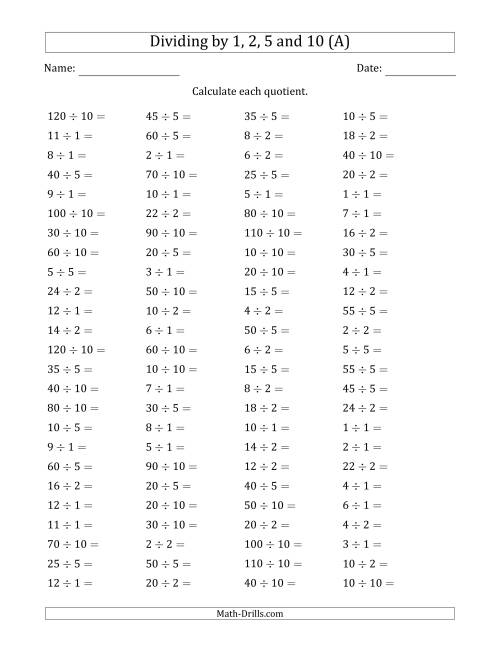
This article delves into why a seemingly simple problem like “1/2 divided by 5” serves as a powerful metaphor for the essential numerical fluency required to navigate the financial landscape successfully. We will explore how this basic concept underpins critical financial applications, highlight the pitfalls of neglecting foundational math skills, and offer strategies to enhance your financial numeracy, ultimately empowering you to make more informed and confident monetary choices.
The Core Calculation: Deconstructing “1/2 Divided by 5”
Before we immerse ourselves in its financial implications, let’s briefly revisit the mechanics of this basic division problem. Understanding the how is often more valuable than merely knowing the what.
The Mechanics of Division with Fractions
To divide 1/2 by 5, we employ a fundamental rule of fraction division: “keep, change, flip.”
-
Keep the first fraction as it is: 1/2.
-
Change the division operation to multiplication: ×.
-
Flip the second number (the divisor) into its reciprocal. Since 5 can be written as 5/1, its reciprocal is 1/5.
So, the problem transforms into: 1/2 × 1/5.
Multiplying fractions involves multiplying the numerators and multiplying the denominators:
(1 × 1) / (2 × 5) = 1/10.
Expressed as a decimal, 1/10 is 0.1.
Conceptually, if you have half of something (e.g., half a pizza, half an inheritance) and you need to divide that half among five people or five different uses, each share would be one-tenth of the original whole. This simple conceptualization is vital for developing financial intuition.
Beyond the Answer: Cultivating Numerical Intuition
While arriving at the correct answer is important, the true value of solving “1/2 divided by 5” lies in cultivating numerical intuition. It’s about more than just applying a formula; it’s about understanding the proportional relationships at play. When you can intuitively grasp that dividing a portion (1/2) into smaller, equal parts (5) results in an even smaller fraction of the whole (1/10), you’re developing a “financial sixth sense.”
This intuition is crucial because in the real world, financial scenarios rarely come with neat, pre-set formulas. You’re often presented with raw data, percentages, and fractions that require on-the-spot interpretation and mental estimation. Can you quickly gauge what 20% of 50% of your portfolio would be? Or how much of a shared profit you’re entitled to if you hold 1/3rd of a venture that had 1/4th of its earnings set aside for distribution? These scenarios are direct extensions of the foundational principle demonstrated by 1/2 divided by 5.
From Abstract Math to Tangible Money: Everyday Applications
The relevance of basic division with fractions extends far beyond the classroom, permeating various aspects of personal finance and business operations.
Budgeting and Expense Allocation
Effective budgeting is at the heart of personal financial management, and it relies heavily on understanding how to divide resources.
-
Splitting Bills: Whether it’s rent, utilities, or a shared vacation cost, knowing how to divide a total expense by the number of participants, or even allocating a portion of a budget (e.g., half your entertainment budget divided by five weeks of the month), is a daily application.
-
Income Allocation: When you receive your paycheck, you might decide to allocate a fraction (e.g., 1/2) of it to savings and then further divide that savings amount among different goals (e.g., five specific investment accounts). This mirrors the “1/2 divided by 5” structure exactly.
-
Expense Categories: You might dedicate 1/4 of your discretionary income to “leisure,” and then further subdivide that 1/4 into 5 sub-categories for specific activities throughout the month. This ensures you stay within your allocated limits.
Investment Portfolios and Share Ownership
The world of investing is rife with fractions and division, even if often masked by percentages.
-
Fractional Shares: With the rise of fintech, many platforms allow investing in fractional shares of stocks. Understanding that owning “1/2” of a high-value stock, and then conceptually dividing its value by your investment goals or time horizon (e.g., 5 years), informs your expected returns.
-
Profit Sharing: In small businesses or partnerships, profits are often distributed based on ownership stakes. If a venture generates a profit, and only half (1/2) is designated for partner distribution, and there are five equal partners, each partner receives 1/10 of the total profit. This directly uses our core calculation.
-
Dividend Yields: Calculating dividend yields often involves understanding the portion of a company’s earnings distributed per share. While percentages are common, the underlying calculation is a division of a specific dollar amount per share.
Debt Management and Loan Repayments
Managing debt requires a clear understanding of how payments are distributed and how interest accrues.
-
Interest Allocation: A significant portion of early loan payments often goes towards interest. Understanding that only a fraction of your payment is reducing the principal, and how that fraction might change over time, is crucial. If half your payment goes to interest, and you’re trying to calculate how much of that interest is allocated across, say, five different fees or loan components, you’re again performing similar divisions.
-
Early Repayment Impact: Deciding to pay an extra “half-payment” each year and then understanding how that extra amount reduces your principal and shortens your loan term requires an intuitive grasp of division and its impact on the remaining balance.
The Invisible Gaps: Where Basic Math Lapses Lead to Financial Pitfalls
Neglecting the foundational numerical skills demonstrated by “1/2 divided by 5” can lead to significant financial missteps, often without the individual even realizing the root cause.
Underestimating Compound Interest
Compound interest, often hailed as the “eighth wonder of the world,” can work for you or against you. A fuzzy understanding of fractions and percentages can lead to:
-
Miscalculating Growth: Investors might underestimate how quickly their money can grow if they don’t fully grasp how fractional interest rates compound over time. The difference between 0.5% interest and 0.05% interest, while numerically small, leads to vastly different outcomes over decades.
-
Exacerbating Debt: On the flip side, borrowers often underestimate the destructive power of compound interest on credit card debt or high-interest loans, where a small fraction of interest applied daily can quickly snowball. The inability to calculate how 1/2 of your available credit, when divided by a high annual percentage rate over several months, can become overwhelming is a critical gap.
Misinterpreting Financial News and Reports
The financial world speaks in numbers, ratios, and percentages. Without a solid foundation, financial information can be opaque or, worse, misinterpreted.
-
Earnings Reports: Companies often report earnings per share, profit margins, and growth rates as fractions or percentages. Misinterpreting what “a 1/2 percentage point increase” means in the context of a company’s revenue versus “a 1/2 percentage point of total market share” can lead to poor investment decisions.
-
Economic Indicators: Inflation rates, unemployment figures, and GDP growth are constantly reported. Understanding the implications of “inflation rising by 0.5%” and how that 0.5% (or 1/2 of a percentage point) is divided among different sectors of the economy requires numerical dexterity.
Missed Opportunities and Overpayments
Simple mathematical oversights can cost you real money, either through missed savings or unnecessary expenditures.
-
Discount Shopping: Failing to quickly calculate which “buy one get one 50% off” or “1/3 off total purchase” deal is truly better can lead to paying more than necessary.
-
Fee Structures: Many financial products have complex fee structures, often expressed as small fractions or percentages. Not understanding how “0.05% management fee on half your assets” translates to an actual dollar amount can lead to unknowingly overpaying for services.
-
Tax Implications: Understanding how different portions of your income are taxed at various rates, or how deductions impact your taxable income, involves constant fractional calculations.
Bridging the Divide: Strategies for Enhancing Financial Numeracy
Improving your financial literacy, starting with basic math, is an investment that pays dividends throughout your life.
Embrace Foundational Learning
It’s never too late to refresh your arithmetic skills. Many adults feel ashamed to revisit basic math, but this is a critical mistake.
-
Online Resources: Websites like Khan Academy, Coursera, or even YouTube channels offer excellent, free tutorials on everything from basic arithmetic to algebra and financial mathematics.
-
Refresher Courses: Community colleges or adult education centers often provide affordable math refreshers specifically designed for practical application.
-
Workbooks: Simple math workbooks designed for middle schoolers can be incredibly effective for adults looking to solidify their understanding of fractions, decimals, and percentages.
Practice with Real-World Scenarios
The best way to learn is by doing. Apply math concepts directly to your own financial life.
-
Personal Budget: Actively calculate percentages of your income allocated to different categories. Figure out what fraction of your monthly expenses goes to housing versus food.
-
Grocery Shopping: Challenge yourself to calculate unit prices and compare discounts mentally while shopping. Estimate the total cost of your cart before reaching the checkout.
-
Investment Simulations: Use online simulators to practice allocating a hypothetical sum of money, calculating returns, and understanding the impact of fractional adjustments.
Leverage Technology Wisely (But Don’t Outsource Understanding)
Calculators, spreadsheets, and financial apps are invaluable tools, but they should augment your understanding, not replace it.
-
Verify, Don’t Blindly Accept: Use a calculator to double-check your mental math, but always try to estimate the answer first. This builds confidence and helps you spot potential errors.
-
Understand the Formulas: If using a spreadsheet for budgeting, take the time to understand the underlying formulas. Don’t just plug in numbers; comprehend what the spreadsheet is doing with them.
-
Avoid Over-Reliance: In situations where a calculator isn’t immediately available, or for quick on-the-spot decisions, your internal numerical intuition will be your greatest asset.
Seek Mentorship and Peer Learning
Discussing financial concepts and mathematical applications with others can deepen your understanding and expose you to new perspectives.
-
Financial Advisors: Don’t be afraid to ask your financial advisor to explain the math behind their recommendations. A good advisor will be happy to break down complex calculations into simpler terms.
-
Study Groups/Forums: Join online forums or local groups dedicated to personal finance. Discussing budgeting techniques, investment strategies, or even challenging each other with practical math problems can be highly beneficial.
The Long-Term Return: Investing in Your Math Skills
Ultimately, the effort invested in understanding concepts like “1/2 divided by 5” yields substantial long-term returns in your financial life.
Empowered Decision-Making
When you possess strong numerical skills, you approach financial decisions with confidence, not trepidation. You can critically analyze information, question assumptions, and make choices rooted in a clear understanding of the numbers, rather than relying solely on gut feelings or external advice. This empowerment translates into better budgeting, smarter investing, and more effective debt management.
Building Wealth Incrementally
Wealth building is often a game of small percentages and consistent contributions. Understanding how fractional gains or consistent, even small, savings compound over time is key. It’s the cumulative effect of many “1/10” gains that ultimately leads to significant financial growth. Your ability to grasp these incremental changes is directly linked to your proficiency with fundamental math.
Resilience in Economic Uncertainty
In an ever-changing economic landscape, the ability to adapt and recalculate financial strategies is paramount. Whether it’s adjusting your budget during inflation, rebalancing your portfolio during a market downturn, or understanding the impact of new tax laws, strong numerical skills provide the resilience needed to navigate uncertainty with greater agility and less stress.

Conclusion
The question “what is 1/2 divided by 5?” is far more than a simple math problem; it’s a foundational gateway to robust financial literacy. Its answer, 1/10, represents the essence of proportional division that underpins countless financial scenarios, from everyday budgeting to complex investment strategies. Neglecting these basic numerical building blocks can create invisible gaps in your understanding, leading to missed opportunities and costly mistakes.
By embracing foundational learning, practicing with real-world scenarios, leveraging technology wisely, and engaging with others, you can significantly enhance your financial numeracy. This investment in your mathematical proficiency will not only empower you to make more informed and confident monetary decisions but will also lay the groundwork for a more secure, prosperous, and financially resilient future. Start with the basics, master the simple, and watch your financial acumen grow exponentially.
aViewFromTheCave is a participant in the Amazon Services LLC Associates Program, an affiliate advertising program designed to provide a means for sites to earn advertising fees by advertising and linking to Amazon.com. Amazon, the Amazon logo, AmazonSupply, and the AmazonSupply logo are trademarks of Amazon.com, Inc. or its affiliates. As an Amazon Associate we earn affiliate commissions from qualifying purchases.