
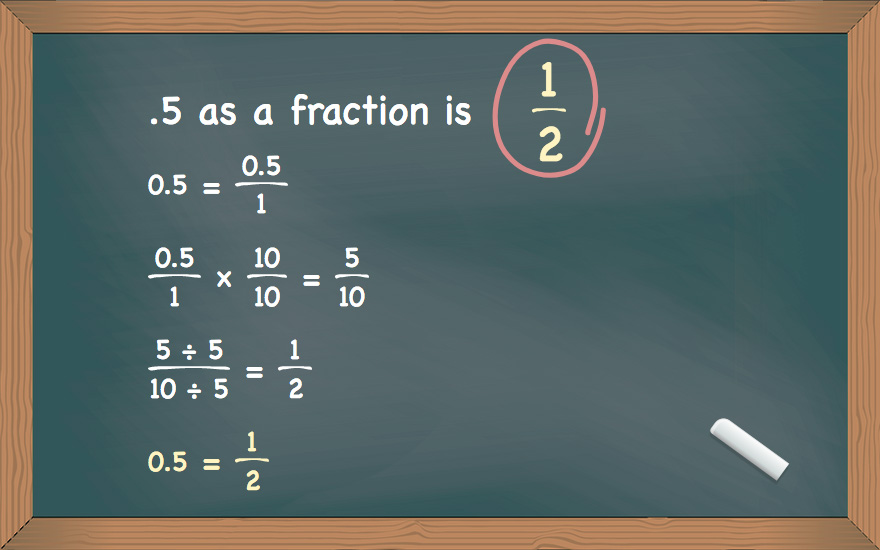
The question “what fraction is equivalent to 0.5” might seem like a relic from elementary school mathematics, a simple exercise in converting decimals to fractions. The immediate answer, of course, is 1/2. However, to dismiss this fundamental concept as merely basic arithmetic would be to overlook its profound and pervasive influence across the entire spectrum of personal finance, investing, and business. In the world of money, understanding the equivalence between fractions and decimals is not just academic; it’s a critical skill that underpins financial literacy, enables informed decision-making, and safeguards against costly misinterpretations.
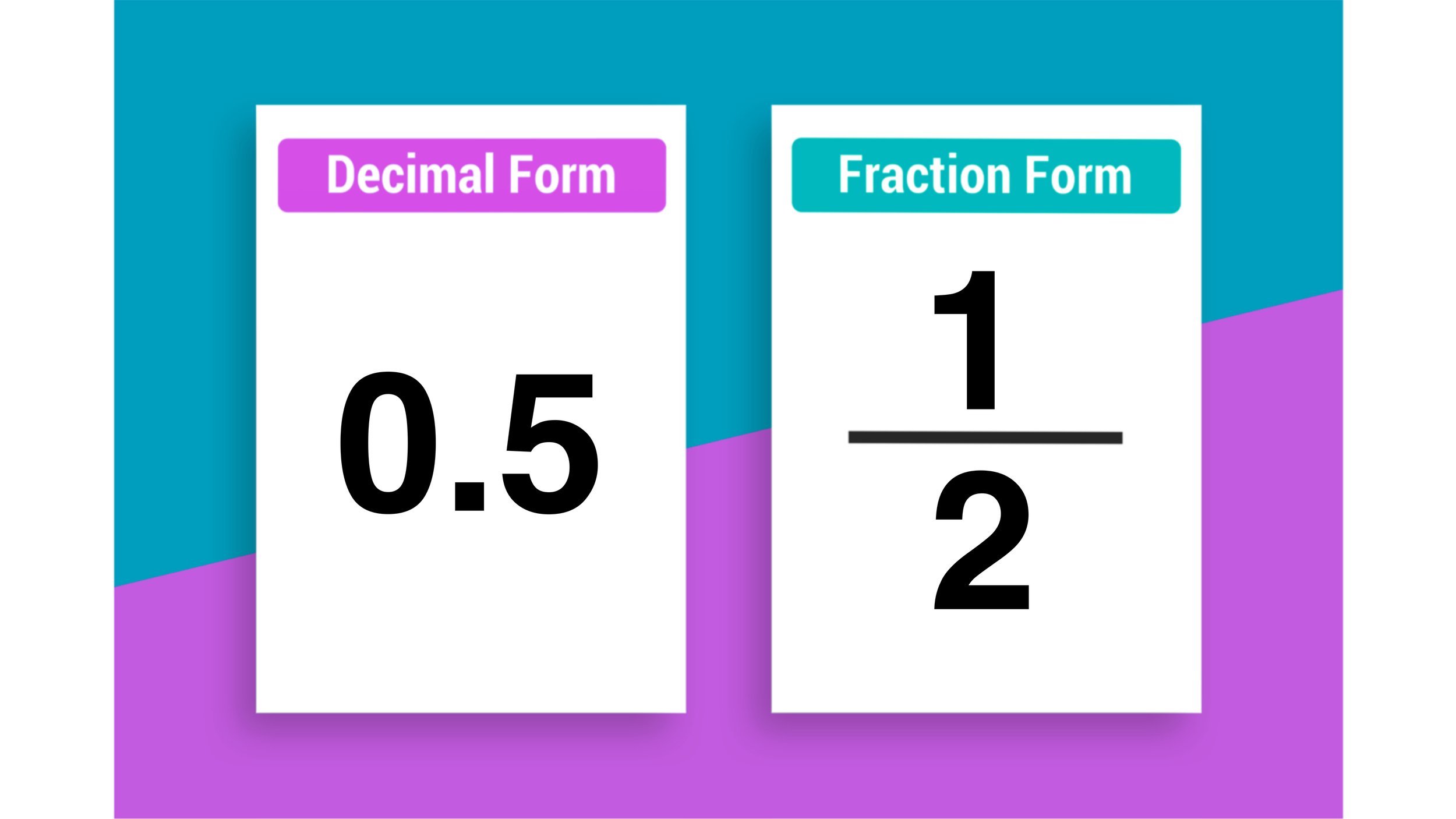
Financial success, whether measured by a healthy savings account, a diversified investment portfolio, or a thriving business, is inherently a numbers game. From calculating interest on a loan to understanding a stock’s price movements, from budgeting for household expenses to projecting business profits, every financial interaction requires a comfort level with numerical relationships. The ability to seamlessly translate between 0.5, 1/2, and even 50% is not just about getting the right answer; it’s about grasping the magnitude and proportion of financial values, which is the cornerstone of sound financial strategy. This article delves into why this seemingly simple mathematical equivalence holds such immense importance in the complex landscape of money.
The Foundational Role of Fractions and Decimals in Personal Finance
At its core, personal finance is about managing resources – income, expenses, savings, and debt. Each of these components frequently appears in fractional or decimal form, making a clear understanding of their equivalence indispensable. Without this fundamental comprehension, navigating everyday financial scenarios can become unnecessarily complicated, leading to suboptimal decisions.
Unpacking Everyday Financial Scenarios: Discounts, Interest, and Budgets
Consider the common occurrence of sales and discounts. A sign proclaiming “50% off!” immediately translates to “half price,” or a multiplication by 0.5. If one doesn’t instinctively understand that 50% is 1/2 or 0.5, the mental calculation of the final price becomes an extra step, slowing down decision-making or, worse, leading to miscalculations. Similarly, interest rates, whether on savings accounts, credit cards, or mortgages, are almost universally expressed as percentages (e.g., 5% APR). To compute the actual interest accrued or paid, one must convert this percentage to a decimal (0.05) or a fraction (5/100 or 1/20) for calculation. A lack of fluency here can lead to underestimating the cost of debt or overestimating investment returns.
Budgeting, a cornerstone of personal financial management, also relies heavily on these concepts. When allocating funds, individuals often think in terms of proportions: “I want to spend a quarter of my income on housing,” or “Half of my disposable income goes to savings.” These proportions are easily expressed as fractions (1/4, 1/2) or decimals (0.25, 0.50). Understanding these relationships allows for clear visualization and practical application of financial goals, ensuring that resources are distributed efficiently and effectively. The simple equivalence of 0.5 to 1/2 therefore becomes a building block for more complex financial planning, such as calculating debt-to-income ratios or savings rates.
The Concept of “Half” in Financial Planning
The concept of “half” (0.5 or 1/2) is particularly prevalent and powerful in financial planning. It represents a significant division, a major milestone, or a substantial proportion. Consider splitting bills, sharing investments, or even assessing risk. A 50/50 split implies an equal distribution, directly referencing 1/2. In retirement planning, one might aim to replace half of their pre-retirement income. For couples, joint financial goals often involve each contributing “half” to a common fund. This seemingly simple fraction carries immense weight, symbolizing equality, division, and often, a benchmark for achievement or distribution. Its consistent appearance across various financial contexts underscores the importance of fully internalizing its meaning and implications beyond a mere mathematical conversion.
Beyond Simple Equivalence: Applying Numerical Fluency to Investing and Business
While fundamental for personal finance, the conversion and understanding of fractions and decimals become even more critical when venturing into the realms of investing and business finance, where precision, proportion, and risk assessment are paramount.
Decoding Investment Performance and Portfolio Allocation
In the world of investing, numbers dictate success. Stock prices are often quoted with decimal points, representing fractions of a dollar. Dividends are calculated as fractions of a company’s profit, distributed per share. Investment returns are almost always expressed as percentages, which require conversion to decimals for calculating actual gains or losses. Understanding that a “0.5% return” is half of a “1% return” and how that translates to actual dollar amounts over various investment sizes is crucial for evaluating investment opportunities and tracking portfolio growth.
Portfolio allocation, a key strategy for diversification and risk management, is inherently based on proportions. An investor might decide to allocate 60% of their portfolio to stocks, 30% to bonds, and 10% to alternative assets. To effectively manage this, they must be comfortable with these percentages as decimals (0.6, 0.3, 0.1) to calculate the dollar amounts for each asset class and rebalance when necessary. Furthermore, concepts like “half a basis point” (0.005%) are common in sophisticated financial instruments and fees. Without a strong grasp of how these small decimal figures translate to fractions of a whole, investors risk misinterpreting their investment’s true performance or the hidden costs involved.

Business Finance: Profit Margins, Shares, and Debt Ratios
For businesses, the ability to manipulate and interpret fractions and decimals is absolutely indispensable. Profit margins, for example, are typically expressed as percentages (e.g., a 10% net profit margin), which implies that 10 cents of every dollar of revenue becomes profit. This is 0.10 or 1/10. Similarly, understanding concepts like return on equity (ROE) or return on assets (ROA) requires converting these ratios into actionable percentages or decimals to compare performance across different periods or against competitors.
In corporate finance, share ownership is fundamentally fractional. If a company has 1,000 shares outstanding and an individual owns 500, they own 50% or 0.5 of the company. Understanding dilution, stock splits, and proportional ownership requires a deep understanding of these fractional relationships. Debt ratios, such as the debt-to-equity ratio, are often presented as decimals (e.g., 0.8), indicating that for every dollar of equity, there is 80 cents of debt. These ratios are critical for assessing a company’s financial health, solvency, and risk profile. Misinterpreting these figures, even by a small decimal point, can lead to poor lending decisions, flawed investment analyses, or misguided business strategies.
Leveraging Technology: Financial Tools and the Decimal Language
In the modern financial landscape, technology plays an increasingly dominant role. From sophisticated trading algorithms to personal budgeting apps, financial tools often process and display information using decimals, highlighting the continued importance of understanding this numerical representation.
Spreadsheets, Budgeting Apps, and Data Visualization
Spreadsheets like Microsoft Excel or Google Sheets are ubiquitous in finance, from personal budgeting to corporate financial modeling. These tools rely almost exclusively on decimals for calculations. When inputting financial data or setting up formulas for interest calculations, budgeting allocations, or investment returns, decimals are the standard format. Understanding that “0.5” represents half is critical when working with percentages or ratios in these programs. Budgeting apps, similarly, display expenses and income, often allowing users to see proportions of their spending as percentages (which are internally handled as decimals). Data visualization tools often present financial data through charts and graphs where segments represent fractions of a whole (e.g., pie charts for budget categories), with associated percentages or decimal values. The ability to interpret these visual representations quickly and accurately hinges on a solid grasp of fraction-decimal equivalence.
The Precision of Digital Currencies and Online Transactions
The rise of digital currencies like Bitcoin and Ethereum further emphasizes the need for decimal precision. These assets are divisible into many decimal places (e.g., Satoshi for Bitcoin, Wei for Ethereum), making fractional ownership and micro-transactions a standard feature. While you might not own a “whole” Bitcoin, you might own 0.005 BTC, or even less. Understanding the value and proportion of these small decimal amounts is crucial for trading, investing, and transacting in the crypto space. Furthermore, online banking, payment systems, and e-commerce platforms all process transactions using decimal currency amounts, requiring users to intuitively grasp these values without constantly converting them back to abstract fractions. The digital world of money is fundamentally a world of decimals.
Cultivating Financial Literacy: From Basic Math to Strategic Decisions
Ultimately, the seemingly simple question “what fraction is equivalent to 0.5” serves as a gateway to broader financial literacy. It’s a foundational piece of the puzzle that allows individuals and businesses to make more informed, strategic, and ultimately, more successful financial decisions.
Empowering Informed Choices and Avoiding Pitfalls
A strong grasp of basic mathematical equivalence empowers individuals to dissect financial information presented in various forms. They can critically evaluate loan offers, understanding the true cost of interest regardless of whether it’s presented as an APR, a monthly rate, or an effective annual rate. They can confidently compare investment opportunities, seeing through marketing jargon to the actual percentage returns or fractional ownership. This numerical fluency helps in avoiding common financial pitfalls, such as falling for misleading discounts, accumulating excessive high-interest debt, or making ill-advised investments due to a misunderstanding of the underlying numbers. When you understand that “0.5” is “half,” you’re less likely to be misled by figures that obscure the true proportion of a deal or a debt.
Educating the Next Generation on Financial Fundamentals
The importance of this foundational understanding extends to financial education. Teaching the next generation about money begins not with complex investment strategies, but with the basics: what is income, what are expenses, and how do we manage them? Incorporating the concept of fractions, decimals, and percentages from an early age, linked directly to real-world financial examples, is crucial. Showing children how to calculate half a price, or how to divide their allowance into fractions for saving, spending, and giving, instills a vital numerical intuition that will serve them throughout their financial lives. Building this robust mathematical foundation ensures that as they encounter more complex financial instruments and decisions, they possess the innate ability to break down the numbers and understand their true implications.
In conclusion, the simple mathematical truth that 1/2 is equivalent to 0.5 is far from trivial. It is a fundamental concept that resonates throughout the entire domain of money. From personal budgeting and understanding discounts to sophisticated investment portfolio allocation and business financial analysis, the ability to fluidly navigate between fractions and decimals is an indispensable skill. It empowers individuals and businesses alike to make more intelligent decisions, manage resources effectively, and ultimately, pave the way towards financial independence and success in an increasingly data-driven world.
aViewFromTheCave is a participant in the Amazon Services LLC Associates Program, an affiliate advertising program designed to provide a means for sites to earn advertising fees by advertising and linking to Amazon.com. Amazon, the Amazon logo, AmazonSupply, and the AmazonSupply logo are trademarks of Amazon.com, Inc. or its affiliates. As an Amazon Associate we earn affiliate commissions from qualifying purchases.