
In an increasingly digitized world, the ability to effortlessly convert numerical formats is not just a convenience, but often a necessity. Among the myriad computational challenges, converting decimals into fractions stands out as a fundamental skill with broad applications across various disciplines. While the underlying mathematical principles are straightforward, the process can become tedious, error-prone, or simply time-consuming, especially with complex or repeating decimals. This is where the invaluable tool of a “decimal to fraction calculator” comes into play, transforming a potentially daunting task into a quick and accurate operation.
Far from being a mere digital novelty, these calculators are robust pieces of software or integrated functions designed to streamline numerical transformations, enhancing efficiency for students, professionals, and hobbyists alike. They embody a practical application of technology to simplify core mathematical concepts, ensuring precision and saving precious time. This article delves into the mechanics, utility, and diverse forms of decimal to fraction calculators, exploring why they have become an indispensable part of our digital toolkit, nestled firmly within the technological landscape of apps, software, and online tools. We will uncover how these ingenious devices work, what features to look for, and how they cater to a wide array of users, solidifying their status as a cornerstone of modern computational assistance.

The Core Functionality: Demystifying Decimal to Fraction Conversion
At its heart, a decimal to fraction calculator performs a specific mathematical conversion: taking a number expressed in base-10 (decimal) and re-expressing it as a ratio of two integers (a fraction), often in its simplest form. While this might sound trivial for simple cases like 0.5 (which easily becomes 1/2), the complexity escalates rapidly with more digits, non-terminating decimals, or those requiring significant simplification. These calculators are engineered to handle such intricacies with unparalleled speed and accuracy, leveraging sophisticated algorithms to deliver precise results.
The Underlying Math: A Quick Recap
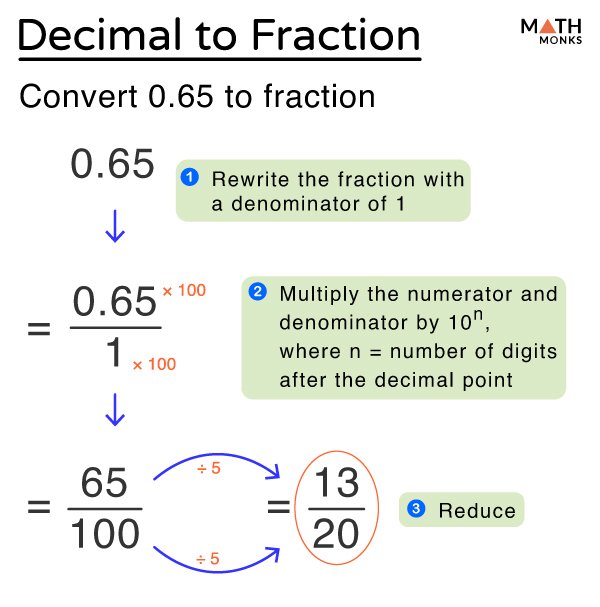
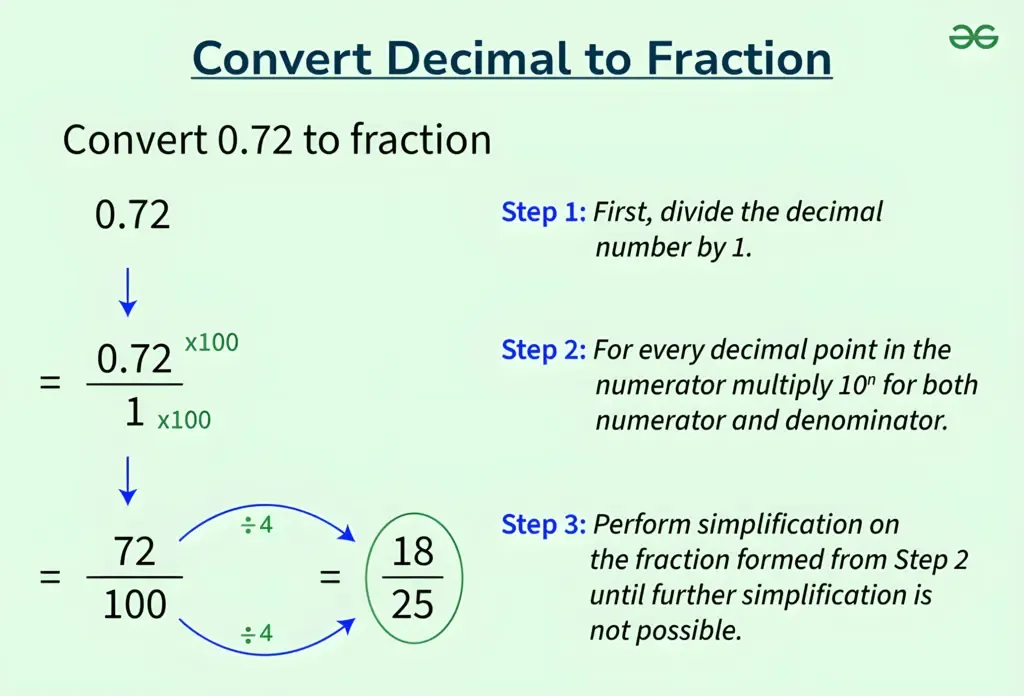
To appreciate the efficiency of these calculators, it’s helpful to briefly recall the manual process. For a terminating decimal, the method involves identifying the place value of the last digit, writing the decimal as a fraction over a power of 10, and then simplifying. For instance, 0.75 is 75/100, which simplifies to 3/4. Repeating decimals, like 0.333…, are more complex, often requiring algebraic manipulation (e.g., setting x = 0.333..., then 10x = 3.333..., subtracting the two equations to isolate x). This manual method, though foundational, is prone to errors, particularly in simplification, and can be exceedingly slow for decimals with many digits or long repeating patterns. The human brain, while capable, is not optimized for repetitive, precise arithmetic across numerous steps, especially under time pressure or when dealing with numbers that don’t neatly fit into common mental patterns. The cognitive load associated with these calculations can divert attention from higher-level problem-solving, making automated tools not just a convenience, but a strategic advantage.
How Calculators Automate the Process
Decimal to fraction calculators are built upon algorithms that essentially mimic and accelerate these manual steps, but with the added power of computational processing. For terminating decimals, the algorithm typically identifies the number of decimal places, multiplies the decimal by the corresponding power of 10 (e.g., for three decimal places, multiply by 1000), and then places the result over that power of 10. The resulting fraction is then subjected to a greatest common divisor (GCD) algorithm to find the largest number that divides both the numerator and the denominator, simplifying the fraction to its lowest terms. For repeating decimals, the algorithms are more advanced, often employing techniques that detect patterns, similar to the algebraic method, but executed at machine speed. Some calculators might use continued fractions, which offer a powerful and efficient way to approximate real numbers with rational fractions, especially useful for irrational numbers or very long non-repeating decimals where a perfectly precise fractional representation might not exist or be practical. The elegance of these computational approaches lies in their ability to handle numbers of arbitrary precision, limited only by the system’s memory and processing power, far surpassing the limitations of manual computation.
Precision vs. Approximation: Terminating and Repeating Decimals
A critical aspect where calculators truly shine is in differentiating between terminating and repeating decimals, and handling the nuances of precision. Terminating decimals (e.g., 0.25, 1.7) have an exact fractional equivalent. Repeating decimals (e.g., 0.333…, 0.142857142857…) also have exact fractional forms (e.g., 1/3, 1/7). However, sometimes an input decimal might be a long, non-repeating sequence that results from a rounded irrational number (e.g., an approximation of Pi). In such cases, a calculator will provide the closest possible fractional approximation within a given level of precision. High-quality calculators are transparent about this, often indicating when a result is an approximation versus an exact conversion. This distinction is crucial in fields requiring high precision, such as engineering or scientific research, where rounding errors can have significant implications. The ability of these digital tools to maintain or clearly indicate the level of precision makes them indispensable in scenarios where accuracy is paramount, offering users confidence in the numerical integrity of their calculations.
Types of Decimal to Fraction Calculators and Their Features
The landscape of decimal to fraction calculators is diverse, reflecting the varied needs and technological environments of users. From simple web-based tools to sophisticated features embedded within advanced software, these calculators leverage different platforms to deliver their core functionality. Understanding the various types available helps users select the best tool for their specific requirements, emphasizing the “Tech” aspect of their utility and deployment.
Online Web-Based Tools
Perhaps the most accessible and widely used type, online decimal to fraction calculators are ubiquitous. Websites dedicated to mathematical tools, educational portals, and general utility sites often feature these calculators. Their primary advantages include instant accessibility from any device with an internet connection, no installation required, and often a clean, intuitive user interface. They are ideal for quick, ad-hoc conversions and for users who do not require offline functionality or advanced features. Many online calculators also provide step-by-step solutions, which are invaluable for students learning the conversion process, transforming the tool from a mere answer-provider into an educational aid. Examples include Wolfram Alpha, Omni Calculator, and numerous other math-focused websites. Their lightweight nature and cross-platform compatibility make them a go-to for millions.
Dedicated Mobile Apps
For users who need on-the-go access and offline capabilities, dedicated mobile applications offer a compelling solution. Available on iOS and Android platforms, these apps often combine the decimal to fraction functionality with a broader suite of mathematical tools, such as scientific calculator features, unit converters, and graphing capabilities. Mobile apps provide a more integrated experience, sometimes offering additional features like input history, custom themes, and deeper educational content. The convenience of having a powerful calculator in one’s pocket makes them particularly popular among students, field workers, and anyone needing frequent conversions without immediate access to a desktop or laptop. They leverage the native capabilities of mobile devices, such as touch interfaces and quick launch times, to provide a seamless user experience.
Scientific/Graphing Calculators
For decades, hardware scientific and graphing calculators (like those from Texas Instruments or Casio) have been the backbone of STEM education and professional practice. Many modern versions of these physical calculators come with built-in functions to convert decimals to fractions. These functions are typically accessed via a dedicated button or a menu option, providing immediate, offline conversion capabilities. Their robust nature and reliability in environments where digital devices might be restricted (e.g., during exams) make them an enduring choice. While they might lack the graphical user interface sophistication of web tools or apps, their integration into a broader computational device means they are often part of a larger, indispensable toolkit for serious mathematical and scientific work. The ability to perform complex calculations and then instantly convert a decimal result to a fraction within the same device streamlines workflow considerably.
Software Integrations (Spreadsheets, Programming Languages)
Beyond standalone tools, the logic for decimal to fraction conversion is often integrated into more powerful software environments. Spreadsheet programs like Microsoft Excel or Google Sheets can, with the right formulas or add-ins, convert decimals to fractions, allowing for batch processing of data. This is particularly useful in business finance, data analysis, or scientific data processing where large datasets require consistent numerical formatting. Similarly, programming languages like Python, Java, or JavaScript offer libraries and functions that can perform these conversions. Developers and data scientists can incorporate this functionality into custom applications, scripts, or data pipelines, allowing for highly specific and automated transformations. This level of integration showcases the adaptability of the conversion logic, moving beyond a simple utility to become a fundamental component in complex technological solutions.
Practical Applications and Use Cases
The utility of a decimal to fraction calculator extends far beyond the confines of a math classroom. Its ability to bridge the gap between different numerical representations makes it an indispensable tool across a myriad of professions and daily activities. The “Tech” aspect here lies in how the calculator facilitates practical problem-solving by abstracting mathematical complexity into a user-friendly interface.
For Students: Mastering Math Concepts
For students, these calculators are not just cheating devices; they are powerful learning aids. They allow students to check their manual calculations, understand the equivalence between decimals and fractions, and tackle more complex problems without getting bogged down in arithmetic. In subjects like algebra, geometry, or even basic arithmetic, understanding fractional representations is crucial. A calculator can provide immediate feedback, helping students grasp concepts faster, build confidence, and focus on problem-solving strategies rather than computational errors. They are especially beneficial when dealing with mixed numbers, improper fractions, or converting repeating decimals, providing a clear path to the simplified fractional form. This educational application transforms a potentially frustrating hurdle into a manageable learning experience, solidifying fundamental mathematical literacy.
For Engineers & Scientists: Precision in Measurement and Design
In engineering and scientific fields, precision is paramount. Measurements are often taken in decimal form, but design specifications, material properties, or theoretical models might require fractional values. For instance, an engineer designing a component might work with decimal dimensions but needs to convert them to common fractional sizes for manufacturing processes that use standard tooling. Scientists analyzing data might encounter decimal results that need to be expressed as fractions for clearer interpretation or for comparison with theoretical fractional ratios. The calculator ensures accuracy, saves time that would otherwise be spent on tedious manual conversions, and helps maintain consistency across different stages of a project, from conceptual design to fabrication and analysis. The ability to quickly and accurately convert between these formats is critical for ensuring that theoretical calculations translate flawlessly into tangible, working systems.
For Tradespeople: Real-World Conversions
Tradespeople across various disciplines—carpenters, plumbers, mechanics, chefs—frequently encounter measurements that require conversion between decimals and fractions. A carpenter, for example, might need to convert a decimal measurement from a blueprint (e.g., 5.375 inches) into a readily usable fraction for their tape measure or ruler (e.g., 5 3/8 inches). Plumbers might need to convert pipe diameters or flow rates. Chefs often work with recipes that specify ingredients in fractions, but their scales might measure in decimals. In these practical, hands-on environments, quick and accurate conversions are essential for efficiency, reducing waste, and ensuring the quality and precision of their work. A reliable decimal to fraction calculator acts as a crucial job-site assistant, translating abstract numbers into concrete, actionable measurements.
For Everyday Life: Budgeting, Cooking, DIY
Even in everyday situations, decimal to fraction calculators prove surprisingly useful. When budgeting, one might calculate a portion of income as a decimal, but prefer to think of it as a fraction (e.g., 0.25 of income is 1/4). In cooking, scaling recipes often involves converting decimal quantities (if using a digital scale) back into common fractional measurements (cups, spoons) that are easier to work with. DIY projects around the house often involve converting decimal measurements to standard fractional tool sizes. From understanding financial ratios to adjusting recipes, these calculators simplify numerical understanding and decision-making for the average person, empowering individuals to navigate numerical information more confidently in their personal lives.
Choosing the Right Decimal to Fraction Calculator
Given the array of options, selecting the optimal decimal to fraction calculator requires a consideration of several key factors. The “Tech” perspective here involves evaluating the features, design, and performance characteristics that align with a user’s specific needs and preferences.
User Interface and Ease of Use
A calculator, regardless of its underlying power, is only as good as its interface. An intuitive, clean, and easy-to-navigate user interface (UI) is paramount. Users should be able to input decimals effortlessly and quickly understand the output. Features like large, clear buttons, immediate results, and minimal clutter contribute to a positive user experience. For online tools, the responsiveness of the web design and the clarity of instructions are crucial. For mobile apps, adherence to platform design guidelines (e.g., Material Design for Android, Human Interface Guidelines for iOS) can significantly enhance usability. A calculator that complicates the simple act of conversion, perhaps through excessive menus or confusing input fields, will quickly deter users, regardless of how mathematically sound its backend might be.
Feature Set
Beyond basic conversion, consider the extended feature set. Does the calculator handle repeating decimals accurately? Does it provide the option to convert to mixed numbers (e.g., 1 1/2 instead of 3/2) or improper fractions? Can it show step-by-step solutions, which is a significant educational benefit? Some advanced calculators might offer the ability to set the maximum denominator for approximations, or even work with complex numbers. For professionals, integration with other tools (like unit converters or scientific functions) might be a key differentiator. The depth and breadth of features directly impact the calculator’s utility for diverse and specialized tasks. A student might prioritize step-by-step guidance, while an engineer might value high-precision approximations for irrational numbers.
Accessibility and Platform Compatibility
Where and how do you intend to use the calculator? If you need it on the go, a mobile app or a physical scientific calculator is ideal. If you primarily work at a desk, a web-based tool or software integration might suffice. Consider platform compatibility: Does it work across different operating systems? Is it responsive on various screen sizes? For some, offline access is non-negotiable, ruling out purely web-based solutions. Accessibility features, such as screen reader compatibility or customizable font sizes, can also be important for users with specific needs. A truly effective technological tool is one that is accessible and available whenever and wherever it is needed, fitting seamlessly into the user’s workflow.
Accuracy and Reliability
Ultimately, the core function of any calculator is to provide accurate results. Verify the calculator’s reliability, especially for complex or repeating decimals. Reputable tools from well-known developers or educational institutions generally offer higher accuracy. For critical applications, cross-referencing results with another trusted calculator or even a manual check (if feasible) can provide added assurance. Some calculators might have limitations on the number of decimal places they can handle or the size of the resulting fraction’s denominator, which could affect precision for extremely complex numbers. Transparency about these limitations is a hallmark of a reliable tool, ensuring users are fully aware of the calculator’s capabilities and any potential constraints.
Cost
Many excellent decimal to fraction calculators are available for free, especially online and as basic mobile apps. However, premium apps or advanced software integrations might come with a cost. Evaluate whether the added features, lack of ads, or enhanced support offered by a paid version justify the expense for your specific use case. For casual users, a free tool is often perfectly adequate, but for professionals or power users, an investment in a feature-rich, reliable paid option might be a wise decision. The balance between cost and functionality is a personal choice, but the market offers robust options at every price point, from entirely free services to enterprise-level mathematical software.
Conclusion
The decimal to fraction calculator, in its various digital manifestations, stands as a testament to the power of technology in simplifying complex mathematical tasks. What was once a laborious, error-prone manual process has been transformed into an instant, precise operation accessible through a myriad of devices and platforms. From the quick convenience of online web tools and the portability of mobile apps to the integrated capabilities of scientific calculators and sophisticated software, these tools cater to a diverse user base, spanning students, engineers, tradespeople, and everyday individuals.
By demystifying the conversion process, offering unparalleled accuracy, and adapting to different technological environments, these calculators do more than just provide answers; they foster a deeper understanding of numerical relationships, enhance productivity, and reduce the friction often associated with quantitative tasks. Choosing the right calculator involves considering its user interface, feature set, accessibility, and reliability—all vital “Tech” considerations that ensure the tool seamlessly integrates into one’s workflow. As our world continues to rely heavily on precise data and efficient computation, the decimal to fraction calculator remains an indispensable digital companion, embodying the essence of how smart tools empower us to navigate the numerical landscape with greater ease and confidence.
aViewFromTheCave is a participant in the Amazon Services LLC Associates Program, an affiliate advertising program designed to provide a means for sites to earn advertising fees by advertising and linking to Amazon.com. Amazon, the Amazon logo, AmazonSupply, and the AmazonSupply logo are trademarks of Amazon.com, Inc. or its affiliates. As an Amazon Associate we earn affiliate commissions from qualifying purchases.