
The seemingly simple mathematical operation of “plus fractions”—adding them together—has long been a cornerstone of elementary education and a foundational skill across numerous disciplines. Yet, for many, it remains a source of apprehension. In an increasingly digital world, the question isn’t just how to add fractions manually, but how technology can empower us to master this skill, ensure precision, and apply it in complex scenarios. This article delves into the technological landscape that demystifies fractional arithmetic, transforming a potentially daunting task into an accessible and efficient process for learners, professionals, and innovators alike. We’ll explore the digital tools, learning platforms, underlying algorithms, and real-world applications that define the modern approach to understanding and utilizing fractions.
The Digital Toolkit for Fractional Arithmetic: From Basic Calculators to Advanced Software
The journey of technology aiding fraction addition spans from pocket-sized gadgets to sophisticated computational environments. These tools not only expedite calculations but also provide new avenues for understanding.
Scientific Calculators and Online Solvers
At the entry-level, the ubiquitous scientific calculator has been a game-changer. Modern scientific calculators, both physical and app-based, are adept at handling fractions directly. Users can input mixed numbers, improper fractions, and perform addition, subtraction, multiplication, and division, often receiving results in simplified fractional form rather than decimal approximations. This capability bypasses the manual process of finding common denominators, significantly reducing human error and calculation time.
Beyond physical devices, online fraction calculators offer even greater accessibility and often provide step-by-step solutions. Websites like Wolfram Alpha, Symbolab, or even simple search engine queries can instantly solve fraction problems, showing the intermediate steps of finding common denominators and simplifying the final answer. These tools are invaluable for students checking their work or for anyone needing a quick, accurate calculation without delving into complex software. However, while incredibly convenient, over-reliance on these solvers without understanding the underlying mathematical principles can hinder genuine conceptual grasp. They are best utilized as a verification tool or a quick reference rather than a primary learning mechanism.
Specialized Math Software (e.g., Wolfram Mathematica, MATLAB, Python Libraries)
For professionals in STEM fields, the realm of fraction addition extends far beyond simple numerical problems. Here, specialized mathematical software becomes indispensable. Tools like Wolfram Mathematica, MATLAB, and open-source alternatives such as Python with its fractions module or libraries like SymPy, offer robust capabilities for symbolic computation and high-precision arithmetic.
These platforms can perform complex fractional operations, including those involving variables (algebraic fractions), very large numbers, or symbolic expressions. They can find common denominators for polynomials, simplify rational functions, and even solve equations where variables are represented as fractions. For instance, in Python, the fractions module allows for exact arithmetic with rational numbers, avoiding the floating-point inaccuracies that can arise when representing fractions as decimals in standard computer memory. This precision is critical in fields like quantitative finance, theoretical physics, or engineering design, where even minute errors can have significant consequences. These software environments empower users not just to “plus fractions” but to manipulate entire systems of equations involving fractional components with unprecedented efficiency and accuracy.
Interactive Learning: AI, Apps, and Online Platforms Demystifying Fractions
The traditional chalk-and-talk method of teaching fractions can be abstract and challenging. Technology has revolutionized this by offering interactive, personalized, and engaging learning experiences.
Educational Apps and Games
Mobile applications and educational games have transformed the way fractions are taught and learned. Apps designed for tablets and smartphones often incorporate visual models, such as pie charts, bar models, or number lines, to represent fractions visually. This helps learners grasp the concept of parts of a whole, common denominators, and equivalent fractions intuitively before moving to abstract symbols. Gamified exercises, complete with progress tracking, rewards, and challenges, make learning engaging and motivating.
Many apps offer step-by-step tutorials that guide users through the process of adding fractions, providing immediate feedback on their answers. This personalized pace allows students to spend more time on challenging concepts and less on those they’ve already mastered. The tactile interaction with touchscreens further enhances the learning experience, making abstract concepts more concrete and manageable for learners of all ages.
AI-Powered Tutors and Adaptive Learning Platforms
Artificial Intelligence is ushering in a new era of fraction education. AI-powered tutors and adaptive learning platforms can analyze a student’s performance in real-time, identify their specific weak points, and tailor a personalized learning path. If a student consistently struggles with finding the least common denominator, the AI can provide targeted practice exercises and supplementary explanations until mastery is achieved.
These intelligent tutoring systems can simulate human teachers, explaining concepts using natural language processing, answering specific questions about fraction addition, and even predicting common misconceptions. By dynamically adjusting the difficulty and type of problems, AI ensures that learners are consistently challenged but not overwhelmed, optimizing their learning curve for fraction mastery. This level of personalized instruction was once only possible with one-on-one human tutoring, but AI makes it scalable and accessible.
Collaborative Online Learning Environments
Technology also facilitates collaborative learning, allowing students and professionals to work together on fraction problems remotely. Virtual whiteboards, shared document tools, and video conferencing platforms enable real-time collaboration. Students can jointly solve problems, explain their reasoning to peers, and receive feedback from instructors or mentors in a virtual classroom setting.
These environments foster a sense of community and allow for diverse perspectives on problem-solving. For instance, a group of students might use a virtual whiteboard to illustrate different methods for finding a common denominator, enriching each other’s understanding. This digital collaboration mirrors real-world professional environments where teams often leverage technology to solve complex problems, many of which involve fractional computations.
The Algorithmic Backbone: How Software “Pluses” Fractions
Behind every fraction calculator or educational app lies a sophisticated set of algorithms that dictate how numbers are processed and displayed. Understanding this algorithmic backbone provides insight into the precision and power of digital tools.
Common Denominators and Simplification Algorithms
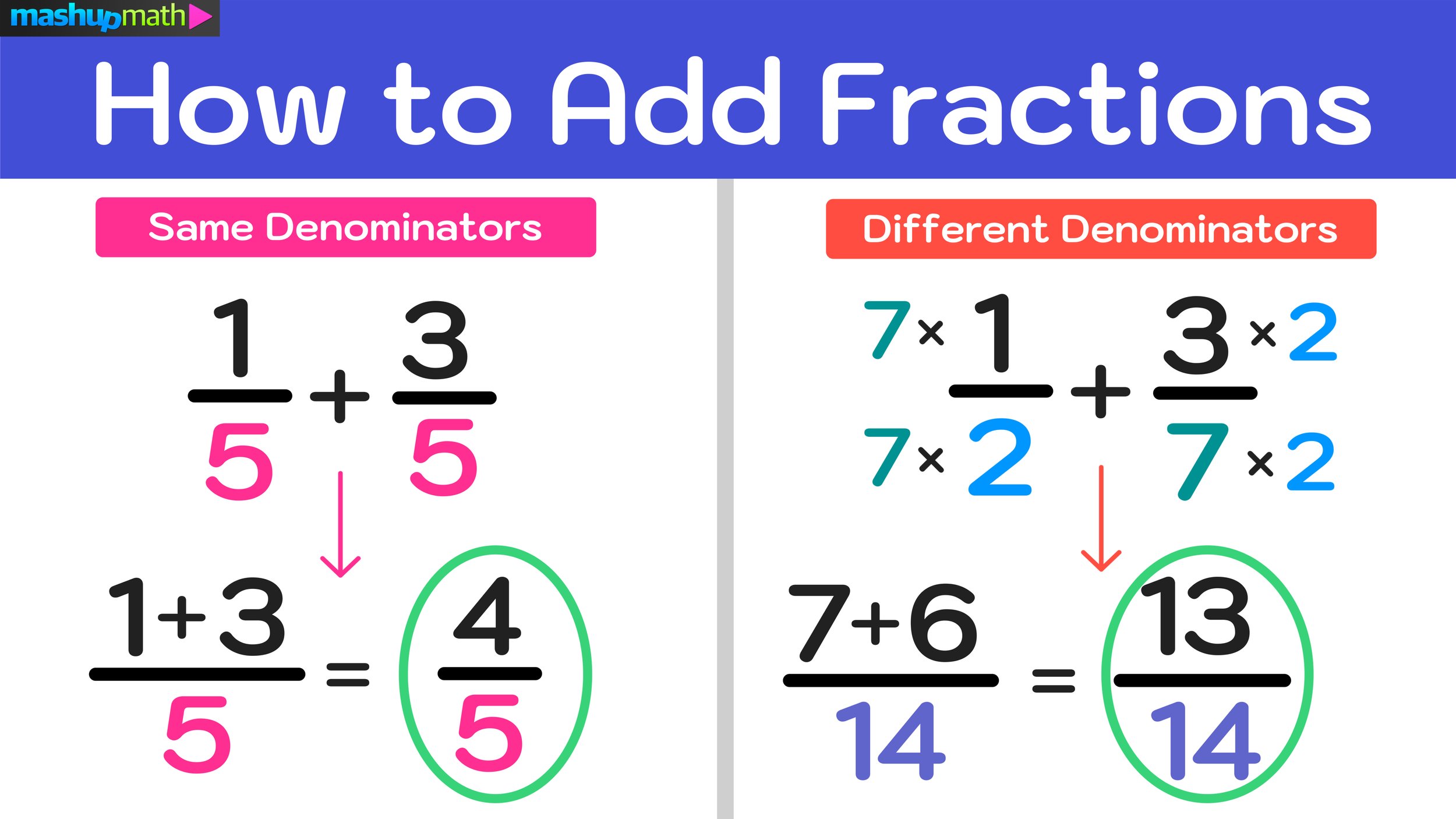
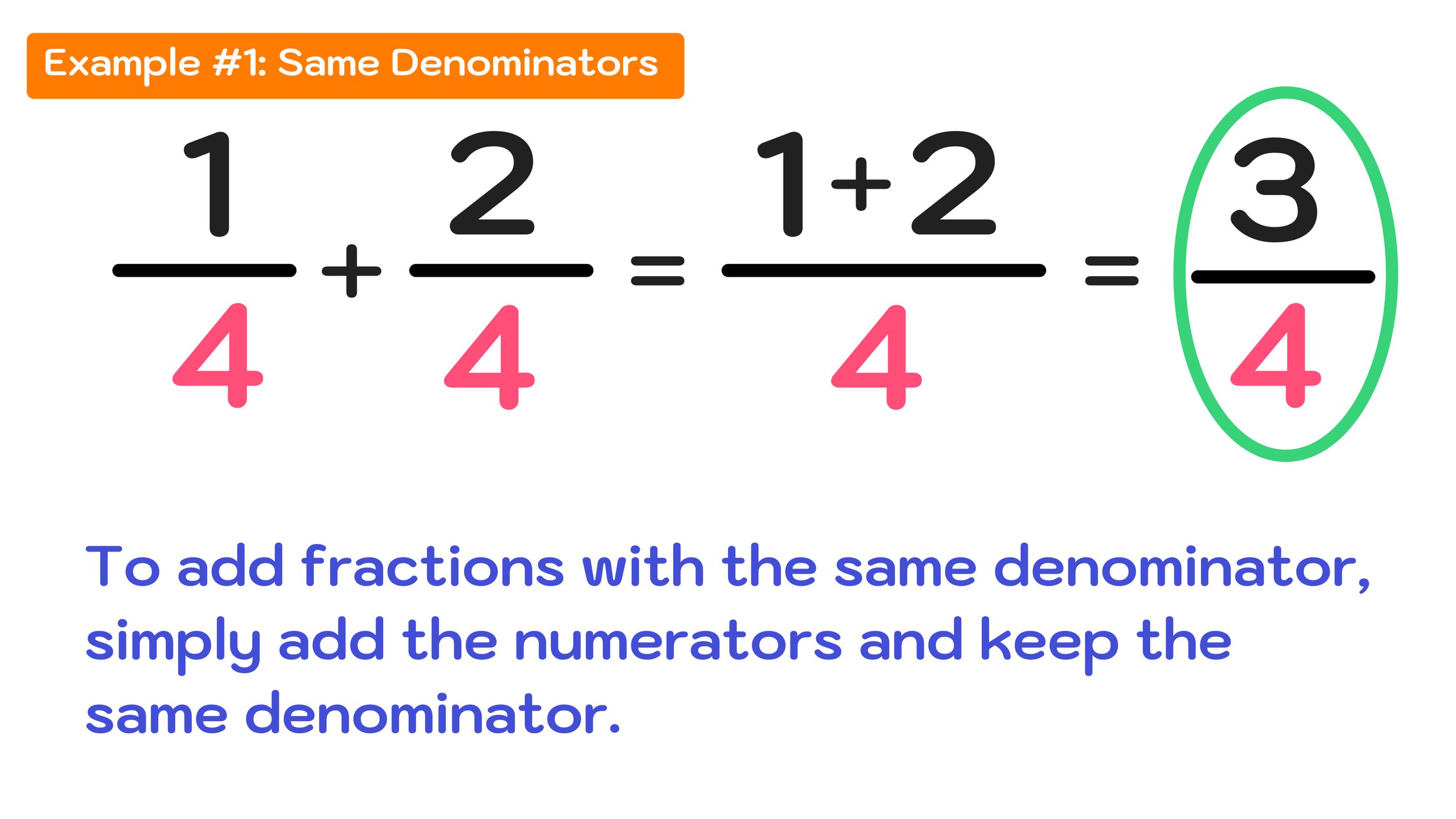
The fundamental mathematical steps for adding fractions are finding a common denominator, adjusting the numerators accordingly, adding them, and then simplifying the result. Software executes these steps with remarkable efficiency. Algorithms are employed to find the Least Common Multiple (LCM) of the denominators to determine the common denominator. Subsequently, algorithms for the Greatest Common Divisor (GCD) are used to simplify the resulting fraction to its lowest terms.
These algorithms are highly optimized. For instance, the Euclidean algorithm is a classic and efficient method for computing the GCD, which is crucial for simplifying fractions quickly, even with very large numbers. Modern computational systems leverage these mathematical foundations, executing hundreds or thousands of such operations in fractions of a second, far surpassing manual calculation speeds and minimizing human error.

Representing Fractions in Digital Systems
How computers store and process fractional numbers is critical. There are generally two approaches: floating-point representation and exact rational representation. Floating-point numbers (e.g., float or double in programming languages) approximate real numbers, including fractions, using a fixed number of bits. While efficient for many computations, they can introduce small inaccuracies because not all fractions (e.g., 1/3) can be perfectly represented in binary. This can lead to rounding errors in sensitive calculations.
For tasks requiring absolute precision, such as financial calculations or certain scientific simulations, exact rational representation is preferred. This involves storing the numerator and denominator as separate integers, allowing for fractional arithmetic to be performed precisely without any loss of information due to rounding. Specialized math software and libraries (like Python’s fractions module or arbitrary-precision arithmetic libraries) use this method to ensure that “plus fractions” operations yield exact results, preserving mathematical integrity.
Beyond Simple Addition: Algebraic and Complex Fractions
The algorithmic power extends beyond simple numerical fraction addition to handle more complex scenarios. Software can manipulate algebraic fractions, which involve variables in their numerators and/or denominators. This means finding common denominators for polynomial expressions, adding rational functions, and simplifying the resulting expressions symbolically.
Furthermore, computers can tackle complex fractions—fractions where the numerator, denominator, or both contain other fractions. Symbolic computation engines are designed to parse these intricate structures, apply the rules of fraction arithmetic iteratively, and present a simplified result. This capability is vital in advanced mathematics, physics, and engineering, where equations often involve layers of fractional expressions that would be exceedingly tedious and error-prone to simplify manually.
Beyond the Classroom: Real-World Tech Applications of Fractional Understanding
The ability to understand and manipulate fractions, often facilitated by technology, is not just an academic exercise but a critical skill with wide-ranging applications in the tech-driven world.
Programming and Data Science
In programming, fractions and ratios are fundamental. From calculating proportions in data analysis (e.g., percentage of users performing an action, probability distributions) to optimizing algorithms, a solid grasp of fractional concepts is essential. Data scientists frequently work with ratios, rates, and probabilities, all of which are rooted in fractions. For instance, when analyzing resource allocation in a cloud computing environment, understanding fractional utilization rates helps in optimizing server loads and minimizing costs. In machine learning, many algorithms involve calculating weights, biases, or learning rates that are often fractional values, and precision in these calculations can impact model performance.
Engineering and Design
Engineers and designers constantly deal with fractional measurements, ratios, and scaling. In architectural design, blueprints and models use precise fractional dimensions and scales to represent real-world structures. Material science involves mixing components in specific fractional ratios to achieve desired properties. Electrical engineering uses fractions for resistance, current, and voltage calculations, especially in circuit design and signal processing. Digital audio and video processing rely heavily on fractional sampling rates and frequency analysis. For example, understanding how fractional bandwidth is allocated in telecommunications is crucial for network efficiency and performance. Computer graphics, too, employs fractional coordinates and scaling factors for rendering objects and creating realistic transformations.
Network Management and Cybersecurity
In network management, performance metrics such as bandwidth utilization, packet loss rates, and latency are often expressed as fractions or percentages derived from fractional concepts. Network administrators use these metrics to optimize network traffic, troubleshoot connectivity issues, and ensure quality of service. For instance, identifying a high fraction of dropped packets on a server can indicate a network bottleneck or an attack.
In cybersecurity, fractional concepts might appear in cryptographic algorithms, where operations often involve modular arithmetic and ratios related to key generation or data encryption. Analyzing the fractional probability of a successful brute-force attack or understanding the fractional distribution of malicious traffic across a network helps in designing more robust security protocols and threat detection systems.
Choosing Your Digital Fraction Assistant: Criteria for Selection and Best Practices
With a myriad of digital tools available, selecting the right “fraction assistant” requires careful consideration to ensure it meets individual or professional needs.
User Interface and Accessibility
An intuitive and user-friendly interface is paramount, especially for learning tools. The best apps and software present fractions clearly, often using visual representations that aid comprehension. Easy navigation, clear input methods, and readable output are essential. For educational purposes, tools that provide step-by-step breakdowns of solutions enhance understanding. Accessibility features, such as text-to-speech, adjustable font sizes, and compatibility with screen readers, are also crucial for catering to diverse learners and ensuring inclusivity.
Accuracy and Reliability
The primary purpose of any computational tool is to provide correct results. Verify the accuracy of a tool, particularly for complex operations. Reputable software and apps from established developers generally offer higher reliability. For learning platforms, look for those that explain the reasoning behind their answers, allowing users to cross-reference and build trust in the tool’s output. In professional contexts, where precision is non-negotiable, opting for tools known for their robust algorithmic implementation and exact arithmetic capabilities (like those using rational number representations) is vital.
Integration and Ecosystem
Consider how well a fraction tool integrates with your existing digital workflow. Does it sync across multiple devices? Can it export results to other applications (e.g., spreadsheets, word processors)? Cloud-based solutions that offer seamless access from different platforms can be highly beneficial. For students, integration with learning management systems (LMS) can streamline assignments and progress tracking. Professionals might look for tools that can be easily incorporated into scripting environments or larger computational frameworks.
Cost-Benefit Analysis and Support
Digital tools for fractions range from free web calculators and basic apps to expensive professional software licenses. Evaluate the features offered against their cost. Free tools are excellent for basic needs, while paid subscriptions often unlock advanced functionalities, ad-free experiences, and dedicated customer support. Review the availability of technical support, community forums, and comprehensive documentation, as these resources can be invaluable when encountering issues or seeking to leverage advanced features. The investment in a tool should ultimately be justified by its ability to save time, increase accuracy, and enhance understanding.
Conclusion
The journey of “how to plus fractions” has been profoundly transformed by technology. From basic calculators that streamline arithmetic to AI-driven platforms that personalize learning, and from powerful software that handles complex symbolic manipulations to the foundational algorithms that ensure precision, digital advancements have made fraction mastery more accessible and efficient than ever before. Technology not only helps us perform calculations but also deepens our understanding and extends the application of fractional concepts into virtually every tech-driven field—from programming and data science to engineering and cybersecurity. While the fundamental principles of adding fractions remain timeless, the tools at our disposal are continuously evolving, empowering us to navigate a world increasingly built on precise numerical relationships. As technology continues to advance, we can anticipate even more intuitive, intelligent, and integrated solutions that will further demystify fractions and unlock their full potential in the digital age.
aViewFromTheCave is a participant in the Amazon Services LLC Associates Program, an affiliate advertising program designed to provide a means for sites to earn advertising fees by advertising and linking to Amazon.com. Amazon, the Amazon logo, AmazonSupply, and the AmazonSupply logo are trademarks of Amazon.com, Inc. or its affiliates. As an Amazon Associate we earn affiliate commissions from qualifying purchases.