
For millions of Americans, Social Security benefits form a crucial pillar of their retirement income strategy. Yet, the question of “how much will I receive?” is far from straightforward. It’s a complex calculation influenced by decades of earning history, your claiming age, and various other personal circumstances. Understanding these factors is not just an academic exercise; it’s a vital step in crafting a robust financial plan that ensures security and peace of mind in your golden years.
This article will demystify the Social Security benefits calculation process, explain the key variables that impact your monthly payout, and provide practical advice on how to estimate and potentially maximize your future benefits. By the end, you’ll have a clearer roadmap for navigating this essential government program and integrating it effectively into your broader retirement vision.
Understanding the Foundation: How Social Security Benefits Are Calculated
At its core, your Social Security benefit is based on your lifetime earnings. The Social Security Administration (SSA) uses a specific formula to convert your work history into an initial benefit amount, which then gets adjusted based on when you choose to start receiving payments.
The Role of Your Average Indexed Monthly Earnings (AIME)
The first step in determining your benefit involves calculating your Average Indexed Monthly Earnings (AIME). This isn’t just a simple average of all your earnings. Instead, the SSA takes your earnings from each year you’ve worked and “indexes” them to account for changes in general wage levels over time. This indexing ensures that earlier earnings are brought up to a more comparable level with recent earnings, reflecting the purchasing power of money at different points in your career.
From your entire earnings history, the SSA then selects the 35 years in which you had the highest indexed earnings. These 35 years are summed up, and that total is divided by 420 (the number of months in 35 years) to arrive at your AIME. It’s crucial to understand that if you have worked fewer than 35 years, those “missing” years will be counted as zeros in the calculation, which can significantly lower your AIME and, consequently, your eventual benefit.
The Primary Insurance Amount (PIA) Formula
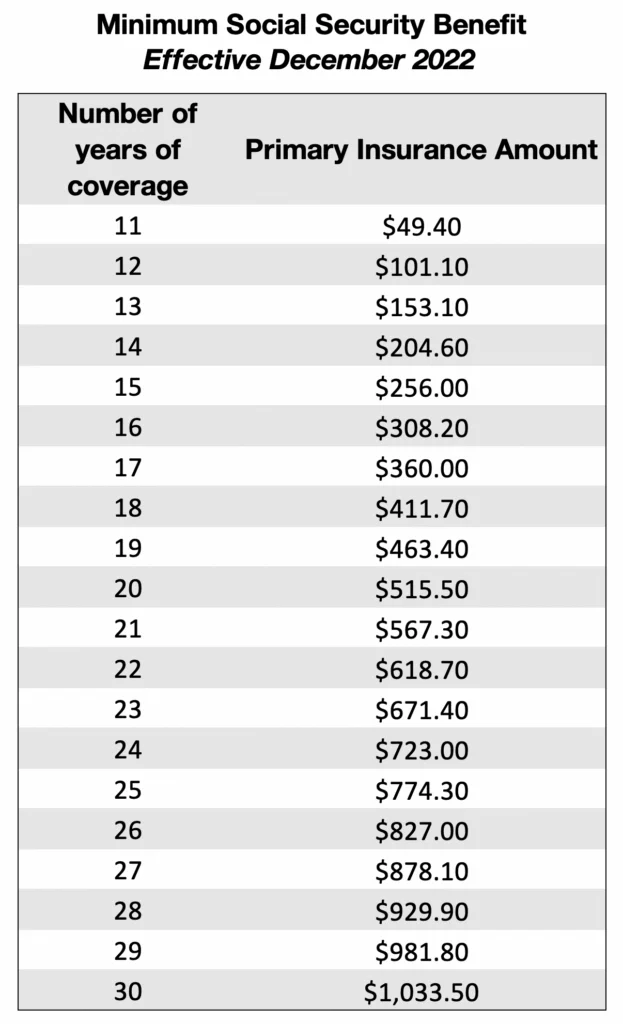
Once your AIME is established, the SSA applies a progressive formula to determine your Primary Insurance Amount (PIA). The PIA is the monthly benefit you would receive if you start collecting Social Security at your Full Retirement Age (FRA). The PIA formula is “progressive” because it replaces a higher percentage of earnings for lower-income workers than for higher-income workers.
The formula uses a series of “bend points” – specific dollar amounts that define income thresholds. For 2024, for example, the PIA is calculated as:
-
90% of the first $1,174 of your AIME, PLUS
-
32% of your AIME between $1,174 and $7,078, PLUS
-
15% of your AIME over $7,078.
These bend points change annually based on the national average wage index. The key takeaway is that the PIA represents your full, unadjusted benefit before any increases for delaying benefits or reductions for claiming early.
The 35-Year Rule and Zero-Earning Years
As mentioned, the 35-year rule is a critical component of the AIME calculation. If you have fewer than 35 years of substantial earnings, each year below that threshold will be entered as a “zero” in your earnings record for the purpose of calculating your AIME. This can have a substantial negative impact on your overall benefit. For instance, if you worked for 30 years and had five years of no earnings, those five years of zeros would drag down your average, reducing your PIA. This highlights the importance of consistent employment over a long career to maximize your Social Security benefits.
Key Factors Influencing Your Social Security Payout
While AIME and PIA form the foundation, several other crucial factors dictate the final amount you receive in your Social Security check. Understanding these can empower you to make informed decisions.
Your Earning History and the Social Security Wage Base
The more you earn, up to a certain limit, the higher your Social Security benefits will be. However, there’s a cap: the Social Security wage base. Each year, only earnings up to this maximum amount are subject to Social Security taxes and are counted toward your future benefits. For 2024, the wage base is $168,600. Earnings above this amount in any given year do not contribute to your Social Security calculation. Consistently earning at or above the wage base for 35 years will generally result in the maximum possible benefit. Conversely, periods of unemployment, part-time work, or lower-wage jobs will reduce your overall AIME.
Your Age When You Claim Benefits
This is arguably the most significant variable under your control. The age at which you decide to start receiving benefits directly impacts whether you get your full PIA, a reduced amount, or an increased amount.
-
Full Retirement Age (FRA): Your FRA is the age at which you are entitled to receive 100% of your PIA. This age is determined by your birth year. For those born between 1943 and 1954, FRA is 66. It gradually increases for those born in later years, reaching 67 for anyone born in 1960 or later. Claiming at FRA provides your unadjusted, standard benefit.
-
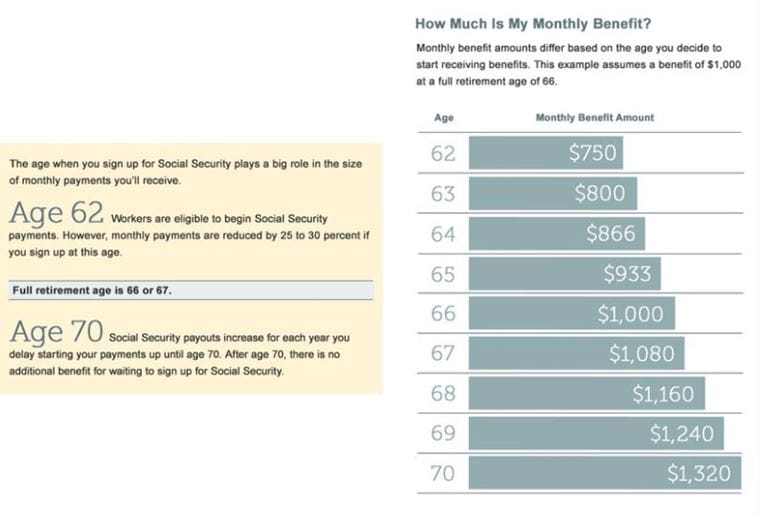
Claiming Early (Age 62-FRA): You can start receiving Social Security benefits as early as age 62. However, claiming before your FRA results in a permanent reduction in your monthly benefit. The reduction is approximately 5/9 of 1% for each month you claim early, up to 36 months, and 5/12 of 1% for each month beyond that. Claiming at age 62 can result in a permanent reduction of up to 30% of your PIA. While you receive benefits for a longer period, your monthly check is significantly smaller.
-
Claiming Late (FRA-Age 70): Conversely, delaying your claim beyond your FRA can substantially increase your monthly benefit. For each year you delay, up to age 70, you earn “delayed retirement credits” (DRCs). These credits increase your annual benefit by 8% (for those born 1943 or later). So, delaying from FRA to age 70 can result in a monthly benefit that is 24% to 32% higher than your PIA. After age 70, there are no further increases for delaying, so there’s no financial incentive to wait beyond that point.
Spousal and Survivor Benefits
Social Security isn’t just for individual workers; it also provides benefits for spouses, ex-spouses, and survivors. A spouse can receive up to 50% of their partner’s PIA (if they claim at their own FRA) if that amount is higher than their own benefit. Survivor benefits can also be substantial, providing crucial financial support to a surviving spouse or dependent children. While these benefits aren’t directly part of your individual PIA calculation, they play a vital role in a household’s overall financial security and can influence claiming strategies for married couples.
Cost-of-Living Adjustments (COLAs)
To help maintain the purchasing power of benefits over time, Social Security benefits are subject to annual Cost-of-Living Adjustments (COLAs). These adjustments are tied to the Consumer Price Index (CPI-W) and are typically announced in October for the following year. While COLAs don’t affect your initial PIA calculation, they ensure that the dollar value of your monthly benefit keeps pace with inflation after you begin receiving payments.
Accessing Your Social Security Information and Estimating Your Benefits
Don’t rely on guesswork when it comes to your Social Security. The SSA provides robust tools to help you understand your earnings history and estimate your future benefits accurately.
The Importance of Your mySocialSecurity Account
The single most valuable resource for understanding your Social Security benefits is your personal mySocialSecurity online account. Creating an account is free, secure, and provides immediate access to:
-
Your complete earnings record, allowing you to verify its accuracy.
-
Personalized estimates of your future retirement benefits at various claiming ages (early, full, and late).
-
Estimates for disability and survivor benefits.
-
The ability to manage your benefits once you start receiving them.
Regularly reviewing your earnings record is crucial. If you spot any inaccuracies, such as missing years or incorrect earnings, you can contact the SSA to have them corrected, ensuring your benefit calculation is based on complete and accurate data.
Understanding Your Social Security Statement
Even without a mySocialSecurity account, the SSA used to mail annual Social Security Statements to most workers. While these are now primarily available online, they are still a fantastic summary. Your statement typically includes:
-
A summary of your taxed earnings for each year of your working life.
-
Estimated benefits at age 62, your Full Retirement Age, and age 70.
-
Estimates for disability and survivor benefits.
Reviewing this statement provides a quick snapshot of your potential benefits and serves as a good starting point for retirement planning discussions.
Using Online Calculators and Resources
Beyond your mySocialSecurity account, the SSA website offers various online calculators for more detailed planning. These include:
-
Retirement Estimator: Provides instant, personalized estimates of your future retirement benefits.
-
Detailed Calculators: For more complex scenarios, these calculators allow you to input various “what-if” situations to see how different claiming ages or future earning scenarios might impact your benefits.
-
Benefit Calculators for Spouses/Survivors: Specific tools to help calculate potential benefits for family members.
Reputable third-party financial planning websites may also offer Social Security calculators, but always verify their methodology and ensure they use up-to-date SSA rules and data.
Strategic Considerations for Maximizing Your Social Security Benefits
Understanding the calculations is one thing; strategizing to optimize your benefits is another. Making the right choices can significantly impact your financial well-being throughout retirement.
The Optimal Claiming Age Dilemma
There is no one-size-fits-all “optimal” claiming age. The best decision depends on several personal factors:
-
Your Health and Longevity: If you expect to live a long life, delaying benefits often makes sense to maximize total lifetime income. If health issues suggest a shorter lifespan, claiming earlier might be more advantageous.
-
Other Retirement Savings: If you have substantial other retirement assets (401(k)s, IRAs, pensions), you might be able to afford to delay Social Security, allowing those benefits to grow. If Social Security will be your primary income source, the decision becomes more critical.
-
Current Income Needs: If you need the income immediately to cover living expenses, claiming early might be a necessity, despite the reduction.
-
Spousal Coordination: For married couples, coordinating claiming strategies is vital. It often makes sense for the higher-earning spouse to delay benefits to age 70 to maximize the primary benefit, which will also provide a higher survivor benefit if they pass away first. The lower-earning spouse might claim earlier or at their FRA.
Coordinating Benefits with a Spouse
Married couples have unique opportunities to optimize their combined Social Security benefits. Strategies often involve:
-
“File and Suspend” (No Longer Available for New Filers): This strategy allowed a worker to file for benefits at FRA, immediately suspend them to earn delayed retirement credits, and allow a spouse to claim spousal benefits. This was eliminated for those born after January 1, 1954.
-
Spousal Benefits Only: If a spouse has a much lower earning record (or none), they might claim spousal benefits based on their partner’s record instead of their own. This can only happen when the primary earner has already filed for their own benefits.
-
Delaying the Higher Earner: Generally, the spouse with the higher PIA should delay claiming as long as possible (up to age 70) to maximize not only their own lifetime benefit but also the potential survivor benefit for the other spouse.
Working in Retirement and the Earnings Test
If you claim Social Security benefits before your Full Retirement Age and continue to work, your benefits may be temporarily reduced if your earnings exceed certain annual limits. This is known as the “earnings test.”
-
Before FRA: For those under FRA, benefits are reduced by $1 for every $2 earned above the annual earnings limit ($22,320 in 2024).
-
In the Year You Reach FRA: In the year you reach FRA, the reduction is $1 for every $3 earned above a higher limit ($59,520 in 2024), but only counting earnings before the month you reach FRA.
-
At or After FRA: Once you reach your FRA, the earnings test no longer applies, and you can earn any amount without your Social Security benefits being reduced.
It’s important to note that any benefits withheld due to the earnings test are not lost; your future monthly benefits will be recalculated at your FRA to give you credit for the withheld amounts.
The Impact of Taxes on Social Security Benefits
While often thought of as tax-free, a portion of your Social Security benefits may be subject to federal income tax, depending on your “provisional income.” Provisional income includes your adjusted gross income, tax-exempt interest, and half of your Social Security benefits.
-
If your provisional income is between $25,000 and $34,000 (single) or $32,000 and $44,000 (married filing jointly), up to 50% of your benefits may be taxable.
-
If your provisional income exceeds $34,000 (single) or $44,000 (married filing jointly), up to 85% of your benefits may be taxable.
Additionally, some states also tax Social Security benefits. It’s crucial to factor these potential taxes into your retirement income planning.
Beyond the Numbers: Integrating Social Security into Your Broader Retirement Plan
Social Security is a critical component, but it’s rarely enough on its own. A holistic approach to retirement planning is essential.
Social Security as a Pillar, Not the Whole House
While Social Security provides a dependable income stream, it’s designed to replace only about 40% of an average worker’s pre-retirement income. For higher earners, that percentage is even lower. It’s not intended to be your sole source of income in retirement. Therefore, it must be viewed as one pillar supporting your retirement, alongside personal savings (like 401(k)s, IRAs), pensions, and other investments. A comprehensive retirement plan will balance Social Security with these other assets to ensure you can maintain your desired lifestyle.
Professional Financial Advice
Given the complexities of Social Security claiming strategies, taxation, and their interaction with other financial assets, seeking advice from a qualified financial advisor is highly recommended. An advisor can:
-
Help you analyze your specific situation and model various claiming scenarios.
-
Integrate your Social Security strategy with your overall investment portfolio, tax planning, and estate plan.
-
Provide guidance on spousal coordination, survivor benefits, and long-term care planning.
-
Help you understand the trade-offs of different choices in the context of your unique goals and risk tolerance.
Staying Informed About Potential Changes
The Social Security system is dynamic and subject to ongoing political and legislative discussions. While major overhauls are rare, potential future adjustments to benefit formulas, claiming ages, or taxation are always a possibility. Staying informed through reputable news sources and the SSA’s official communications can help you adapt your plans if necessary.
Conclusion
Understanding “how much will I receive from Social Security” requires a grasp of its foundational calculations, the numerous factors that influence your final payout, and strategic planning. Your earning history, claiming age, and marital status all play significant roles. By leveraging tools like your mySocialSecurity account, understanding your Social Security statement, and considering the broader context of your financial plan, you can make informed decisions that optimize your benefits.
Social Security is a cornerstone of financial security for millions, but it works best when integrated thoughtfully into a comprehensive retirement strategy. Don’t leave this vital piece of your financial future to chance. Take the time to educate yourself, explore your options, and consult with financial professionals to ensure your golden years are truly secure.
aViewFromTheCave is a participant in the Amazon Services LLC Associates Program, an affiliate advertising program designed to provide a means for sites to earn advertising fees by advertising and linking to Amazon.com. Amazon, the Amazon logo, AmazonSupply, and the AmazonSupply logo are trademarks of Amazon.com, Inc. or its affiliates. As an Amazon Associate we earn affiliate commissions from qualifying purchases.