
Understanding your potential Social Security benefits is a cornerstone of effective retirement planning, a critical element in personal finance. For many, Social Security represents a significant, if not primary, source of income in their golden years, acting as a vital safety net that has supported millions of Americans since its inception. However, the answer to “how much Social Security will I receive?” is far from a simple, one-size-fits-all number. It’s a complex calculation influenced by a multitude of personal factors, including your earnings history, when you choose to claim benefits, and even your marital status.
Navigating the intricacies of Social Security can feel daunting, but breaking down the components of its benefit calculation reveals a logical, albeit detailed, system. This article will demystify the process, exploring the key elements that determine your benefit amount, crucial considerations for maximizing your entitlement, and essential resources to help you estimate your future income from this indispensable program. By understanding these factors, you can make informed decisions that significantly impact your financial well-being in retirement.
Understanding the Foundation: How Social Security Benefits Are Calculated
The bedrock of your Social Security benefit calculation is your lifetime earnings record. The Social Security Administration (SSA) doesn’t just look at your current income; it meticulously tracks your entire history of earnings from jobs where you paid Social Security taxes. This long-term perspective ensures that benefits are tied to your contributions over your working life.
The Role of Earning History and AIME
Every dollar you earn up to an annual limit (the Social Security taxable maximum) is recorded by the SSA. These are known as your “covered earnings.” To determine your benefit, the SSA first calculates your “Average Indexed Monthly Earnings” (AIME). This is a crucial step because it normalizes your past earnings. Inflation means a dollar earned in 1980 had more purchasing power than a dollar earned today. To account for this, the SSA “indexes” your past earnings to reflect the general increase in wages over time. This process ensures that the benefits you receive are based on your earnings’ real value, not just their nominal historical amount.
The AIME calculation specifically focuses on your highest 35 years of indexed earnings. If you have fewer than 35 years of earnings, the missing years are filled in with zeroes, which can significantly lower your average. This emphasizes the importance of a long and consistent work history in maximizing your Social Security benefits. Once your 35 highest indexed earning years are identified, those annual totals are summed up and divided by 420 (the number of months in 35 years) to arrive at your AIME. This monthly average is the fundamental number that feeds into the next stage of the calculation.
The Primary Insurance Amount (PIA) Formula
Your AIME is then plugged into a progressive formula to determine your “Primary Insurance Amount” (PIA). The PIA is the monthly benefit you would receive if you start collecting Social Security benefits at your Full Retirement Age (FRA). The PIA formula is structured with “bend points” – specific dollar amounts that divide your AIME into three segments. Different percentages are applied to each segment:
-
90% of the first segment of your AIME
-
32% of the second segment of your AIME
-
15% of the third segment of your AIME
These percentages are applied to your AIME up to the bend points, which are adjusted annually for inflation. The progressive nature of this formula means that lower-income earners receive a higher percentage of their average indexed earnings back in benefits compared to higher-income earners. This is a core principle of Social Security, designed to provide a greater safety net for those with more modest lifetime incomes, while still ensuring that everyone who contributes receives a benefit proportional to their contributions. The sum of these three calculations results in your PIA, the baseline from which all your benefit adjustments (early or delayed claiming, spousal benefits, etc.) are derived.
Credits: The Gateway to Eligibility
Before you can even consider how much you’ll receive, you must first be eligible. Eligibility for Social Security benefits is determined by earning “credits.” In 2024, you earn one credit for every $1,730 in earnings, up to a maximum of four credits per year. Most individuals need 40 credits – equivalent to 10 years of work – to qualify for retirement benefits. These credits do not need to be consecutive; they simply accumulate over your working life.
It’s important to note that the number of credits required can vary for disability and survivor benefits. For instance, younger workers may qualify for disability benefits with fewer credits, as the system recognizes they haven’t had a full working lifetime to accumulate 40 credits. However, for full retirement benefits, 40 credits is the standard gateway. Without meeting this fundamental requirement, you will not be eligible to receive Social Security retirement income, regardless of your earnings history.
Key Factors Influencing Your Benefit Amount
While your earnings history and PIA form the backbone of your Social Security benefit, several other critical factors can significantly alter the actual monthly payment you receive. The most impactful of these is the age at which you decide to begin collecting benefits.
Your Full Retirement Age (FRA)
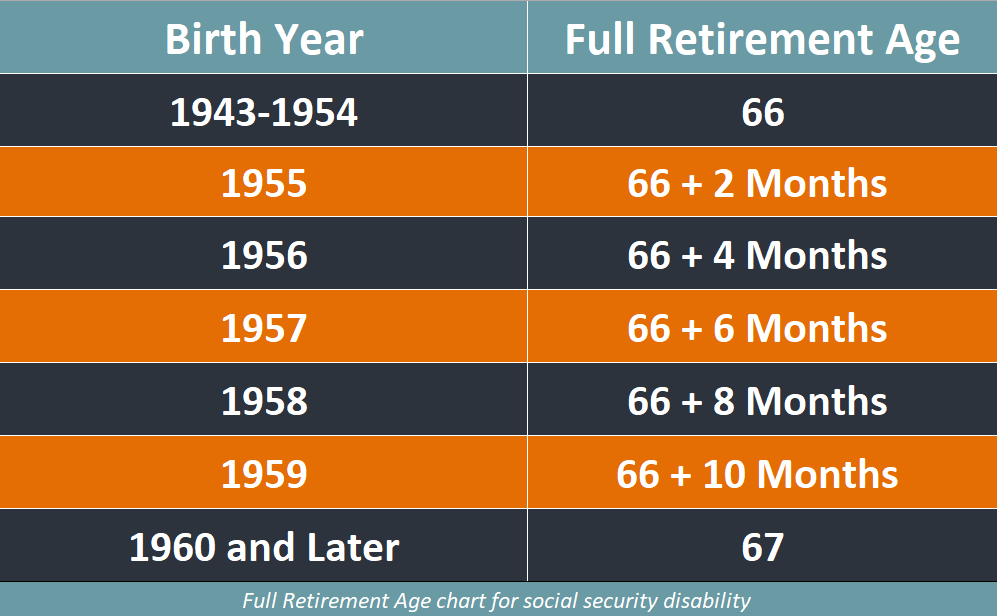
Your Full Retirement Age (FRA) is a crucial concept in Social Security planning. It’s the age at which you are entitled to receive 100% of your Primary Insurance Amount (PIA). Your FRA depends entirely on your birth year. For those born in 1943 through 1954, FRA is 66. It gradually increases for those born between 1955 and 1959, reaching 66 and 10 months for those born in 1959. For everyone born in 1960 or later, your FRA is 67.
Understanding your FRA is vital because claiming benefits before or after this age will permanently adjust your monthly payment. Claiming early results in a reduced benefit, while delaying past your FRA leads to an increased benefit. This makes your claiming age one of the most powerful levers you have in determining your final Social Security income.
When You Choose to Claim Your Benefits
The decision of when to start receiving Social Security benefits is perhaps the most significant choice you’ll make and has the greatest impact on your monthly payment.
-
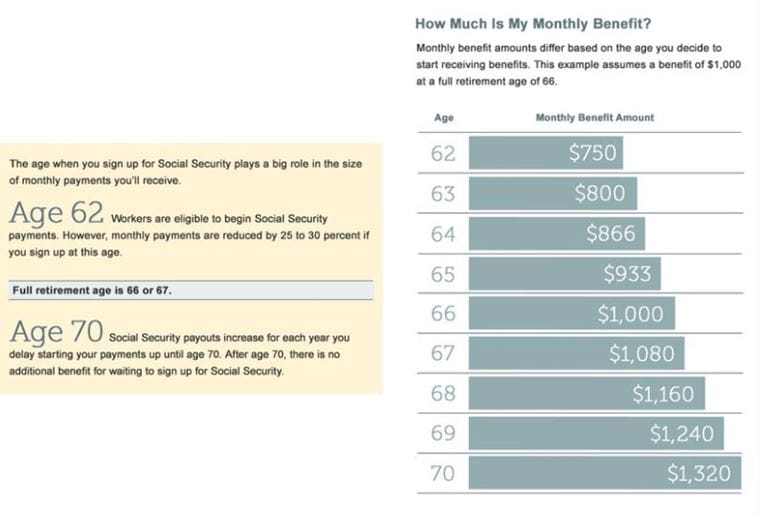
Early Claiming (as early as age 62): You can begin receiving benefits as early as age 62. However, claiming before your FRA results in a permanent reduction of your monthly benefit. The reduction amount varies based on how many months early you claim, but it can be as much as 25% to 30% if you claim at age 62, compared to your FRA. For example, if your FRA is 67 and you claim at 62, your benefit will be reduced by approximately 30%. This reduction is permanent for the rest of your life, though your benefit will still receive Cost-of-Living Adjustments (COLAs).
-
Claiming at FRA: If you wait until your Full Retirement Age (FRA) to claim, you will receive 100% of your Primary Insurance Amount (PIA). This is the baseline amount determined by your earnings history.
-
Delayed Claiming (up to age 70): For every year you delay claiming benefits past your FRA, up to age 70, you earn Delayed Retirement Credits (DRCs). These credits increase your monthly benefit by 8% per year. This means if your FRA is 67 and you delay until age 70, you could increase your monthly benefit by 24% (3 years x 8% per year) compared to what you would receive at your FRA. This is often cited as the most effective way for individuals to maximize their guaranteed lifetime income from Social Security, assuming they are healthy enough to work longer or have other financial resources to bridge the gap.
The decision of when to claim involves weighing factors such as your current financial needs, your health and life expectancy, other retirement savings, and potential spousal benefits. There’s no single “best” age for everyone, making this a highly personalized choice.
Spousal and Survivor Benefits
Social Security isn’t just for individual workers; it also provides crucial benefits for spouses and survivors.
-
Spousal Benefits: If you are married, you may be eligible to receive benefits based on your spouse’s earnings record. A spouse can receive up to 50% of their partner’s Full Retirement Age benefit (PIA), provided they claim at their own FRA. If the spouse claims spousal benefits early (as early as age 62), their benefit will be reduced. You cannot claim spousal benefits until your spouse has filed for their own benefits, with a few exceptions. Even divorced individuals may be eligible for spousal benefits if their marriage lasted at least 10 years, they are not currently married, and their ex-spouse is eligible for Social Security (even if they haven’t filed yet).
-
Survivor Benefits: When a covered worker dies, certain family members may be eligible for survivor benefits. These can include a widow or widower (as early as age 60, or age 50 if disabled), unmarried children under 18 (or 19 if still in high school), and even dependent parents. The amount of survivor benefits depends on the deceased worker’s PIA and the relationship of the survivor. A widow or widower at FRA could receive up to 100% of the deceased worker’s benefit.
Strategizing claiming for couples, particularly considering spousal and survivor benefits, can be complex but immensely rewarding in terms of maximizing lifetime income for the household.
Cost-of-Living Adjustments (COLAs)
Once you start receiving Social Security benefits, your payments are not static. The SSA periodically adjusts benefits to keep pace with inflation through Cost-of-Living Adjustments (COLAs). These annual increases, typically announced in the fall, are designed to ensure that the purchasing power of your Social Security benefits is maintained over time. COLAs are calculated based on the Consumer Price Index for Urban Wage Earners and Clerical Workers (CPI-W). While COLAs provide essential protection against inflation, they are not guaranteed to occur every year if inflation is low or non-existent.
Navigating Complex Scenarios and Optimizing Your Benefits

Beyond the core calculations and claiming age, several specific scenarios and rules can impact your Social Security benefits, requiring careful consideration to avoid unexpected reductions or to optimize your overall financial plan.
Working While Receiving Benefits
If you decide to claim Social Security benefits before your Full Retirement Age (FRA) and continue to work, your benefits may be temporarily reduced or withheld due to the “earnings test.”
-
Before FRA: If you are under FRA for the entire year, the SSA will deduct $1 from your benefits for every $2 you earn above an annual earnings limit (e.g., $22,320 in 2024).
-
In the year you reach FRA: In the year you reach your FRA, the deduction rate is different: $1 is deducted for every $3 you earn above a higher earnings limit (e.g., $59,520 in 2024), and this only applies to earnings before the month you reach your FRA.
-
At or after FRA: Once you reach your FRA, the earnings test no longer applies, and you can earn any amount without your Social Security benefits being affected.
It’s important to understand that any benefits withheld due to the earnings test are not permanently lost. When you reach your FRA, your monthly benefit amount will be recalculated to account for the months benefits were withheld, effectively increasing your monthly payment for the rest of your life. This means the earnings test doesn’t truly “take away” benefits but rather postpones them and then provides a higher future payout.
Windfall Elimination Provision (WEP) and Government Pension Offset (GPO)
Two provisions, the Windfall Elimination Provision (WEP) and the Government Pension Offset (GPO), can significantly reduce Social Security benefits for individuals who also receive a pension from a job where they did not pay Social Security taxes.
-
Windfall Elimination Provision (WEP): WEP affects your own Social Security retirement or disability benefits. If you worked in a job not covered by Social Security (e.g., some state or local government jobs, or certain foreign employment) and also worked in other jobs where you did pay Social Security taxes, your Social Security benefit formula will be adjusted. WEP reduces the 90% factor in the PIA formula’s first bend point, leading to a lower benefit than someone with similar earnings who only had covered employment. There’s a maximum reduction amount, and WEP does not apply if you have 30 or more years of “substantial earnings” in covered employment.
-
Government Pension Offset (GPO): GPO affects spousal or survivor benefits. If you receive a pension from a government job where you did not pay Social Security taxes, your Social Security spousal or survivor benefits will be reduced by two-thirds of the amount of your non-covered pension. In many cases, this can entirely eliminate your spousal or survivor benefit. GPO is designed to prevent “double-dipping” by ensuring that individuals receiving a non-covered government pension don’t also receive full spousal/survivor benefits from Social Security, which is intended for those who didn’t contribute to the system through their own earnings.
Both WEP and GPO are complex and can have substantial impacts, making it crucial for affected individuals to understand how they apply to their specific situation.
Taxability of Social Security Benefits
While Social Security benefits are not taxed for everyone, a significant portion of beneficiaries finds that a portion of their benefits is subject to federal income tax. This depends on your “provisional income,” which is calculated as your Adjusted Gross Income (AGI) + nontaxable interest + one-half of your Social Security benefits.
-
Federal Tax:
-
If your provisional income is between $25,000 and $34,000 for an individual ($32,000 and $44,000 for a married couple filing jointly), up to 50% of your benefits may be taxable.
-
If your provisional income exceeds $34,000 for an individual ($44,000 for a married couple filing jointly), up to 85% of your benefits may be taxable.
-
These thresholds are not indexed for inflation, meaning more and more retirees become subject to this tax over time.
- State Tax: A handful of states also tax Social Security benefits, though most do not. It’s essential to check your state’s specific tax laws if you live in one of these states, as this can further reduce your net Social Security income.
Understanding the potential tax implications is a vital part of estimating your net Social Security benefit and integrating it into your broader retirement income strategy.
Tools and Resources to Estimate Your Benefits
Accurately estimating your future Social Security benefits is a critical step in personal financial planning. Fortunately, the Social Security Administration (SSA) provides excellent tools and resources to help you gain clarity.
Your Social Security Statement
The single most important document for understanding your future benefits is your “Social Security Statement.” This personalized statement provides a projection of your monthly benefit amount at different claiming ages (e.g., age 62, Full Retirement Age, and age 70). It also includes a detailed record of your lifetime earnings that the SSA has on file.
The best way to access your statement is by creating a “my Social Security” account online at the SSA website (ssa.gov). Through this secure portal, you can:
-
View your complete earnings history.
-
Get personalized estimates of your future benefits for retirement, disability, and survivor benefits.
-
Review your Social Security statement instantly.
-
Manage your benefits if you are already receiving them.
It is highly recommended that everyone, especially those approaching retirement, create and regularly review their my Social Security account. Checking your earnings record for accuracy is paramount; errors could potentially reduce your future benefits. If you find any discrepancies, you should contact the SSA to correct them.
Social Security Online Calculators
Beyond your personalized statement, the SSA website also offers a suite of online calculators that allow you to explore various “what-if” scenarios. These calculators can help you:
-
Estimate your benefits based on different future earning scenarios.
-
Compare benefit amounts if you claim at different ages.
-
Understand the impact of different retirement dates.
While these tools provide valuable insights, they are estimates. For the most accurate and personalized projections, particularly when considering complex situations like spousal benefits, WEP/GPO, or working while receiving benefits, your personal Social Security statement is the primary source.
Consulting a Financial Advisor
For individuals facing complex financial situations, such as blended families, significant other retirement assets, non-covered pensions, or specific health considerations, consulting a qualified financial advisor can be invaluable. A financial advisor specializing in retirement planning can:
-
Help you integrate your Social Security benefits into your overall retirement income strategy.
-
Analyze your unique circumstances to determine the optimal claiming strategy for you and your spouse.
-
Explain the nuances of specific provisions like WEP or GPO and their impact.
-
Provide guidance on tax-efficient strategies for drawing down your retirement savings in conjunction with Social Security.
While the SSA provides the data, a knowledgeable advisor can help you interpret that data within the broader context of your financial life goals, potentially uncovering strategies to maximize your lifetime income from all sources, including Social Security.
Conclusion
Determining “how much Social Security will I receive” is a multifaceted inquiry that demands a comprehensive understanding of your personal earnings history, the intricacies of the benefit calculation formula, and critical decisions regarding when and how you claim your benefits. Social Security is a powerful and reliable component of financial security in retirement, but its full potential is only realized through informed planning.
From understanding the impact of your Average Indexed Monthly Earnings (AIME) and Primary Insurance Amount (PIA), to strategically choosing your claiming age, and considering the implications of spousal benefits, the earnings test, and potential tax liabilities, every factor plays a role. Proactively engaging with these details allows you to move beyond mere estimation to active optimization.
The first, and arguably most important, step is to create and regularly review your “my Social Security” account online at ssa.gov. This direct access to your personal earnings record and benefit estimates empowers you with the foundational data needed for sound decision-making. Combine this with the insights from online calculators and, if your situation warrants, the expert guidance of a financial advisor, and you will be well-equipped to integrate your Social Security benefits effectively into your broader retirement plan.
Social Security should not be viewed as your sole source of retirement income, but rather a vital pillar within a diversified financial strategy. By taking the time to understand its mechanics and making deliberate choices, you can significantly enhance your financial outlook and ensure a more secure and comfortable retirement. Take control of your financial future today – your Social Security benefits are a key part of that journey.
aViewFromTheCave is a participant in the Amazon Services LLC Associates Program, an affiliate advertising program designed to provide a means for sites to earn advertising fees by advertising and linking to Amazon.com. Amazon, the Amazon logo, AmazonSupply, and the AmazonSupply logo are trademarks of Amazon.com, Inc. or its affiliates. As an Amazon Associate we earn affiliate commissions from qualifying purchases.