
Navigating the intersection of employment and retirement benefits is one of the most complex aspects of personal finance. For many Americans, Social Security is not a hard stop to professional life but rather a supplemental income stream that allows for a “semi-retirement” or a transition into lower-stress work. However, the Social Security Administration (SSA) maintains specific rules regarding how much a beneficiary can earn before their monthly payments are impacted. Understanding these thresholds is essential for maximizing your total income and avoiding unexpected financial setbacks during your golden years.
The core of this issue lies in the Retirement Earnings Test (RET). This policy dictates the withholding of benefits for those who have not yet reached their Full Retirement Age (FRA) but continue to earn an income. While the word “test” might sound intimidating, it is essentially a mathematical formula designed to ensure that Social Security remains a safety net for those who are truly retired or significantly reduced in their working capacity.
Understanding the Retirement Earnings Test
The Retirement Earnings Test only applies to individuals who claim Social Security benefits before they reach their Full Retirement Age. For most people born after 1960, the FRA is 67. If you are at or above your FRA for the entire year, there is no limit on how much you can earn. You could earn a million dollars a year and still receive your full Social Security check. The constraints only exist for those who choose to “file early”—usually starting at age 62.
The Philosophy of Social Security Benefits
To understand why these limits exist, one must look at the intent of the program. Social Security was designed as social insurance to replace lost income due to old age or disability. If an individual is still earning a substantial salary, the SSA views them as not yet fully reliant on that insurance. Consequently, they temporarily withhold a portion of the benefits. It is a common misconception that this money is “lost.” In reality, the SSA recalculates your benefit amount once you reach FRA to account for the months where benefits were withheld, effectively giving you a higher monthly payment for the rest of your life.
Determining Your Full Retirement Age (FRA)
Your FRA is the pivotal point for all earnings-related rules. If you were born between 1943 and 1954, your FRA is 66. For those born between 1955 and 1959, the age increases in two-month increments (e.g., 66 and 2 months, 66 and 4 months) until it hits age 67 for those born in 1960 or later. Knowing this date is the first step in calculating your earning potential without penalty.
The Thresholds: Calculating Your Earnings Limit
The SSA adjusts the earnings limits annually based on national wage trends. The rules are split into three distinct categories based on where you are in your journey toward Full Retirement Age.
Rules for Those Under Full Retirement Age
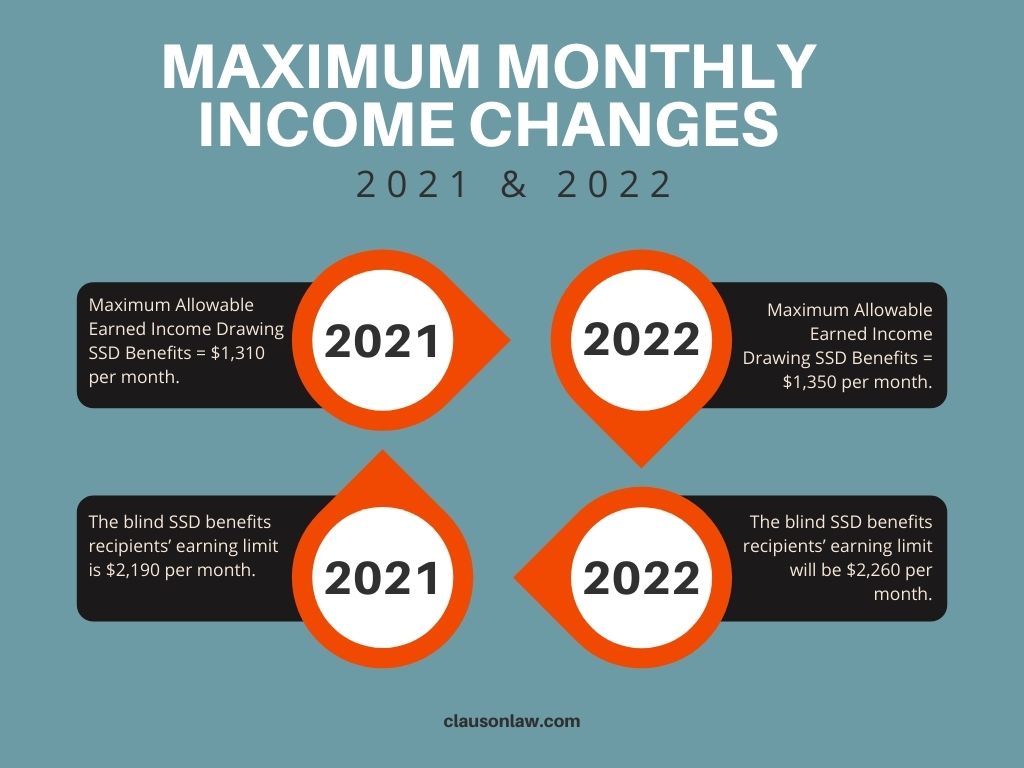
If you are younger than your FRA for the entire year, the SSA imposes a strict limit. For 2024, that limit is $22,320. If you earn more than this amount, the SSA will deduct $1 from your benefit payments for every $2 you earn above the limit.
For example, if you earn $32,320 in a year ($10,000 over the limit), the SSA will withhold $5,000 of your Social Security benefits. This withholding typically happens by stopping your monthly checks entirely until the “debt” is paid. If your monthly benefit is $2,000, the SSA might stop your checks for three months to cover the $5,000 withholding requirement.
The Year You Reach Full Retirement Age
The rules become significantly more lenient during the year you actually hit your FRA. In this specific year, the earnings limit jumps significantly. For 2024, the limit is $59,520. Furthermore, the penalty is less severe: the SSA deducts $1 for every $3 you earn above the limit.
Crucially, the SSA only counts the money you earn in the months before the month you reach your FRA. For instance, if your birthday is in October, they only look at what you earned from January through September. Anything you earn from October to December is completely exempt from the Retirement Earnings Test, regardless of the amount.
After Reaching Full Retirement Age
Once you reach the month of your Full Retirement Age, the earnings test vanishes completely. You are free to earn any amount of income from wages or self-employment without any reduction in your Social Security benefits. At this stage, your work history is re-evaluated, and if your current earnings are among your highest 35 years of indexed earnings, the SSA will even increase your monthly benefit amount automatically.

Defining “Earnings”: What the SSA Considers Income
A major source of confusion for retirees is what actually counts toward the earnings limit. Not all money that enters your bank account is considered “earnings” by the Social Security Administration.
Included Income Sources
The SSA is primarily interested in “earned income.” This includes:
-
Wages: Any gross wages you earn as an employee. This is the amount before taxes or 401(k) contributions are taken out.
-
Net Earnings from Self-Employment: If you own a business or work as a freelancer, the SSA looks at your net profit. This is your gross income minus allowable business expenses.
-
Bonuses and Commissions: If these are paid for work performed during the period you are receiving benefits, they count toward the limit.
Excluded Income Sources
To the relief of many investors and retirees, “unearned income” does not count toward the Social Security earnings limits. You can have millions in these categories without impacting your benefit check:
-
Pensions and Annuities: Monthly payments from a former employer or a private insurance product.
-
Investment Income: Dividends, interest, and capital gains from stocks, bonds, or mutual funds.
-
IRA and 401(k) Distributions: Taking money out of your retirement accounts does not count as “earnings” for the RET.
-
Social Security Benefits: Your actual benefit checks do not count against your limit.
-
Rental Income: Unless you are a real estate professional whose primary business is managing these properties, rental income is generally considered passive.
The Hidden Silver Lining: How Benefits Are Recalculated
It is vital to understand that the Retirement Earnings Test is a “deferral” rather than a “tax.” When the SSA withholds your benefits because you earned too much, they are not simply pocketing that money forever.
When you reach your Full Retirement Age, the SSA performs an automated recalculation. They look at all the months where they withheld a partial or full benefit check. They then adjust your monthly benefit upward as if you had claimed Social Security at a later date.
For example, if you claimed benefits at 62 but worked enough that the SSA withheld 12 months’ worth of checks by the time you turned 67, they will recalculate your benefit as if you had originally filed at age 63. This results in a permanent increase in your monthly check for the rest of your life. This mechanism ensures that, actuarially speaking, most people receive the same total lifetime benefits whether they work through retirement or not, provided they live to an average life expectancy.
Strategic Considerations for Working Retirees
Deciding whether to work while receiving Social Security requires a holistic look at your financial picture, particularly regarding taxes and long-term retirement security.
The Impact of Taxation on Benefits
While the Retirement Earnings Test looks at your gross wages, the IRS looks at your “combined income” to determine if your Social Security benefits are taxable. Combined income is defined as your Adjusted Gross Income (AGI) + non-taxable interest + half of your Social Security benefits.
If you are a single filer and your combined income is between $25,000 and $34,000, you may have to pay income tax on up to 50% of your benefits. If it exceeds $34,000, up to 85% of your benefits may be taxable. For married couples filing jointly, these thresholds are $32,000 and $44,000, respectively. Working while on Social Security can easily push you into these brackets, meaning you aren’t just dealing with potential benefit withholding, but also a higher tax bill.
To File or Not to File?
For many high-earners, the best strategy is often to delay filing for Social Security until they reach their FRA or even age 70. By delaying, you avoid the Retirement Earnings Test entirely and take advantage of “Delayed Retirement Credits,” which increase your benefit by 8% for every year you wait past your FRA.
However, if you need the cash flow to bridge a gap or if you are in a lower tax bracket, working and receiving benefits simultaneously can be a viable strategy. The key is to monitor your income closely. If you know you are going to exceed the limits, it is often better to inform the SSA in advance. This prevents an “overpayment” scenario where the SSA pays you benefits you weren’t entitled to and then demands the money back in a lump sum or through aggressive withholding later.
Ultimately, the question of how much you can earn is a matter of timing. Before your Full Retirement Age, the limits are strict and require careful management. After that milestone, the doors swing wide open, allowing you to blend professional passion with the financial security of a full Social Security benefit. By planning around these thresholds, you can ensure that your transition into retirement is both profitable and predictable.
aViewFromTheCave is a participant in the Amazon Services LLC Associates Program, an affiliate advertising program designed to provide a means for sites to earn advertising fees by advertising and linking to Amazon.com. Amazon, the Amazon logo, AmazonSupply, and the AmazonSupply logo are trademarks of Amazon.com, Inc. or its affiliates. As an Amazon Associate we earn affiliate commissions from qualifying purchases.