
In the vast and intricate world of technology, where innovation constantly pushes the boundaries of what’s possible, understanding fundamental physical properties is paramount. While many concepts capture headlines, one often overlooked yet critically important property is specific volume. Far from being a mere academic curiosity, specific volume is a bedrock principle in thermodynamics, fluid mechanics, and materials science, playing an indispensable role in the design, optimization, and performance of countless technological systems, from the microchips powering our smartphones to the propulsion systems launching rockets into space.
At its core, specific volume describes how much space a unit mass of a substance occupies. It’s a measure of the “voluminousness” of a material per unit of its mass, providing crucial insights into its physical state, behavior under varying conditions, and suitability for specific technological applications. In an era where efficiency, miniaturization, and robust performance are key drivers of technological advancement, a deep comprehension of specific volume is not just beneficial—it’s essential for engineers, scientists, and innovators striving to build the next generation of technological marvels.
The Fundamental Concept: Specific Volume Defined and Its Link to Density
To truly appreciate the technological implications of specific volume, we must first establish a clear understanding of what it is and how it relates to other fundamental properties, particularly density.
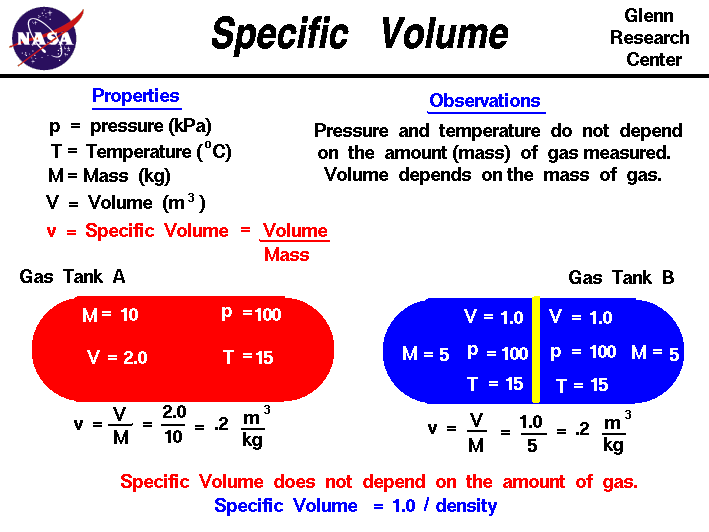
Specific volume (often denoted by the symbol v) is defined as the ratio of a substance’s total volume (V) to its total mass (m). Mathematically, this relationship is expressed as:
$v = V / m$
In simple terms, if you take a certain amount of a substance, its specific volume tells you how much space each kilogram (or pound, in imperial units) of that substance occupies. The standard SI unit for specific volume is cubic meters per kilogram ($m^3/kg$).
Why Specific Volume, Not Just Density?
While specific volume might seem closely related to density, it is actually its reciprocal. Density (ρ) is defined as mass per unit volume ($ρ = m / V$). Therefore, specific volume can also be expressed as:
$v = 1 / ρ$
Given this inverse relationship, one might ask why specific volume is necessary when density already exists. The answer lies in the specific contexts and types of analysis performed in engineering and scientific disciplines, especially within the realm of technology development:
-
Thermodynamic Analysis: In thermodynamics, specific volume is often preferred because it directly relates to the energy content and state changes of a substance. When dealing with processes like compression, expansion, or phase changes (e.g., water turning into steam), specific volume provides a more intuitive and direct measure of how the substance’s volume changes per unit mass. This is crucial for designing engines, refrigeration cycles, and power plants.
-
System Design and Control: Engineers frequently work with control volumes—defined regions in space where mass and energy flows are analyzed. When considering the flow of fluids or the behavior of materials within a system (e.g., a pipe, a pressure vessel, a semiconductor fabrication chamber), it’s often more convenient to think about how much volume a certain mass of the fluid takes up, especially as temperature and pressure conditions fluctuate.
-
Property Tables and Charts: In many engineering handbooks and software, thermodynamic properties are often tabulated or charted with specific volume as a primary independent variable, particularly for substances like steam, refrigerants, and various gases. This makes calculations and system design more streamlined for tech applications.
For instance, in the design of a gas turbine, engineers need to know not just how dense the air is at the inlet, but also its specific volume as it’s compressed and heated, as this directly impacts the size and efficiency of the turbine blades and combustion chamber. Similarly, in microfluidics, the specific volume of a liquid can dictate how much fluid can be precisely delivered through microscopic channels.
Specific Volume in Action: Crucial Applications Across Tech Sectors
The utility of specific volume extends across a myriad of technological domains, underpinning the functionality and innovation in diverse fields.
Material Science and Manufacturing
In the development of new materials for cutting-edge technologies, specific volume is a critical design parameter.
-
Polymers and Composites: For instance, in crafting lightweight yet strong aerospace components or advanced electronics enclosures, engineers must consider the specific volume of polymers and composite materials. A material with a lower specific volume for a given strength can lead to more compact and robust designs, minimizing weight without sacrificing integrity.
-
Semiconductor Manufacturing: In the intricate processes of semiconductor fabrication, the specific volume of gases used (e.g., dopants, etchants) must be precisely controlled. Variations in specific volume can impact deposition rates, etching uniformity, and ultimately, the performance and yield of integrated circuits. The ability to model and control these properties is fundamental to producing smaller, more powerful chips.
-
Additive Manufacturing (3D Printing): The specific volume of powders and resins used in 3D printing affects how densely a part can be printed, its structural integrity, and its final dimensions. Optimizing specific volume for different materials helps achieve high-resolution prints with desired mechanical properties, pushing the boundaries of custom manufacturing for prototypes and end-use parts.
Thermal Management and Fluid Systems

Effective thermal management is paramount in nearly every electronic and mechanical system, from data centers to electric vehicles. Specific volume plays a central role here.
-
Cooling Electronics: In high-performance computing, understanding the specific volume of refrigerants or cooling fluids (like water or dielectric liquids) is vital. As these fluids absorb heat, their temperature and specific volume increase. Designing efficient cooling loops requires precise calculations of how much volume these fluids will occupy at different temperatures and pressures to ensure adequate flow rates and heat transfer within limited spaces.
-
HVAC Systems: In heating, ventilation, and air conditioning technologies, the specific volume of air, steam, and refrigerants dictates compressor and pump sizing, ductwork dimensions, and overall energy efficiency. Engineers use specific volume charts for these substances to design systems that maintain optimal environmental conditions in buildings and cleanrooms with minimal energy consumption.
-
Power Generation: In traditional and advanced power plants, specific volume calculations are indispensable for optimizing steam turbines. As water turns into high-pressure steam, its specific volume increases dramatically. This expansion drives the turbine, and understanding the specific volume at various stages of the steam cycle is crucial for maximizing power output and efficiency.
Aerospace and Automotive Engineering
The relentless pursuit of efficiency, safety, and performance in aerospace and automotive sectors heavily relies on specific volume considerations.
-
Fuel Efficiency: In aircraft and vehicle design, the specific volume of fuels (both traditional and alternative) impacts tank design and range. A fuel with a lower specific volume (higher density) means more energy can be stored in a given volume, extending range or allowing for smaller fuel tanks, leading to lighter vehicles and improved fuel economy.
-
Engine Design: The specific volume of air entering an engine, and the combustion gases exiting it, dictates the engine’s volumetric efficiency, compression ratios, and overall power output. Modern engine management systems continually adjust parameters based on real-time specific volume calculations to optimize performance and minimize emissions.
-
Hydraulic and Pneumatic Systems: In aircraft landing gear, braking systems, and various robotic controls, hydraulic fluids and compressed gases are used. The specific volume of these fluids and gases determines the force generated and the responsiveness of the system, requiring careful consideration in design.
Specific Volume and Technological Innovation
The implications of specific volume extend beyond current applications, directly fueling future technological innovation and addressing pressing global challenges.
Optimizing Performance and Efficiency
The drive for smaller, lighter, and more powerful devices directly benefits from specific volume optimization.
-
Miniaturization: In microelectronics and MEMS (Micro-Electro-Mechanical Systems), the specific volume of materials and working fluids influences how densely components can be packed and how efficiently they operate. Innovations in materials with tailored specific volumes enable the creation of increasingly miniaturized sensors, actuators, and processors.
-
Energy Storage: For next-generation batteries and hydrogen fuel cells, the specific volume of active materials and stored gases is a critical factor in determining energy density and device size. Reducing specific volume while maintaining or enhancing performance is a key area of research for electric vehicles and portable electronics.
Designing for Extreme Conditions
Specific volume is a cornerstone in developing technologies for harsh and unconventional environments.
-
Space Exploration: In spacecraft, satellites, and extraterrestrial habitats, materials and systems must withstand extreme temperatures and pressures. Understanding the specific volume of propellants, life support gases, and structural materials under these conditions is vital for mission success and astronaut safety.
-
Deep-Sea Exploration: Submersibles and underwater robotics operate under immense pressures. The specific volume of buoyancy materials, hydraulic fluids, and structural components directly impacts their ability to withstand crushing forces and maintain operational integrity.
Sustainable Technology Development
As the world pivots towards sustainable solutions, specific volume plays a role in green tech.
-
Carbon Capture and Storage: Technologies designed to capture and store CO2 often involve compressing gases to high pressures, where specific volume calculations are crucial for designing efficient storage tanks and transport pipelines.
-
Renewable Energy: In geothermal systems, the specific volume of supercritical fluids influences energy extraction efficiency. In advanced heat pumps and solar thermal systems, the specific volume of working fluids determines heat transfer rates and system performance.
Measuring and Controlling Specific Volume in Tech
Accurate measurement and control of specific volume are not trivial tasks but are essential for robust technological development and deployment.
Instrumentation and Sensors
Modern technology relies on sophisticated tools to measure specific volume-related properties.
-
Densitometers: These devices, ranging from hydrostatic to vibrational types, measure density, from which specific volume can be derived. They are crucial in quality control for petroleum products, food processing, and chemical manufacturing.
-
Flow Meters and Pressure Sensors: By combining readings from these instruments with temperature sensors, engineers can infer specific volume in dynamic systems, allowing for real-time adjustments and optimization in industrial processes, such as in semiconductor cleanrooms or power generation plants.
-
Gas Analyzers: For gaseous systems, specialized analyzers can determine the composition and state, allowing for precise calculation of specific volume, vital for processes requiring specific gas mixtures, like plasma etching.
Computational Tools and Simulations
The complexity of modern systems often necessitates advanced computational methods.
-
Computational Fluid Dynamics (CFD): Software like ANSYS Fluent or OpenFOAM uses specific volume in its fundamental equations to simulate fluid flow, heat transfer, and chemical reactions. This allows engineers to virtually test and optimize designs for everything from aircraft wings to microfluidic devices, saving immense time and resources.
-
Finite Element Analysis (FEA): In structural mechanics, FEA software like Abaqus or SolidWorks Simulation uses material properties influenced by specific volume to predict how components will deform or fail under stress, ensuring the reliability of designs for high-tech components.
-
Thermodynamic Property Databases: Digital databases and software tools contain extensive information on the specific volume of various substances across a wide range of temperatures and pressures, enabling engineers to perform quick and accurate calculations for system design.

Material Engineering Techniques
Beyond measurement, engineers actively manipulate materials to achieve desired specific volumes.
-
Alloying and Composites: By combining different metals or embedding fibers into polymers, engineers can create materials with tailored specific volumes and other properties like strength-to-weight ratio, crucial for aerospace and automotive tech.
-
Porous Materials: Developing materials with controlled porosity (e.g., foams, aerogels) allows for very high specific volumes (low density) while maintaining structural integrity, ideal for insulation, filtration, and lightweight structures in various tech applications.
-
Nanomaterials: At the nanoscale, properties can differ significantly. Research into nanomaterials aims to create structures with unique specific volume characteristics for applications in energy storage, catalysis, and advanced sensors.
In conclusion, specific volume, while seemingly a straightforward physical property, is a cornerstone of modern technology and engineering. Its profound impact resonates through every stage of technological development, from the fundamental research into new materials to the intricate design of complex systems and the continuous optimization of existing technologies. For anyone looking to innovate, build, or understand the physical world through a technological lens, grasping the concept of specific volume is not just helpful—it’s absolutely indispensable. As technology continues its inexorable march forward, the precise control and understanding of properties like specific volume will remain at the forefront of enabling the next wave of revolutionary advancements.
aViewFromTheCave is a participant in the Amazon Services LLC Associates Program, an affiliate advertising program designed to provide a means for sites to earn advertising fees by advertising and linking to Amazon.com. Amazon, the Amazon logo, AmazonSupply, and the AmazonSupply logo are trademarks of Amazon.com, Inc. or its affiliates. As an Amazon Associate we earn affiliate commissions from qualifying purchases.