
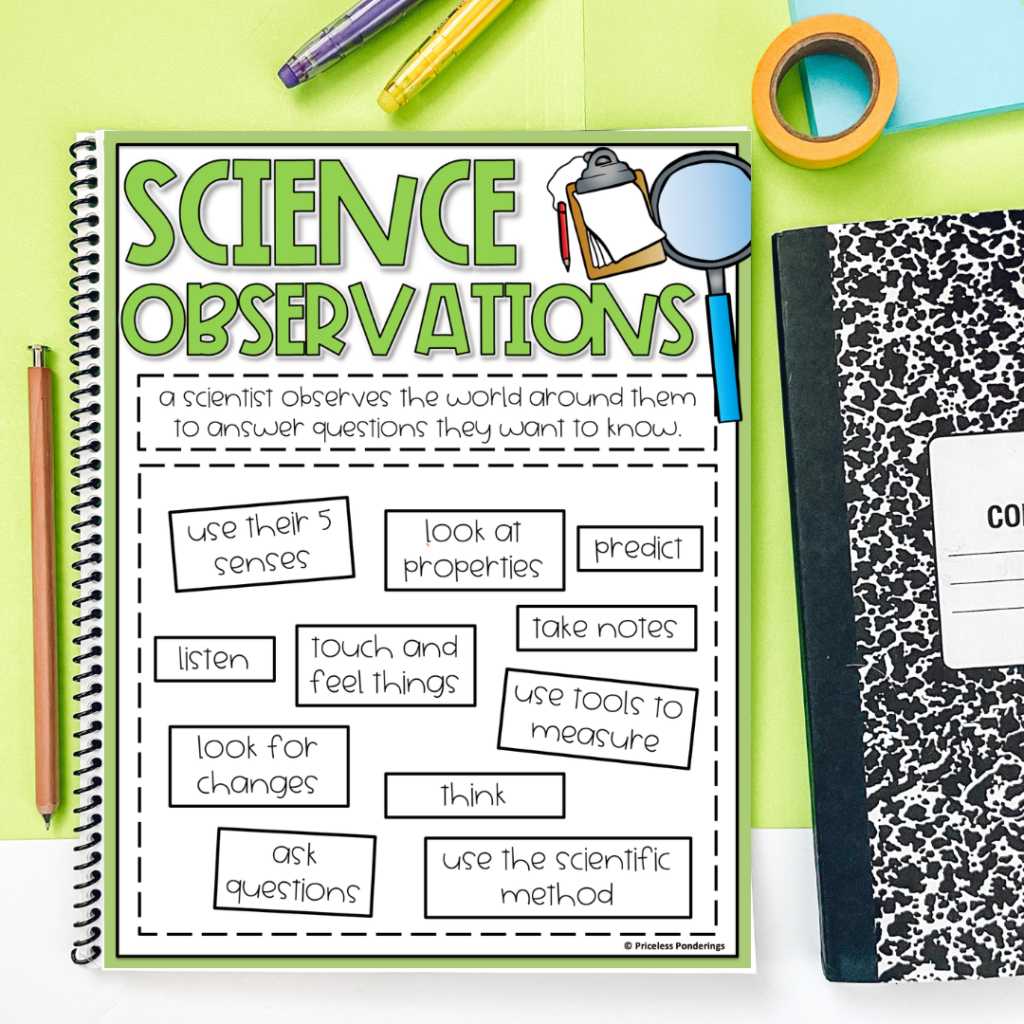
At its core, science observation is the fundamental process of gathering information about the natural or artificial world using one’s senses or instruments. It is the empirical bedrock upon which all scientific inquiry, hypothesis formulation, experimentation, and theory building rests. Historically, observation might have been limited to what the human eye could see or the hand could feel. Today, however, “science observation” has been utterly transformed by technology, evolving into a sophisticated interplay of advanced sensors, computational power, and artificial intelligence, pushing the boundaries of what we can perceive, measure, and understand. In the digital age, understanding scientific observation is synonymous with comprehending the technological tools and methodologies that make it possible, efficient, and increasingly automated.

The Digital Evolution of a Fundamental Principle
The concept of observation is ancient, predating formal science. Early humans observed the patterns of the stars, the behavior of animals, and the changing seasons to survive and thrive. When the scientific method formalized, observation became its indispensable first step: “Observe a phenomenon, ask a question.” What has changed dramatically is how we observe and the sheer scale and precision of what is observable. Technology has not just augmented human senses; it has created entirely new modes of perception.
Beyond the Naked Eye: The Role of Instrumentation
For centuries, scientific progress has been tied to the development of instruments that extend human sensory capabilities. From Galileo’s telescope, which revealed Jupiter’s moons and the true nature of the cosmos, to Hooke’s microscope, which opened up the unseen world of microorganisms, instruments have been the primary drivers of observational advancement. Today, this trend continues at an exponential pace. Modern scientific observation leverages a vast array of sophisticated instruments: electron microscopes capable of imaging individual atoms, powerful telescopes detecting gravitational waves from distant galaxies, intricate sensor networks monitoring environmental changes, and high-fidelity medical imaging systems peering into the human body without invasion. These tools transform phenomena beyond human perception into measurable, analyzable data, rendering the invisible visible and the imperceptible quantifiable.
From Qualitative Insights to Quantitative Data Streams
Traditional observation often involved qualitative descriptions – detailed notes, sketches, and subjective interpretations. While qualitative observation still holds value, particularly in initial exploratory phases or specific fields like ethnography, the digital era has propelled scientific observation predominantly into the quantitative realm. Modern instruments are designed to produce vast quantities of precise numerical data. A single sensor array might generate gigabytes of data per second, capturing temperature, pressure, humidity, light intensity, chemical composition, and more. This shift to quantitative data streams is crucial because it allows for statistical analysis, mathematical modeling, and automated processing, leading to objective, reproducible, and verifiable scientific insights. The ability to collect, store, and process this “big data” from observational instruments is a defining characteristic of contemporary scientific endeavor, entirely dependent on advanced computing and data management technologies.
The Technological Arsenal of Modern Observation
The sophisticated nature of modern scientific observation is a direct reflection of the technological breakthroughs that underpin it. From specialized hardware to intelligent software, technology forms the backbone of how we gather and interpret empirical evidence.
Advanced Sensing and Imaging: Expanding Human Perception
At the heart of contemporary observation lies an ever-growing suite of advanced sensing and imaging technologies. These tools are designed to detect, measure, and record data across the electromagnetic spectrum and beyond. Think of hyperspectral cameras that can “see” chemical compositions, LiDAR systems that map topography with extreme precision, or atomic force microscopes that image surfaces at the nanoscale. In medicine, MRI, CT, and PET scanners provide detailed anatomical and functional images of the body, revolutionizing diagnostics. Environmental science utilizes satellite imagery, drone-mounted sensors, and ground-based sensor networks to monitor everything from deforestation to ocean currents. These technologies don’t just amplify our senses; they fundamentally alter our observational capacity, allowing us to gather data in contexts and at resolutions previously unimaginable.
Data Acquisition and Management: Handling the Deluge
The volume and velocity of data generated by modern observational instruments pose significant technological challenges. This deluge of “big data” necessitates robust data acquisition systems, efficient storage solutions, and powerful processing capabilities. Cloud computing platforms have become indispensable, offering scalable storage and computational resources that allow researchers to manage petabytes of data from projects like particle accelerators or climate models. Specialized software and algorithms are crucial for filtering, cleaning, and organizing raw observational data, ensuring its integrity and making it suitable for analysis. Without these sophisticated data management technologies, the vast potential of advanced sensing would be lost in an unmanageable sea of information.
AI and Machine Learning: Uncovering Hidden Patterns

Perhaps the most revolutionary technological advancement in scientific observation is the integration of Artificial Intelligence (AI) and Machine Learning (ML). While humans excel at certain types of pattern recognition, AI can process vast datasets and identify subtle correlations, anomalies, and trends that might be invisible to the human observer. In astronomy, ML algorithms sift through telescope data to classify galaxies or detect exoplanets. In materials science, AI predicts material properties based on observational data. In medical imaging, AI assists in the early detection of diseases by identifying subtle patterns in scans. These intelligent systems enhance observational capabilities by automating analysis, accelerating discovery, and extracting deeper insights from complex data, effectively transforming raw observation into actionable knowledge with unprecedented speed and accuracy.
Impact Across Industries: Observation as a Catalyst for Tech Innovation
The principles and technologies of scientific observation are not confined to academic research labs; they are pivotal drivers of innovation across diverse technological industries. Understanding and mastering observation, augmented by technology, is a critical component of developing smarter systems and more effective solutions.
Predictive Analytics and IoT: Smart Systems in Action
The Internet of Things (IoT) is fundamentally an exercise in ubiquitous observation. Networks of smart sensors embedded in everything from industrial machinery to smart homes constantly observe and collect data on environmental conditions, operational status, and user behavior. This continuous stream of observational data feeds into predictive analytics models. For example, sensors on manufacturing equipment observe vibration, temperature, and wear patterns, allowing AI algorithms to predict potential failures before they occur, enabling predictive maintenance and minimizing downtime. Smart city initiatives use observational data from traffic sensors, environmental monitors, and utility meters to optimize resource allocation, manage congestion, and improve public services. In these applications, observation moves from being a passive act to an active component of intelligent, responsive systems.
Biomedical Tech and Diagnostics: Peering into Life’s Processes
The field of biomedical technology is a prime example of how scientific observation drives innovation. Advanced diagnostic tools are essentially sophisticated observational instruments. Wearable tech, like smartwatches and continuous glucose monitors, provides real-time observational data on physiological parameters, empowering individuals to manage their health proactively. Robotic surgery systems enhance a surgeon’s observational precision and control. Personalized medicine relies heavily on observational data from genomics, proteomics, and patient histories, analyzed by AI to tailor treatments. The ability to observe biological processes at cellular and molecular levels through techniques like flow cytometry or high-throughput sequencing is constantly yielding new insights, paving the way for targeted therapies and preventative strategies.
Environmental Monitoring and Climate Science: Global-Scale Observation
Addressing global challenges like climate change relies heavily on massive-scale scientific observation, overwhelmingly enabled by technology. Satellites equipped with various sensors observe global temperature fluctuations, sea-level rise, deforestation, and atmospheric composition. Autonomous drones observe localized ecological changes, while oceanographic buoys monitor marine conditions. Ground-based sensor networks track air quality and biodiversity. The integration of this vast, diverse observational data, managed by cloud computing and analyzed by sophisticated models, provides the empirical evidence needed to understand complex Earth systems, predict future climate scenarios, and inform policy decisions aimed at environmental protection and sustainability.
The Future of Observation: Integrating Real-time and Virtual Realities
The trajectory of scientific observation points towards an even deeper integration of physical sensing with digital intelligence, virtual environments, and collaborative frameworks. The future will see observation become more pervasive, predictive, and interactive.
Digital Twins and Simulation: Observational Projections
The concept of “digital twins” represents a cutting-edge application of observational science. A digital twin is a virtual replica of a physical object, process, or system, constantly updated with real-time observational data from its physical counterpart. This allows for continuous monitoring, performance analysis, and predictive modeling in a virtual environment. Engineers can observe how changes in a physical system (like a turbine or a smart building) might impact its performance or lifespan, without needing to experiment on the actual object. This fusion of real-time observation and simulation offers unparalleled insights, allowing for proactive adjustments and optimizing complex systems across industries, from manufacturing to urban planning.
Collaborative and Citizen Science Platforms: Democratizing Observation
Technology is also democratizing scientific observation, moving beyond professional scientists. Citizen science platforms leverage mobile apps and web portals to enable the public to contribute observational data – whether it’s recording bird sightings, monitoring local water quality, or classifying galaxies. This crowdsourced data, when properly collected and validated, can contribute significantly to large-scale scientific projects, extending observational reach far beyond what professional teams alone could achieve. Furthermore, advanced communication and collaboration tools allow scientists globally to share observational data and analyses in real-time, fostering a more interconnected and rapid pace of discovery. The future of scientific observation is not just about more powerful tools, but also about more participants and richer, collaborative intelligence.
In conclusion, “what is science observation” in the 21st century is fundamentally a question of technological capability. It is the art and science of leveraging an ever-evolving suite of digital sensors, computational power, AI, and interconnected platforms to perceive, quantify, and understand the world in ways previously unimaginable. As technology continues to advance, so too will our capacity for scientific observation, driving innovation across every sector and deepening our collective knowledge of the universe.
aViewFromTheCave is a participant in the Amazon Services LLC Associates Program, an affiliate advertising program designed to provide a means for sites to earn advertising fees by advertising and linking to Amazon.com. Amazon, the Amazon logo, AmazonSupply, and the AmazonSupply logo are trademarks of Amazon.com, Inc. or its affiliates. As an Amazon Associate we earn affiliate commissions from qualifying purchases.