
In an increasingly interconnected world, where computing resources are no longer confined to a single machine or physical location, the concept of “remoting” stands as a foundational pillar. It is a technological paradigm that underpins much of our digital infrastructure, enabling seamless interaction with systems, applications, and data across networks, often spanning vast geographical distances. Far from being a niche concept, remoting is the silent enabler behind everything from accessing your desktop from home to the intricate workings of cloud computing and distributed systems. Understanding remoting is crucial for anyone seeking to grasp the architecture of modern software and the dynamics of digital collaboration.
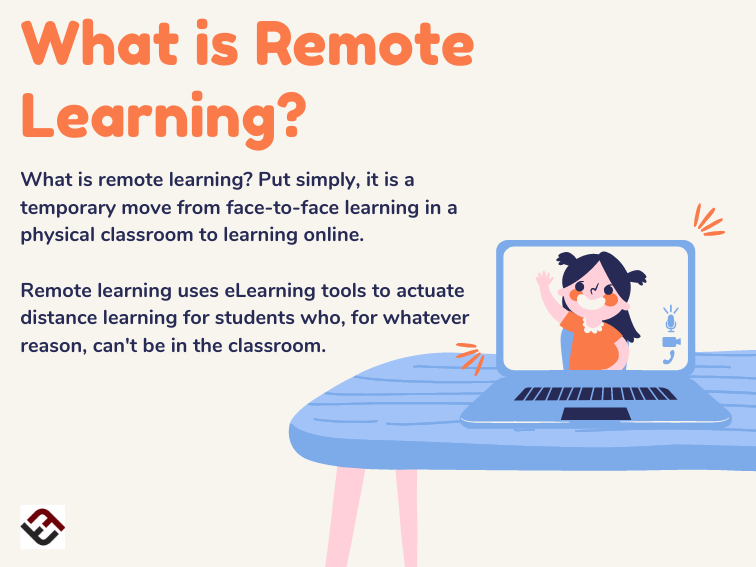
At its heart, remoting refers to the ability to interact with a computational resource (like an application, a service, a database, or even an entire operating system) as if it were local, despite it physically residing on a different machine or network. This interaction typically involves sending requests over a network to a remote machine, which then processes the request and sends a response back. This seemingly simple exchange opens up a universe of possibilities, allowing for resource sharing, distributed processing, enhanced collaboration, and unparalleled flexibility in how we build and deploy technology.
This article will delve into the intricacies of remoting, exploring its core definitions, diverse implementations, underlying architectural principles, and its profound impact on the technological landscape. We will also cast an eye towards its future, highlighting emerging trends that promise to further redefine how we interact with distant digital resources.
The Core Concept of Remoting
To truly appreciate the power and pervasiveness of remoting, it’s essential to grasp its fundamental definition and the historical context that led to its widespread adoption. It represents a paradigm shift from monolithic, self-contained systems to modular, interconnected architectures.
Defining Remoting in a Technical Context
Technically, remoting describes the mechanism by which processes running on different machines can communicate and interact with each other. This communication transcends the boundaries of a single operating system or memory space, leveraging network protocols to bridge the gap. The goal is to abstract away the network latency and physical separation, making remote operations appear as close to local operations as possible for the user or the calling program. This involves marshaling data, transmitting it, and unmarshaling it on the remote end, facilitating the invocation of methods, access to data, or the execution of commands on a machine other than the one currently being used.
The Fundamental Problem Remoting Solves
Before remoting became prevalent, software systems were often designed as monolithic applications running on single, powerful servers. While effective for contained environments, this approach presented significant limitations. Scalability was difficult, requiring expensive hardware upgrades for the entire system. Resource sharing was constrained, as applications couldn’t easily leverage computational power or specialized services from other machines. Collaboration between geographically dispersed teams was cumbersome, and accessing corporate resources from remote locations was a significant challenge.
Remoting emerged as the solution to these problems. It allows for:
-
Distribution of Workloads: Breaking down complex tasks into smaller components that can be processed concurrently across multiple machines.
-
Resource Sharing: Centralizing critical data or expensive hardware resources (like specialized processors or large storage arrays) and making them accessible to many clients.
-
Geographical Flexibility: Enabling users and applications to interact with systems regardless of their physical location, fostering remote work and distributed enterprises.
-
Scalability and Resilience: Adding more machines to distribute loads or providing redundancy, improving system performance and fault tolerance.
Evolution of Remoting Paradigms
The concept of remoting has evolved significantly over decades. Early forms included simple file transfer protocols (FTP) and terminal emulation. The 1980s and 90s saw the rise of sophisticated distributed computing technologies like Remote Procedure Calls (RPC), which allowed functions in one program to execute code in another program located on a different computer. This was followed by distributed object technologies (like CORBA, DCOM, and Java RMI), which extended the RPC concept to object-oriented programming, allowing objects to interact across network boundaries. The early 2000s ushered in web services (SOAP, REST), leveraging standard web protocols for widespread interoperability. Today, cloud-native architectures, microservices, and serverless computing represent the latest evolution, making remoting more abstract, scalable, and resilient than ever before.
Key Types and Implementations of Remoting
The broad concept of remoting manifests in various forms, each tailored to specific use cases and technical requirements. Understanding these different types is crucial for appreciating the breadth of its application.
Remote Procedure Calls (RPC) and Distributed Objects
RPC is one of the earliest and most fundamental remoting technologies. It allows a program to cause a subroutine or function to execute in a different address space (usually on another computer on a shared network) without the programmer explicitly coding the remote interaction. The calling program makes a local procedure call, but behind the scenes, a “stub” marshals the parameters, sends them over the network, and waits for a response from the remote server. Examples include Sun RPC, Microsoft’s DCOM, and Google’s gRPC.
Distributed objects, like Java RMI (Remote Method Invocation) or CORBA (Common Object Request Broker Architecture), extend the RPC paradigm to object-oriented programming. They allow objects instantiated on one machine to invoke methods on objects residing on another machine, treating them as if they were local objects. This enables more complex, object-oriented distributed systems.
Remote Desktop and Virtualization
Perhaps the most visible form of remoting for end-users is remote desktop access. Technologies like Microsoft Remote Desktop Protocol (RDP), VNC (Virtual Network Computing), and TeamViewer allow users to view and interact with a graphical user interface (GUI) of a remote computer over a network. The remote computer renders the desktop, captures user input (keyboard, mouse), and sends screen updates back to the local client. This is invaluable for IT support, accessing work computers from home, or managing servers.
Virtualization technologies further enhance this by abstracting the underlying hardware, allowing multiple “virtual machines” (VMs) to run concurrently on a single physical server. Remote desktop access then connects users to these virtualized environments, providing isolated, on-demand computing resources. Desktop-as-a-Service (DaaS) solutions, built on virtualization, deliver entire virtual desktops to users as a cloud service.
API-Based Remoting and Web Services
In the modern web era, Application Programming Interfaces (APIs) form the backbone of remoting. Web services, primarily using HTTP/HTTPS, allow different applications to communicate and exchange data.
-
SOAP (Simple Object Access Protocol): An XML-based protocol for exchanging structured information in the implementation of web services. It’s highly standardized and platform-independent, often used in enterprise environments.
-
REST (Representational State Transfer): An architectural style for networked applications. RESTful APIs use standard HTTP methods (GET, POST, PUT, DELETE) to interact with resources identified by URLs. REST is lightweight, flexible, and widely adopted for web and mobile applications due to its simplicity and scalability.
These API-driven approaches enable microservices architectures, where applications are built as collections of small, independent, loosely coupled services that communicate over a network, typically via RESTful APIs.
Cloud-Native Remoting (Serverless, Containers)
The advent of cloud computing has redefined remoting, making it more dynamic, scalable, and often invisible to the developer.
-
Containers (e.g., Docker, Kubernetes): Package applications and their dependencies into isolated units that can run consistently across various environments. While not remoting themselves, containers facilitate the deployment and management of remote services, allowing applications to be distributed and scaled easily across a cluster of machines. Kubernetes orchestrates these containers, abstracting the underlying network and infrastructure.
-
Serverless Computing (e.g., AWS Lambda, Azure Functions): Takes remoting to an even higher level of abstraction. Developers write functions (small pieces of code) that are executed “on demand” by cloud providers, without needing to provision or manage servers. The cloud provider handles all the underlying remoting infrastructure, automatically scaling resources to execute the function when triggered by an event, effectively making every function call a remote operation.
The Architecture and Mechanisms Behind Remoting
Despite the varied implementations, all remoting solutions share common architectural patterns and underlying mechanisms that enable communication across network boundaries.
Client-Server Model
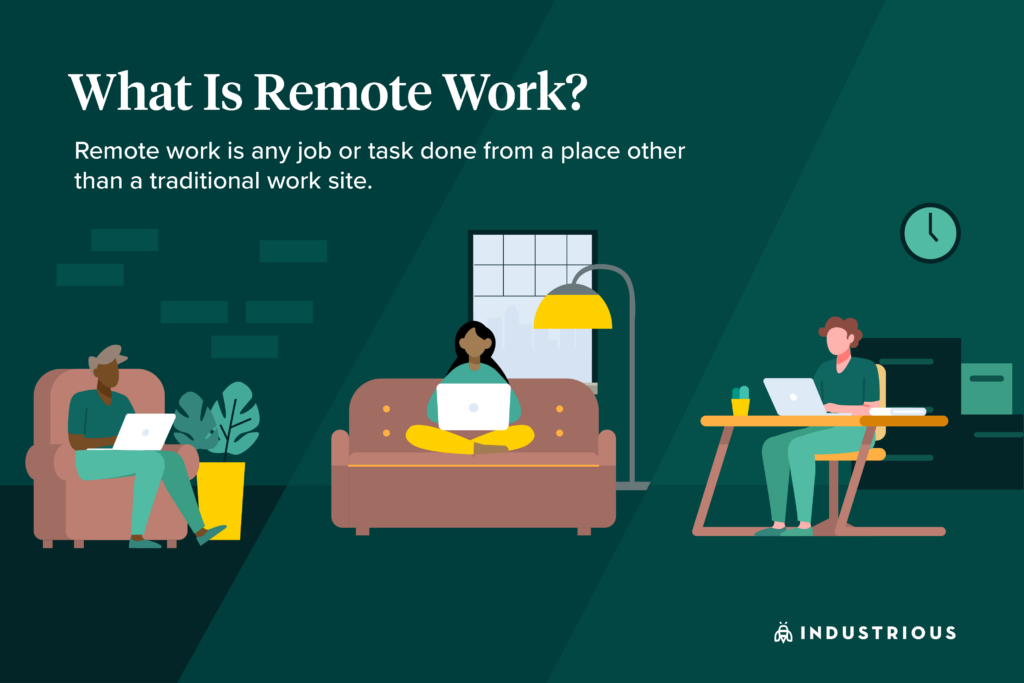
The most prevalent architectural pattern for remoting is the client-server model. A “client” initiates a request for a service or resource from a “server,” which processes the request and sends a response back.
-
Client: The component that makes requests for data or services. It could be a web browser, a mobile app, a desktop application, or another server.
-
Server: The component that listens for requests, processes them, and sends responses. Servers typically host the actual application logic, data, or computational resources.
This model is fundamental to RPC, web services, remote desktops, and virtually all distributed systems.
Serialization and Deserialization
When data needs to be transmitted between a client and a server, especially if they are built on different platforms or programming languages, it must be converted into a universally understandable format. This process is called serialization (or marshaling). The data structure (e.g., an object, a list of parameters) is transformed into a byte stream or a text-based format (like JSON or XML) that can be sent over the network.
Upon receiving the data, the remote end performs deserialization (or unmarshaling), converting the byte stream back into the original data structure, allowing the local program to understand and use it. Efficient and robust serialization/deserialization mechanisms are critical for performance and interoperability in remoting.
Network Protocols and Communication Channels
The actual transportation of serialized data between client and server relies on network protocols.
-
TCP/IP (Transmission Control Protocol/Internet Protocol): The foundational suite of protocols for the internet. TCP provides reliable, ordered, and error-checked delivery of a stream of bytes between applications, while IP handles the addressing and routing of packets.
-
HTTP/HTTPS: Hypertext Transfer Protocol (Secure). These are application-layer protocols built on TCP/IP, primarily used for web communication. HTTP is stateless, making it ideal for client-server interactions like RESTful APIs. HTTPS adds a layer of encryption for secure communication.
-
Other Protocols: Depending on the specific remoting technology, other protocols might be used, such as UDP (User Datagram Protocol) for faster but less reliable communication, or specialized protocols for message queues (e.g., AMQP, MQTT).
The choice of protocol heavily influences the characteristics of the remoting interaction, impacting reliability, speed, and security.
Security Considerations in Remote Access
Given that remoting inherently involves opening systems to external access, security is paramount. Key considerations include:
-
Authentication: Verifying the identity of the user or system attempting to access a remote resource (e.g., usernames/passwords, API keys, OAuth tokens).
-
Authorization: Determining what authenticated users or systems are permitted to do (e.g., read-only access, execute commands, modify data).
-
Encryption: Protecting data in transit from eavesdropping and tampering using protocols like SSL/TLS (which underpins HTTPS) or VPNs (Virtual Private Networks).
-
Firewalls and Network Segmentation: Controlling network traffic and isolating remote systems from internal networks to minimize attack surfaces.
-
Access Control Lists (ACLs): Specifying which users or groups have permissions to specific files, directories, or network services.
-
Regular Auditing and Logging: Monitoring remote access activities to detect and respond to suspicious behavior.
Neglecting security in remoting can lead to significant vulnerabilities, data breaches, and system compromises.
Benefits and Challenges of Remoting
Remoting offers substantial advantages that have driven its widespread adoption, but it also comes with its own set of complexities and potential drawbacks.
Advantages: Scalability, Flexibility, Resource Utilization
-
Scalability: Remoting allows systems to scale horizontally by adding more servers to handle increased load. When a service becomes popular, more instances of it can be deployed remotely without modifying the core application logic. This is a cornerstone of cloud computing.
-
Flexibility: It decouples applications from specific hardware or locations. Users can work from anywhere, and services can be deployed on various infrastructure types. This agility is crucial for modern businesses.
-
Resource Utilization: Expensive or specialized resources (e.g., high-performance computing clusters, large databases) can be centralized and shared across many clients, maximizing their utilization and reducing overall costs.
-
Modularity and Reusability: Services can be developed independently and exposed remotely, fostering modular architectures (like microservices) and promoting the reuse of components across different applications.
-
Collaboration: Facilitates remote teams working together on shared resources or systems, improving productivity and fostering global talent pools.
Disadvantages: Latency, Complexity, Security Risks
-
Latency: Network communication inherently introduces delays. The time it takes for a request to travel to a remote server and for a response to return can impact application performance and user experience, especially over long distances or unreliable networks.
-
Complexity: Building and managing distributed systems with remoting can be significantly more complex than monolithic applications. Developers must handle network errors, message ordering, concurrency, distributed transactions, and data consistency across multiple nodes.
-
Security Risks: As discussed, opening systems to remote access inherently increases the attack surface. Ensuring robust authentication, authorization, and encryption is a continuous challenge.
-
Debugging and Troubleshooting: Diagnosing issues in distributed systems can be challenging due to the asynchronous nature of communication and the lack of a single point of failure. Logs and monitoring must be carefully aggregated and analyzed across multiple remote components.
-
Network Dependence: Remoting relies heavily on a stable and fast network connection. Network outages or degraded performance can cripple applications and services.
Impact on Modern Software Development and Operations
Remoting has fundamentally reshaped how software is developed and operated. It has been the driving force behind:
-
DevOps and CI/CD: Enabling automated deployment and management of remote services.
-
Microservices Architecture: Fostering the decomposition of large applications into smaller, manageable, remotely accessible services.
-
Cloud Computing: Making elastic, on-demand infrastructure a reality, where services are provisioned and scaled remotely.
-
Remote Work: Providing the technological backbone for employees to access corporate resources from any location.
-
Global Teams: Facilitating collaboration and resource sharing across geographically dispersed development and operational teams.
The Future of Remoting: Trends and Innovations
The evolution of remoting is far from over. As technology continues to advance, several trends are poised to redefine and enhance remote interactions further.
Edge Computing and IoT Remoting
With the proliferation of IoT devices and the demand for real-time processing, edge computing is gaining prominence. Instead of sending all data to a centralized cloud for processing, computation is moved closer to the data source—at the “edge” of the network. This involves remoting capabilities at a much smaller scale, where edge devices can communicate and even process data remotely with nearby gateways or other edge nodes, significantly reducing latency and bandwidth usage. Remoting in this context will focus on highly efficient, secure, and resilient communication between vast numbers of constrained devices.
AI-Powered Remote Management
Artificial intelligence and machine learning are increasingly being integrated into remote management systems. AI can analyze vast amounts of operational data from remote systems to:
-
Predictive Maintenance: Anticipate hardware failures or software issues before they occur.
-
Automated Troubleshooting: Identify and even resolve common problems without human intervention.
-
Intelligent Resource Allocation: Dynamically scale remote resources based on predicted demand.
-
Enhanced Security: Detect anomalous behavior and potential threats in real-time within remote access logs.
This will lead to more autonomous and self-healing remote infrastructures.
Enhanced Security and Zero-Trust Architectures
As the attack surface expands with more remote systems, security paradigms are evolving. Zero-Trust Architecture is becoming the standard, where no user, device, or application is implicitly trusted, regardless of whether it’s inside or outside the network perimeter. Every access request to a remote resource must be authenticated and authorized. This involves micro-segmentation, continuous verification, and strong identity management. Future remoting solutions will embed these principles deeply, providing granular control and continuous monitoring of all remote interactions.
Seamless Cross-Platform Interoperability
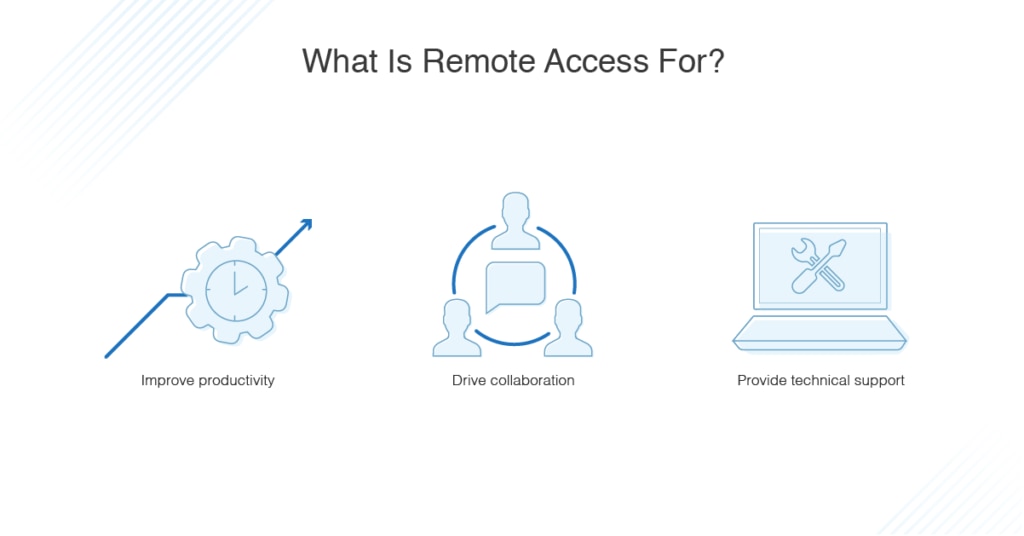
The demand for seamless interaction between disparate systems—be it mobile apps, web browsers, desktop applications, or backend services, running on various operating systems and hardware—will continue to drive innovation in remoting. Efforts will focus on lightweight, highly efficient, and universally compatible protocols and data formats. WebAssembly (Wasm) and emerging standards for remote execution environments could bridge gaps further, allowing code to run consistently across virtually any platform, blurring the lines between local and remote execution even more.
In conclusion, remoting is not merely a technical feature; it is a fundamental design principle that has enabled the modern digital world. From the simplest remote login to the most complex global cloud infrastructure, the ability to interact with distant resources efficiently and securely is indispensable. As technology continues its relentless march forward, remoting will undoubtedly evolve, becoming more intelligent, more secure, and even more integral to the fabric of our interconnected future.
aViewFromTheCave is a participant in the Amazon Services LLC Associates Program, an affiliate advertising program designed to provide a means for sites to earn advertising fees by advertising and linking to Amazon.com. Amazon, the Amazon logo, AmazonSupply, and the AmazonSupply logo are trademarks of Amazon.com, Inc. or its affiliates. As an Amazon Associate we earn affiliate commissions from qualifying purchases.